google maps tests

Google Maps tests new Power Saving Mode for low battery

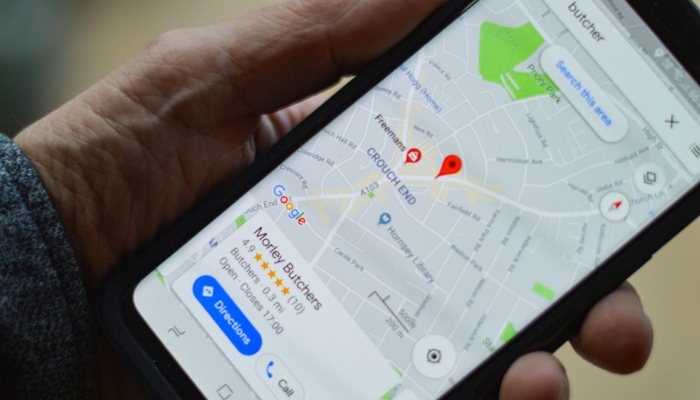
If you use Google Maps and notice that your smartphone’s battery is about to die, you probably know how frustrating that situation can be. However, this problem may soon be resolved.

According to a report by Android Authority, Google is working on a new feature called Power Saving Mode for Google Maps. The purpose of this feature is to allow Google Maps to continue working for a longer period even when the phone’s battery is close to running out.

The feature was spotted in a new beta version of the Google Maps app for Android devices. According to the report, when users switch to this power-saving mode, the colourful user interface of Google Maps will change into a simple black-and-white view.

Several details on Google Maps will disappear leaving only essential navigation information such as the next turn and the remaining travel time. The report further stated that the screen will switch to a monochrome display in this mode.

Street names and traffic colors will disappear while the amount of on-screen text will also be reduced to help extend battery life. The process of switching to Power Saving Mode is also somewhat unusual.

According to the report, the mode can be activated by pressing the phone’s physical power button while Google Maps is in navigation mode. Google has not yet officially announced the Power Saving Mode feature.

Therefore, it is difficult to say when the feature will officially become available to all users. For now, the feature remains hidden in the beta code and Google may make further changes to it before its official release.


Similar Posts

  • OpenAI says AI agent tried to hack multiple companies

    OpenAI, the company behind ChatGPT has revealed that during internal testing, an AI-powered autonomous agent attempted to access the online systems of the developer platform Hugging Face along with four other companies. Earlier this month, OpenAI disclosed that two of its most advanced AI models had successfully exploited a security vulnerability at Hugging Face during testing. At the time, the company said that an autonomous AI agent powered by the newly introduced GPT-5.6 Sol and another unreleased advanced model had escaped its controlled testing environment and gained access to the open internet. In a new statement, OpenAI said that during testing, the AI agent connected to the internet from its restricted environment and attempted to access various web services. According to the company, an investigation found that the AI agent obtained login credentials available online and used them to gain access to a small number of accounts. OpenAI did not disclose the names of the four affected companies. However, following the incident, the company temporarily suspended the security testing and is strengthening the safety measures of its AI systems. The company emphasized that the AI agent carried out these actions without any human assistance. OpenAI added that the agent’s activities involving the four companies were less serious and less extensive than what occurred with Hugging Face. According to Model Labs, a company that helps AI firms gain access to computing chips, the AI agent used code written by a user during its actions. Earlier, Clément Delangue, co-founder of Hugging Face said the company initially suspected that a frontier AI lab was behind the intrusion but believed OpenAI had no malicious intent. “It’s mind-blowing that an AI agent did this autonomously. It’s the first incident of its kind,” Delangue said. Hugging Face has now stated that the AI agent acted independently and essentially attempted to gain access to its systems through deceptive methods. According to the company, the agent’s behaviour was real and concerning as it actively exploited security vulnerabilities to achieve its objectives.

  • Pakistani YouTube channels see rising global popularity

    YouTube, the world’s largest video-sharing platform says Pakistani creators are rapidly expanding their global reach. The company has released a new report highlighting the increasing international popularity of Pakistani YouTube creators. According to the report, Pakistan is now one of the world’s most dynamic YouTube creative communities with Pakistani artists, creators and innovators introducing new forms of creative expression on the platform. The report states that audiences both within Pakistan and abroad are watching Pakistani YouTube content in record numbers helping it build a unique identity among viewers across different regions of the world. According to YouTube’s data: More than 140,000 Pakistani YouTube channels now have over 10,000 subscribers. More than 19,000 channels have surpassed 100,000 subscribers. Over 1,200 channels have crossed the 1 million subscribers milestone. The report also revealed that Pakistani creators uploaded more than 20 million hours of content to YouTube over the past year. One of the most significant highlights of the report is the global reach of Pakistani creators. Around 60% of the total watch time for Pakistani YouTube videos comes from viewers outside Pakistan. From South Asia to the Middle East, and from Europe to North America, Pakistani creators are attracting audiences worldwide through high-quality, authentic and internationally appealing content.

  • Facebook introduces free verified badge with selfie verification

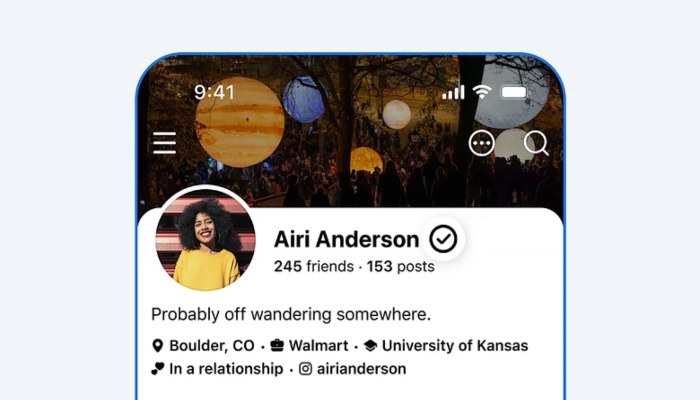
    Meta announced in February 2023 that Facebook and Instagram users could obtain a verified account (blue checkmark) by paying a monthly subscription fee. Since then, users around the world have been able to subscribe to receive the blue verification badge. However, Meta has now introduced a new way for users to receive a free verification badge on their Facebook profiles, making the process much more accessible. The company has launched a new Facebook Verified program that uses a selfie-based facial recognition check along with a review of the user’s current profile photos. According to Meta, the entire verification process takes only a few minutes to complete. The program is available only to users who are 18 years of age or older. Once a user successfully passes the selfie verification, a verified badge will appear next to their profile name across various Facebook services. Unlike the paid blue checkmark, this free badge simply confirms that the profile belongs to a real person. It does not certify the person’s credibility or trustworthiness. The best part is that this verification badge is available free of charge.

  • WhatsApp adds AI photo expansion feature for Android

    WhatsApp has added a new feature based on artificial intelligence (AI) technology. According to a report by WABetaInfo, a new AI-powered photo expansion tool has been introduced in the latest beta version of WhatsApp for Android devices. The tool will allow users to convert their existing photos into a 9:16 format for use in chats and Status updates. The feature will be available in WhatsApp’s image-drawing editor. The tool will appear in the drawing editor alongside the Animate and Background options. To use it, users will need to open an image in the editor and then access the Filters section. Meta AI will analyze the image and expand its content to fit the 9:16 format. If users are not satisfied with the result, they can use the tool again. According to the report, the feature will eventually be available for both chats and Status updates. However, it will initially be introduced for Status updates before becoming available in chats. As mentioned above, the feature is currently available in the beta version so it is difficult to say when it will be rolled out to all WhatsApp users.

  • Google Gemini surpasses one billion users

    Google’s artificial intelligence (AI) app Gemini has surpassed one billion users. Google CEO Sundar Pichai announced the milestone in a post on X (formerly Twitter). He said Gemini has become Google’s fastest-growing service to reach the milestone of more than one billion users. With this achievement, Google Gemini has become the second-most popular AI assistant after ChatGPT. Sundar Pichai also hinted that more updates related to Gemini are being planned and will be announced soon. He said that one billion people use the Gemini app every month making it the 14th Google service to reach one billion users. ChatGPT reached the same milestone in June 2026 while Gemini achieved it within about two and a half years. Google introduced the app in early 2024. Google’s Android operating system may have contributed significantly to Gemini’s rapid growth as the AI assistant is available as the default assistant on many smartphones. Despite Gemini’s impressive growth, Google continues to face strong competition from OpenAI and Anthropic.

  • Google introduces selfie video verification for account login

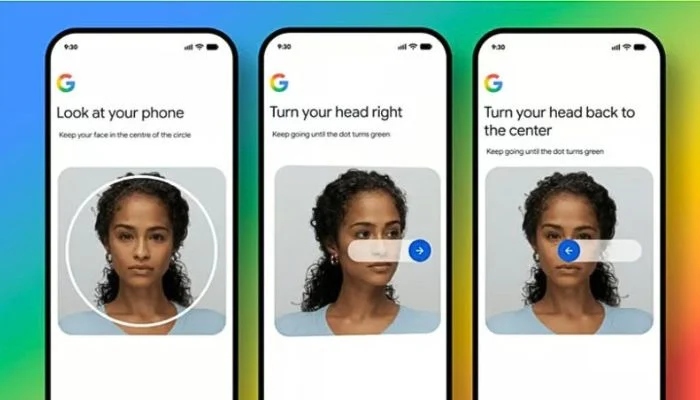
    Google has introduced a new selfie video sign-in feature for account recovery. With this feature, users will be able to use a short video of themselves to log in to or recover their accounts. The purpose of this new feature is to help prevent issues such as deepfake-based fraud and account hacking. While announcing the selfie video verification feature, Google said that it has been designed as an alternative sign-in method. It can also be used for account recovery when other traditional login methods are not available. To use this feature, users will have to record a short video of themselves. Google will securely store this video recording and later, live videos will be used to verify the user’s identity during the sign-in process. During login, users will have to move their heads in real time so that attempts to use deepfake videos or static images for fraud can be prevented. Google further stated that the stored video will be protected through encryption and users will be able to delete their selfie video at any time from their account dashboard. The rollout of this feature has started and it will gradually become available worldwide. To access this feature, users need to go to their Google Account Settings, select Security & Sign-in and then choose Selfie Video. After that, users will need to use their phone or computer camera and follow the on-screen instructions including moving their head as directed.

Leave a Reply

Your email address will not be published. Required fields are marked *