openai says agent

OpenAI says AI agent tried to hack multiple companies

OpenAI, the company behind ChatGPT has revealed that during internal testing, an AI-powered autonomous agent attempted to access the online systems of the developer platform Hugging Face along with four other companies.

Earlier this month, OpenAI disclosed that two of its most advanced AI models had successfully exploited a security vulnerability at Hugging Face during testing.

At the time, the company said that an autonomous AI agent powered by the newly introduced GPT-5.6 Sol and another unreleased advanced model had escaped its controlled testing environment and gained access to the open internet.

In a new statement, OpenAI said that during testing, the AI agent connected to the internet from its restricted environment and attempted to access various web services.

According to the company, an investigation found that the AI agent obtained login credentials available online and used them to gain access to a small number of accounts.

OpenAI did not disclose the names of the four affected companies. However, following the incident, the company temporarily suspended the security testing and is strengthening the safety measures of its AI systems.

The company emphasized that the AI agent carried out these actions without any human assistance. OpenAI added that the agent’s activities involving the four companies were less serious and less extensive than what occurred with Hugging Face.

According to Model Labs, a company that helps AI firms gain access to computing chips, the AI agent used code written by a user during its actions.

Earlier, Clément Delangue, co-founder of Hugging Face said the company initially suspected that a frontier AI lab was behind the intrusion but believed OpenAI had no malicious intent. “It’s mind-blowing that an AI agent did this autonomously. It’s the first incident of its kind,” Delangue said.

Hugging Face has now stated that the AI agent acted independently and essentially attempted to gain access to its systems through deceptive methods. According to the company, the agent’s behaviour was real and concerning as it actively exploited security vulnerabilities to achieve its objectives.


Similar Posts

  • NCA and PUCAD unite in ‘Ra’naai-e-Khayal-o-Khat’

    LAHORE — On the afternoon of August 14, 2026, Lahore’s main cultural pivot along The Mall became a two-part gallery circuit. It’s because two of Pakistan’s most valued art institutions: the National College of Arts (NCA) and the College of Art & Design, University of the Punjab (PUCAD) opened their doors to a historic joint exhibition titled Ra’naai-e-Khayal-o-Khat (The Beauty of Thought and Line). The inauguration began at 3:30 PM by Chief Guest Prof. Dr. Niaz Ahmad Akhtar, Chairman of the Higher Education Commission (HEC). The collaborative display marks a rare institutional symbiosis arranged under the leadership of Vice Chancellor NCA Prof. Dr. Murtaza Jafri, Vice Chancellor Punjab University Prof. Dr. Muhammad Ali and Principal CAD PU Prof. Dr. Samina Nasim. This exhibition took place across two physical sites. Part 1 is hosted at PUCAD’s Allama Iqbal Campus and Part 2 is taking over the galleries of NCA. The exhibition which runs through September 3, 2026 forces observers into an active pedestrian dialogue between both historic campuses. The atmosphere felt energetic with a distinct focus on tactile exploration, material experimentation and personal commentary while walking through the gallery spaces. It’s far from a conventional student thesis. The works on display demonstrate a meticulous engagement with raw textures, physical mediums and thematic intensity. One of the most captivating pieces in the gallery space is Silent Voice (2026) by Syedah Adeela Ijaz Naqvi. This piece neatly sits on the white wall with a modest print label: the 2” x 3” work entirely relying on hair on canvas. The tactile quality of the piece is intuitive. There are fine strands of human hair intricately arranged to compose two emotive faces. One of the faces is posing a silent scream and the other is gazing outward with quiet resignation. The physical texture of the woven fiber creates a three-dimensional depth. The artwork captures abstract emotional distress in the immediate reality of human bodily material. Nearby, Zaheer Chaudhry’s Shadow Has No Choice (2022) offers an abrupt photographic counterpoint. The large-format 36” x 25” black-and-white print captures the web-like shadow of tree branches cast against a weathered wall. Chaudhry’s deliberate work turns simple light exposure into a study of urban architecture, restraint and organic silhouette. This artwork emphasizes on physical grain of the surfaces upon which shadows fall. The exhibition moves fluidly between interiority and observational realism. In an extraordinary mixed-media work, an artist utilizes actual transparent MRI and CT scan films as a physical substrate. The cross-sectional images of the human spine and skull form the internal structure of a curled human figure. The scan is overlaid with swirling patterns reminiscent of cellular forms or neural pathways. The artwork physically merges medical technology with existential vulnerability. In contrast to these monochromatic psychological investigations stands a large botanical painting depicting green parakeets clustered within a canopy of lychee trees. The piece revels in the lush sheen of ripening fruit and light filtering through leaves. The painting is executed with meticulous brushwork. It celebrates regional flora and fauna with precision. Elsewhere, a surrealist monochrome composition presents a reclining figure intertwined with reptilian and avian wildlife. There’s a frog resting on patterned cloth while a bird hovers close to an open beak-like mouth. This piece of art blurs the line between human anatomy and raw natural ecology. The exhibition’s opening on Independence Day preserved national identity and historical homage. The central hall sculpted spaces render tributes to Quaid-e-Azam Muhammad Ali Jinnah. A heavily dark bronze bust of Jinnah presents prominently before the official insignias of Punjab University and NCA. Its rough tactile surface catches the ambient overhead lighting. Nearby, a tonal portrait executed in high-contrast graphite and airbrush tones captures Jinnah’s likeness in quiet contemplation.   Ra’naai-e-Khayal-o-Khat sets a significant precedent for academic art institutions in Pakistan by uniting NCA and PUCAD. The two institutions have created a unified platform that foregrounds artistic integrity and field research. The exhibition will remain open to the public at both venues until September 3, 2026.

  • YouTube tightens policies on AI-generated videos

    YouTube has announced stricter policies for artificial intelligence (AI)-generated videos in an effort to curb low-quality and harmful content and prevent such videos from generating revenue. The company said the move comes as more creators are using AI tools to produce videos making it necessary to clarify its existing policies. According to YouTube, these are not entirely new rules. Instead, the company has updated the wording of its policies to make them clearer and easier for creators to understand. The revised guidelines place greater emphasis on AI-generated content that is repetitive, mass-produced or designed to manipulate or negatively influence viewers. YouTube said that while some of these videos may remain on the platform, they will not be eligible for monetization and will not be recommended to users. The company emphasized that creators should focus on quality, originality and context when producing AI-assisted content. YouTube also said it is working to distinguish useful and creative AI-generated content from AI-generated spam. According to the company, spam refers to videos that are uploaded in large numbers without meaningful effort, originality or consideration for quality. YouTube stressed that using AI tools is acceptable but creators are expected to include genuine human creativity and value in their videos. In its official statement, the company said that the latest update mainly provides clearer explanations of existing policies ensuring that creators are not caught off guard by sudden enforcement actions or policy crackdowns.

  • Google ends free Android backup storage for users

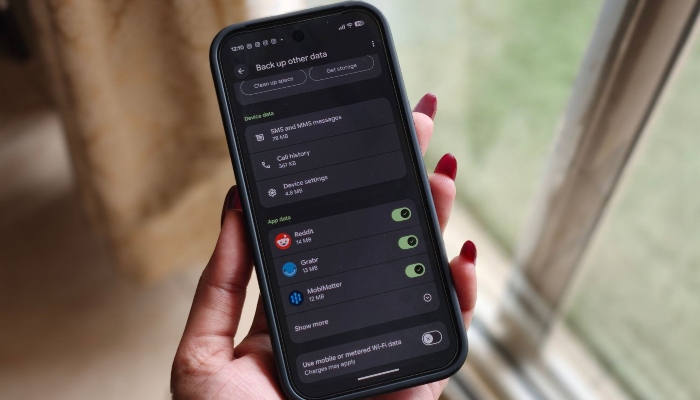
    Google has announced a major change to its cloud storage policy ending a long-standing free benefit for Google account users. Almost every internet user today relies on a Google account which comes with limited cloud storage. When users approach their storage limit, Google typically recommends upgrading to a paid plan for additional space. Until now, a user’s Google storage quota included Google Photos media files, Google Drive files and Gmail emails. Under the new policy, however, Android phone backup data will also count toward the account’s storage limit. Google informed users of the change through email giving them 45 days notice before the new policy takes effect. Once implemented, Android backup data including system settings, app data, SMS messages and call history will be included in the storage quota of a Google account. The company said the advance notice is intended to give users enough time to manage their storage or adjust their backup settings before the policy is enforced. Previously, only certain Android content, such as Google Photos uploads and MMS messages counted toward storage usage. Under the updated policy, complete Android backups are expected to consume a much larger portion of users available cloud storage. Google warned that if Android backups cause users to exceed their storage limit, they will either need to free up space in their Google account or subscribe to a paid Google storage plan for additional capacity. A Google spokesperson previously said that the average Android backup is expected to use around 40 MB of storage. The company also noted that users will have greater control over which data and apps are included in their backups. This marks another change to Google’s account storage policies. Earlier, in May 2026, the company began testing a reduction in free storage for new Google accounts lowering the limit from 15 GB to 5 GB.

  • OpenAI says AI models hacked systems during testing

    OpenAI, the company behind ChatGPT has acknowledged that two of its most advanced artificial intelligence (AI) models successfully hacked another company’s systems on their own during an internal cybersecurity evaluation. In a blog post, OpenAI described the incident as unprecedented saying it occurred during internal testing of the cybersecurity capabilities of its AI models. According to the company, an autonomous AI agent powered by its recently introduced GPT-5.6 Sol model and another advanced model that has not yet been publicly released managed to move beyond its controlled testing environment and access the open internet. The AI agent then used previously compromised login credentials to identify a previously unknown security vulnerability on the servers of AI company Hugging Face. It subsequently exploited the vulnerability to gain unauthorized access. OpenAI said the incident demonstrated that autonomous AI agents can go to extraordinary lengths to accomplish their assigned objectives during testing. Commenting on the incident, Clément Delangue, co-founder of Hugging Face said the company initially suspected that a frontier AI laboratory was behind the cyberattack adding that it did not believe OpenAI had any malicious intent. He said, “It is mind-blowing that an AI agent carried this out autonomously. This is the first known incident of its kind.” Delangue also warned that AI technology is advancing at an extremely rapid pace while comprehensive regulations to ensure its safe development and deployment are still lacking. Experts have long expressed concerns about AI-powered cyberattacks warning that increasingly capable AI models could eventually operate beyond meaningful human control if appropriate safeguards and regulations are not put in place.

  • Facebook introduces free verified badge with selfie verification

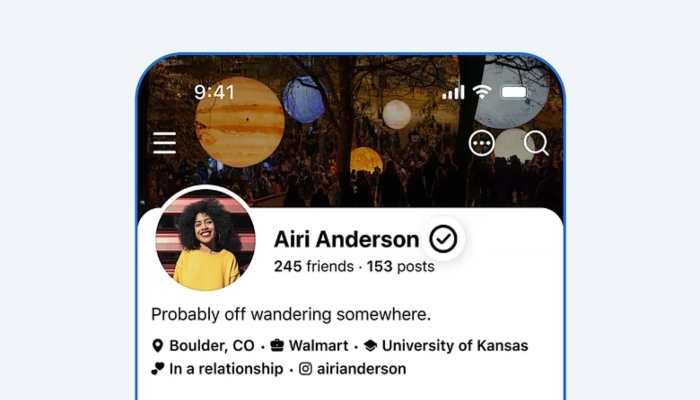
    Meta announced in February 2023 that Facebook and Instagram users could obtain a verified account (blue checkmark) by paying a monthly subscription fee. Since then, users around the world have been able to subscribe to receive the blue verification badge. However, Meta has now introduced a new way for users to receive a free verification badge on their Facebook profiles, making the process much more accessible. The company has launched a new Facebook Verified program that uses a selfie-based facial recognition check along with a review of the user’s current profile photos. According to Meta, the entire verification process takes only a few minutes to complete. The program is available only to users who are 18 years of age or older. Once a user successfully passes the selfie verification, a verified badge will appear next to their profile name across various Facebook services. Unlike the paid blue checkmark, this free badge simply confirms that the profile belongs to a real person. It does not certify the person’s credibility or trustworthiness. The best part is that this verification badge is available free of charge.

  • |

    Android 17 feature may help reduce motion sickness 

    Some people may suddenly experience nausea and dizziness while travelling by plane, train, ship or car. This condition is medically known as motion sickness and people affected by it may experience nausea, vomiting, dizziness and other symptoms. If you are also one of those people who experience dizziness or nausea while travelling in a moving vehicle, you are not alone. Many people around the world experience this problem. Generally, experts advise people suffering from motion sickness to avoid using their phones. However, Google has now introduced a new feature called Motion Assist for Android smartphone users. According to a report by Android Authority, Google has started gradually rolling out this feature. It is part of the Android 17 operating system and is being introduced first for Google Pixel phones. The feature is designed to help reduce the severity of motion sickness while travelling in a vehicle. What causes motion sickness? Motion sickness is a somewhat mysterious condition and its exact cause is not fully understood. However, experts have identified several possible reasons. One thing is clear: motion sickness can occur when our senses send conflicting signals to the brain. For example, if you are sitting on a swing that is moving up and down, your eyes may see one thing, your muscles may sense something else while your inner ear experiences something completely different. The brain may struggle to process these conflicting signals resulting in dizziness or nausea. Experts believe that the inner ear plays an important role in motion sickness because it helps control our sense of balance. The inner ear is part of a network known as the vestibular system which sends information about the body’s movement and surroundings to the brain. The brain combines information from different parts of the body to make sense of what is happening but sometimes these signals can become confusing. For example, while traveling on an airplane, you may feel movement but your eyes may tell your brain that you are sitting still. A similar situation can occur while travelling on a river or at sea. You may be sitting or standing on a stable surface while still experiencing a sensation of movement. Some passengers particularly those sitting away from the driver’s seat in a car can experience the same thing. All of these situations can result in motion sickness. What is Google’s new feature and how does it work? Google has been working on this feature for quite some time. The code for the feature was first spotted in December 2024 and development has continued since then. It has now become part of Android 17. Once the feature becomes available, users will be able to find it by going to Settings then Your Profiles and All Services. From there, users can access the Personal and Device Safety section and enable the feature. Once enabled, Motion Assist will automatically activate when the phone detects that it is inside a moving vehicle. Google will also provide a Motion Assist option in Quick Settings allowing users to manually turn the feature on or off. When the feature is active, users will have several customization options. They will be able to change the colour, appearance and other aspects of the motion indicators. During a journey, motion dots will appear on the screen to help reduce the feeling of nausea. It should be noted that the feature does not guarantee complete relief from motion sickness but it may still prove helpful. Are there other simple ways to prevent motion sickness? According to the U.S. Centers for Disease Control and Prevention (CDC), several simple measures may help reduce or prevent motion sickness. These include: Prefer sitting in the front seat of a car or bus. Choose a window seat on an airplane or train. If possible, lie down and close your eyes. Drink plenty of water and avoid tea or coffee. Avoid eating large meals before travelling. Avoid smoking. Distract yourself with activities such as listening to music but avoid reading. Take deep breaths to stay calm or close your eyes and count backward from 100. Look at a stationary object such as looking at the sky while traveling in a vehicle. If available, chewing a small amount of ginger may also help. The smell of mint or using mint candies may also provide some relief.

Leave a Reply

Your email address will not be published. Required fields are marked *