pakistani youtube channels

Pakistani YouTube channels see rising global popularity

YouTube, the world’s largest video-sharing platform says Pakistani creators are rapidly expanding their global reach. The company has released a new report highlighting the increasing international popularity of Pakistani YouTube creators.

According to the report, Pakistan is now one of the world’s most dynamic YouTube creative communities with Pakistani artists, creators and innovators introducing new forms of creative expression on the platform.

The report states that audiences both within Pakistan and abroad are watching Pakistani YouTube content in record numbers helping it build a unique identity among viewers across different regions of the world. According to YouTube’s data:

  • More than 140,000 Pakistani YouTube channels now have over 10,000 subscribers.
  • More than 19,000 channels have surpassed 100,000 subscribers.
  • Over 1,200 channels have crossed the 1 million subscribers milestone.

The report also revealed that Pakistani creators uploaded more than 20 million hours of content to YouTube over the past year. One of the most significant highlights of the report is the global reach of Pakistani creators.

Around 60% of the total watch time for Pakistani YouTube videos comes from viewers outside Pakistan. From South Asia to the Middle East, and from Europe to North America, Pakistani creators are attracting audiences worldwide through high-quality, authentic and internationally appealing content.

Similar Posts

  • OpenAI says AI agent tried to hack multiple companies

    OpenAI, the company behind ChatGPT has revealed that during internal testing, an AI-powered autonomous agent attempted to access the online systems of the developer platform Hugging Face along with four other companies. Earlier this month, OpenAI disclosed that two of its most advanced AI models had successfully exploited a security vulnerability at Hugging Face during testing. At the time, the company said that an autonomous AI agent powered by the newly introduced GPT-5.6 Sol and another unreleased advanced model had escaped its controlled testing environment and gained access to the open internet. In a new statement, OpenAI said that during testing, the AI agent connected to the internet from its restricted environment and attempted to access various web services. According to the company, an investigation found that the AI agent obtained login credentials available online and used them to gain access to a small number of accounts. OpenAI did not disclose the names of the four affected companies. However, following the incident, the company temporarily suspended the security testing and is strengthening the safety measures of its AI systems. The company emphasized that the AI agent carried out these actions without any human assistance. OpenAI added that the agent’s activities involving the four companies were less serious and less extensive than what occurred with Hugging Face. According to Model Labs, a company that helps AI firms gain access to computing chips, the AI agent used code written by a user during its actions. Earlier, Clément Delangue, co-founder of Hugging Face said the company initially suspected that a frontier AI lab was behind the intrusion but believed OpenAI had no malicious intent. “It’s mind-blowing that an AI agent did this autonomously. It’s the first incident of its kind,” Delangue said. Hugging Face has now stated that the AI agent acted independently and essentially attempted to gain access to its systems through deceptive methods. According to the company, the agent’s behaviour was real and concerning as it actively exploited security vulnerabilities to achieve its objectives.

  • WhatsApp adds AI photo expansion feature for Android

    WhatsApp has added a new feature based on artificial intelligence (AI) technology. According to a report by WABetaInfo, a new AI-powered photo expansion tool has been introduced in the latest beta version of WhatsApp for Android devices. The tool will allow users to convert their existing photos into a 9:16 format for use in chats and Status updates. The feature will be available in WhatsApp’s image-drawing editor. The tool will appear in the drawing editor alongside the Animate and Background options. To use it, users will need to open an image in the editor and then access the Filters section. Meta AI will analyze the image and expand its content to fit the 9:16 format. If users are not satisfied with the result, they can use the tool again. According to the report, the feature will eventually be available for both chats and Status updates. However, it will initially be introduced for Status updates before becoming available in chats. As mentioned above, the feature is currently available in the beta version so it is difficult to say when it will be rolled out to all WhatsApp users.

  • Google ends free Android backup storage for users

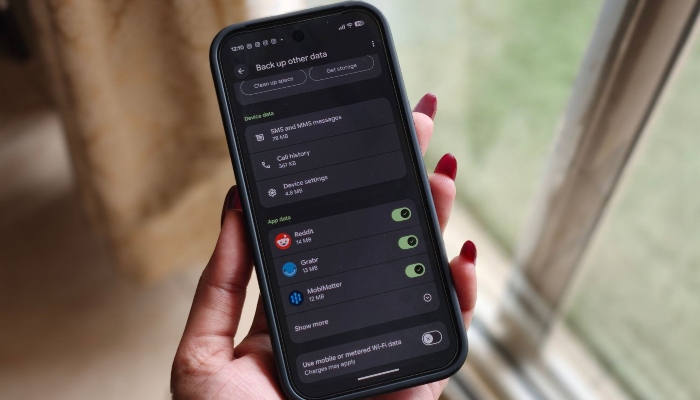
    Google has announced a major change to its cloud storage policy ending a long-standing free benefit for Google account users. Almost every internet user today relies on a Google account which comes with limited cloud storage. When users approach their storage limit, Google typically recommends upgrading to a paid plan for additional space. Until now, a user’s Google storage quota included Google Photos media files, Google Drive files and Gmail emails. Under the new policy, however, Android phone backup data will also count toward the account’s storage limit. Google informed users of the change through email giving them 45 days notice before the new policy takes effect. Once implemented, Android backup data including system settings, app data, SMS messages and call history will be included in the storage quota of a Google account. The company said the advance notice is intended to give users enough time to manage their storage or adjust their backup settings before the policy is enforced. Previously, only certain Android content, such as Google Photos uploads and MMS messages counted toward storage usage. Under the updated policy, complete Android backups are expected to consume a much larger portion of users available cloud storage. Google warned that if Android backups cause users to exceed their storage limit, they will either need to free up space in their Google account or subscribe to a paid Google storage plan for additional capacity. A Google spokesperson previously said that the average Android backup is expected to use around 40 MB of storage. The company also noted that users will have greater control over which data and apps are included in their backups. This marks another change to Google’s account storage policies. Earlier, in May 2026, the company began testing a reduction in free storage for new Google accounts lowering the limit from 15 GB to 5 GB.

  • Facebook introduces free verified badge with selfie verification

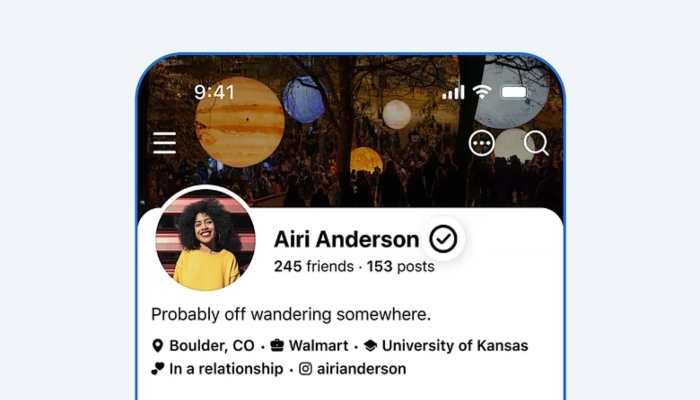
    Meta announced in February 2023 that Facebook and Instagram users could obtain a verified account (blue checkmark) by paying a monthly subscription fee. Since then, users around the world have been able to subscribe to receive the blue verification badge. However, Meta has now introduced a new way for users to receive a free verification badge on their Facebook profiles, making the process much more accessible. The company has launched a new Facebook Verified program that uses a selfie-based facial recognition check along with a review of the user’s current profile photos. According to Meta, the entire verification process takes only a few minutes to complete. The program is available only to users who are 18 years of age or older. Once a user successfully passes the selfie verification, a verified badge will appear next to their profile name across various Facebook services. Unlike the paid blue checkmark, this free badge simply confirms that the profile belongs to a real person. It does not certify the person’s credibility or trustworthiness. The best part is that this verification badge is available free of charge.

  • |

    Press play on nostalgia

    There is an absurdly satisfying drama to slipping a shiny compact disc into a silver portable CD player. Next up, click the lid shut and voila! Listen to that faint mechanical whir-click as the laser reads the track. We live in an era where a glass smartphone screen gives you instant access to 100 million songs. And when one chooses to carry around a plastic disc player, it feels less like a modern inconvenience and more like a heroic act of rebellion. Well! In order to figure out why Gen Z is suddenly obsessing over vintage music players that take up actual pocket space, we have to look at the wild journey of how we got here. From Giant Plastic Discs to Invisible Spotify Soundtracks The evolution of portable music is essentially a history of humans constantly trading physical soul for pure convenience. The Boombox & Tape Era Back in 1979, the original Sony Walkman fundamentally changed society by letting people walk down the street with their own personal soundtrack playing on magnetic cassette tape. It was revolutionary, even if you occasionally had to fix a tangled tape using a No. 2 pencil. The Silver Disc Reign By the late 80s and 90s, the CD player (affectionately nicknamed the Discman, though brands like Goodmans ruled the market too) took over. Suddenly, music was crisp, digital and skip-resistant. The condition that provided your player had a reliable 45-second anti-shock buffer and you didn’t jump off while walking! Albums came with jewel cases, actual artwork and fold-out lyric booklets you could read on the bus. The MP3 Tidal Wave The early 2000s crushed physical media into tiny digital files. The iPod and cheap MP3 players meant you could hoard thousands of low-bitrate songs in your pocket. They effectively killed off the concept of buying an album just to listen to it as a cohesive story. The Infinite Streaming Void Today, platforms like Spotify and Apple Music serve us endless music on demand.  Every track on Earth is accessible with a single tap. That’s why music easily morphs into background noise rather than a meaningful event. The Retro Revival You’d think the generation born into high-speed Wi-Fi would turn their noses up at retro tech. However, physical music sales among young listeners are skyrocketing. It turns out that living entirely online gets exhausting. The antique way of listening to music hits differently for a few fun reasons. Spotify’s algorithm loves to push you into a hyper-specific mood bubble. On the other hand, physical disc into a portable player forces you to listen to an entire album from track 1 to track 20 the way the artist intended. On top, there are no skips, no ads, no doomscrolling while listening. There is a joy in pressing actual spring-loaded plastic buttons instead of tapping a flat screen. The mechanical clicks, volume dials and tangled headphone wires bring a sensory connection. In my opinion, a digital app just can’t match. In the subscription economy, you don’t own anything. If a streaming platform loses licensing rights, your favorite album vanishes overnight. A physical CD on your shelf, however, is yours forever. Now, let’s be honest! Pulled-out wired earbuds connected to a metallic silver CD player looking like straight out of Y2K sci-fi is an undeniable aesthetic flex.

  • Google hits record search traffic during FIFA World Cup match

    Google, the world’s most popular internet search engine processes more than 99,000 searches every second and nearly 9 billion searches every day. However, during a match at the 2026 FIFA World Cup, Google experienced the highest search traffic in its history. According to the company, the Round of 16 match between Argentina and Egypt set a new record for internet search activity. Nick Fox, Head of Google’s Knowledge and Information division said that on July 7 (July 8 in Pakistan Standard Time), search traffic reached its highest level in the company’s 28-year history immediately after Argentina scored the decisive goal. Although Google did not disclose the exact figures, a company spokesperson said that the winning goal triggered a record number of searches per second. The spokesperson added that, at that moment, it seemed as though the entire world was searching for the same thing online. The 2026 FIFA World Cup concluded with Spain defeating defending champions Argentina 1-0 in the final securing the country’s second World Cup title and its first in 16 years.

Leave a Reply

Your email address will not be published. Required fields are marked *