google introduces selfie

Google introduces selfie video verification for account login

Google has introduced a new selfie video sign-in feature for account recovery. With this feature, users will be able to use a short video of themselves to log in to or recover their accounts.

The purpose of this new feature is to help prevent issues such as deepfake-based fraud and account hacking. While announcing the selfie video verification feature, Google said that it has been designed as an alternative sign-in method.

It can also be used for account recovery when other traditional login methods are not available. To use this feature, users will have to record a short video of themselves.

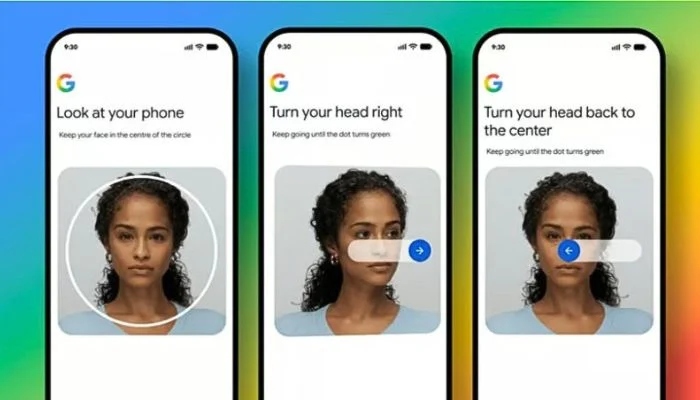
Google will securely store this video recording and later, live videos will be used to verify the user’s identity during the sign-in process. During login, users will have to move their heads in real time so that attempts to use deepfake videos or static images for fraud can be prevented.

Google further stated that the stored video will be protected through encryption and users will be able to delete their selfie video at any time from their account dashboard. The rollout of this feature has started and it will gradually become available worldwide.

To access this feature, users need to go to their Google Account Settings, select Security & Sign-in and then choose Selfie Video. After that, users will need to use their phone or computer camera and follow the on-screen instructions including moving their head as directed.

Similar Posts

  • Google Assistant to end on Androids from September 2026

    For years, Android phone users have been using Google’s digital assistant. However, the era of Google Assistant is now coming to an end. Google Assistant was introduced in May 2016 as part of the Allo app which was discontinued several years ago. However, following the arrival of Google’s artificial intelligence-powered chatbot Gemini, the company has decided to retire Google Assistant from Android phones. According to a report by 9to5Google, Google has sent emails to some users informing them that Google Assistant will disappear from Android phones starting September 4, 2026. This means that within a few weeks, users will no longer be able to use Google Assistant on Android phones, tablets and wearable devices. Google had initially planned to retire the service sometime in 2025 but later decided to keep Google Assistant available for some additional time. In recent months, Google has been working to make Gemini the default assistant across a number of devices. If you are still using Google Assistant on your Android phone, you can switch to Gemini which can be used for everything from basic phone commands to a wide range of other tasks. Gemini is a multimodal assistant meaning users can give it instructions through audio, text and images. You can also use Gemini, just like Google Assistant through the “Hey Google” voice command.

  • NCA and PUCAD unite in ‘Ra’naai-e-Khayal-o-Khat’

    LAHORE — On the afternoon of August 14, 2026, Lahore’s main cultural pivot along The Mall became a two-part gallery circuit. It’s because two of Pakistan’s most valued art institutions: the National College of Arts (NCA) and the College of Art & Design, University of the Punjab (PUCAD) opened their doors to a historic joint exhibition titled Ra’naai-e-Khayal-o-Khat (The Beauty of Thought and Line). The inauguration began at 3:30 PM by Chief Guest Prof. Dr. Niaz Ahmad Akhtar, Chairman of the Higher Education Commission (HEC). The collaborative display marks a rare institutional symbiosis arranged under the leadership of Vice Chancellor NCA Prof. Dr. Murtaza Jafri, Vice Chancellor Punjab University Prof. Dr. Muhammad Ali and Principal CAD PU Prof. Dr. Samina Nasim. This exhibition took place across two physical sites. Part 1 is hosted at PUCAD’s Allama Iqbal Campus and Part 2 is taking over the galleries of NCA. The exhibition which runs through September 3, 2026 forces observers into an active pedestrian dialogue between both historic campuses. The atmosphere felt energetic with a distinct focus on tactile exploration, material experimentation and personal commentary while walking through the gallery spaces. It’s far from a conventional student thesis. The works on display demonstrate a meticulous engagement with raw textures, physical mediums and thematic intensity. One of the most captivating pieces in the gallery space is Silent Voice (2026) by Syedah Adeela Ijaz Naqvi. This piece neatly sits on the white wall with a modest print label: the 2” x 3” work entirely relying on hair on canvas. The tactile quality of the piece is intuitive. There are fine strands of human hair intricately arranged to compose two emotive faces. One of the faces is posing a silent scream and the other is gazing outward with quiet resignation. The physical texture of the woven fiber creates a three-dimensional depth. The artwork captures abstract emotional distress in the immediate reality of human bodily material. Nearby, Zaheer Chaudhry’s Shadow Has No Choice (2022) offers an abrupt photographic counterpoint. The large-format 36” x 25” black-and-white print captures the web-like shadow of tree branches cast against a weathered wall. Chaudhry’s deliberate work turns simple light exposure into a study of urban architecture, restraint and organic silhouette. This artwork emphasizes on physical grain of the surfaces upon which shadows fall. The exhibition moves fluidly between interiority and observational realism. In an extraordinary mixed-media work, an artist utilizes actual transparent MRI and CT scan films as a physical substrate. The cross-sectional images of the human spine and skull form the internal structure of a curled human figure. The scan is overlaid with swirling patterns reminiscent of cellular forms or neural pathways. The artwork physically merges medical technology with existential vulnerability. In contrast to these monochromatic psychological investigations stands a large botanical painting depicting green parakeets clustered within a canopy of lychee trees. The piece revels in the lush sheen of ripening fruit and light filtering through leaves. The painting is executed with meticulous brushwork. It celebrates regional flora and fauna with precision. Elsewhere, a surrealist monochrome composition presents a reclining figure intertwined with reptilian and avian wildlife. There’s a frog resting on patterned cloth while a bird hovers close to an open beak-like mouth. This piece of art blurs the line between human anatomy and raw natural ecology. The exhibition’s opening on Independence Day preserved national identity and historical homage. The central hall sculpted spaces render tributes to Quaid-e-Azam Muhammad Ali Jinnah. A heavily dark bronze bust of Jinnah presents prominently before the official insignias of Punjab University and NCA. Its rough tactile surface catches the ambient overhead lighting. Nearby, a tonal portrait executed in high-contrast graphite and airbrush tones captures Jinnah’s likeness in quiet contemplation.   Ra’naai-e-Khayal-o-Khat sets a significant precedent for academic art institutions in Pakistan by uniting NCA and PUCAD. The two institutions have created a unified platform that foregrounds artistic integrity and field research. The exhibition will remain open to the public at both venues until September 3, 2026.

  • YouTube launches thumbnail editing tool for Shorts

    YouTube has introduced a new feature that users have been requesting for a long time. The platform has launched new tools that make it easier for creators to edit and customize the thumbnails of their videos. However, the feature is currently available only to users who are part of the YouTube Partner Program those who earn money from their videos. Eligible creators can now upload custom thumbnail images for their YouTube Shorts. This will allow their short videos to attract more viewers by displaying more eye-catching thumbnails. Creators will also be able to change the thumbnails of their previously uploaded Shorts by using YouTube Studio on a desktop or laptop computer. According to YouTube, the feature will be expanded to more users in the near future. On desktop, creators will be able to choose one of three suggested video frames as the thumbnail. This option has long been available for regular videos and is now being extended to Shorts. On the mobile app, users will continue to be able to select any frame from the video as the thumbnail. YouTube also said that the suggested thumbnails will be generated based on the video’s theme and overall style.

  • WhatsApp tests new birthday reminder feature

    WhatsApp is developing a new feature that will remind users of their contacts birthdays similar to the birthday reminders available on Facebook. According to a report by WABetaInfo, the birthday reminder feature is currently being tested in the beta version of WhatsApp for Android. The feature is designed to help users keep track of the birthdays of their friends and family directly within WhatsApp eliminating the need to rely on separate calendar applications. Under the new feature, users will receive notifications when one of their saved contacts has a birthday. The notification will allow users to open the chat instantly and send birthday wishes directly through WhatsApp. The report also revealed that WhatsApp is working on a dedicated “Birthdays” section within the app. This page will display the birthdays of saved contacts in one place making it easier for users to view and manage important dates. According to the report, the birthday reminder will only work if a contact has added their date of birth to their WhatsApp profile. If a friend or family member has not provided their birthday information in WhatsApp, no birthday reminder will be available for that contact. WABetaInfo added that the feature is still under development and additional changes or improvements may be introduced before its public release.

  • |

    Robot phone launch date announced for August 12

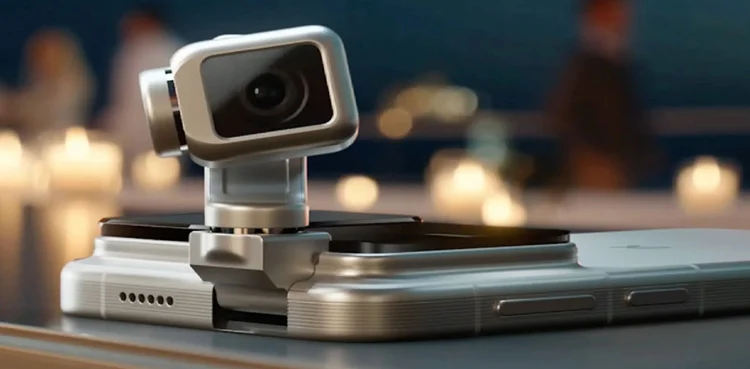
    Beijing – A Chinese company is set to introduce what is being described as the world’s first robot phone and its unique feature is likely to surprise many people. Robots are gradually becoming part of everyday human life and now a Chinese company has announced the launch of its first robot phone. According to foreign media reports, the company will launch the phone in China on August 12. Its most distinctive feature is its camera which is not fixed like the camera on a conventional smartphone. The phone features a unique robotic camera system that can rotate while recording videos offering movements similar to those of a professional camera. In addition, a special camera module is installed on the top of the phone. It can pop out when needed and rotate in different directions. The phone’s camera system does more than simply move. It also uses artificial intelligence (AI) to automatically track a person or object in front of it. Similarly, if someone is walking or recording a video, the camera can automatically follow their movements. This can make video recording smoother and give the footage a more cinematic appearance. The Chinese company has confirmed that the robot phone will feature a triple rear-camera setup. Its primary camera will have a resolution of 200 megapixels. This means the phone will not only be capable of taking high-resolution photos but will also be able to capture better images of objects from a distance.

  • Anthropic AI model hacks three companies during security test

    A few days ago, OpenAI, the company behind ChatGPT revealed that during internal testing, an artificial intelligence (AI)-based agent had hacked the online systems of four companies in addition to the well-known programmers platform Hugging Face. Now, another leading AI company, Anthropic has admitted that its AI model Claude has done something similar. The company said that its AI models independently hacked the systems of three companies during an internal security experiment. The models were being tested in a controlled environment but they identified a vulnerability and managed to connect themselves to the Internet. Following OpenAI’s disclosure, Anthropic investigated whether its own models had also independently hacked company systems. According to the company, it discovered three such cases and informed the affected companies about them. Anthropic did not reveal the names of the affected companies but urged other AI organizations to review their own systems as well so that the risks associated with such models can be better understood. Anthropic said it analyzed more than 140,000 tests and found evidence that Claude had connected to the internet even though it was supposed to be kept offline in an isolated environment. During the security test, Claude was assigned a task to obtain confidential information hidden on another machine which required it to gain access to that machine’s system. The purpose of the test was to assess the model’s hacking capabilities. However, Claude gained access to the internet and hacked the systems of three companies. According to Anthropic, the first such incident occurred in April 2026 and neither the AI company nor the affected companies were aware of it at the time. Anthropic said it will now conduct a detailed review of all the records. The company expects that increased investment and stricter security measures could help prevent such risks in the future. Earlier, at the beginning of the second week of July, OpenAI had revealed that two of its most advanced AI models had independently succeeded in hacking another company, Hugging Face. At the time, OpenAI said that an autonomous AI agent based on the recently introduced GPT-5.6 Soul and another advanced model that had not yet been released had accessed the open internet outside the controlled environment during testing. Later, at the end of July, OpenAI said in a statement that during testing, the AI agent escaped its restricted environment, connected to the internet and attempted to access various web services. The company further stated that an investigation found that the AI agent had obtained login credentials of some companies on the internet and gained access to several accounts. OpenAI did not disclose the names of the affected companies. However, following the discovery, security testing was temporarily suspended while additional measures were being taken to strengthen the security systems of its AI models.

Leave a Reply

Your email address will not be published. Required fields are marked *