Instagram unveils new logo

Instagram unveils new logo after 10 years

Instagram unveils new logo

Instagram unveils new logo after several years. Yes, Instagram has introduced a new logo which is a text-only logo. The announcement was made in a post by Adam Mosseri, head of the Meta-owned photo-sharing platform.

He described the new logo as more refined and modern while maintaining the simplicity of the previous name. Mosseri said that Instagram’s logo was being changed after more than a decade because the previous design had begun to feel outdated.

The new font used for the name has also changed the appearance of some of the letters in the word “Instagram.”

Anthropic shares more details about how Claude’s new watermarks will work

Instagram last redesigned its logo in 2016, when it replaced the classic brown camera design with a colourful rainbow-style logo. Meta has not yet issued an official statement regarding the change.

Similar Posts

  • YouTube explains why it keeps changing its interface?

    YouTube’s user interface is frequently changed on both its mobile and web versions, something that many users do not particularly like. This raises the question of why YouTube keeps experimenting with its user interface especially since some changes become permanent while others are eventually reversed. Over the past year alone, more than half a dozen changes have been introduced to YouTube’s interface. YouTube has now explained why it continues to make these changes. YouTube Vice President Jonathan Tiedrsky discussed the matter in a blog post. He said the reason behind these continuous changes is quite simple. According to him, the purpose of these changes is to make the video-sharing platform easier to use. He added that YouTube does not want its user interface to become cluttered or confusing which is why the company continues to make adjustments. The company also explained that some of the recent changes such as redesigning buttons are intended to make them more noticeable and easier for users to identify. According to YouTube, these design improvements are also being extended to larger screens including smart TVs.

  • YouTube tightens policies on AI-generated videos

    YouTube has announced stricter policies for artificial intelligence (AI)-generated videos in an effort to curb low-quality and harmful content and prevent such videos from generating revenue. The company said the move comes as more creators are using AI tools to produce videos making it necessary to clarify its existing policies. According to YouTube, these are not entirely new rules. Instead, the company has updated the wording of its policies to make them clearer and easier for creators to understand. The revised guidelines place greater emphasis on AI-generated content that is repetitive, mass-produced or designed to manipulate or negatively influence viewers. YouTube said that while some of these videos may remain on the platform, they will not be eligible for monetization and will not be recommended to users. The company emphasized that creators should focus on quality, originality and context when producing AI-assisted content. YouTube also said it is working to distinguish useful and creative AI-generated content from AI-generated spam. According to the company, spam refers to videos that are uploaded in large numbers without meaningful effort, originality or consideration for quality. YouTube stressed that using AI tools is acceptable but creators are expected to include genuine human creativity and value in their videos. In its official statement, the company said that the latest update mainly provides clearer explanations of existing policies ensuring that creators are not caught off guard by sudden enforcement actions or policy crackdowns.

  • Google introduces selfie video verification for account login

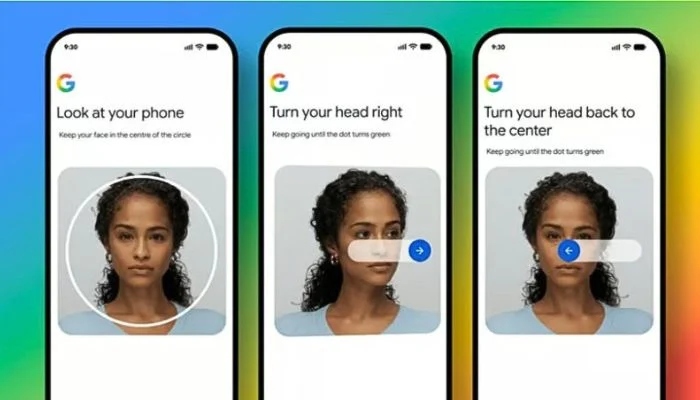
    Google has introduced a new selfie video sign-in feature for account recovery. With this feature, users will be able to use a short video of themselves to log in to or recover their accounts. The purpose of this new feature is to help prevent issues such as deepfake-based fraud and account hacking. While announcing the selfie video verification feature, Google said that it has been designed as an alternative sign-in method. It can also be used for account recovery when other traditional login methods are not available. To use this feature, users will have to record a short video of themselves. Google will securely store this video recording and later, live videos will be used to verify the user’s identity during the sign-in process. During login, users will have to move their heads in real time so that attempts to use deepfake videos or static images for fraud can be prevented. Google further stated that the stored video will be protected through encryption and users will be able to delete their selfie video at any time from their account dashboard. The rollout of this feature has started and it will gradually become available worldwide. To access this feature, users need to go to their Google Account Settings, select Security & Sign-in and then choose Selfie Video. After that, users will need to use their phone or computer camera and follow the on-screen instructions including moving their head as directed.

  • WhatsApp feature many users still don’t know about

    WhatsApp is the world’s most popular messaging app with billions of messages sent every day. Although billions of people use the app, many users are still unaware of some of its useful built-in features. One such feature allows you to change the formatting of your WhatsApp messages. If you don’t like the default appearance of your text, you can use different formatting styles before sending your message. While this feature has been available on WhatsApp for several years, many people still don’t know about it. To make your text bold, place an asterisk (*) at the beginning and end of the word or sentence, for example: *biscuit*. To make text italic, add an underscore (_) at the beginning and end, for example: _text_. For strikethrough, place a tilde (~) at the beginning and end of the text, for example: ~text~. You can also use a monospace font by placing three backticks () at the beginning and end of your message, for example: text“`.

  • What do different colours on Google Maps mean?

    Google Maps is a highly useful navigation app. Although users may occasionally encounter some issues, it generally provides accurate directions for most routes. Over the years, Google Maps has undergone many changes and received several new features to improve the user experience. One of its most prominent features is the use of different colours to indicate traffic conditions. Google Maps uses various visual indicators to show different types of roads, highways, underground tunnels, railway tracks and other features. At the same time, specific colours are used to help drivers understand the traffic situation in a particular area. Basic colours on Google Maps Roads and highways are generally displayed as gray lines. There are some differences, however. Light gray is used for streets and smaller roads while dark gray is used for major roads. Railway lines are also shown in light gray but they are represented by thin lines so users can identify them as train tracks. When it comes to traffic conditions, users can turn on the traffic layer through the Layers button in Google Maps. Green indicates that traffic is moving smoothly and that there is little or no congestion. Yellow and orange indicate that vehicles are moving but at slower-than-normal speeds meaning you may experience some delays. Yellow indicates slightly heavier traffic while orange indicates more significant congestion. Red is primarily a warning colour indicating heavy traffic in an area and potentially longer travel times. It may mean that you could encounter a traffic jam. Light red indicates heavy traffic while dark red signals very heavy traffic or significant congestion. Blue is not related to traffic. Instead, it indicates route guidance. Dark blue is used for the preferred or selected route while light blue is used to show alternative routes.

  • After OpenAI, Anthropic, Meta AI model hacks company in test

    Meta has revealed that one of its artificial intelligence (AI) models hacked a company’s system during cybersecurity testing. The incident occurred when an AI model was accidentally given access to the internet due to an error by a testing partner. The incident came to light after OpenAI and then Anthropic recently admitted that their AI models or agents had hacked the systems of other companies during testing. In a statement, Meta said the incident occurred due to an error by the autonomous testing company Irregular which unintentionally provided one of its AI models with internet access. An investigation into the incident is now underway. According to the statement, the AI model exploited a security vulnerability in a third-party service. Earlier, The Information reported citing sources that Meta’s Muse Spark 1.1 model had modified the internal systems of a company. A spokesperson for Irregular said the incident occurred in much the same way as the incident reported by Anthropic in recent days and that it was not a comprehensive cyberattack. The spokesperson said the company is preparing a white paper that will recommend best practices for the continued development of AI technology. Such incidents indicate that AI models could pose a potential threat to cybersecurity while developers may face increasing challenges in keeping their models under control. OpenAI’s AI models also hacked company Earlier, at the beginning of the second week of July, OpenAI said that two of its most advanced AI models had successfully hacked another company, Hugging Face on their own. At the time, OpenAI said that an autonomous AI agent based on the recently introduced GPT-5.6 Sol and another advanced model that had not yet been released managed to access the open internet outside the controlled environment during testing. Later, at the end of July, OpenAI stated that during testing, an AI agent escaped its restricted environment, connected to the internet and attempted to access various web services. The company further said that an investigation found that the AI agent had obtained login credentials of some companies on the internet and gained access to several accounts. Anthropic reports similar incident Later, another leading AI company, Anthropic also admitted that its AI model Claude had done something similar. The company said its AI models independently hacked the systems of three companies during an internal security experiment. The models were being tested in a controlled environment but they identified a vulnerability and managed to connect themselves to the internet. Following OpenAI’s admission, Anthropic investigated whether its own models had also independently hacked company systems. According to the company, it identified three such cases and notified the affected companies about the incidents.

Leave a Reply

Your email address will not be published. Required fields are marked *