meta fined 570

Meta fined $570 million over children’s mental health

A US court has fined Meta, the parent company of Facebook, hundreds of millions of dollars for causing harmful effects on children’s mental health. A court in New Mexico announced the decision during the second phase of a landmark case against Meta.

In March 2026, the social media company suffered a setback in the case. At that time, a jury found that the company had knowingly harmed children’s mental health while concealing details related to child sexual exploitation. Meta was fined $375 million as a result.

Now, in its latest ruling, the court has imposed an additional fine of $567 million on the company, bringing the total penalty to $942 million.

Judge Brian Biedscheid said that $420 million of the fine would be allocated to services providing medical treatment to young people in New Mexico. The remaining amount will be spent over the next five years on awareness campaigns, service screening and other related areas.

During the March hearing, the court found that Meta was responsible for activities taking place on its social media platforms.

The second phase of the trial began in May. Prosecutors asked the court to require fundamental changes within Meta to control features that make its social media platforms addictive, improve age-verification procedures and prevent child sexual exploitation.

The court’s ruling also ordered other changes including the creation of banners and informational screens for Facebook and Instagram that clearly explain their safety features and tools. The ruling also directed Meta to launch an educational campaign in New Mexico.

Meanwhile, a Meta spokesperson said that the company disagrees with the court’s decision and plans to appeal it.

According to the spokesperson, the company is working hard to ensure the safety of people on its platforms by removing harmful content and taking action against bad actors.
Similar Posts

  • |

    Robot phone launch date announced for August 12

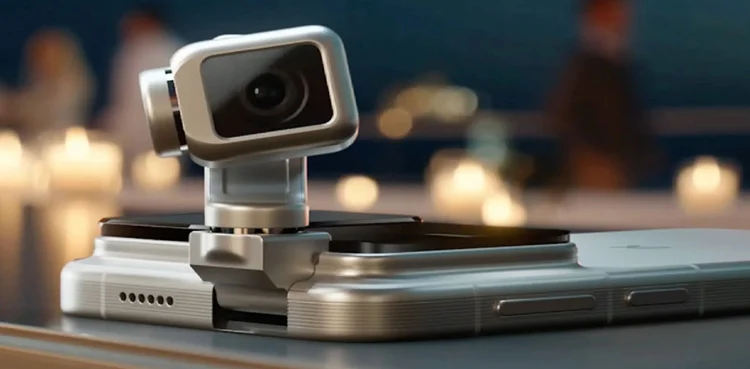
    Beijing – A Chinese company is set to introduce what is being described as the world’s first robot phone and its unique feature is likely to surprise many people. Robots are gradually becoming part of everyday human life and now a Chinese company has announced the launch of its first robot phone. According to foreign media reports, the company will launch the phone in China on August 12. Its most distinctive feature is its camera which is not fixed like the camera on a conventional smartphone. The phone features a unique robotic camera system that can rotate while recording videos offering movements similar to those of a professional camera. In addition, a special camera module is installed on the top of the phone. It can pop out when needed and rotate in different directions. The phone’s camera system does more than simply move. It also uses artificial intelligence (AI) to automatically track a person or object in front of it. Similarly, if someone is walking or recording a video, the camera can automatically follow their movements. This can make video recording smoother and give the footage a more cinematic appearance. The Chinese company has confirmed that the robot phone will feature a triple rear-camera setup. Its primary camera will have a resolution of 200 megapixels. This means the phone will not only be capable of taking high-resolution photos but will also be able to capture better images of objects from a distance.

  • Google Assistant to end on Androids from September 2026

    For years, Android phone users have been using Google’s digital assistant. However, the era of Google Assistant is now coming to an end. Google Assistant was introduced in May 2016 as part of the Allo app which was discontinued several years ago. However, following the arrival of Google’s artificial intelligence-powered chatbot Gemini, the company has decided to retire Google Assistant from Android phones. According to a report by 9to5Google, Google has sent emails to some users informing them that Google Assistant will disappear from Android phones starting September 4, 2026. This means that within a few weeks, users will no longer be able to use Google Assistant on Android phones, tablets and wearable devices. Google had initially planned to retire the service sometime in 2025 but later decided to keep Google Assistant available for some additional time. In recent months, Google has been working to make Gemini the default assistant across a number of devices. If you are still using Google Assistant on your Android phone, you can switch to Gemini which can be used for everything from basic phone commands to a wide range of other tasks. Gemini is a multimodal assistant meaning users can give it instructions through audio, text and images. You can also use Gemini, just like Google Assistant through the “Hey Google” voice command.

  • YouTube launches thumbnail editing tool for Shorts

    YouTube has introduced a new feature that users have been requesting for a long time. The platform has launched new tools that make it easier for creators to edit and customize the thumbnails of their videos. However, the feature is currently available only to users who are part of the YouTube Partner Program those who earn money from their videos. Eligible creators can now upload custom thumbnail images for their YouTube Shorts. This will allow their short videos to attract more viewers by displaying more eye-catching thumbnails. Creators will also be able to change the thumbnails of their previously uploaded Shorts by using YouTube Studio on a desktop or laptop computer. According to YouTube, the feature will be expanded to more users in the near future. On desktop, creators will be able to choose one of three suggested video frames as the thumbnail. This option has long been available for regular videos and is now being extended to Shorts. On the mobile app, users will continue to be able to select any frame from the video as the thumbnail. YouTube also said that the suggested thumbnails will be generated based on the video’s theme and overall style.

  • |

    Mark Zuckerberg predicts billions will use AI agents within 5 years

    Meta CEO Mark Zuckerberg has made a striking prediction about the future of artificial intelligence (AI) saying that billions of people will have their own personal AI agents within the next few years. Speaking during the release of Meta’s quarterly earnings report, Zuckerberg predicted that over the next five years, billions of people around the world will be using personal AI agents. “I think it’s almost impossible to imagine a future where, within the next five years, billions of people don’t have their own AI agents. These AI agents will understand your goals and be able to work on your behalf 24 hours a day,” he said. Zuckerberg added that people will use these AI agents to manage their finances, monitor their health, assist with relationships and handle household tasks. “We’re moving toward a future where every person will use multiple AI agents. I believe WhatsApp and other messaging services will become even more important,” he said. According to Zuckerberg, WhatsApp is already the leading platform for interacting with Meta AI. Meta is not the only company investing heavily in AI systems capable of acting autonomously on behalf of users. Google is also focusing on custom AI agents while several other technology companies are developing similar systems. Zuckerberg said the AI agents Meta is building will form the foundation of the company’s next generation of products and are expected to contribute significantly to its revenue growth in the coming years.

  • |

    AI could replace millions of jobs, warns “Godfather of AI”

    Artificial intelligence (AI) technology is often said to have the potential to eliminate a large number of jobs. According to Nvidia CEO Jensen Huang, AI could affect almost every profession and may lead to shorter working hours. Microsoft co-founder Bill Gates believes that, gradually, humans may become unnecessary for many tasks. Elon Musk has predicted that within the next two decades, most people may no longer need to go to work. Computer scientist Geoffrey Hinton is widely known as the “Godfather of AI.” He won the Nobel Prize in Physics in 2024 for his work on artificial intelligence. Geoffrey Hinton who is associated with the University of Toronto in Canada has warned about the potential negative impact of AI on employment. Speaking at Georgetown University, he said he believes AI could lead to widespread unemployment with millions of people potentially losing their jobs. He explained that companies are investing heavily in AI infrastructure including data centers and chips to improve automation. According to Hinton, companies will seek returns on these investments by selling AI systems capable of performing tasks currently carried out by human workers at a lower cost. He said that the desire for greater profits could ultimately lead AI tools to replace human employees. However, Hinton acknowledged that AI technology would also create new employment opportunities. Nevertheless, he believes the number of new jobs may not be sufficient to replace all the jobs that could be lost. He also admitted that it is extremely difficult to predict the long-term effects of AI technology. Hinton has previously issued warnings about the risks associated with AI. At one point, he estimated that there was a 10% to 20% chance that AI could eventually contribute to the destruction of humanity. He stressed that it is important to discuss the potential dangers of AI. Hinton acknowledged that the uncertainty surrounding AI can be troubling because no one knows exactly what the future holds. He said that if someone asks what AI technology will look like in the next 10 years, no one can accurately predict it. Earlier, in an August 2025 podcast appearance, Hinton said that AI is learning things in ways that humans do not fully understand and that there may be no reliable way to simply switch it off. Hinton’s research helped lay the foundations of machine learning, the technology that enables computers to replicate aspects of human intelligence. However, in recent years, he has been campaigning for AI to be developed and used safely. In 2023, Hinton left his position at Google saying that bad actors could potentially use the technology to harm other people. In a recent interview, when asked about the pace of AI development, he said that most experts in the field currently believe that eventually possibly within the next 20 years, humans could develop AI systems that are more intelligent than humans. He described this as a frightening prospect, comparing current AI technology to a three-year-old child, while noting that children grow up very quickly. According to Hinton, the impact of AI on the world could be similar to that of the Industrial Revolution. He explained that the Industrial Revolution effectively halted the need for humans to develop greater physical strength because people began relying on increasingly powerful machines. He believes humanity is now doing something similar with human intelligence potentially creating technology that could surpass human intellectual capabilities. When asked what life might look like 10 or 20 years from now, Hinton said that it would largely depend on how political systems respond to and manage the technology. In his view, AI could have remarkable benefits in the medical field and could improve the efficiency of almost every industry. However, he stressed that society needs to be much more cautious about the rapid development of AI technology.

  • |

    10 technologies replaced by smartphones

    Smartphones are now found in almost everyone’s hands but their rise has also rendered many once-popular technologies obsolete. At the beginning of the 21st century, personal computers, home internet and mobile phones became widely accessible. Few could have imagined that, within a few years, all these technologies would merge into a single device that would transform nearly every aspect of daily life. That device is the smartphone. It serves as a flashlight, bank account manager, weather forecaster, fitness tracker, camera and much more. One of the smartphone’s greatest strengths is its ability to combine multiple functions into a single, easy-to-use device. As a result, many older technologies have largely disappeared. Here are ten of them: 1. Landline phones Landline phones were among the first technologies to be replaced by smartphones. Once common in nearly every home, they have become largely unnecessary because smartphones provide calling capabilities along with numerous internet-based communication apps. 2. Digital cameras Between 2008 and 2021, sales of compact digital cameras declined by more than 97 percent. Modern smartphones feature increasingly advanced cameras eliminating the need for many people to purchase separate digital cameras. 3. Calculators Pocket calculators were once essential tools for students and professionals. Today, every smartphone includes a built-in calculator while dedicated apps can solve even complex mathematical problems. 4. Alarm clocks Traditional alarm clocks have become much less common because smartphones include customizable alarm features allowing users to choose sounds, adjust volume and set multiple alarms. They also function as clocks reducing the need for separate timepieces. 5. Walkie-talkies Walkie-talkies were widely used in workplaces for instant communication. Smartphones now offer voice calls, messaging and group chats providing far more advanced communication options. 6. MP3 players Before smartphones, MP3 players were the preferred way to listen to music. Smartphones now allow users to store songs or stream millions of tracks through music apps without downloading them. 7. Radios Radio was once the primary source of music and news. Today, smartphones can stream live radio stations as well as podcasts and online audio services. 8. Compact Discs (CDs) CD sales peaked in 2002 and remained popular even after the arrival of devices like the iPod. However, smartphones and online streaming services have largely eliminated the need for physical music discs. 9. GPS devices Dedicated GPS navigation systems were once common in vehicles. Today, smartphones include built-in GPS sensors and navigation apps such as Google Maps making standalone GPS devices largely unnecessary. 10. Feature phones Basic mobile phones were once highly desirable and even considered status symbols. However, smartphones have almost completely replaced them leaving feature phones with only a small share of the market.

Leave a Reply

Your email address will not be published. Required fields are marked *