741 dangerous buildings
| |

741 dangerous buildings identified across Sindh

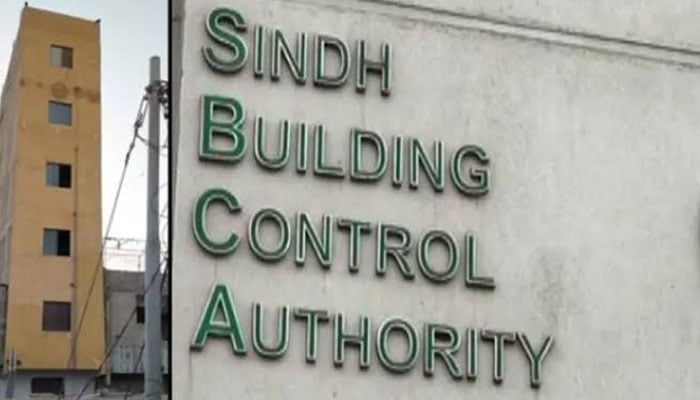
The Sindh Building Control Authority (SBCA) has identified 741 dilapidated and dangerous buildings across the province.

The disclosure was made during a meeting of the Sindh Assembly’s Public Accounts Committee (PAC) in Karachi. The meeting was chaired by PAC Chairman Nisar Khuhro.

According to an official statement, the SBCA briefed the committee about the condition of buildings across Sindh. The authority said a large number of unsafe structures were located in Karachi.

Of the 741 dangerous buildings identified across the province, 588 are situated in Karachi. The figure includes 444 buildings classified as heritage structures.

The SBCA also informed the committee about steps taken to deal with buildings that pose risks to residents and the public.

According to the authority, approval has been granted to evacuate 59 dilapidated buildings. Permission has also been given to demolish 39 structures considered dangerous.

The issue of heritage buildings also came under discussion during the meeting.

The Public Accounts Committee decided to summon the Heritage Committee at its next session. It also sought a detailed report on buildings constructed illegally around the Mazar-i-Quaid.

The committee expressed concern over unauthorised construction in important areas of Karachi. It directed the relevant authorities to provide complete details of such structures.

The meeting also discussed illegal housing schemes operating in Karachi. The committee was informed about 58 unauthorised housing schemes in the city.

The PAC directed authorities to take steps to prevent people from investing in these illegal schemes. It also ordered action against individuals and groups involved in operating them.

The committee further directed officials to identify and disclose the names of people involved in the illegal housing projects.

The latest disclosure has raised concerns over the safety of residents living in old and structurally weak buildings across Sindh.

The authorities are now expected to take further measures to identify unsafe structures, evacuate residents where necessary and remove buildings that pose an immediate threat.

The issue is particularly significant in Karachi, where hundreds of old and heritage buildings are located in densely populated areas.
Similar Posts

  • Former FATA, Balochistan students protest over medical seats

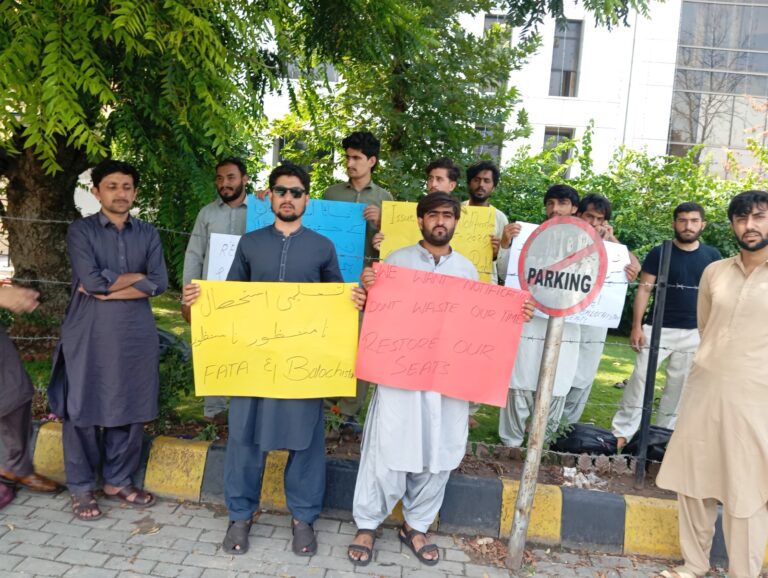
    Islamabad: Students from former FATA and Balochistan have been protesting outside the Pakistan Medical and Dental Council (PMDC) for around a week, stating their medical and dental seat issue remains unresolved despite repeated meetings, provincial proposals and a PMDC decision allowing increased intake in public medical colleges. Protesters say they expected hundreds of seats under a federal education programme but are still waiting for a clear notification covering their admissions. Among the protesting students named are Usman Afridi, Allah Yar and Shafi ud Din. Muhammad Rehan, a student from South Waziristan, said the federal government through the Higher Education Commission had been providing medical and dental education opportunities to students from former FATA and Balochistan. He said 333 MBBS and BDS seats had been provided each year under the programme in previous years. Rehan claimed that the same number of seats had not been made available to students this time. According to his account, PMDC initially told the students that it did not hold a separate quota of 333 seats and that provincial governments would have to identify available seats before PMDC could consider approval. Students then approached the governments and medical education authorities in Khyber Pakhtunkhwa and Balochistan. Rehan said Khyber Pakhtunkhwa identified 375 additional seats while Balochistan proposed another 36 medical seats. He said the students expected PMDC to approve these seats for their current admission session but the matter had still not been settled. Official documents in the file support that Khyber Medical University submitted a proposal for a major increase in seats for students from former FATA. The KMU proposal listed additional seats in several public medical colleges. It proposed 50 additional seats each at Saidu Medical College, Gomal Medical College, Bannu Medical College, Bacha Khan Medical College, Nowshera Medical College, Gajju Khan Medical College and KMU Institute of Medical Sciences. It also proposed 25 additional seats at KMU Institute of Dental Sciences. The total proposed increase under the KMU plan was 375 seats. Khyber Medical University said the colleges proposed for increased intake had been examined for faculty, infrastructure, teaching hospitals, equipment and other requirements. KMU stated that the institutions were capable of supporting the proposed increase and asked PMDC to approve the seats for the relevant session. Balochistan also submitted a separate proposal for 36 additional MBBS seats. According to the document, Bolan Medical College was proposed for 21 additional seats. Five seats each were proposed at Jhalawan Medical College, Loralai Medical College and Kech Medical College. The Balochistan Health Department said the proposal would support educational equality and help address the shortage of medical professionals in underserved regions. The combined proposals from Khyber Pakhtunkhwa and Balochistan therefore amount to 411 additional seats. However, whether all of those seats must be reserved specifically for students from former FATA and Balochistan is a central issue in the dispute. Students say they were expecting a fixed quota under the HEC programme. PMDC documents in the file show a somewhat different arrangement. PMDC approved an increase in student intake capacity across recognised public medical colleges, subject to inspections and compliance with its standards. The regulator said colleges seeking increased intake would have to meet requirements on infrastructure, faculty and accreditation. It also made clear that the increased intake was not a relaxation of minimum medical education standards. The PMDC decision further stated that where the approved capacity of a public medical college is increased, the relevant provincial or regional government may reserve an appropriate quota within those additional seats for students under the HEC scholarship programme for former FATA and Balochistan. The document says the provincial government and HEC would determine the method for nomination, allocation and admission under the quota. The PMDC notification therefore does not state in the provided text that every province must reserve a fixed number of 333 or 300 seats. Instead, it allows provincial governments to earmark an appropriate quota from approved enhanced capacity. This difference appears to be at the heart of the current dispute. Students say they were promised a specific number of seats. The formal PMDC notification in the provided documents speaks more broadly about increased capacity and allows provinces to determine an appropriate HEC quota within that capacity. Rehan also claimed that a PMDC Council meeting had agreed to approve 300 seats for students of former FATA and Balochistan. He said students were later repeatedly told that a notification would be issued soon but it did not come in the form they expected. He also claimed that students have recordings of conversations with senior PMDC officials regarding promises about the notification. These claims are statements made by the protesting student and the provided documents do not independently establish the contents of the alleged recordings. Official PMDC documents do confirm that the Council approved increased intake capacity in recognised public medical colleges across Pakistan. The decision stated that expanding capacity would give more deserving students access to medical education and strengthen Pakistan’s future health workforce. However, this approval remained subject to PMDC assessment and compliance with required standards. An earlier Khyber Pakhtunkhwa meeting regarding former FATA students also shows that the issue had been under discussion for some time. The meeting reviewed an overall capacity figure of 333 seats and discussed how additional opportunities could be created for students from former FATA. Officials were told that PMDC was willing in principle to consider increased seats if the required documents and formal requests were completed. KMU was directed to survey medical colleges and submit the required information to PMDC. The meeting record dacuments also states that the support initiative for former FATA students was described as continuing until 2031. Students are now demanding that PMDC issue a clear decision and allow the enhanced seats to apply to their current admission session. They argue that provincial governments and universities have already carried out the work required to identify additional capacity and that further delay could cost them an academic year.

  • | |

    India’s Gen Z movement raises pressure on Mo…

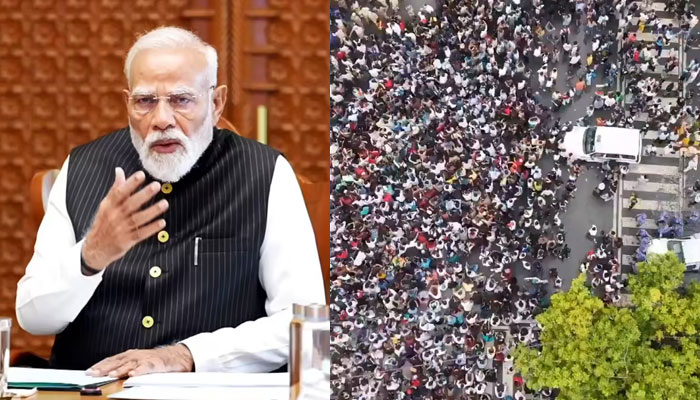
    NEW DELHI: A growing youth-led protest movement is emerging as one of the most significant political challenges to Prime Minister Narendra Modi’s third term, with demonstrations spreading across parts of India over allegations of examination irregularities, unemployment and demands for greater government accountability. What began as an online campaign has evolved into a nationwide movement driven largely by Generation Z, reflecting mounting frustration among young Indians over limited job opportunities and concerns about the country’s education system. The movement, associated with the youth-led platform known as the “Cockroach Janata Party,” initially focused on alleged examination scandals but has since broadened into a wider campaign calling for institutional reforms and political accountability. Protesters are demanding the resignation of the country’s education minister and greater transparency in the recruitment and examination process. The demonstrations have gained further momentum following activist Sonam Wangchuk’s hunger strike and his reported forced relocation, developments that have intensified public debate and drawn fresh attention to the broader protest movement. According to international media reports, the unrest represents one of the strongest waves of public pressure faced by Modi’s government since it began its third consecutive term. Analysts say the protests highlight deeper concerns among young voters, particularly over unemployment, education and confidence in public institutions. Tensions escalated during a protest march toward Parliament, where demonstrators clashed with security forces. Official figures said at least 180 people were injured, including 118 police officers and 60 protesters, as authorities moved to disperse crowds. Mobile internet services were also suspended in several sensitive areas to prevent the spread of unrest. Observers say the movement’s rapid rise demonstrates the increasing influence of social media in mobilising young people. What started as a satirical online campaign quickly transformed into an organised street movement, giving voice to a generation that believes its economic and educational concerns have gone unanswered. Political analysts note that while the protests remain centred on education and employment, they could carry broader political implications if public dissatisfaction continues to grow. The government’s response in the coming weeks is expected to be closely watched, as it seeks to balance law and order with demands for reform. Although it remains uncertain how the movement will develop, the ongoing demonstrations underscore the growing political engagement of India’s younger generation and the challenges facing the Modi administration as it navigates rising public expectations during its third term in office.

  • | |

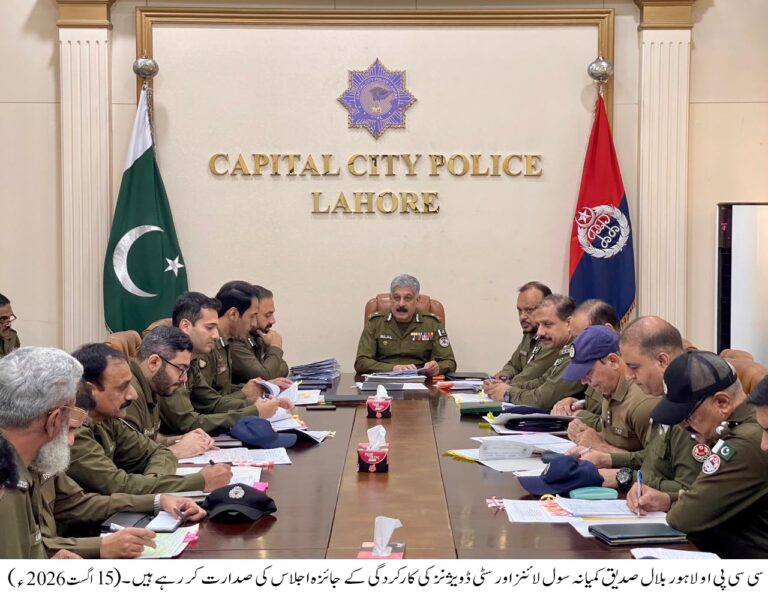
    Lahore police intensify crackdown on usury, drugs …

    LAHORE: Capital City Police Officer Lahore Bilal Siddique Kamyana has ordered intensified action against criminal activities while directing officers to improve law enforcement and public service delivery across the city. Chairing a meeting to review the performance of the Civil Lines and City divisions, the CCPO was briefed that 21 suspects allegedly involved in illegal moneylending had been arrested during an ongoing crackdown. He directed police to pursue legal action without leniency and ensure that victims receive protection and timely justice. Kamyana also ordered stronger operations against drug trafficking, calling for targeted action to dismantle narcotics networks and arrest those involved in the illegal trade. The CCPO directed officers to identify foreign nationals residing illegally in Lahore and proceed against them in accordance with the law. He also ordered enhanced surveillance of sensitive areas and monitoring of suspicious activities. He further called for continued combing operations and expanded intelligence-led action against elements posing threats to law and order. Stressing the importance of citizen-focused policing, Kamyana instructed officers to resolve public complaints promptly and prevent citizens from being repeatedly sent from one office to another. Senior police officials, including DIG Investigation Zeeshan Raza, DIG Operations Faisal Kamran and SSP Investigation Muhammad Naveed, attended the meeting.

  • |

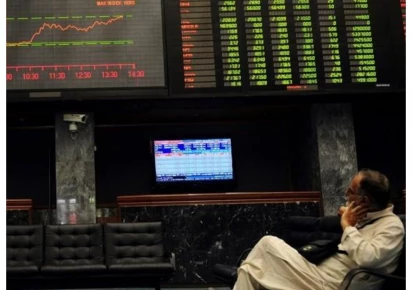
    PSX rallies above 181,000 as investors return to key sectors

    KARACHI: Positive momentum returned to the Pakistan Stock Exchange (PSX) on Monday as investors stepped up buying activity across major sectors, pushing the benchmark KSE-100 Index above the 181,000-point mark during the opening phase of trading. At around 9:40am, the benchmark index was trading at 181,066.59 points, showing an increase of 961.98 points, or 0.53%, compared with the previous close. The early-session recovery reflected renewed investor interest in large-cap and index-heavy companies. Buying was particularly visible across automobile assemblers, cement, commercial banking, fertiliser, oil and gas exploration, oil marketing companies (OMCs), power generation and refinery sectors. Among the major stocks supporting the upward movement were Mari Petroleum (MARI), Oil and Gas Development Company (OGDC), Pakistan Petroleum Limited (PPL), Pakistan Oilfields Limited (POL), Hub Power Company (HUBCO), Habib Bank Limited (HBL), MCB Bank, Meezan Bank Limited (MEBL) and United Bank Limited (UBL). Most of these index-heavy shares traded in positive territory during the initial hours. The recovery came after a difficult week for the domestic equity market. The KSE-100 Index had closed the previous week at 180,104.61 points, declining by 1,325.41 points, or 0.7% on a week-on-week basis. Market sentiment had been affected by heightened geopolitical uncertainty, particularly concerns over the future of the US-Iran ceasefire and the potential impact of regional tensions on international energy supplies. Investors also remained cautious over developments affecting shipping activity around the Strait of Hormuz and the Red Sea, both of which are critical routes for global energy and trade. Despite the pressure on equities, Pakistan’s domestic fiscal position and external-sector indicators had provided some support to investor confidence. However, geopolitical developments continued to dominate trading decisions, particularly because any prolonged disruption to oil supplies could raise import costs and increase inflationary pressures. Global markets remain cautious The cautious mood was also evident across international markets on Monday. Asian equities moved largely sideways as investors monitored developments in the Middle East and assessed the implications for energy prices and global inflation. Oil prices recorded significant gains during the previous week as uncertainty surrounding efforts to end the Iran conflict increased concerns about potential supply disruptions. Investors remained particularly focused on developments concerning the strategic Strait of Hormuz, where tanker traffic had remained disrupted amid the continuing tensions. Iran on Saturday called on the United States to acknowledge defeat, while US President Donald Trump warned Americans that higher gasoline prices could persist as long as the conflict continued. The situation in the wider region also remained volatile. In southern Lebanon, Israeli strikes on Saturday killed at least 11 people, according to the Lebanese health ministry. The casualties came amid renewed tensions following an earlier US-mediated framework aimed at easing hostilities between Lebanon and Israel. Oil prices remain elevated Crude oil prices remained at elevated levels on Monday after recording strong gains during the previous week. Brent crude was trading around $88.50 per barrel, little changed during the session after climbing approximately 6% last week. Meanwhile, US West Texas Intermediate (WTI) crude slipped around 0.3% to $82.12 per barrel, following a weekly gain of about 5.4%. Higher international oil prices remain a key concern for oil-importing economies such as Pakistan because a sustained increase can widen the import bill, put pressure on the current account and contribute to domestic inflation. For investors at the PSX, developments in global energy markets are particularly important because oil and gas companies have significant representation in the benchmark index, while higher fuel costs can also affect the profitability of other industries. Asian equities mixed In regional markets, MSCI’s broadest index of Asia-Pacific shares outside Japan was broadly flat on Monday. Japan’s Nikkei 225, meanwhile, gained around 0.4%. The mixed performance reflected investor caution as markets continued to assess the potential economic consequences of prolonged geopolitical tensions. Concerns over energy prices, inflation and interest-rate expectations remained central to global market sentiment. At the PSX, however, the strong opening suggested that domestic investors were willing to look beyond short-term geopolitical concerns and accumulate fundamentally strong stocks. Whether the KSE-100 can sustain its early gains will depend on developments in global oil markets, regional tensions and trading activity in heavyweight sectors as the session progresses.

  • Israeli man deported from Koh Samui under Thailand’s new deportation rules

    KOH SAMUI, Thailand – An Israeli man convicted last month of making threats against the owners of a zoo on Koh Samui has become the first foreigner ordered out of Thailand under new regulations governing the deportation of individuals deemed a threat to public order. Prime Minister Anutin Charnvirakul, acting in his capacity as interior […]

  • | |

    India Gen Z movement: Youth protests create new ch…

    A wave of youth-led protests in India has brought the power of Generation Z into the spotlight, with thousands of young people taking to the streets over concerns related to education, employment, examination systems, and governance. Political observers say the rise of Gen Z movements across South Asia reflects a growing frustration among young people who are demanding accountability, transparency, and better opportunities. Similar youth movements in countries such as Nepal, Sri Lanka, and Bangladesh have previously influenced political developments, raising questions about whether India could witness a similar shift. Recent demonstrations in New Delhi have drawn significant attention, with students and young activists gathering at Jantar Mantar and attempting to march toward Parliament. Protesters have been demanding action over alleged irregularities in competitive examinations and changes within the education system. The demonstrations intensified after clashes between protesters and police, with authorities using measures including batons and tear gas to disperse crowds. Several protesters were reportedly injured during the action, while opposition parties and rights groups criticized what they described as excessive use of force. The movement has also gained support from prominent social activists, including Sonam Wangchuk, whose participation attracted wider public attention. Student leaders say their campaign is focused on protecting the future of millions of young people affected by problems in the education and examination systems. One of the major concerns raised by protesters is alleged paper leaks and irregularities in competitive examinations, including medical entrance tests. Students argue that such issues have damaged trust in the examination system and created uncertainty for millions of aspiring candidates. The protesters are also demanding accountability from education authorities and calling for stronger action against those responsible for examination-related failures. Some activists have raised broader concerns about unemployment, rising education costs, and the future of public institutions. Experts believe the growing influence of Gen Z activism represents a major change in political engagement. Unlike traditional movements, many of these campaigns use social media platforms to organize supporters and spread messages rapidly. The emergence of youth-led movements presents a challenge for governments across the region. Analysts suggest that young citizens are increasingly unwilling to ignore issues related to governance, fairness, and economic opportunities. As the movement continues to develop, its long-term impact on India’s political landscape remains a key question. The growing participation of young people indicates that Gen Z is becoming an important voice in shaping future debates over policy and governance.

Leave a Reply

Your email address will not be published. Required fields are marked *