states sue meta

29 US states sue Meta over social media’s impact on children

More than half of the US states have jointly taken Meta, the company that owns apps such as Facebook, Instagram and WhatsApp to court. The trial against Meta is set to begin on August 18.

The US states have accused the parent company of Facebook and Instagram of designing its apps in ways that can be addictive and harmful to young people. The case is being heard in a federal court in California and is expected to continue for six to eight weeks.

The jury will hear testimony from Meta CEO Mark Zuckerberg, Instagram CEO Adam Mosseri and former Meta employee Arturo Bejar who has since become a whistleblower regarding the company.

The lawsuit filed by the 29 states is being led by attorneys general from California, Colorado, New Jersey and Kentucky.

The states originally filed the lawsuit in October 2023 submitting 233 pages of documents to the court. They accused Meta of collecting data from children under the age of 13 without parental consent allegedly violating federal and state laws.

The lawsuit claims that Meta refused to stop the use of harmful features because its primary objective was to generate profits.

The case could have serious consequences for the future of the social media company as the states are seeking $200 billion in damages, an amount equivalent to Meta’s annual revenue in 2025. The states are also demanding that Meta redesign its apps to make them safer for children.

Meta, on the other hand, has rejected all the allegations. The company claims that the states filed the lawsuit to obtain billions of dollars rather than based on facts or the law.

In a statement, Meta said the case is important for the states but described their allegations as unfounded and their financial demands as inappropriate. The company also said that the attorneys do not have sufficient evidence to support their claims.

According to state attorneys, Meta has developed features designed to keep people spending as much time as possible on its apps with young users being among those most affected.

The trial comes shortly after a similar case in New Mexico where a court recently imposed a $567 million fine. A similar lawsuit is also currently being heard in the US state of Tennessee.

Similar Posts

  • |

    Google Pixel 11 Pro XL features leaked ahead of launch

    San Francisco: Key features of the Google Pixel 11 Pro XL have reportedly been leaked with major upgrades expected in its camera and AI technology. According to a report by Geeky Gadgets, details about the design and key features of Google’s upcoming flagship smartphone have emerged ahead of its launch. Google is preparing to introduce new devices at its hardware event on August 12. According to the leaked information, the Pixel 11 Pro XL is expected to receive significant upgrades in several areas, including the camera, artificial intelligence, processor and connectivity. The leaks have attracted considerable attention from technology enthusiasts. Google is reportedly planning major improvements to the phone’s design, camera, performance and AI capabilities. According to the leaked details, the phone’s camera bar has been redesigned and will reportedly include an LED notification ring. Early leaks referred to this feature as “Pixel Glow” but recent reports suggest its possible official name could be “Highlight.” Available in five colours The Pixel 11 Pro XL is reportedly expected to be available in five colours: green, light green, silver, midnight and red. The phone is expected to feature a 6.8-inch LTPO OLED display with support for a 120Hz refresh rate. Reports also suggest that it will have a 13-megapixel ultra-wide selfie camera on the front. The design is also expected to receive some changes. The Pixel 11 Pro XL may feature a durable aluminum frame and Gorilla Glass Victus 3 which could provide greater protection against scratches and accidental drops. Major camera improvements The Pixel 11 Pro XL is expected to have a triple rear-camera setup. According to the leaks, it may include a 50-megapixel main camera, a 48-megapixel ultra-wide camera and a 48-megapixel periscope telephoto camera. The telephoto camera is reportedly expected to provide 5x optical zoom. The phone may also feature a 120x Pro Zoom option in its software, designed to capture distant objects and scenes with greater detail. With the help of Google’s Gemini AI technology, the camera could offer improved low-light photography, scene recognition and real-time image processing. A new mode called “Motion Capture” is also reportedly being developed. It could use AI to track moving people or objects and maintain focus on them. Improved performance with Tensor G6 The phone is also expected to feature Google’s new Tensor G6 processor which could provide improved performance for multitasking, gaming, video editing and AI-powered applications. The Tensor G6 is expected to offer enhanced capabilities for on-device machine learning, real-time language translation and intelligent text suggestions. The leaked reports also claim improvements in battery performance. The phone could feature an adaptive power-management system that adjusts energy consumption according to usage patterns to help extend battery life. Range of AI features The Pixel 11 Pro XL is expected to include several new AI-powered features. These may include an Animal Rescue feature designed to help identify and locate lost pets. Other expected features include advanced voice recognition, personalized app suggestions based on user habits, improved security, on-device encryption and real-time threat detection. A new Focus Mode could allow users to temporarily silence unnecessary notifications so they can concentrate on important tasks. Reports have also mentioned improved speakers, spatial audio and potentially advanced augmented reality (AR) features. Although most of the information currently available about the Pixel 11 Pro XL is based on leaks and speculation, it suggests that Google is focusing heavily on AI technology alongside hardware improvements in its new flagship smartphone. Google is expected to officially announce the phone’s final specifications and price at its launch. Until then, the reported details should be considered leaks and speculation rather than confirmed information.

  • WhatsApp launches AI scam detection feature for users

    WhatsApp is introducing a new feature powered by artificial intelligence (AI) technology to help protect users from scams. According to a report, the AI-powered scam detection feature is designed to help identify potentially fraudulent chats. The feature will use on-device AI to flag suspicious conversations while messages will continue to be protected by end-to-end encryption. According to the report, the feature works by downloading a machine-learning model directly onto the user’s smartphone. The model analyzes WhatsApp messages from people whose phone numbers are not saved in the user’s contacts. It examines the conversation style and language to assess whether the interaction could potentially be a scam. If the system identifies a chat as potentially fraudulent, WhatsApp will display a warning to the user. The other person involved in the conversation will not be notified about the warning. After seeing the warning, users can choose to block or report the sender, continue the conversation or mark the chat as trusted. Once a chat is marked as trusted, WhatsApp will stop displaying scam alerts for that conversation. According to the company, the AI model has been trained to identify fraudulent activity. Meta also stated that the AI model will not compromise users privacy and the company will not have access to users’ messages.

  • Instagram unveils new logo after 10 years

    Instagram has changed its logo after several years. Yes, Instagram has introduced a new logo which is a text-only logo. The announcement was made in a post by Adam Mosseri, head of the Meta-owned photo-sharing platform. He described the new logo as more refined and modern while maintaining the simplicity of the previous name. Mosseri said that Instagram’s logo was being changed after more than a decade because the previous design had begun to feel outdated. The new font used for the name has also changed the appearance of some of the letters in the word “Instagram.” Instagram last redesigned its logo in 2016, when it replaced the classic brown camera design with a colourful rainbow-style logo. Meta has not yet issued an official statement regarding the change.

  • Instagram unveils new logo after 10 years

    Instagram has changed its logo after several years. Yes, Instagram has introduced a new logo which is a text-only logo. The announcement was made in a post by Adam Mosseri, head of the Meta-owned photo-sharing platform. He described the new logo as more refined and modern while maintaining the simplicity of the previous name. Mosseri said that Instagram’s logo was being changed after more than a decade because the previous design had begun to feel outdated. The new font used for the name has also changed the appearance of some of the letters in the word “Instagram.” Instagram last redesigned its logo in 2016, when it replaced the classic brown camera design with a colourful rainbow-style logo. Meta has not yet issued an official statement regarding the change.

  • Google ends free Android backup storage for users

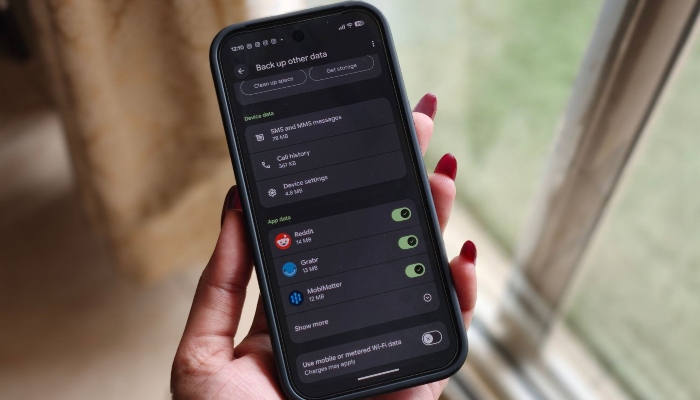
    Google has announced a major change to its cloud storage policy ending a long-standing free benefit for Google account users. Almost every internet user today relies on a Google account which comes with limited cloud storage. When users approach their storage limit, Google typically recommends upgrading to a paid plan for additional space. Until now, a user’s Google storage quota included Google Photos media files, Google Drive files and Gmail emails. Under the new policy, however, Android phone backup data will also count toward the account’s storage limit. Google informed users of the change through email giving them 45 days notice before the new policy takes effect. Once implemented, Android backup data including system settings, app data, SMS messages and call history will be included in the storage quota of a Google account. The company said the advance notice is intended to give users enough time to manage their storage or adjust their backup settings before the policy is enforced. Previously, only certain Android content, such as Google Photos uploads and MMS messages counted toward storage usage. Under the updated policy, complete Android backups are expected to consume a much larger portion of users available cloud storage. Google warned that if Android backups cause users to exceed their storage limit, they will either need to free up space in their Google account or subscribe to a paid Google storage plan for additional capacity. A Google spokesperson previously said that the average Android backup is expected to use around 40 MB of storage. The company also noted that users will have greater control over which data and apps are included in their backups. This marks another change to Google’s account storage policies. Earlier, in May 2026, the company began testing a reduction in free storage for new Google accounts lowering the limit from 15 GB to 5 GB.

  • |

    Press play on nostalgia

    There is an absurdly satisfying drama to slipping a shiny compact disc into a silver portable CD player. Next up, click the lid shut and voila! Listen to that faint mechanical whir-click as the laser reads the track. We live in an era where a glass smartphone screen gives you instant access to 100 million songs. And when one chooses to carry around a plastic disc player, it feels less like a modern inconvenience and more like a heroic act of rebellion. Well! In order to figure out why Gen Z is suddenly obsessing over vintage music players that take up actual pocket space, we have to look at the wild journey of how we got here. From Giant Plastic Discs to Invisible Spotify Soundtracks The evolution of portable music is essentially a history of humans constantly trading physical soul for pure convenience. The Boombox & Tape Era Back in 1979, the original Sony Walkman fundamentally changed society by letting people walk down the street with their own personal soundtrack playing on magnetic cassette tape. It was revolutionary, even if you occasionally had to fix a tangled tape using a No. 2 pencil. The Silver Disc Reign By the late 80s and 90s, the CD player (affectionately nicknamed the Discman, though brands like Goodmans ruled the market too) took over. Suddenly, music was crisp, digital and skip-resistant. The condition that provided your player had a reliable 45-second anti-shock buffer and you didn’t jump off while walking! Albums came with jewel cases, actual artwork and fold-out lyric booklets you could read on the bus. The MP3 Tidal Wave The early 2000s crushed physical media into tiny digital files. The iPod and cheap MP3 players meant you could hoard thousands of low-bitrate songs in your pocket. They effectively killed off the concept of buying an album just to listen to it as a cohesive story. The Infinite Streaming Void Today, platforms like Spotify and Apple Music serve us endless music on demand.  Every track on Earth is accessible with a single tap. That’s why music easily morphs into background noise rather than a meaningful event. The Retro Revival You’d think the generation born into high-speed Wi-Fi would turn their noses up at retro tech. However, physical music sales among young listeners are skyrocketing. It turns out that living entirely online gets exhausting. The antique way of listening to music hits differently for a few fun reasons. Spotify’s algorithm loves to push you into a hyper-specific mood bubble. On the other hand, physical disc into a portable player forces you to listen to an entire album from track 1 to track 20 the way the artist intended. On top, there are no skips, no ads, no doomscrolling while listening. There is a joy in pressing actual spring-loaded plastic buttons instead of tapping a flat screen. The mechanical clicks, volume dials and tangled headphone wires bring a sensory connection. In my opinion, a digital app just can’t match. In the subscription economy, you don’t own anything. If a streaming platform loses licensing rights, your favorite album vanishes overnight. A physical CD on your shelf, however, is yours forever. Now, let’s be honest! Pulled-out wired earbuds connected to a metallic silver CD player looking like straight out of Y2K sci-fi is an undeniable aesthetic flex.

Leave a Reply

Your email address will not be published. Required fields are marked *