google ends free

Google ends free Android backup storage for users

Google has announced a major change to its cloud storage policy ending a long-standing free benefit for Google account users.

Almost every internet user today relies on a Google account which comes with limited cloud storage. When users approach their storage limit, Google typically recommends upgrading to a paid plan for additional space.

Until now, a user’s Google storage quota included Google Photos media files, Google Drive files and Gmail emails. Under the new policy, however, Android phone backup data will also count toward the account’s storage limit.

Google informed users of the change through email giving them 45 days notice before the new policy takes effect.

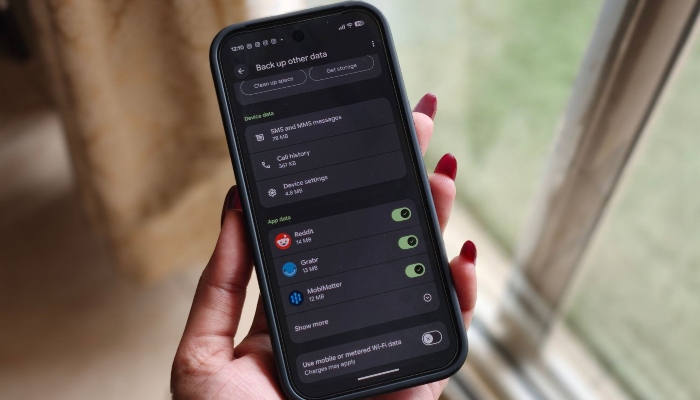
Once implemented, Android backup data including system settings, app data, SMS messages and call history will be included in the storage quota of a Google account.

The company said the advance notice is intended to give users enough time to manage their storage or adjust their backup settings before the policy is enforced.

Previously, only certain Android content, such as Google Photos uploads and MMS messages counted toward storage usage. Under the updated policy, complete Android backups are expected to consume a much larger portion of users available cloud storage.

Google warned that if Android backups cause users to exceed their storage limit, they will either need to free up space in their Google account or subscribe to a paid Google storage plan for additional capacity.

A Google spokesperson previously said that the average Android backup is expected to use around 40 MB of storage. The company also noted that users will have greater control over which data and apps are included in their backups.

This marks another change to Google’s account storage policies. Earlier, in May 2026, the company began testing a reduction in free storage for new Google accounts lowering the limit from 15 GB to 5 GB.

Similar Posts

  • |

    Mark Zuckerberg predicts billions will use AI agents within 5 years

    Meta CEO Mark Zuckerberg has made a striking prediction about the future of artificial intelligence (AI) saying that billions of people will have their own personal AI agents within the next few years. Speaking during the release of Meta’s quarterly earnings report, Zuckerberg predicted that over the next five years, billions of people around the world will be using personal AI agents. “I think it’s almost impossible to imagine a future where, within the next five years, billions of people don’t have their own AI agents. These AI agents will understand your goals and be able to work on your behalf 24 hours a day,” he said. Zuckerberg added that people will use these AI agents to manage their finances, monitor their health, assist with relationships and handle household tasks. “We’re moving toward a future where every person will use multiple AI agents. I believe WhatsApp and other messaging services will become even more important,” he said. According to Zuckerberg, WhatsApp is already the leading platform for interacting with Meta AI. Meta is not the only company investing heavily in AI systems capable of acting autonomously on behalf of users. Google is also focusing on custom AI agents while several other technology companies are developing similar systems. Zuckerberg said the AI agents Meta is building will form the foundation of the company’s next generation of products and are expected to contribute significantly to its revenue growth in the coming years.

  • |

    10 technologies replaced by smartphones

    Smartphones are now found in almost everyone’s hands but their rise has also rendered many once-popular technologies obsolete. At the beginning of the 21st century, personal computers, home internet and mobile phones became widely accessible. Few could have imagined that, within a few years, all these technologies would merge into a single device that would transform nearly every aspect of daily life. That device is the smartphone. It serves as a flashlight, bank account manager, weather forecaster, fitness tracker, camera and much more. One of the smartphone’s greatest strengths is its ability to combine multiple functions into a single, easy-to-use device. As a result, many older technologies have largely disappeared. Here are ten of them: 1. Landline phones Landline phones were among the first technologies to be replaced by smartphones. Once common in nearly every home, they have become largely unnecessary because smartphones provide calling capabilities along with numerous internet-based communication apps. 2. Digital cameras Between 2008 and 2021, sales of compact digital cameras declined by more than 97 percent. Modern smartphones feature increasingly advanced cameras eliminating the need for many people to purchase separate digital cameras. 3. Calculators Pocket calculators were once essential tools for students and professionals. Today, every smartphone includes a built-in calculator while dedicated apps can solve even complex mathematical problems. 4. Alarm clocks Traditional alarm clocks have become much less common because smartphones include customizable alarm features allowing users to choose sounds, adjust volume and set multiple alarms. They also function as clocks reducing the need for separate timepieces. 5. Walkie-talkies Walkie-talkies were widely used in workplaces for instant communication. Smartphones now offer voice calls, messaging and group chats providing far more advanced communication options. 6. MP3 players Before smartphones, MP3 players were the preferred way to listen to music. Smartphones now allow users to store songs or stream millions of tracks through music apps without downloading them. 7. Radios Radio was once the primary source of music and news. Today, smartphones can stream live radio stations as well as podcasts and online audio services. 8. Compact Discs (CDs) CD sales peaked in 2002 and remained popular even after the arrival of devices like the iPod. However, smartphones and online streaming services have largely eliminated the need for physical music discs. 9. GPS devices Dedicated GPS navigation systems were once common in vehicles. Today, smartphones include built-in GPS sensors and navigation apps such as Google Maps making standalone GPS devices largely unnecessary. 10. Feature phones Basic mobile phones were once highly desirable and even considered status symbols. However, smartphones have almost completely replaced them leaving feature phones with only a small share of the market.

  • |

    Google Pixel 11 Pro XL features leaked ahead of launch

    San Francisco: Key features of the Google Pixel 11 Pro XL have reportedly been leaked with major upgrades expected in its camera and AI technology. According to a report by Geeky Gadgets, details about the design and key features of Google’s upcoming flagship smartphone have emerged ahead of its launch. Google is preparing to introduce new devices at its hardware event on August 12. According to the leaked information, the Pixel 11 Pro XL is expected to receive significant upgrades in several areas, including the camera, artificial intelligence, processor and connectivity. The leaks have attracted considerable attention from technology enthusiasts. Google is reportedly planning major improvements to the phone’s design, camera, performance and AI capabilities. According to the leaked details, the phone’s camera bar has been redesigned and will reportedly include an LED notification ring. Early leaks referred to this feature as “Pixel Glow” but recent reports suggest its possible official name could be “Highlight.” Available in five colours The Pixel 11 Pro XL is reportedly expected to be available in five colours: green, light green, silver, midnight and red. The phone is expected to feature a 6.8-inch LTPO OLED display with support for a 120Hz refresh rate. Reports also suggest that it will have a 13-megapixel ultra-wide selfie camera on the front. The design is also expected to receive some changes. The Pixel 11 Pro XL may feature a durable aluminum frame and Gorilla Glass Victus 3 which could provide greater protection against scratches and accidental drops. Major camera improvements The Pixel 11 Pro XL is expected to have a triple rear-camera setup. According to the leaks, it may include a 50-megapixel main camera, a 48-megapixel ultra-wide camera and a 48-megapixel periscope telephoto camera. The telephoto camera is reportedly expected to provide 5x optical zoom. The phone may also feature a 120x Pro Zoom option in its software, designed to capture distant objects and scenes with greater detail. With the help of Google’s Gemini AI technology, the camera could offer improved low-light photography, scene recognition and real-time image processing. A new mode called “Motion Capture” is also reportedly being developed. It could use AI to track moving people or objects and maintain focus on them. Improved performance with Tensor G6 The phone is also expected to feature Google’s new Tensor G6 processor which could provide improved performance for multitasking, gaming, video editing and AI-powered applications. The Tensor G6 is expected to offer enhanced capabilities for on-device machine learning, real-time language translation and intelligent text suggestions. The leaked reports also claim improvements in battery performance. The phone could feature an adaptive power-management system that adjusts energy consumption according to usage patterns to help extend battery life. Range of AI features The Pixel 11 Pro XL is expected to include several new AI-powered features. These may include an Animal Rescue feature designed to help identify and locate lost pets. Other expected features include advanced voice recognition, personalized app suggestions based on user habits, improved security, on-device encryption and real-time threat detection. A new Focus Mode could allow users to temporarily silence unnecessary notifications so they can concentrate on important tasks. Reports have also mentioned improved speakers, spatial audio and potentially advanced augmented reality (AR) features. Although most of the information currently available about the Pixel 11 Pro XL is based on leaks and speculation, it suggests that Google is focusing heavily on AI technology alongside hardware improvements in its new flagship smartphone. Google is expected to officially announce the phone’s final specifications and price at its launch. Until then, the reported details should be considered leaks and speculation rather than confirmed information.

  • |

    PTA cuts eSIM fee to Rs1,500, allows 10 free transfers

    ISLAMABAD – The Pakistan Telecommunication Authority (PTA) has reduced the charges for eSIM services. The PTA has set the initial eSIM fee at Rs. 1,500 and allowed users to transfer an eSIM from one phone to another up to 10 times free of charge. The new policy will come into effect on August 17, 2026. The decision was taken following directions from a parliamentary committee which had asked the PTA to make eSIM services more user-friendly. The committee also sought to reduce the need for subscribers to visit customer service centres for eSIM-related services. According to the PTA, the existing system already allows users to transfer an eSIM between phones multiple times by using the same QR code provided during the original purchase and activation. As a result, no additional charges are applied for these transfers. However, following consultations with cellular operators, the regulator has now formally revised the charging structure. The maximum initial eSIM fee has been reduced to Rs. 1,500 while subscribers will be allowed up to 10 free eSIM transfers between compatible devices. In addition, the PTA is working with the National Database and Registration Authority (NADRA) and cellular operators to improve SIM security. The regulator plans to introduce a new multi-factor subscriber verification system to strengthen the verification process for SIM issuance and ownership.

  • Google Maps tests new Power Saving Mode for low battery

    If you use Google Maps and notice that your smartphone’s battery is about to die, you probably know how frustrating that situation can be. However, this problem may soon be resolved. According to a report by Android Authority, Google is working on a new feature called Power Saving Mode for Google Maps. The purpose of this feature is to allow Google Maps to continue working for a longer period even when the phone’s battery is close to running out. The feature was spotted in a new beta version of the Google Maps app for Android devices. According to the report, when users switch to this power-saving mode, the colourful user interface of Google Maps will change into a simple black-and-white view. Several details on Google Maps will disappear leaving only essential navigation information such as the next turn and the remaining travel time. The report further stated that the screen will switch to a monochrome display in this mode. Street names and traffic colors will disappear while the amount of on-screen text will also be reduced to help extend battery life. The process of switching to Power Saving Mode is also somewhat unusual. According to the report, the mode can be activated by pressing the phone’s physical power button while Google Maps is in navigation mode. Google has not yet officially announced the Power Saving Mode feature. Therefore, it is difficult to say when the feature will officially become available to all users. For now, the feature remains hidden in the beta code and Google may make further changes to it before its official release.

  • YouTube tightens monetization rules for creators

    YouTube, the world’s most popular video-sharing platform provides additional income opportunities to millions of people around the world. Yes, YouTube has become an attractive platform for people who want to earn money through videos. Billions of people use the video-sharing platform making it an excellent place for creative individuals to showcase their skills. Anyone can earn money from YouTube by becoming part of the YouTube Partner Program (YPP). However, earning money from YouTube will now become more difficult for many people as the company has tightened its requirements. YouTube monetization allows users to earn money through advertisements, channel memberships, Super Chat and merchandise. To unlock these features, users need to become part of the YouTube Partner Program. For this, certain requirements must be met and these requirements have now been made stricter. Previously, users needed at least 1,000 subscribers on their channel and more than 4,000 hours of watch time on their long-form videos over the previous 12 months to earn money from the platform. However, this requirement has now been doubled. Under the new requirements, users will need at least 8,000 hours of video watch time within one year to qualify for the Partner Program and earn money. Alternatively, they will need their YouTube Shorts videos to receive more than 20 million views within the previous 90 days. Previously, the requirement for earning through Shorts was 10 million views. The new changes will take effect from February 1, 2027. Google has clarified that users who are already part of the YouTube Partner Program will not be affected by this update. YouTube also stated that, in the future, users will need to maintain 10 million Shorts views within a 90-day period to continue earning from Shorts. If they fail to meet this requirement, they will remain part of the Partner Program and will still be able to earn money from long-form videos. However, they will only be able to earn from Shorts again after reaching 10 million views once more. According to the company, these changes are being introduced to keep pace with YouTube’s continued growth. More than 200 billion Shorts are now viewed on YouTube every day, while users watch the equivalent of one billion hours of video content on television screens alone. However, these changes will make it more difficult for users to join the YouTube Partner Program and maintain their eligibility particularly those who primarily create and post Shorts videos.

Leave a Reply

Your email address will not be published. Required fields are marked *