russia condemns eus
|

Russia condemns EU’s 21st sanctions, warns of consequences

Russia has sharply criticized the European Union after the bloc approved its 21st package of sanctions, saying the new measures will damage European economies more than Russia and further increase tensions between Moscow and Brussels.

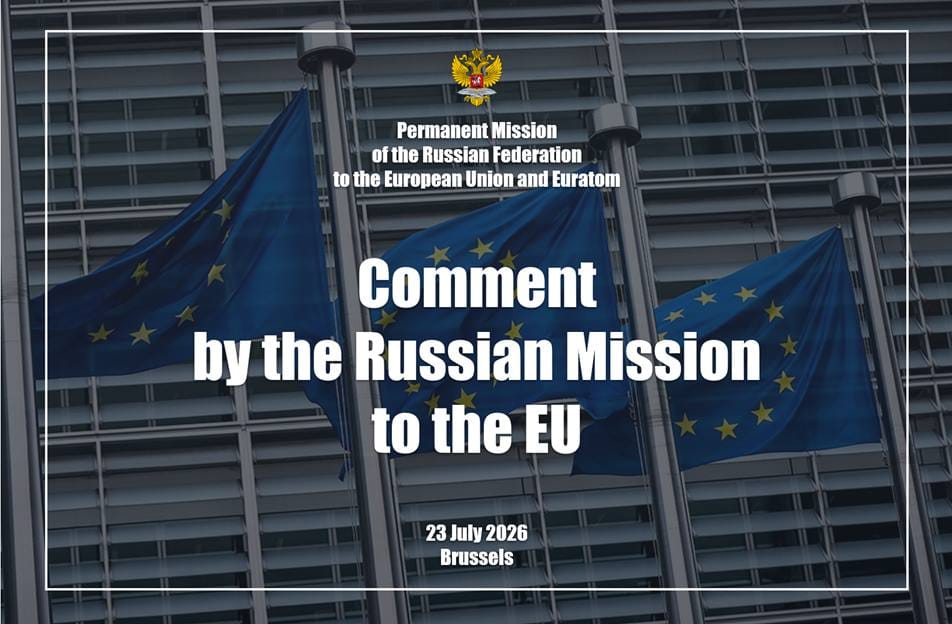
In a statement released by Russia’s Permanent Mission to the European Union, officials said the approval process for the latest sanctions exposed growing divisions within the EU. According to Moscow, many member states were reluctant to support additional restrictions because of the economic burden they are already facing. Russia claimed the lengthy negotiations reflected increasing concern among European governments over the impact of sanctions on businesses, energy supplies and overall economic growth.

The Russian mission accused the European Union of continuing a policy of confrontation despite rising economic challenges across Europe. It said EU leaders were ignoring the financial costs of sanctions while pursuing what Moscow described as a political campaign against Russia. The statement also referred to comments by EU High Representative for Foreign Affairs Kaja Kallas, who indicated that further sanctions could be introduced in the future.

According to Russia, discussions on new sanctions have become a political ritual aimed at showing unity among EU member states rather than achieving practical results. Moscow argued that the restrictions have failed to weaken Russia in the way European leaders had expected. Instead, it claimed that European citizens and businesses are paying the price through higher energy costs, inflation and slower economic growth.

The statement further argued that Europe’s economic difficulties have been intensified by the EU’s decision to reduce imports of Russian energy, continued financial and military support for Ukraine, and instability in global energy markets caused by ongoing tensions in the Middle East.

Russian officials also pointed to a recent assessment by the European Central Bank, which highlighted geopolitical conflicts and energy market uncertainty as major risks to the European economy. Moscow said this assessment supports its argument that continued sanctions are creating additional pressure on European countries.

Using a road journey as a comparison, the Russian mission said the European Union was following a path that could lead its economy into serious difficulties. It argued that EU policymakers should reconsider their current strategy instead of introducing more restrictions that, in Russia’s view, have produced limited results while increasing costs for Europe.

The statement concluded by reaffirming that Russia considers the EU sanctions to be illegal unilateral measures. Moscow warned that any additional restrictions imposed by the European Union would receive what it described as an effective and appropriate response from Russia.
Similar Posts

  • | |

    Alia Bhatt leads female celebrities in India’s brand rankings

    Actor Alia Bhatt has emerged as India’s highest-ranked female celebrity in the Kroll Celebrity Brand Valuation Report 2025, securing sixth place overall with a brand value of $93.9 million. While Shah Rukh Khan retained his position as India’s most valuable celebrity brand, Alia topped the list among female stars, reflecting her strong commercial appeal and endorsement value. According to the report, Deepika Padukone ranked seventh with a brand value of $89.2 million, while Alia’s husband, Ranbir Kapoor, secured 10th place with a brand valuation of $80 million. Among the rising stars, Rashmika Mandanna claimed 12th position with a brand value of $75.2 million. Veteran actress Kareena Kapoor Khan ranked 15th with a brand value of $61.8 million, followed by Kiara Advani in 16th place at $51.9 million. The report also highlighted the growing commercial influence of younger actresses. Kriti Sanon secured 18th place with a brand value of $50.2 million, supported by the success of her skincare venture, while Ananya Panday ranked 19th with a valuation of $48.5 million, driven by her partnerships with several international brands

  • |

    Spanish minister bids for top UN labour agency post amid US funding crisis

    Spain has officially nominated its Labour Minister and Second Deputy Prime Minister, Yolanda Díaz, to run for Director-General of the International Labour Organization (ILO). If elected, Díaz would become the first woman to lead the Geneva-based UN agency in its 107-year history. Díaz is set to challenge incumbent Director-General Gilbert Houngbo of Togo, who took office in 2022 as the first African leader of the ILO and is seeking re-election. Her candidacy comes as the agency faces a severe liquidity crisis, exacerbated by unpaid contributions from member states, most notably the United States, which owes 257 million Swiss francs ($315 million) in arrears and has outlined plans to halt funding for the upcoming fiscal year. The nomination highlights her domestic record of labor reforms and social dialogue in Spain, though analysts note her candidacy faces a diplomatic balancing act between securing European support and risking friction with the African diplomatic bloc. The election will take place in November 2026, with the winner’s five-year term beginning in October 2027.

  • | |

    Pakistan intensifies efforts to secure release of …

      Deputy Prime Minister and Foreign Minister Ishaq Dar on Thursday chaired a high-level meeting to assess Pakistan’s ongoing efforts to secure the safe and early release of 10 Pakistani nationals being held hostage aboard the oil tanker MT Honour 25 after it was hijacked by pirates off the coast of Somalia. The tanker, which was operating under the Somali flag, was travelling from Oman to Somalia when it was seized by pirates on April 21. A total of 17 crew members were on board the vessel, including 10 Pakistani citizens. Since the incident, the families of the Pakistani hostages have repeatedly appealed to the government to intensify efforts for their loved ones’ safe recovery. During the meeting, officials briefed the deputy prime minister on the latest developments surrounding the hostage situation and the measures being taken to secure the release of the Pakistani nationals. Dar directed all relevant authorities and stakeholders to maintain close and regular coordination while further strengthening diplomatic efforts with both national and international partners. The foreign minister placed particular emphasis on continued communication with Somali authorities and relevant international organisations. He said sustained diplomatic engagement was essential to creating conditions that could facilitate the safe recovery and repatriation of the hostages. Dar also expressed solidarity with the families of the detained Pakistanis and assured them that the government was closely monitoring the situation. He stressed that all possible efforts were being made to achieve a positive outcome and expressed hope that ongoing diplomatic contacts would ultimately result in the safe return of all 10 Pakistani citizens. Last month, Dar spoke by telephone with his Somali counterpart, Abdisalam Abdi Ali, to convey Pakistan’s serious concern over the hostage situation. During the conversation, Dar emphasised the need to protect the health and safety of the hostages, secure their early release and ensure their safe return to Pakistan. The Somali foreign minister assured Dar that his government was continuing sincere efforts to help secure the hostages’ release as soon as possible. The latest meeting in Islamabad comes amid growing concerns about the deteriorating conditions reportedly being faced by the Pakistani nationals aboard the vessel. In video and audio messages, some of the hostages have described severe shortages of essential supplies. They said food and medicines had run out and claimed that they were receiving only one serving of boiled rice each day. They also reported that clean drinking water was no longer available, forcing them to consume contaminated water. According to the hostages, the lack of safe water has already caused illnesses among several crew members, further increasing concerns about their health. One hostage said their lives remained under constant threat and that gunfire could be heard almost every day in the surrounding area. The situation has renewed attention on piracy along Somalia’s coastline and its potential threat to international shipping. Somali pirate attacks reached their highest level in 2011, when armed groups operated as far as 3,655 kilometres from Somalia’s coastline. At its peak, Somali piracy posed a major threat to one of the world’s busiest maritime trade routes, disrupting commercial shipping and placing hundreds of seafarers at risk. Pakistan’s government is now seeking to strengthen diplomatic and international cooperation to ensure the safe release of the 10 Pakistani nationals. Authorities remain engaged with Somalia and other relevant stakeholders as efforts continue to bring the hostages home safely.

  • | |

    55-year-old security guard missing in Lahore, Kidn…

    A private company security guard has reportedly gone missing from Lahore’s Nasirabad area, after which police registered a case of alleged abduction. Authorities have started an investigation to trace the missing man and determine the circumstances surrounding his disappearance. According to police officials, the case was registered on the complaint of the missing security guard’s daughter. The missing person has been identified as 55-year-old Ijaz Hussain, who was working as a security guard at a private company. In her statement to police, the guard’s daughter said that her father was unwell and had gone to Gulab Devi Hospital to get medicine and have tea. However, despite efforts to locate him, the family was unable to find any information about his whereabouts. Following the complaint, police registered a case and began collecting details as part of the investigation. Officials said that efforts are underway to trace the missing security guard and identify any possible suspects involved in the incident. Police teams are reportedly reviewing available information and taking necessary steps to find clues regarding the disappearance. Authorities have assured the family that the matter is being investigated and all possible measures are being taken to locate the missing man. Cases involving missing persons require immediate action, as early investigation and evidence collection can play an important role in determining the facts. Police officials have encouraged anyone with relevant information about the incident to cooperate with investigators. The investigation into the alleged abduction remains ongoing, and further developments are expected as police continue their efforts to recover the missing security guard and establish what happened.

  • |

    Iran appoints former revolutionary guards chief Mohsen Rezaei to National Security Council

    TEHRAN: Iran has appointed veteran military and political figure Mohsen Rezaei to a senior position within the country’s Supreme National Security Council (SNSC), replacing Mohammad Baqer Zolqadr and bringing one of the Islamic Republic’s most prominent former Revolutionary Guards commanders back into a central security role. The appointment was announced late Sunday by the office of Iranian President Masoud Pezeshkian’s deputy director of communications. No official explanation was immediately provided for the change, and it remains unclear whether Rezaei’s appointment will result in any significant shift in Iran’s security or foreign policy. Rezaei, 71, has extensive experience in Iran’s military, security and political institutions. He served as commander of the Islamic Revolutionary Guard Corps (IRGC) from 1981 until 1997, a period that included most of the Iran-Iraq war. His return to a prominent security position comes at a particularly sensitive time for Iran, amid continuing tensions with the United States and Israel, as well as uncertainty surrounding the security of the strategically important Strait of Hormuz. The SNSC is one of Iran’s most important institutions for coordinating national security and foreign policy. Although the council is formally chaired by the elected president, it brings together senior military, intelligence and government officials, along with representatives of Supreme Leader Mojtaba Khamenei. Major strategic decisions ultimately remain subject to the authority of the supreme leader. Zolqadr’s short tenure ends Zolqadr had been appointed secretary of the SNSC only in late March. He took over the position following the death of his predecessor, Ali Larijani, who was killed in an air strike during the conflict involving Iran, the United States and Israel. Unlike Zolqadr, Rezaei has maintained a considerably higher public profile over the course of his political career and has frequently spoken on major domestic, economic and foreign-policy issues. In a separate decree issued Sunday, Supreme Leader Mojtaba Khamenei appointed Rezaei as his representative to the SNSC. The decree referred to Rezaei’s extensive experience, including his service during the 1980-1988 Iran-Iraq war. Hardline politician Saeed Jalili also serves as the supreme leader’s representative on the council. The same decree appointed Zolqadr as Khamenei’s political adviser, suggesting that his departure from the SNSC leadership does not represent a complete withdrawal from the country’s senior political establishment. Rezaei’s long political career Rezaei’s career has extended well beyond the military. After leaving his post as IRGC commander, he served for more than two decades as secretary of Iran’s Expediency Discernment Council, an influential body involved in resolving disputes between state institutions and advising the supreme leadership. He later entered the executive branch, serving as vice president for economic affairs from 2021 to 2023 during the administration of former President Ebrahim Raisi. Rezaei also holds a doctorate in economics from the University of Tehran. Despite his academic background, much of his professional life has been spent within Iran’s military, security and political establishment. His appointment therefore places an experienced figure with a long history in Iran’s national security apparatus at the center of a council responsible for coordinating some of the country’s most consequential strategic decisions. Strait of Hormuz remains key issue The leadership change comes as Tehran continues discussions over the future of shipping through the Strait of Hormuz, a critical international energy route. Iranian Foreign Minister Abbas Araqchi said Saturday that Tehran and Oman were nearing an understanding on a possible new shipping route through the strait. The waterway has faced severe disruption during months of conflict and escalating regional tensions. However, Iranian officials have indicated that reopening the route would depend on broader conditions being met. These reportedly include demands related to US compensation for Iran and an end to what Tehran describes as American threats and aggression. Zolqadr had previously outlined several demands, including an end to US threats against Iran, the cessation of military action against Iran and its regional allies, the lifting of sanctions and blockade measures, and the release of Iranian assets. The demands highlight the wider diplomatic and security challenges facing Tehran as it attempts to manage relations with Washington while dealing with continuing regional instability. Policy direction remains uncertain The replacement of Zolqadr by Rezaei does not necessarily indicate an immediate change in Iran’s foreign-policy direction. The SNSC operates within a broader political system in which the supreme leader has ultimate authority over major matters of national security and international affairs. However, Rezaei’s extensive military background and long involvement in Iran’s senior political institutions could make his appointment significant, particularly as Tehran navigates negotiations, military tensions and economic pressure.

  • | | |

    Global oil prices drop 12% in three days, Pakistan…

    Pakistani consumers have yet to benefit from a sharp decline in global oil prices, despite international petroleum markets recording a fall of up to 12% over the past three days. The continued high fuel prices have added to the financial burden on households already struggling with rising inflation. Over the last 12 days, fuel prices in Pakistan have increased significantly, with diesel becoming Rs. 65.08 per litre more expensive and petrol rising by Rs. 25.10 per litre. The increases followed the federal government’s decision on July 17 to introduce a daily fuel price adjustment mechanism in line with international market trends. On July 17, petrol was priced at Rs. 310.71 per litre, while high-speed diesel was available at Rs. 323.30 per litre. As of July 29, petrol is being sold at Rs. 335.81 per litre, whereas diesel has climbed to Rs. 388.38 per litre, marking one of the steepest short-term increases in recent years. Although consumers witnessed two minor reductions in petrol prices during this period, the relief was limited. Petrol prices were cut by Rs. 0.35 per litre on July 21 and by Rs. 1.00 per litre on July 27. Diesel prices, however, have not been reduced since the daily pricing mechanism came into effect. International oil markets experienced a sustained upward trend after July 17, contributing to higher domestic fuel prices. However, between July 25 and July 28, global petroleum prices fell sharply, with reports indicating a decline of approximately 12% across major international benchmarks. Despite this significant drop in global prices, Pakistani consumers have not yet received any corresponding reduction at the pump. The absence of immediate relief has sparked concerns among motorists and businesses, particularly those heavily dependent on transportation and logistics, where fuel costs directly affect operating expenses. Economists note that lower international oil prices, if sustained, could create room for a reduction in domestic fuel prices in the coming days. Any adjustment, however, will depend on several factors, including exchange rate movements, government taxes and levies, freight costs, and the pricing formula adopted by the authorities. With inflation continuing to squeeze household budgets, many consumers are hoping the recent decline in global oil prices will soon translate into lower petrol and diesel prices in Pakistan, easing transportation costs and reducing pressure on the overall cost of living.

Leave a Reply

Your email address will not be published. Required fields are marked *