iran claims 200
| | |

Iran claims 200+ US troops killed as Tehran warns …

TEHRAN: Iran’s Islamic Revolutionary Guard Corps (IRGC) has claimed that more than 200 US military personnel were killed and many others wounded during Iranian retaliatory attacks amid the latest escalation between Tehran and Washington.

The claim, however, has not been independently verified, and no immediate confirmation or denial of the reported US casualties was available from American officials.

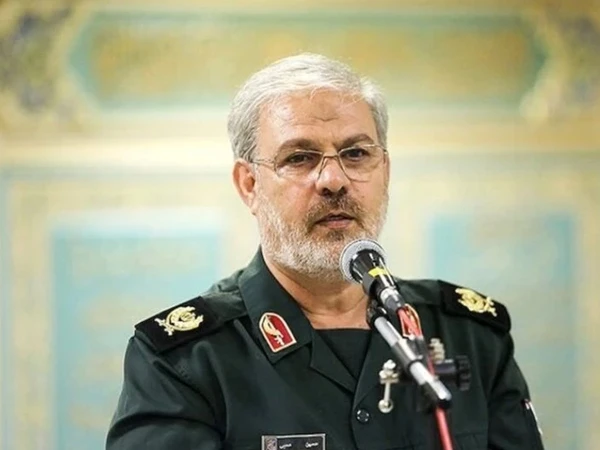
IRGC spokesman Brigadier General Hossein Mohebbi rejected figures released by Washington, arguing that they did not reflect the full extent of losses suffered by US forces during the conflict.

Speaking to Iran’s semi-official Tasnim news agency, Mohebbi said Iranian forces had targeted US military facilities across the region. He claimed that eight American military centers were struck and that around 20 protective shelters at one location were destroyed.

The IRGC spokesman challenged Washington to allow journalists access to the affected military sites, saying such visits would reveal the extent of the damage. He accused US authorities of withholding information about casualties and military losses.

Iran claims major US aircraft losses

Mohebbi also claimed that Iranian attacks during roughly two weeks of fighting destroyed 11 US warplanes and helicopters on the ground.

According to the IRGC account, the reported losses included an F-15 fighter jet, a P-8 maritime patrol aircraft, a C-17 transport aircraft and eight aerial refueling planes. Iran also claimed that 17 reconnaissance and operational drones were destroyed, including eight described as brand-new.

The claims represent a potentially significant escalation in Tehran’s portrayal of the conflict. Independent confirmation of the reported aircraft losses has not emerged, and the locations of the alleged strikes have not been publicly specified.

The statements came as tensions between Iran and the United States remained high, even as diplomatic contacts appeared to be continuing. Reports indicate that Washington and Tehran have exchanged messages through intermediaries, although major differences and deep mistrust remain.

IRGC issues warning to Israel

Iran also issued a fresh warning to Israel, saying Tel Aviv could face serious consequences if it re-enters the conflict.

The IRGC said Iranian forces were closely monitoring the possibility of Israeli involvement and had prepared their strategy accordingly.

The latest claims add another layer of uncertainty to an already volatile situation. With casualty figures and battlefield damage disputed by the opposing sides, the coming days could determine whether the confrontation moves toward diplomacy—or another dangerous round of escalation.
Similar Posts

  • | | |

    PM forms top panel to revive Iran gas pipeline

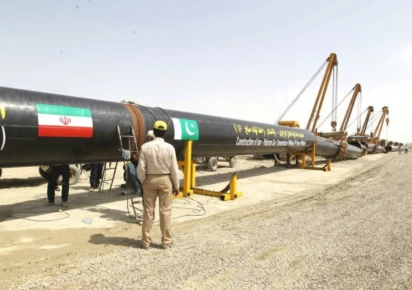
    Prime Minister Shehbaz Sharif has formed a high-level committee to find a mutually acceptable solution to the long-delayed Pakistan-Iran gas pipeline project, which has remained stuck for more than a decade. Petroleum Minister Ali Pervaiz Malik informed the Senate that the committee is examining the legal, financial and energy implications of the project. It will assess Pakistan’s potential financial exposure in the ongoing arbitration process while also considering the country’s future energy requirements. The minister was responding to a calling-attention notice raised by Senator Talha Mahmood. He said the government was seeking a negotiated solution rather than allowing the dispute to become more complicated through prolonged litigation. Describing Iran as a “brotherly country”, Malik said the leadership of Pakistan and Iran remained in contact and was working towards an amicable settlement. He noted that Iran had already completed substantial infrastructure on its side of the project. Iranian authorities have brought gas from the South Pars field towards a major city close to the Pakistani border. The dispute over the pipeline has reached international arbitration in Paris. Pakistan is therefore assessing the possible financial consequences of the project delays and the legal proceedings before deciding its next course of action. The government is also reviewing whether the pipeline can be made commercially viable. Pakistan has previously asked Iran to cut its gas price by around 50 per cent and reduce the proposed supply volume because several domestic sectors have shown limited interest in purchasing Iranian gas at existing prices. Officials have said that domestic consumers and fertiliser plants are currently receiving gas at significantly lower prices than the cost at which imported gas could be supplied through the project. Power producers have also indicated that purchasing imported gas at prices above Rs2,000 per million British thermal units would not be commercially feasible. The government has therefore been considering a lower price as a potential benchmark for making the pipeline economically sustainable. Pakistan has also indicated that it could move ahead with the project if the United States provides a waiver allowing energy cooperation with Iran despite Washington’s sanctions regime. The Iran-Pakistan pipeline, commonly known as the Peace Pipeline, was originally designed to transport Iranian natural gas to Pakistan and help address the country’s long-term energy needs. Iran completed a substantial portion of the pipeline within its territory. Pakistan, however, did not complete its section by the agreed deadline, leaving the project largely dormant. US sanctions against Iran, difficulties in securing financing and wider geopolitical tensions have complicated Pakistan’s efforts to complete the project. The issue has also resulted in legal disputes between the two countries. Iran initiated international arbitration proceedings in Paris over delays in the implementation of the project. Meanwhile, the petroleum minister told the Senate that the government was separately addressing gas-related problems in Balochistan. He said Prime Minister Shehbaz Sharif had instructed him to engage with provincial stakeholders. Another high-level committee, headed by Deputy Prime Minister and Foreign Minister Ishaq Dar, is examining gas-related issues in the province, including technical and payment-related matters. The latest move indicates that Islamabad is attempting to balance its obligations under the Iran gas project with its financial constraints, international commitments and changing energy requirements.

  • |

    Syria rejects Israel’s claim over airbase strike

    Syria has rejected Israel’s explanation for an airstrike on a military airbase in northern Syria, saying there were no plans to establish a Turkish military base or permanent Turkish presence at the facility. Syrian Foreign Minister Asaad al-Shaibani said Damascus had informed Israeli officials about the nature of the work being carried out at Abu al-Duhur airbase before the attack. According to Syrian officials, the facility was being repaired and prepared for use by the Syrian Air Force. The work was focused on restoring runways and infrastructure damaged during Syria’s civil war. Israel carried out at least eight strikes on the airbase early Tuesday, hitting runways and hangars. The attacks reportedly damaged recently repaired sections of the facility. No casualties were reported. Israeli officials said the operation was aimed at preventing what they described as a Turkish military buildup at the site. Israeli Prime Minister Benjamin Netanyahu also said Syria had previously been warned against allowing a Turkish military presence at the base. Al-Shaibani strongly disputed that account. He said the airbase was largely empty and had not yet become fully operational. “There was no Turkish military buildup at the base,” the Syrian foreign minister said, arguing that the situation on the ground did not support Israel’s justification for the strike. He acknowledged that Turkish military officers had visited the facility shortly before the attack. However, he described the visit as part of broader military cooperation between Syria and Türkiye, including training and the exchange of expertise. Al-Shaibani said Syria had also developed military cooperation with countries including Saudi Arabia, Jordan, Qatar and Russia as it works to rebuild its institutions. He stressed that Syria is a sovereign country and has the right to establish partnerships with other states. The Syrian minister also said Syrian and Israeli officials had remained in contact before the airstrike. Damascus had reportedly explained that the facility would remain under Syrian control and that no permanent Turkish deployment was planned. Following the attack, Syria contacted the United States and other countries to protest the strike and seek measures to prevent similar incidents. Al-Shaibani said Damascus had warned Washington about what it described as Israel’s increasingly aggressive policies toward Syria. He also called for respect for Syrian sovereignty and warned against turning Syrian territory into a battleground for wider regional disputes. Despite the latest escalation, Damascus said it remained open to negotiations with Israel aimed at reducing tensions along their border. Al-Shaibani said Syria and Israel had previously spent months negotiating a security arrangement through US mediation. According to him, the two sides had made substantial progress and reached an understanding on paper, but Israel later failed to implement the agreed framework. The Syrian foreign minister said future negotiations could resume if there was genuine political will. He maintained that any security arrangement must address the concerns of both sides while respecting Syria’s sovereignty. Meanwhile, Türkiye has strongly backed Syria following the Israeli strike. Turkish Communications Director Burhanettin Duran criticised Netanyahu’s statements about Türkiye and accused the Israeli leadership of using threats against regional countries to divert attention from its own policies. Duran said Türkiye would continue supporting Syria and other countries seeking peaceful solutions to regional conflicts. He argued that Israel’s military actions in Gaza, Syria and Lebanon had contributed to growing instability across the region. He also said Ankara opposed policies that could widen the conflict. Duran stressed that Türkiye’s objective was to reduce bloodshed and promote peace, with the Palestinian issue and the situation in Gaza remaining among its key concerns.

  • Chinese Suspect With Pattaya Arsenal Planned Cambodia Scam-gang Attack

    PATTAYA, Chon Buri — A Chinese national detained last week with a large cache of weapons and explosives in Pattaya was planning to attack a rival scam operation in Cambodia and had no intention of carrying out a terrorist attack in Thailand, according to senior Royal Thai Police officials. Chinese Suspect In C4 Explosives Case […]

  • | | | |

    Petrol hits Rs335.18, diesel climbs to Rs383.46

    The federal government has increased the prices of petrol and high-speed diesel (HSD) in its latest fuel price revision. According to an official notification, the price of petrol has been increased by Rs3.66 per litre, while HSD has gone up by Rs4.80 per litre. The new prices will take effect from July 25. After the increase, petrol will cost Rs335.18 per litre, while high-speed diesel will be available at Rs383.46 per litre. The government revised fuel prices after changes in international oil markets. Global crude prices have remained unstable due to tensions in the Persian Gulf. Petrol is mainly used by private vehicles, motorcycles and rickshaws. Any increase directly affects daily commuters and middle-income families by raising transportation costs. High-speed diesel is widely used by trucks, buses, agricultural machinery and power generators. A rise in diesel prices increases freight charges and production costs. This can eventually lead to higher prices of food and other essential goods. The government has also introduced a daily fuel pricing mechanism. Under the new system, fuel prices will be adjusted every day based on international oil prices and market trends instead of weekly revisions. The decision has faced criticism from petroleum dealers. They say daily price changes could create uncertainty for businesses and consumers. Dealer associations have indicated they may announce a protest plan against the new pricing system.

  • | | |

    India behind anti-Pakistan propaganda network: Tar…

    ISLAMABAD: Federal Minister for Information and Broadcasting Attaullah Tarar has alleged that an entire network involved in spreading misleading propaganda and disinformation against Pakistan and Pakistani agencies has links to India. Speaking at a press conference in Islamabad, the minister said most of the content being circulated was related to the banned Action Committee in Kashmir. Tarar claimed that evidence of Indian funding for elements associated with the banned Action Committee was now in the public domain. He said numerous Indian social media accounts had emerged with evidence linking them to the campaign. According to the minister, posts shared through these accounts were aimed at provoking people against the state. He alleged that social media platforms were being used to promote groups involved in mob mobilisation and attempts to take the law into their own hands. The minister said efforts had been made to encourage such elements through social media. He alleged that the campaign was designed to create unrest and chaos in Kashmir. Tarar said Pakistan’s recent successes had not been acceptable to its adversaries. He said Pakistan had achieved gains not only on the military front but also on the diplomatic front. The information minister said the government would continue defending Pakistan’s national interests on every front. He stressed that efforts to spread disinformation and destabilise the country would not be allowed to undermine Pakistan’s interests. Tarar’s remarks came amid continued debate over social media campaigns and alleged foreign influence in Pakistan’s internal affairs. The minister urged the public to remain alert to misleading content and propaganda being circulated online.

  • | | | |

    Two UAE-linked ships attacked in Strait of Hormuz,…

    DUBAI: Two vessels belonging to Abu Dhabi National Oil Company (ADNOC) were attacked while passing through the Strait of Hormuz on Thursday evening, according to the UAE state news agency WAM and ADNOC. No injuries or deaths were reported. ADNOC said the situation had been brought under control and that authorities were managing the incident. The company did not immediately provide detailed information about the vessels, their cargoes or the extent of any damage. The United Arab Emirates has accused Iran of carrying out the attack, while Tehran has not immediately commented on the allegation. The UAE Foreign Ministry condemned what it described as a hostile Iranian attack and said targeting commercial shipping posed a threat to regional stability and global energy security. The incident is the latest in a series of attacks involving ADNOC-linked vessels in the strategic waterway. The company said earlier this month that 15 of its vessels had been attacked by missiles and drones since the conflict began, with one crew member killed and 20 injured in previous incidents. ADNOC said the safety and wellbeing of its crews, particularly maritime workers, remained its highest priority. It also stressed the importance of maintaining safe navigation and freedom of movement through the Strait of Hormuz. The latest attack comes as shipping traffic through the waterway remains well below normal levels amid heightened tensions between Iran and the United States. Kpler data showed that only nine commodity vessels passed through the strait on Thursday, compared with an August daily average of about 12. The Strait of Hormuz, located between Iran and Oman, is one of the world’s most important energy chokepoints. Before the current conflict, roughly one-fifth of global oil and liquefied natural gas shipments passed through the narrow waterway. Repeated attacks and growing security concerns have forced shipping companies to reassess routes, while some vessels have delayed or avoided transit altogether. ADNOC urged the public to rely only on official and verified information about the latest incident and avoid spreading rumours or unconfirmed claims. With tensions still high around the waterway, the latest attack has renewed concerns over the safety of commercial shipping and the potential impact on global energy markets.

Leave a Reply

Your email address will not be published. Required fields are marked *