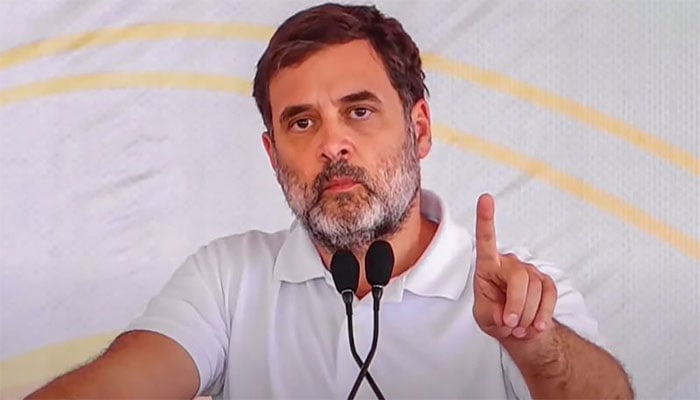
trump threatens annihilate
| |

Trump threatens to annihilate Iran as diplomats push for deal at UN

UNITED NATIONS – US President Donald Trump warned on Tuesday, September 22, that he could annihilate Iran if there is no deal to end the war, but also suggested an agreement could come soon amid a diplomatic push at the United Nations.

“I have a big decision to make,” Trump said in a speech at the UN General Assembly in New York.

“Will a deal be made with Iran that lets them rebuild and create a far greater country than it ever was before?… Or do I annihilate the Islamic Republic and do it quickly, never giving them a chance to kill and destroy people and countries again?”

Must Read

Tehran hints at Hormuz talks with US as leaders gather at UN


Tehran hints at Hormuz talks with US as leaders gather at UN

In a statement on Tuesday, Iran’s Armed Forces dismissed Trump’s comments at the UN as “propaganda”, saying their response is “full readiness to inflict more severe, crushing, and unpredictable blows on the aggressors.”

But away from the fiery rhetoric, discussions continued to try to end the nearly seven-month conflict that began with joint US-Israeli strikes and has since killed thousands, driven up oil prices and drawn in neighboring countries.

Trump said that envoys Steve Witkoff and Jared Kushner “had a very productive meeting today with mediators of Iran.”

“I think there’s a lot of momentum for them to make a deal,” he said.

Trump also met the leaders of Middle Eastern countries who are keen to restore shipping through the Strait of Hormuz, the conduit for a fifth of global oil and gas shipments before the war, but are wary of giving their longstanding rival Iran too much power.

Many also host huge US military bases that have come under repeated Iranian attack throughout the war.

“We think that the situation with Iran could end right after the (November 3) midterm elections, maybe before. I don’t know. You never know,” Trump said as he met the leaders.

The diplomatic maneuvering comes as Trump faces pressure on multiple fronts — rising energy costs at home, a widening regional conflict abroad, and the midterms six weeks away that could reshape his political standing. Whether talks produce a deal or the war escalates further carries consequences for global oil markets, Gulf security and millions of Iranians.

Iranian foreign minister Abbas Araqchi met with Prime Minister Sheikh Mohammed bin Abdulrahman Al Thani of Qatar, which has spent months trying to de-escalate the conflict, the Qatari state news agency reported.

A senior Iranian official said Tehran could reopen the Strait of Hormuz within days if the US eased military pressure and lifted its blockade on Iranian ports.

The senior Iranian official told Reuters that Tehran had conveyed its latest proposal to Washington through mediators last week and could reopen the strait to Gulf shipping within seven days if its demands were met.

In a reminder of Iran’s firm position so far, Parliament Speaker Mohammad Baqer Qalibaf, who headed Iran’s negotiating team at previous talks, said Iran would never surrender: “Trump must understand that he cannot impose his power on the Iranian people and its armed forces.”

Widening regional conflict

On the table at the Gulf states’ meeting with Trump is a Qatari proposal for a common security framework involving Iran and the Arab Gulf states, regional sources said. One source said Iran was reviewing the proposal.

Al Thani has said any such arrangement would need to provide security guarantees for the Gulf states and expand economic interdependence with Iran.

Saudi Arabia, the largest of the Gulf states, has been drawn deeper into the war this month as Iran-aligned Houthi fighters have advanced in Yemen, routing forces of the Saudi-backed government and threatening Saudi oil exports through the Red Sea.

The US, which bombed the Houthis for two months last year, has so far rebuffed repeated pleas from Saudi Arabia’s Crown Prince Mohammed bin Salman to rejoin the fight. The New York Times reported that Trump called off US strikes against the Houthis on Sunday at the last minute.

Asked why Washington had held back from striking the Houthis, US Secretary of State Marco Rubio said the United States would always support Saudi Arabia, adding:
“That said, that is a very dangerous and complex conflict that pre-exists … We have a history with the Houthis as well, and that’s something we don’t want to see impacted either.”

Oil markets did find some relief on Tuesday after sources told Reuters that Saudi Arabia had restarted operations at its East-West Pipeline and could resume exports from the Red Sea port of Yanbu within hours, albeit at reduced volumes.

The pipeline, Saudi Arabia’s main export route bypassing wartime disruption in the Strait of Hormuz, had been shut after attacks this month that Riyadh blamed on Iranian-backed groups in Iraq. – Rappler.com

Similar Posts

  • | | |

    Trump criticizes oil companies over high profits a…

    US President Donald Trump has criticized major oil companies over their growing profits, saying that energy firms are earning excessive amounts of money amid rising fuel prices. His remarks come as global oil markets face uncertainty due to geopolitical tensions and disruptions affecting energy supplies. Speaking to reporters at the White House, Trump said he supports free markets but expressed dissatisfaction with what he described as unusually high earnings by oil companies. He stated that while businesses have the right to operate freely, current market conditions have allowed some energy companies to generate profits beyond what he considers reasonable. The increase in crude oil prices has significantly boosted the revenues of several major energy companies worldwide. Market uncertainty linked to tensions between the United States and Iran has contributed to higher oil prices, creating favorable conditions for large oil producers and companies. Saudi Arabia’s state-owned oil giant Saudi Aramco reported a significant increase in quarterly profit, announcing earnings of $33.4 billion, compared with $25.2 billion during the same period last year. This represents a substantial rise in profits. US-based energy companies have also recorded strong financial results. ExxonMobil reported quarterly earnings of $14.5 billion, more than double compared with the previous year. Meanwhile, Chevron posted a profit of $12.1 billion, marking a significant increase from the same period previously. British energy company Shell also reported nearly $10 billion in quarterly profits, making it one of the company’s strongest financial performances in recent years. While energy companies benefit from higher crude oil prices, consumers in the United States have faced increased fuel costs. Average petrol prices have risen significantly since the beginning of the conflict-related market disruptions, adding further pressure on households already dealing with inflation. Fuel prices have become a major political issue ahead of the upcoming midterm elections. Lowering petrol costs has emerged as a key priority for the Trump administration, as high energy prices often influence public opinion and economic sentiment. A major factor behind the rise in oil prices has been disruption in key shipping routes, including the Strait of Hormuz, one of the world’s most important energy corridors. Reduced oil transportation through the region has affected global supply and contributed to market volatility. Although diplomatic efforts have reportedly aimed at reducing tensions and improving shipping access, uncertainty remains in global energy markets. Security concerns in the Red Sea and Bab el-Mandeb Strait have also affected oil transportation routes. Energy analysts believe that major oil companies may continue benefiting from elevated prices in the short term. However, they suggest that increased global supply or improved conditions in strategic waterways could eventually push crude oil prices lower. The ongoing debate highlights the challenge faced by governments worldwide: balancing energy company profits, market stability, and the need to provide affordable fuel for consumers.

  • | | | |

    Iranian strike hits Chinese company building in Ku…

    KUWAIT CITY: A building belonging to a Chinese company in northern Kuwait was struck during an alleged Iranian attack, leaving one worker dead and causing extensive structural damage, according to Kuwait’s Ministry of Defense. The ministry confirmed the incident in an official statement on Wednesday, saying emergency response teams and security agencies were immediately dispatched to the affected site to secure the area, assess the damage, and launch rescue operations. Authorities said one worker was killed in the strike, but did not immediately disclose the victim’s identity or nationality. Officials added that investigations are continuing to determine whether there were additional casualties or injuries and to establish the full extent of the damage caused by the attack. Images from the scene showed emergency personnel working around the damaged building as security forces cordoned off the area. Officials have yet to release further details regarding the type of weapon used or the circumstances surrounding the strike. In its statement, Kuwait’s Ministry of Defense stressed that the country’s armed forces remain on high alert and are fully prepared to safeguard Kuwait’s sovereignty, territorial integrity, and national security against any external threat. The ministry also urged the public to rely only on official government statements for updates, warning citizens against spreading or believing unverified reports and rumors circulating on social media. The attack comes amid heightened regional tensions linked to the ongoing confrontation between Iran and the United States, which has fueled growing security concerns across the Gulf region. In recent weeks, military facilities, energy infrastructure, commercial shipping routes, and strategic installations have increasingly come under threat, raising fears of a wider regional escalation. Security analysts say the latest strike demonstrates how the conflict is expanding beyond its primary actors, with neighboring Gulf states facing increasing risks from the deteriorating security environment. Kuwait, which has traditionally sought to maintain balanced regional relations, now finds itself confronting the possibility of being directly affected by the broader conflict. The incident is expected to intensify security measures across the country, particularly around critical infrastructure, industrial facilities, and foreign-owned commercial sites. Regional governments have already strengthened surveillance and emergency preparedness in response to the growing threat of cross-border attacks. No immediate statement was issued by Iranian authorities regarding the alleged strike. Meanwhile, Kuwaiti officials said investigations remain underway and pledged to provide further information as more details become available. The latest incident underscores the widening regional impact of the Iran-US confrontation and highlights growing concerns that escalating hostilities could increasingly affect civilian infrastructure and foreign businesses operating across the Gulf.

  • | |

    Fury wins lowkey warm up to keep Joshua fight on t…

    Tyson Fury stopped Mariusz Wach in a low-key bout in Thailand, attended by no more than 1,500 fans and not televised live anywhere in the world. The 37-year-old British heavyweight dominated for seven rounds at the Max Muay Thai Stadium in Pattaya before the overmatched Wach, 46, retired on his stool at the start of the eighth. Friday’s bout was not broadcast on any television or radio platform and will instead form part of the third series of the Netflix reality show ‘At Home With The Fury’s’. The 36th victory of his career moves Fury closer to a potential blockbuster meeting with fellow Briton Anthony Joshua, who has his own comeback fight against Albanian Kristian Prenga in Saudi Arabia on Saturday. “I went through my test tonight. Let’s see if he can get through his,” Fury said. Many expected ‘the Gypsy King’ to fly straight to Jeddah for Joshua’s fight, with the pair potentially announcing their long-awaited showdown in the ring afterwards if Joshua wins. Instead, Fury said he was going home. “I’ve got to face off with my wife. I’ve got to iron when I get home. I’ve been away for six out of the last seven months. I’m not going to Jeddah, I’m going home to my wife and kids. I’m going to regroup and hopefully we’ll have a big fight signed next week.” Questions still linger over where the all-British bout would take place, with Eddie Hearn saying Joshua’s contract stipulates the UK, but industry whispers suggesting a venue in America. “We’ll head wherever we’re going to head,” Fury said. “Who knows? It could be in Vegas, New York, Ireland, London. Who knows where the fight’s going to be?” The low-key warm-up in Thailand was a strategic move for Fury, who has been basing his training camps in the country. The fight, though not broadcast live, allowed him to shake off any ring rust and stay active ahead of a potential megafight with Joshua. Wach, a durable veteran, provided rounds for Fury, who was able to dominate at his own pace without taking unnecessary risks. The fight between Fury and Joshua has been one of the most anticipated in boxing history, with fans around the world eager to see the two British heavyweights finally meet. Both fighters have expressed interest in the bout, and negotiations have been ongoing for months. Joshua’s fight against Prenga is seen as a final tune-up before the potential clash, and a victory would likely set the stage for the showdown. Fury’s decision to skip Joshua’s fight and return home has raised some eyebrows, but the heavyweight champion has always marched to the beat of his own drum. His focus remains on the future, and he has made it clear that he is ready for the big fight. As the boxing world waits for official confirmation, fans are hopeful that the long-awaited clash between Fury and Joshua will finally come to fruition, delivering a spectacle worthy of the sport’s biggest stage. The coming weeks will be crucial in determining whether the fight will be made and where it will take place, with the potential to become one of the biggest events in boxing history.

  • | |

    Fresh footage of Iran’s Supreme Leader Mojtaba K…

    A previously recorded video of Iran’s Supreme Leader Mojtaba Khamenei has surfaced, offering a rare glimpse of the country’s new leader as speculation continues over his health. The footage, released by Iranian media, shows Khamenei attending an academic session and reviewing a student’s research paper on the “Islamic security model.” He is heard speaking publicly in the video for what is described as the first time since assuming the leadership, and he praises the research as flawless. The release comes amid unverified reports that Khamenei was seriously injured during military strikes that resulted in the death of his father, Ayatollah Ali Khamenei. Iranian state media has sought to counter the reports by broadcasting the footage, although the exact date when it was recorded remains unclear. Iranian President Masoud Pezeshkian has also rejected claims about the supreme leader’s deteriorating health, describing him as “absolutely healthy.” Since taking office, the 56-year-old Mojtaba Khamenei has largely stayed away from public appearances, communicating mainly through written statements and official channels. His limited visibility has continued to fuel questions about his health and whereabouts.

  • |

    Syria rejects Israel’s claim over airbase strike

    Syria has rejected Israel’s explanation for an airstrike on a military airbase in northern Syria, saying there were no plans to establish a Turkish military base or permanent Turkish presence at the facility. Syrian Foreign Minister Asaad al-Shaibani said Damascus had informed Israeli officials about the nature of the work being carried out at Abu al-Duhur airbase before the attack. According to Syrian officials, the facility was being repaired and prepared for use by the Syrian Air Force. The work was focused on restoring runways and infrastructure damaged during Syria’s civil war. Israel carried out at least eight strikes on the airbase early Tuesday, hitting runways and hangars. The attacks reportedly damaged recently repaired sections of the facility. No casualties were reported. Israeli officials said the operation was aimed at preventing what they described as a Turkish military buildup at the site. Israeli Prime Minister Benjamin Netanyahu also said Syria had previously been warned against allowing a Turkish military presence at the base. Al-Shaibani strongly disputed that account. He said the airbase was largely empty and had not yet become fully operational. “There was no Turkish military buildup at the base,” the Syrian foreign minister said, arguing that the situation on the ground did not support Israel’s justification for the strike. He acknowledged that Turkish military officers had visited the facility shortly before the attack. However, he described the visit as part of broader military cooperation between Syria and Türkiye, including training and the exchange of expertise. Al-Shaibani said Syria had also developed military cooperation with countries including Saudi Arabia, Jordan, Qatar and Russia as it works to rebuild its institutions. He stressed that Syria is a sovereign country and has the right to establish partnerships with other states. The Syrian minister also said Syrian and Israeli officials had remained in contact before the airstrike. Damascus had reportedly explained that the facility would remain under Syrian control and that no permanent Turkish deployment was planned. Following the attack, Syria contacted the United States and other countries to protest the strike and seek measures to prevent similar incidents. Al-Shaibani said Damascus had warned Washington about what it described as Israel’s increasingly aggressive policies toward Syria. He also called for respect for Syrian sovereignty and warned against turning Syrian territory into a battleground for wider regional disputes. Despite the latest escalation, Damascus said it remained open to negotiations with Israel aimed at reducing tensions along their border. Al-Shaibani said Syria and Israel had previously spent months negotiating a security arrangement through US mediation. According to him, the two sides had made substantial progress and reached an understanding on paper, but Israel later failed to implement the agreed framework. The Syrian foreign minister said future negotiations could resume if there was genuine political will. He maintained that any security arrangement must address the concerns of both sides while respecting Syria’s sovereignty. Meanwhile, Türkiye has strongly backed Syria following the Israeli strike. Turkish Communications Director Burhanettin Duran criticised Netanyahu’s statements about Türkiye and accused the Israeli leadership of using threats against regional countries to divert attention from its own policies. Duran said Türkiye would continue supporting Syria and other countries seeking peaceful solutions to regional conflicts. He argued that Israel’s military actions in Gaza, Syria and Lebanon had contributed to growing instability across the region. He also said Ankara opposed policies that could widen the conflict. Duran stressed that Türkiye’s objective was to reduce bloodshed and promote peace, with the Palestinian issue and the situation in Gaza remaining among its key concerns.

Leave a Reply

Your email address will not be published. Required fields are marked *