english football trial
| |

English Football to trial new rule to eliminate go…

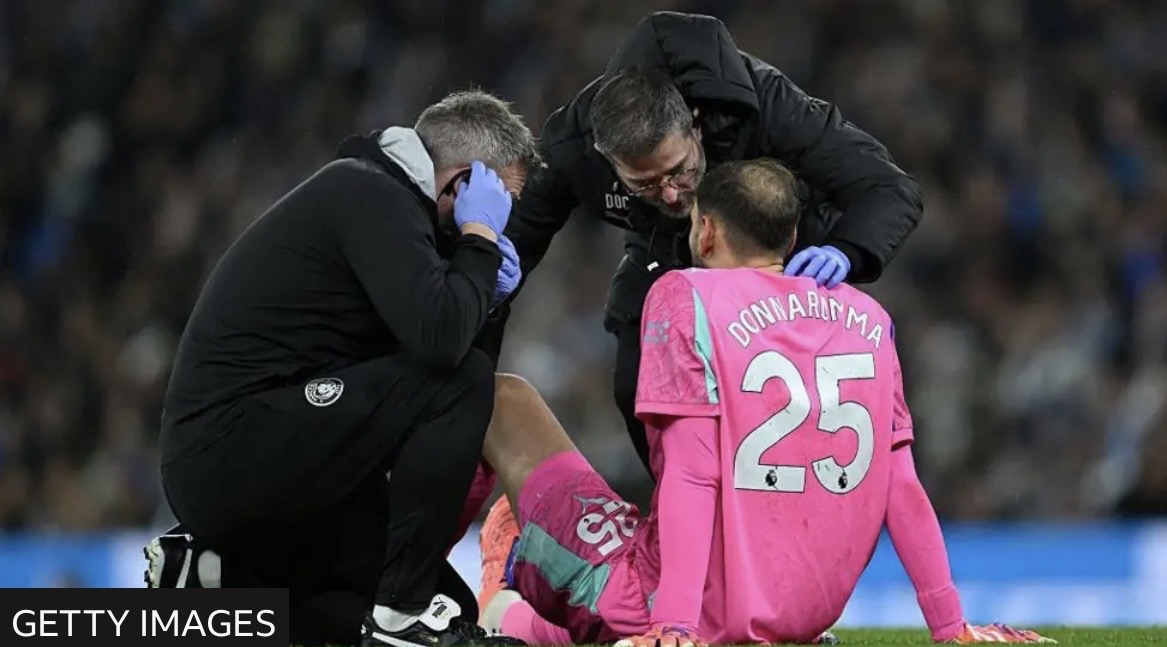
English football will implement a trial this season aimed at eradicating the increasingly common practice of goalkeepers feigning injury to secure tactical timeouts, with teams required to temporarily remove an outfield player if their keeper receives treatment .

The Football Association, Premier League, English Football League, National League, and Women’s Super League have agreed on the measure, with permission granted by the International Football Association Board (IFAB) . The first game to feature the trial will be the Carabao Cup preliminary round tie between Tranmere and Rochdale on Saturday .

Under the new protocol, if a referee signals for a physio to treat a goalkeeper, the team’s coach will have 10 seconds to nominate an outfield player to leave the pitch for one minute after play restarts, informing the fourth official of their choice . If no player is selected within 10 seconds, the captain must leave the field .

The tactic of goalkeepers going down for treatment allowing coaches to deliver instructions to outfield players gathered on the touchline has become increasingly controversial in recent seasons . Leeds United fans regularly booed opposing goalkeepers for such delays last season, and the practice has been used to disrupt momentum when opponents are on top .

Pro Ref, led by chief refereeing officer Howard Webb, had been in discussions with the leagues to address the issue . English football opted for this trial because it follows the logic already applied to outfield players, who must leave the field for one minute if the physio comes on . The measure is intended as a proactive deterrent rather than a reactive punishment .

There are several exemptions: no player will have to leave if the goalkeeper says they do not need treatment and have not stopped play, if the goalkeeper and an outfield player have collided, if the goalkeeper is fouled and needs immediate treatment, if the goalkeeper is bleeding, or if there is a serious injury requiring substitution or concussion .

Match of the Day pundit Danny Murphy had previously suggested this exact solution, saying: “If a keeper goes down injured, instead of him having to go off, one of the outfield players should go off then it’s fair all round. It’s a little change that makes a world of difference.”

The Australian A-League will trial a variation where the captain must always leave the field . The results of the trials will be assessed by IFAB throughout the season, potentially leading to a permanent global law change from the 2027-28 season .

Similar Posts

  • |

    Iran condemns Israeli minister’s remarks over Gaza killings

        Iran’s Deputy Foreign Minister Kazem Gharibabadi has strongly condemned remarks attributed to Israeli National Security Minister Itamar Ben-Gvir regarding the killing of Palestinians in Gaza, accusing him of openly advocating mass violence and the forced displacement of Palestinians. According to media reports, Gharibabadi said Ben-Gvir had set a daily target of killing between 30 and 40 people in Gaza. He described the remarks as further evidence of what Iran considers systematic violence against Palestinians and called for such statements to be preserved as evidence for possible future legal proceedings. Gharibabadi said that Israeli officials were openly discussing the expulsion of Palestinians from Gaza and the establishment or expansion of Jewish settlements in Palestinian territory. He argued that these statements should not simply be treated as political rhetoric but should be documented carefully because they could potentially become important evidence in future cases involving alleged violations of international law. “The statements and admissions made by Israeli officials should be preserved as evidence,” Gharibabadi said, according to the reports. He added that such evidence could be presented when Israeli officials are held accountable and legal proceedings are initiated against those accused of crimes against Palestinians. The Iranian official’s comments came in response to statements attributed to Ben-Gvir concerning Israel’s military campaign in Gaza. Media reports said the Israeli minister had spoken about killing between 30 and 40 people in Gaza every night. He was also reported to have said that the people of Gaza should not remain alive. Ben-Gvir, a far-right Israeli politician, has repeatedly faced international criticism over his statements and positions concerning Palestinians and the Gaza conflict. His remarks have frequently generated controversy, particularly when he has discussed military operations, Palestinian displacement and the future of Gaza. Gharibabadi’s response reflects Iran’s broader criticism of Israel’s military operations in Gaza. Iranian officials have repeatedly accused Israel of committing serious violations against Palestinians and have called for international action against Israeli leaders and officials. Tehran has also consistently supported the establishment of an independent Palestinian state and opposed the expansion of Israeli settlements in Palestinian territories. The issue of accountability has become increasingly prominent amid the continuing conflict in Gaza. Palestinian officials and international organizations have reported extensive civilian casualties and destruction in the territory since the outbreak of the war. Israel, meanwhile, has maintained that its military operations are aimed at Hamas and other armed groups and has defended its actions as necessary for national security and the release of hostages. The latest exchange between Iran and Israel comes amid continued regional tensions. Iranian officials have frequently used international forums and diplomatic statements to call attention to the humanitarian situation in Gaza and to demand accountability for alleged violations of international humanitarian law. Gharibabadi’s call to preserve statements made by Israeli officials highlights Iran’s argument that public comments by political and military figures could later be examined in legal proceedings. He suggested that remarks regarding killings, forced displacement and settlement expansion should be documented so they can potentially be used when questions of responsibility and accountability are considered. The controversy surrounding Ben-Gvir’s reported remarks is therefore likely to add to international scrutiny of Israel’s conduct in Gaza and the statements of its political leaders. As the conflict continues to generate diplomatic and legal debate, allegations concerning civilian killings, displacement and settlement policies remain major points of contention between Israel and its critics, including Iran.

  • |

    Modi says he forgives students over protest slogans

    Indian Prime Minister Narendra Modi has said he forgives students who shouted abusive slogans against him during last month’s nationwide demonstrations, describing them as “misled children” who should be guided instead of punished. Speaking in a video message, Modi said the protesters had used offensive language against him and his late mother during the demonstrations. Despite that, he said he did not want young people to face legal action or social persecution, stressing that they should be shown the “right path” rather than dragged into lengthy court proceedings. The protests emerged after controversy surrounding the National Eligibility cum Entrance Test (NEET), one of India’s largest competitive examinations. The movement gained momentum after the exam was cancelled because of a paper leak, forcing more than two million students to retake the test. What began as an online campaign for education reforms quickly developed into a nationwide protest movement, drawing thousands of students onto the streets. The demonstrations eventually ended after the Indian government accepted several key demands, including the resignation of the education minister. Authorities also announced that criminal cases against protesters would not be pursued. However, reports indicate that police in several states later registered cases against hundreds of demonstrators, particularly those accused of clashing with security personnel or participating in protests where anti-government slogans were raised. The development has sparked criticism from opposition parties and student groups, who argue that it contradicts the government’s earlier assurances. The protests were accompanied by clashes between demonstrators and security forces in several cities. In New Delhi, police used tear gas, baton charges and other crowd-control measures to stop protesters attempting to march towards parliament. Some student activists have also alleged that participants, particularly female protesters, became targets of online harassment and threats on social media following the demonstrations. Rights advocates have expressed concern over the growing hostility directed at student activists during the protest movement. The opposition has intensified pressure on the government, demanding accountability for the police response to the demonstrations. Critics have also questioned the continued registration of cases against protesters despite earlier commitments to withdraw legal action. Meanwhile, the Indian government has introduced legislation aimed at strengthening laws against examination fraud. The proposed bill seeks tougher penalties, including longer prison terms and heavier fines, for those involved in examination paper leaks.

  • | | |

    ‘No more theatre’: Ghalibaf challenges Trump over talks

    TEHRAN: Iran’s Parliament Speaker and chief negotiator Mohammad Bagher Ghalibaf has delivered a blunt message to US President Donald Trump, calling for facts, commitments and serious diplomacy instead of what he described as political theatre. Reacting to Trump’s remarks suggesting that a major attack could be imminent, Ghalibaf said Iran was still prepared to negotiate, but expected the United States to demonstrate seriousness at the negotiating table. “Accept the facts and fulfil your promises,” Ghalibaf said, stressing that there was no need for further diplomatic drama and that responsible conduct was required. His comments come amid heightened tensions between Tehran and Washington, with negotiations remaining a key focus even as both sides continue to exchange strong warnings. Ghalibaf has emerged as a central figure in Iran’s diplomatic efforts and has been involved in negotiations with the United States. He was also re-elected as speaker of Iran’s parliament in May, securing 235 votes from 271 lawmakers who cast ballots. Ghalibaf accused Washington of repeatedly using pressure tactics, including threats, broken promises and what he characterized as false reports. According to him, such an approach has failed to achieve its intended purpose. The Iranian official’s message combines a firm warning with an opening for dialogue: Tehran, he suggested, is willing to talk, but not under pressure. The latest remarks could add another layer of uncertainty to already fragile US-Iran diplomacy, particularly as both sides weigh whether negotiations can prevent another escalation.

  • | |

    China lodges complaint after New Zealand’s W…

    China’s embassy in New Zealand has filed a formal complaint after Deputy Prime Minister Winston Peters told a Green Party lawmaker of Chinese descent to return to his own country during a heated parliamentary exchange. The clash unfolded Wednesday when Green Party member Lawrence Xu-Nan, who was born in the Chinese city of Tianjin but raised in New Zealand, asked Peters during a debate over the country’s Covid pandemic response whether he was vaccinated. Peters, who leads the populist NZ First party, responded by telling Xu-Nan he had arrived in the country only recently and should return home, adding a remark suggesting dishonesty in China that does not apply in New Zealand. He went on to describe New Zealand as a democracy, in contrast to what he implied Xu-Nan was used to, and told him to go back to where he came from. The remarks prompted an unusual public response from Chinese Ambassador to New Zealand Wang Xiaolong, who said on social media that he generally avoids commenting on domestic politics but suggested the statement revealed more about the speaker than anyone else. China’s embassy in Wellington confirmed it had lodged a complaint with New Zealand’s foreign ministry over what it called negative China related remarks from a New Zealand politician. Peters has stood by his comments, saying New Zealand’s democratic system protects free speech and rights that other countries restrict, at times through force. He said on social media that those offended by his remarks were welcome to the reality of living in New Zealand. New Zealand Prime Minister Christopher Luxon, whose National Party governs in coalition with Peters’ NZ First, criticized the remarks as inappropriate attention seeking behavior. This is not the first time Peters and his party, who hold significant influence as coalition partners in New Zealand’s fragmented political landscape, have faced accusations of racially charged rhetoric. Earlier this year, Peters’ deputy Shane Jones drew criticism for describing a free trade agreement with India as risking what he called a butter chicken flood. Last year, Peters and Jones faced backlash after Jones shouted at another lawmaker to send Mexicans home during a parliamentary debate, a comment aimed at a legislator who was actually born in the Philippines. Peters later told that lawmaker and Xu-Nan that they should show gratitude for being allowed to live in New Zealand. The episode adds to a pattern of controversies surrounding minor coalition partners in small parliamentary democracies, where kingmaker parties often wield outsized influence despite representing a smaller share of the electorate, occasionally straining diplomatic relationships in the process.

  • | |

    Paris Jackson shares rare insights into first meet…

    Paris Jackson is opening up about one of the most personal moments of her life: meeting her mother, Debbie Rowe, for the first time when she was 15. The singer and actress discussed the experience during a recent appearance on the Call Her Daddy podcast. Looking back, Paris revealed that the meeting was much more relaxed than people might expect. Rather than being an emotional or dramatic reunion, their first encounter unfolded in a surprisingly natural way. (People.com⁠) Paris explained that she had started asking questions about her mother when she was around 10 or 11. At the time, she was given enough information to satisfy her curiosity, including Rowe’s name, and she simply moved on. Several years later, however, Paris and Rowe finally connected when Paris was about 15. The reunion happened after years of limited contact. Rowe is the biological mother of Paris and her older brother, Prince Jackson. She was married to Michael Jackson from 1996 until their divorce in 2000, after which Michael retained full custody of their children. (EW.com⁠) Paris recalled that when she first encountered Rowe, she was with her grandmother. Instead of making the moment overly serious, Paris greeted her mother casually, reportedly saying, “Hey, Mom.” The two then spent time together talking and getting to know each other. (Page Six⁠) Interestingly, Paris said she did not approach the reunion with many expectations. She believes that keeping expectations low helped their relationship develop naturally instead of placing pressure on either of them. Over time, the mother-daughter relationship became stronger. Paris has previously spoken about discovering similarities between herself and Rowe, including their personalities and shared interest in music. She has also noted that they look alike and enjoy similar genres, particularly country and folk music. (Yahoo⁠) Their bond became especially meaningful as the years passed. Paris supported Rowe during her battle with breast cancer in 2016, further strengthening their connection. More recently, Paris has continued to share glimpses of their relationship, including rare photos of the two together. The actress has also reflected on how different her relationship with Rowe is from a traditional mother-daughter bond. Because they were separated during much of Paris’ childhood, their connection developed more gradually as she grew older. Now, Paris appears grateful for the relationship they have built. Her latest comments offer a rare glimpse into a deeply personal chapter of her life and show how a simple first meeting at 15 eventually grew into a meaningful bond between mother and daughter.

  • |

    Pakistan’s Ehsanullah Mehsud wins Taekwondo gold at the Thailand International Taekwondo Championship

    BANGKOK: Pakistan celebrated another proud moment on the international sporting stage as taekwondo athlete Ehsanullah Mehsud captured the gold medal at the Thailand International Taekwondo Championship after an impressive run through the competition. Mehsud sealed the title with a commanding victory over his Sri Lankan opponent in the final, completing an unbeaten campaign that showcased his skill, determination and consistency against top regional competitors. The Pakistani fighter began his journey with a confident win over a competitor from Kazakhstan in the opening round, setting the tone for an outstanding tournament. He then produced one of his best performances in the semi-finals by defeating an Indian opponent to secure a place in the championship match. Carrying that momentum into the final, Mehsud delivered another composed display to overcome the Sri Lankan contender and clinch the coveted gold medal for Pakistan. Speaking after his victory, Mehsud thanked the people of Pakistan for their prayers and unwavering support throughout the tournament. He dedicated his gold medal to the nation, saying the encouragement he received from fans inspired him to perform at his best on the international stage. “I am grateful for the love, prayers and motivation from the people of Pakistan. This gold medal belongs to the entire nation,” he said after the medal ceremony. The achievement drew widespread praise from across the country. Provincial Assembly member Asif Mehsud congratulated the athlete, saying his remarkable performance had brought pride to both Pakistan and Waziristan by raising the country’s flag on the international stage. Recognizing his success, Asif Mehsud also announced a job for the newly crowned champion, describing the gold medal as a reward for years of dedication and hard work. The latest triumph adds to Pakistan’s growing list of achievements in international taekwondo and highlights the emergence of talented athletes capable of competing successfully on the global stage. Sports enthusiasts hope Mehsud’s victory will inspire more young athletes to pursue martial arts and represent Pakistan with distinction in future international competitions.

Leave a Reply

Your email address will not be published. Required fields are marked *