history echoes our
|

How history echoes in our present day

An unwavering pendulum swings between day and night. Light and shadow. Good and bad. Perhaps it is the same with past and present – they are not completely distinct. They bleed into each other.


We often treat history as a closed volume, a collection of static dates bound safely within dusty books. We comfort ourselves with the notion that the past is a distant land. It’s separated from us by the firm barrier of time. Yet, as the world navigates the shifting landscapes of global headlines from geopolitical realignments to social revolutions, that comfortable boundary dissolves. This reminds us of a fundamental truth: human experience is governed by rhythmic cycles rather than straight lines. The past does not vanish. Rather, it leaks into our modern reality. The past has been shaping our choices and defining our current struggles.

Consider the nature of a pendulum. It never remains stationary at one extreme without gathering momentum to travel toward the other. When we examine contemporary events, we witness this exact dynamic playing out on a global scale. Periods of immense technological progress and international cooperation are frequently followed by waves of skepticism, isolationism, and social fragmentation. The transition from light to shadow is rarely sudden. Rather, it is a gradual arc, an unavoidable swing that moves back and forth through the generations.

In our current era, news stories frequently mirror the anxieties and triumphs of previous centuries. The debates over economic security, human rights and political sovereignty that dominate today’s news cycles are not novel crises born purely of the twenty-first century. They are the latest iterations of long-standing philosophical battles.  We read about modern diplomatic tensions or economic uncertainty. Similarly, we are observing the pendulum as it swings across familiar ground. The actors may change or the tools may become more sophisticated. However, the underlying human drives such as fear, ambition, hope and the pursuit of justice remain constant.

To suggest that the past and present bleed into each other is to acknowledge that our current social fabric is set long ago. Every law passed today carries the DNA of ancient legal traditions. Every cultural movement draws inspiration, or takes warning, from historical predecessors. When we fail to recognize this continuity, we risk viewing modern events in isolation, mistaking recurring patterns for unprecedented anomalies.

This fluidity between yesterday and today offers a significant perspective for processing current events. It invites us to move beyond reactive outrage or superficial analysis and instead ask deeper questions. Where have we seen this pattern before? What did our ancestors learn when the pendulum reached this exact point in its arc? How can we prevent the shadows of history from obscuring the light of present possibilities?


Ultimately, the quote serves as both a warning and an invitation. It warns us that progress is never permanent, requiring constant vigilance to maintain the balance toward fairness and truth. At the same time, it invites us to find solace in continuity. The darkness of any given moment is not an absolute end, but merely a phase in an ongoing cycle. As the past bleeds into the present, we are handed the pen to write the next passage. By recognizing the persistent movement of the pendulum, we gain the foresight needed to guide its path toward a more enlightened future.

Similar Posts

  • |

    Pashtun identity in modern South Asia

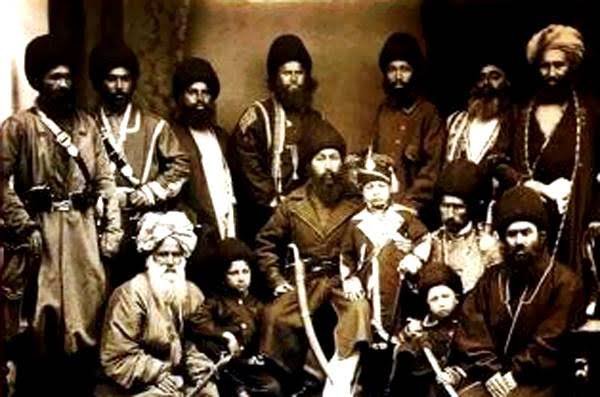
    The Pashtuns represent one of the most populous indigenous groups across South and Central Asia, predominantly in Afghanistan and Pakistan. Their social backbone relies on interconnected lineages, extended families, clans, and tribal alliances rather than a centralized political authority. From major confederations like the Durrani and Ghilzai to influential communities such as the Yusufzai, Afridi, Mohmand, Khattak, Wazir, and Mahsud, Pashtun society is a rich tapestry of overlapping regional, religious, and civic loyalties. At the core of their culture is Pashtunwali, an ancient honor code governing daily life through principles of hospitality, courage, asylum, and restorative justice. Historically, community issues and disputes were negotiated collectively through jirgas, or assemblies of local elders, maintaining order through consensus. Empire Builders and Cultural Crossroads Beyond tribal structure, Pashtuns have repeatedly reshaped the political landscape of the Indian subcontinent and Central Asia. Sultanate Dynasties: The Lodi dynasty established its rule over the Delhi Sultanate, paving the way for intricate South Asian governance structures. Administrative Reforms: Imperial leader Sher Shah Suri founded the Sur Empire in North India, pioneering sweeping reforms in taxation, infrastructure development, and currency. Empire Founding: In the 18th century, Mirwais Hotak challenged Safavid Persian dominance, while Ahmad Shah Durrani established the Durrani Empire in 1747, laying the groundwork for modern Afghanistan. This history is far more than military conquest. Pashtun territories served as vital crossroads where Persian, Turkic, Indian, and Islamic traditions converged. Consequently, their heritage spans beyond warrior traditions. It thrives in rich oral poetry, musical compositions, complex embroidery, craftsmanship, and trade networks. The Borderlands and Modern Challenges The 19th century brought prolonged conflict with British imperial forces along the northwestern frontier. A pivotal turning point arrived with the demarcation of the Durand Line in 1893. By drawing an artificial boundary between Afghanistan and British India (now Pakistan), the British divided ancestral Pashtun communities, establishing a geopolitically sensitive frontier that continues to spark debate and shape regional politics today.   In recent weeks, administrative re-alignments and border disputes in provinces like Balochistan and Khyber Pakhtunkhwa have reignited local debate. Prominent political and tribal leaders have voiced strong resistance to state restructuring, asserting that top-down administrative decisions risk erasing historical identities. Through renewed calls for broad political dialogue rather than bureaucratic divisions, modern Pashtun communities continue to rely on unified assemblies to safeguard their cultural heritage, self-determination, and historical voice in a changing region.

  • | |

    Author Ursula Hegi leaves a legacy of memory and truth

    The literary world has lost one of its most perceptive voices on historical memory and collective silence. Author Ursula Hegi, whose work rigorously examined the human dimensions of life during and after World War II in Germany, died on July 27 at her home in Sag Harbor, New York. She was 80 years old. Hegi’s Journey as a Writer Hegi’s journey as a writer was deeply intertwined with her personal background. Born Ursula Koch in Düsseldorf, Germany, in 1946, she spent her early years amidst the rubble of a nation struggling to rebuild. Growing up in the immediate aftermath of the war, she experienced a culture dominated by a pervasive, uncomfortable silence. Despite visible physical destruction all around, adults rarely spoke openly about the Holocaust or Germany’s culpability in Nazi atrocities. That suffocating atmosphere of secrecy left an indelible impression on Hegi. At age 18, she left Germany for the United States. She later became a naturalized U.S. citizen. Unpacking the Burgdorf Cycle Hegi’s move across the Atlantic gave her the critical distance needed to confront the uncomfortable realities of her heritage. She began exploring these themes through fiction, creating the imaginary German town of Burgdorf. This setting served as the backdrop for four of her novels, most notably her 1994 masterpiece, Stones from the River. In Stones from the River, Hegi tells the story of Trudi Montag, a woman with dwarfism who serves as the town’s librarian. Trudi lives on the periphery of her community. She becomes a silent observer of human nature. People often dismiss or confide in her, allowing her to gather the town’s deepest secrets and witness how ordinary citizens slowly succumbed to, ignored, or quietly resisted the rise of National Socialism. The novel received widespread critical acclaim and was nominated for the PEN/Faulkner Award. It achieved massive commercial success when Oprah Winfrey selected it for her book club in 1997. It has catapulted Hegi to national prominence and cementing the novel as a staple of modern historical fiction. Confronting the Unspoken What set Hegi’s work apart was her refusal to reduce complex historical atrocities to simple caricatures. Rather than focusing solely on major political figures or battlefields, she turned her lens toward the everyday townspeople. The neighbors who looked the other way, the shopkeepers who compromised their moral standards, and the silent witnesses whose compliance enabled widespread horror. Through her character-driven narratives, Hegi demonstrated how shame and denial could poison future generations if left unaddressed. Her non-fiction work, Tearing the Silence, extended these themes by gathering interviews from German-born individuals of her generation to explore how their parents’ war choices shaped their own adult identities. A Lasting Influence Her career as an author of over a dozen books including short story collections, children’s literature, and standalone novels. Hegi spent decades teaching and mentoring aspiring writers, notably serving on the creative writing faculty at Stony Brook Southampton. Ursula Hegi’s legacy lies in her unwavering belief that storytelling can bridge the gap between guilt and healing. By confronting uncomfortable truths with empathy, clarity, and grace, her literature ensures that the painful lessons of the 20th century will not be forgotten.

  • |

    Longing for other lives

    You might be driving along a quiet stretch of highway at dusk and notice a remote house set against the rolling hills. Its porch light glowing softly against the fading twilight. It happens in an instant. Your mind steps inside for a fleeting moment. You picture yourself standing in that kitchen, tending to a warm pot of soup, learning the rhythms of the local wildlife and forget the press of unread emails. Or perhaps it happens when you see a cozy cottage on a distant coast. Might be an apartment perched above a neighborhood bookstore. Or a tiny rural train station where only a few passengers wait. For a few seconds, you inhabit that alternate life. But as quickly as the thought arrives, reality hits back. For many people, these sudden bursts of romantic daydreaming trigger a wave of subtle unease. It is common to treat such longings like a mild psychological symptom. It is an indicator that something in our current existence is lacking. We wonder if we made wrong turns along the path, selected the wrong career or settled into the wrong neighborhood. We assume that fantasizing about a simpler life means we are secretly desperate to escape our reality. However, a change in perspective shows that this assumption may misinterpret how the human mind functions. Understanding Fernweh: The Opposite of Homesickness The key to re-evaluating this feeling lies in a concept from the German language: fernweh. The word is translated literally as far-pain. Fernweh describes a deep, aching yearning for distant places. It stands as the emotional mirror image of homesickness. While homesickness pulls us back toward the familiar, fernweh pushes toward the unfamiliar. Fernweh is neither a practical plan for relocation nor a symptom of dissatisfaction. It exists in a unique middle ground. It is more than a mere desire to escape reality, yet far less than a literal plan to manifest a new lifestyle. When we treat longing as a sign of discontent, we force ourselves into an unnecessary dilemma. We start assuming we must either change our lives or suppress our thoughts entirely. In reality, these brief mental excursions rarely end with us packing a suitcase. Instead, they leave us returning to our daily routine feeling subtly expanded, as if our capacity for wonder has been stretched open. The Multiple Selves and the Purpose of Imagination The alternative selves we envision during daydreams: the quiet caretaker of a lighthouse, the keeper of a village shop, or the isolated writer in a secluded cabin, are not criticism on our present choices. They do not demand that we abandon our jobs or start over from scratch. Rather, these imagined lives serve as quiet reminders that human beings are inherently complex. The person managing household budgets, answering routine emails and searching for misplaced keys is not the entirety of who we are or who we could be. Human imagination evolved specifically to explore endless possibilities without requiring us to physically execute every scenario. Seeing Distant Peace as Invitation Instead of seeing distant places as destinations we failed to reach, we can view them as invitations. They invite us to reconnect with our curiosity, our creativity and our capacity for reinvention. They reassure us that another way of seeing the world remains entirely possible, even within the routine of daily living.   Ultimately, longing for another life or a distant land does not mean you chose the wrong life. It simply demonstrates that your imagination remains curious and alive. As long as a distant porch light or a road over a hill can capture your wonder, you can take comfort in a profound truth. The truth is your internal life will always be far larger than the single outer life you happen to inhabit.

Leave a Reply

Your email address will not be published. Required fields are marked *