longing other lives
|

Longing for other lives

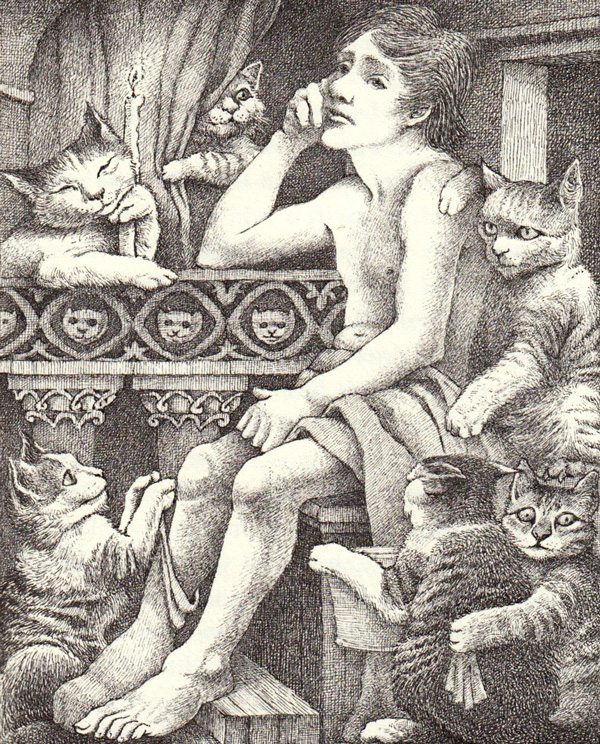
You might be driving along a quiet stretch of highway at dusk and notice a remote house set against the rolling hills. Its porch light glowing softly against the fading twilight. It happens in an instant. Your mind steps inside for a fleeting moment. You picture yourself standing in that kitchen, tending to a warm pot of soup, learning the rhythms of the local wildlife and forget the press of unread emails. Or perhaps it happens when you see a cozy cottage on a distant coast. Might be an apartment perched above a neighborhood bookstore. Or a tiny rural train station where only a few passengers wait.

For a few seconds, you inhabit that alternate life. But as quickly as the thought arrives, reality hits back.

For many people, these sudden bursts of romantic daydreaming trigger a wave of subtle unease. It is common to treat such longings like a mild psychological symptom. It is an indicator that something in our current existence is lacking. We wonder if we made wrong turns along the path, selected the wrong career or settled into the wrong neighborhood. We assume that fantasizing about a simpler life means we are secretly desperate to escape our reality.

However, a change in perspective shows that this assumption may misinterpret how the human mind functions.

Understanding Fernweh: The Opposite of Homesickness

The key to re-evaluating this feeling lies in a concept from the German language: fernweh. The word is translated literally as far-pain. Fernweh describes a deep, aching yearning for distant places. It stands as the emotional mirror image of homesickness. While homesickness pulls us back toward the familiar, fernweh pushes toward the unfamiliar.

Fernweh is neither a practical plan for relocation nor a symptom of dissatisfaction. It exists in a unique middle ground. It is more than a mere desire to escape reality, yet far less than a literal plan to manifest a new lifestyle.

When we treat longing as a sign of discontent, we force ourselves into an unnecessary dilemma. We start assuming we must either change our lives or suppress our thoughts entirely. In reality, these brief mental excursions rarely end with us packing a suitcase. Instead, they leave us returning to our daily routine feeling subtly expanded, as if our capacity for wonder has been stretched open.

The Multiple Selves and the Purpose of Imagination

The alternative selves we envision during daydreams: the quiet caretaker of a lighthouse, the keeper of a village shop, or the isolated writer in a secluded cabin, are not criticism on our present choices. They do not demand that we abandon our jobs or start over from scratch.

Rather, these imagined lives serve as quiet reminders that human beings are inherently complex. The person managing household budgets, answering routine emails and searching for misplaced keys is not the entirety of who we are or who we could be.

Human imagination evolved specifically to explore endless possibilities without requiring us to physically execute every scenario.

Seeing Distant Peace as Invitation

Instead of seeing distant places as destinations we failed to reach, we can view them as invitations. They invite us to reconnect with our curiosity, our creativity and our capacity for reinvention. They reassure us that another way of seeing the world remains entirely possible, even within the routine of daily living.


Ultimately, longing for another life or a distant land does not mean you chose the wrong life. It simply demonstrates that your imagination remains curious and alive. As long as a distant porch light or a road over a hill can capture your wonder, you can take comfort in a profound truth. The truth is your internal life will always be far larger than the single outer life you happen to inhabit.
Similar Posts

  • Why Airplanes turn off the AC before takeoff

    Have you ever noticed that the cabin feels warmer just before a plane takes off? Many passengers wonder why the air conditioning seems to stop working at that moment. The reason is not a technical problem it is part of the aircraft’s normal operating procedure. When passengers board the plane the cabin is usually cooled by an external air conditioning system at the airport. This keeps everyone comfortable while the aircraft is parked at the gate. Just before departure the external power and cooling supply are disconnected.  At that point the aircraft switches to its Auxiliary Power Unit (APU) a small onboard engine that provides electricity and cool air until the main engines are fully running. During takeoff pilots need as much engine power as possible to safely lift the aircraft into the air.  To help achieve this some systems that are not essential during takeoff including parts of the air conditioning and climate control system may be temporarily reduced or switched off. This allows more engine power to be used for takeoff instead of running cabin cooling systems. Former American pilot John Cox explains that this short changeover happens because the aircraft moves from ground power to its own power systems. Once the engines are operating normally and the plane reaches a stable stage of flight the air conditioning returns to normal and the cabin quickly becomes comfortable again. So, if the cabin feels a little warm before takeoff there is usually no reason to worry. It is a normal part of the flight process designed to support a safe and efficient departure.

  • Self Care DAy healthy habits

    Every year on July 24, people around the world observe Self Care Day to remind everyone that looking after their physical mental and emotional health is just as important as meeting daily responsibilities. The date also carries a special meaning encouraging people to practice self care 24 hours a day 7 days a week. Health experts say taking care of yourself is not selfish it is an important part of living a healthy and balanced life. While self care should be practiced every day Self Care Day is a good time to renew this commitment. One of the best ways to care for yourself is to set aside some personal time each day.  Even one hour can make a difference. You can read a book watch your favorite show take a walk or simply relax in a quiet place. These activities can help reduce stress and improve your mood. Eating a healthy and balanced diet is another important part of self care. Experts recommend including fresh fruits vegetables whole grains and beans in your meals.  Nutritious foods provide energy and support overall health. Regular physical activity is also essential. Exercise even if it is light can improve fitness boost energy reduce stress and help you feel happier. If you cannot exercise every day try to stay active whenever possible. Getting enough quality sleep is equally important.  Good sleep helps the body recover improves brain function and reduces tiredness making it easier to handle daily tasks. Experts also suggest practicing deep breathing meditation or yoga to support mental well being. These activities can improve focus lower anxiety and help you feel more relaxed. According to health professionals self care is not a luxury but a basic need. Making these simple habits part of your daily routine can help improve both your physical and mental health.

  • |

    Tradition, impersonality and mythic structure in “The Waste Land”

    Eliot’s masterpiece The Waste Land is published in 1922 just three years after “Tradition and the Individual Talent“. The poem serves as the ultimate practical demonstration of his theoretical ideas. Rather than describing tradition abstractly, Eliot uses allusion, polyphony, structural juxtaposing, and mythic framing to explain how a modern poem can absorb European history to process post-WWI disillusionment. Eliot argued that a poet must possess a historical sense. It is an awareness of the past’s presence alongside the contemporary moment. In The Waste Land, centuries of literary tradition exist on a single plane. In Section I (The Burial of the Dead), the speaker encounters acquaintance in modern London named Stetson and asks:    That corpse you planted last year in your garden, Has it begun to sprout?  In the very next line, Eliot links this modern London scene directly to the Punic Wars between Rome and Carthage. You who were with me in the ships at Mylae!   Modern industrial London and ancient Rome are collapsed into the same spiritual wasteland. The historical sense allows Eliot to treat human trauma across millennia as simultaneous rather than sequential. In his Impersonal Theory, Eliot argued that the poet’s mind acts as a catalytic medium. It’s  fusing disparate feelings and literary artifacts into a new substance without injecting personal bias. Throughout the 433 lines of The Waste Land, Eliot incorporates over 35 distinct literary references, 6 foreign languages, and references to sacred texts across Eastern and Western traditions. Eliot quotes Edmund Spenser’s Renaissance poem Prothalamion: Sweet Thames, run softly, till I end my song. He juxtaposes Spenser’s idyllic, nymph-filled river with the industrial Thames of 1920s London, scattered with silk handkerchiefs, cardboard boxes, cigarette ends. As commuters cross London Bridge, Eliot echoes Dante’s Inferno (Canto III): I had not thought death had undone so many. The modern office workers are literally mapped onto the souls trapped in Hell’s vestibule. He isn’t relying on a traditional narrative arc or a subjective personal narrative. Eliot uses what he famously called the Mythic Method (a technique he also praised in James Joyce’s Ulysses)..Eliot grounds the entire poem in two scholarly texts on mythology and ritual. From Ritual to Romance (the Grail Legend and the sterile Fisher King). The Golden Bough (ancient fertility cults, dying-and-rising gods). The underlying archetype, a sterile land awaiting a spiritual rain to restore fertility, unifies the fragmented scenes of modern decay (mechanized sex, empty conversations, spiritual apathy). Therefore, the individual talent grounds chaos in timeless mythic order. In order to achieve the extinction of personality, Eliot abandons a central I persona. Instead, he speaks through a chorus of shifting voices. A Marie in Munich, a hyacinth girl, a cockney woman in a pub, and Saint Augustine. In his famous explanatory notes to line 218, Eliot exposes he unifying center of the poem:  Tiresias, although a mere spectator and not indeed a ‘character’, is yet the most important personage in the poem, uniting all the rest… What Tiresias sees, in fact, is the substance of the poem. Tiresias: the blind, bisexual prophet of Greek myth (from Sophocles and Ovid). It has lived as both man and woman and seen the depths of classical tragedy. Eliot submerges his own biographical ego into an ancient, collective consciousness by adopting Tiresias as the central perspective Eliot’s concept of tradition is not narrowly provincial. His concept relates to the broader heritage of human thought. In the final section “What the Thunder Said”, the modern mind seeks a cure for its spiritual dryness not in the West, but in the Upanishads. The thunder speaks the Sanskrit syllables: Datta (give), Dayadhvam (sympathize) and Damyata (control). The poem concludes with the solemn formal chant: Shantih shantih shantih The Peace which passeth understanding. The final line: “These fragments I have shored against my ruins” summarizes Eliot’s entire philosophy of tradition. Modern civilization may be in ruins, but the individual poet reconstructs meaning by gathering and rearranging the enduring fragments of global tradition.  

  • |

    Iqbal’s philosophy shapes modern freedom movements

    Ghulami Mein Na Kaam Ati Hain Shamsheerain Na Tadbeerain Jo Ho Zauq-E-Yaqeen Paida To Kat Jati Hain Zanjeerain (In slavery, neither swords nor plans are effective but when the taste for conviction is forged, the chains are shattered.) In these timeless couplets, Allama Muhammad Iqbal captivated a fundamental truth about human liberation. It’s that the physical force (shamsheerain) and strategic maneuvering (tadbeerain) are utterly powerless if a nation or an individual is trapped in a mindset of subjugation. True emancipation does not start on the battlefield or at a diplomatic negotiation table. It begins within the human psyche through Zauq-e-Yaqeen. An unshakeable conviction, profound self-belief, and faith in a higher purpose accordingly.  When one examines the contemporary global events, Iqbal’s words understand modern struggles for sovereignty, social justice, and systemic reform. In the modern world, servitude rarely presents itself through colonial rule or physical iron chains. Instead, modern subjugation often manifests as economic dependency, cultural imperialism, digital surveillance, and ideological defeatism. Entire populations often find themselves caught in systems that dictate their economic choices. They systems that diminish their local heritage, and undermine their self-reliance. Iqbal’s verse applies to this contemporary reality. The verse reveals why so many political reform efforts or heavily funded technological solutions fail to bring real change. When a society suffers from an internal sense of inferiority, no amount of advancement or external assistance can bring genuine autonomy. Strategy and weapons are just instruments. They remain inert without the driving force of genuine conviction. Psychological emancipation must precede material victory. Until a community believes it is worthy and capable of self-determination, external freedom remains an illusion. What does it mean to cultivate Zauq-e-Yaqeen (the taste of deep certainty) in today’s complex world? It represents a transition from passive endurance to active self-realization (Khudi). Historically and in present times, the most profound societal revolutions did not succeed purely because they had superior resources. They succeeded because a critical mass of people developed an unshakeable belief in the justice of their cause. Modern historical struggles show that authoritarian regimes with military apparatuses often crumble when faced with non-violent movements engined by absolute moral certainty. In an era of informational dominance, Zauq-e-Yaqeen requires reclaiming intellectual sovereignty. It demands rejecting narrative manipulation and trusting one’s collective identity and ethical values. Developing nations breaking free from debt cycles and foreign leverage do so by encouraging local innovation, education, and confidence in their human capital. Iqbal’s poetry is not a eulogy for the past. It is an urgent command for the present. The chains of the modern era: political suppression, economic exploitation, or personal despair, cannot be let go of by adopting foreign systems or waiting for political saviors. Real liberation requires an internal awakening. When a society cultivates faith in its intrinsic worth, its moral foundation, and its capacity to shape its destiny, the structural barriers that once seemed insurmountable inevitably begin to shatter. Strategic plans and practical tools then become effective because they are finally guided by an invincible spirit.  

  • AI eye test for heart disease

    A new study suggests that a simple eye scan could help predict a person’s risk of having a heart attack or stroke over the next 10 years. The scan takes a picture of the back of the eye a test that is already used to check for different eye diseases.  Researchers believe it may also reveal important signs about heart health. Scientists used artificial intelligence (AI) to study thousands of digital eye images. The AI system can examine a scan in less than a second and estimate a person’s future risk of serious heart problems. Researchers hope this quick test could one day become part of regular health checkups along with blood pressure and cholesterol tests. This may help doctors identify high risk patients earlier and start treatment before serious problems develop. The study focused on eye scans from people with type 2 diabetes because they already receive regular eye exams to detect conditions such as diabetic retinopathy. Lead researcher Dr. Efi Mordi said the eyes can provide valuable information about the heart. If the tiny blood vessels at the back of the eye become narrow or damaged similar changes may also be happening in the blood vessels that supply the heart. At first the AI was trained to look for signs of narrowed or blocked blood vessels. Later it also learned to recognize other small details such as the pattern and size of blood vessels. The system was trained using 4,200 eye images. The results were encouraging.  The AI correctly predicted the risk of a heart attack or stroke within the next 10 years with about 70% accuracy. Dr. Mordi said the eye scan takes less than a minute and is already part of routine eye examinations. If widely used it could help save lives by identifying people who need early treatment. Professor Bryan Williams of the British Heart Foundation called the technology an important step forward but said more research is needed before it becomes a standard medical tool. Dr. Clare Jonas from the Stroke Association also welcomed the findings. She said that if governments include technologies like this in healthcare planning they could help prevent many cases of stroke in the future. Experts believe this research is an important development and could lead to  AI powered eye scans becoming a routine part of future medical checkups.

  • How breakfast supports children’s mental health

    Health experts say that starting the day with a healthy breakfast is important for children’s energy growth and mental development.  However many children go to school without eating anything in the morning. This habit can affect their health mood and studies. Skipping breakfast is common among school going children. Some children do not feel hungry in the morning while others leave home without eating because they are in a hurry. Experts warn that this routine can lead to tiredness low energy poor concentration and irritability. According to Health line it is not only important what children eat for breakfast but also where and how they eat it.  Research suggests that regularly skipping breakfast or having breakfast outside the home may be linked to a higher risk of emotional and behavioral problems among children and teenagers. A spanish national health survey collected information from parents and guardians of 3,772 children between the ages of 4 and 14.  The study looked at their breakfast habits as well as their mental well being self esteem mood and anxiety levels. The findings showed that eating breakfast outside the home could have negative effects similar to skipping breakfast completely.  Experts believe that a balanced home prepared breakfast can support children’s physical growth as well as their mental and emotional well being. A nutritious breakfast may also help improve children’s memory attention and ability to learn.  These benefits can make it easier for them to stay focused in class and perform better at school. Experts advise parents to plan breakfast in advance if mornings are busy.  Some foods can even be prepared the night before. Most importantly parents should try not to send children to school on an empty stomach as a healthy breakfast can help them stay active, focused and ready to learn throughout the day.

Leave a Reply

Your email address will not be published. Required fields are marked *