pmln vows deliver
| |

PML-N vows to deliver on Kashmir promises

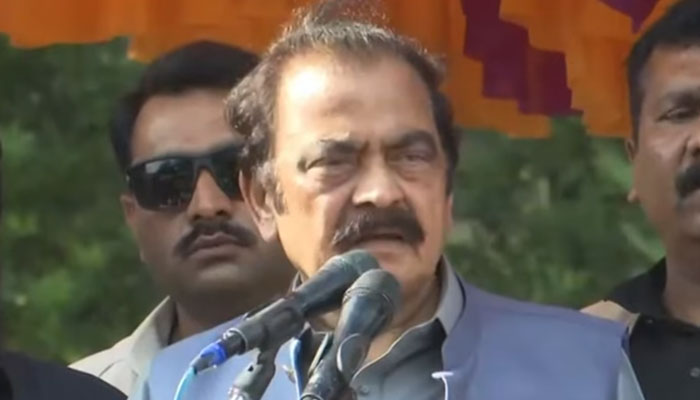
Pakistan Muslim League-Nawaz (PML-N) leader and Prime Minister’s Adviser on Political Affairs Rana Sanaullah said the time has come to fulfill the commitments made to the people of Azad Jammu and Kashmir (AJK), following the party’s strong performance in the region’s elections.

Addressing an election rally in Haveli, Rana Sanaullah said the people of AJK had already expressed their confidence in PML-N through their vote. He stated that the party had secured 24 seats in the elections, surpassing the 23-seat threshold required to form the government in the Legislative Assembly.

He described the electoral process as one of the fairest and most transparent in AJK’s history, saying voters had placed their trust in former prime minister Nawaz Sharif and the party’s development agenda. According to him, PML-N now carries the responsibility of honoring every promise made during the election campaign.

Rana Sanaullah said AJK witnessed significant progress whenever PML-N governed both Pakistan and the region. He pledged that the party would launch a new phase of development if it formed the next government, adding that projects similar to those introduced in Punjab would also be implemented across AJK to improve infrastructure, public services, and economic opportunities.

He said the party remains committed to accelerating development, strengthening institutions, and improving the quality of life for the people of Kashmir.

Meanwhile, Federal Minister for Kashmir Affairs and Gilgit-Baltistan Amir Muqam also addressed the gathering and praised the resilience of residents living along the Line of Control (LoC). He said the people of the border areas have made extraordinary sacrifices in defending the country and deserve continued recognition and support.

Amir Muqam said the PML-N leadership has consistently stood with the people of Kashmir and remains committed to safeguarding their interests while pursuing policies aimed at development, stability, and prosperity in the region.

Similar Posts

  • | |

    Poor internet access threatens girls’ education …

    PESHAWAR: Poor internet connectivity is creating serious problems for girls pursuing education in the merged districts of Khyber-Pakhtunkhwa. Students in remote areas often struggle to attend online classes. They also face difficulties downloading study material and submitting assignments. For 16-year-old Khadija Bibi from Kurram district, finding an internet signal has become part of her daily life. During the summer holidays, she often leaves her home and climbs a nearby hill. She carries her mobile phone with her. She stands on the rocky slope and searches for a stronger signal. She uses the limited connection to download lecture notes and complete academic tasks. She also tries to attend online classes from the hill. However, the weak network frequently disconnects. This causes her to miss lessons and submit assignments late. Khadija is a BS Computer Science student at Benazir Women University Peshawar. She said unreliable internet had become one of the biggest challenges in her education. She said students in remote areas were being left behind as education increasingly depended on digital technology. The problem is not limited to Kurram. Thousands of girls across the merged districts face similar difficulties. The region already has several major education challenges. Poverty remains a serious obstacle. Insecurity has also affected access to education. Many areas also lack proper schools and other educational facilities. The digital divide has added another challenge. Several schools in the merged districts either do not have computer laboratories or have laboratories without working computers. Some also lack internet connections. This prevents students from gaining basic computer skills. It also makes online education difficult. Official data highlights the wider education crisis in the region. Benazir Income Support Programme data shows that 66 per cent of children in North Waziristan are out of school. The rate stands at 63 per cent in Bajaur. It is 61 per cent in South Waziristan. Mohmand and Khyber each record an out-of-school rate of 51 per cent. Kurram and Orakzai each have a rate of 47 per cent. Girls face additional difficulties because of limited access to technology. The Khyber-Pakhtunkhwa Women Empowerment Policy 2026-2030 highlights the scale of the digital divide. According to the policy, only 11 per cent of women in the merged districts have access to the internet. The female literacy rate is also extremely low. It stands at only 17 per cent. Education and digital inclusion advocates say poor infrastructure is a major reason for the situation. Weak mobile networks make internet access unreliable. Many families also cannot afford smartphones or regular internet packages. Some girls have to borrow phones from family members. This makes it difficult for them to attend online classes regularly. Access to technology is also affected by social restrictions. In some communities, families remain concerned about girls using mobile phones and the internet. Concerns about online safety and social pressure often result in restrictions. Cultural norms can also limit girls’ access to digital technology. Experts say improving internet coverage alone will not solve the problem. Girls also need greater freedom to travel to schools, universities and training centres. Better transport facilities could help students reach educational institutions more easily. It could also improve access to vocational training and employment opportunities. Experts have urged the provincial government and telecommunications authorities to give greater attention to the merged districts. They say residents should receive reliable internet services similar to those available in settled areas. Improved digital infrastructure could transform educational opportunities for girls in remote communities. Reliable internet would allow students to attend online classes without travelling long distances. They could access digital libraries and educational resources. They could also develop computer skills and participate in online training programmes. For students like Khadija, internet access is more than a technological facility. It is directly linked to education and future opportunities. Without reliable connectivity, many talented girls may continue to struggle despite their willingness to study. Addressing the digital divide therefore requires investment in telecommunications infrastructure, schools, digital devices and affordable internet services. It also requires efforts to remove social barriers that prevent girls from using technology.

  • | | |

    Tank terrorist attack: 15 martyred including 14 se…

    Khyber Pakhtunkhwa: A terrorist attack on a joint police checkpost in Khyber Pakhtunkhwa’s Tank district has resulted in the martyrdom of 15 people, including 14 security personnel, according to the Inter-Services Public Relations (ISPR). The military’s media wing said the attack took place early Friday and was carried out by militants identified as Fitna-al-Khawarij, a term used by authorities for members of the banned Tehreek-i-Taliban Pakistan (TTP). ISPR said the attackers attempted to breach the checkpost’s perimeter, but their efforts were swiftly stopped by security forces. The personnel deployed at the post responded with courage and professionalism, engaging the attackers and killing 15 militants. According to the statement, after the failed attempt to enter the checkpost, the attackers rammed an explosive-laden vehicle into the perimeter wall. The powerful blast caused severe damage to the infrastructure and resulted in the martyrdom of 15 individuals, including 12 soldiers, two police officers, and a government official from the former forest department. A sanitisation operation is currently underway in the area to locate and eliminate any remaining terrorists. ISPR said security forces and law enforcement agencies will continue counterterrorism operations under the Azm-e-Istehkam strategy to eliminate terrorism from the country. The military’s media wing paid tribute to the sacrifices of security personnel, stating that their sacrifices strengthen Pakistan’s resolve to protect the nation. The attack comes amid increased militant activity in parts of Khyber Pakhtunkhwa. Security forces have recently conducted operations in Bannu and surrounding areas, where several militants were killed during intelligence-based operations. Authorities say efforts are continuing to dismantle terrorist networks and prevent further attacks against security personnel and civilians.

  • Thai Police Rescue Chinese Student From Transnational ‘virtual Kidnapping’ Scam

    BANGKOK, Thailand — Thai authorities have successfully rescued a 21-year-old Chinese university student who was coerced by a transnational scam syndicate into staging her own abduction, a sophisticated “virtual kidnapping” scheme designed to extort millions in ransom from her family in Hong Kong. Six Nigerian Men Arrested In Nonthaburi For Alleged Ai-powered Romance Scams The […]

  • | |

    PTI founder not in solitary confinement

      The Islamabad High Court on Thursday heard petitions challenging the alleged solitary confinement of Pakistan Tehreek-e-Insaf (PTI) founder Imran Khan and his wife Bushra Bibi. During the proceedings, Advocate General (AG) Islamabad Naveed Hayat Malik informed the court that the two prisoners were not kept in solitary confinement, adding that they were being provided facilities even better than B-class prison standards. Justice Khadim Hussain Soomro presided over the hearing. The petitioners were represented by Barrister Salman Safdar, while the jail superintendent was also present in the courtroom and submitted a detailed report regarding the facilities provided to the high-profile inmates. Advocate General Malik clarified that the detainees were not isolated due to punitive measures but as a security protocol. He noted that the inability of petitioners’ families to meet them did not constitute solitary confinement. Meanwhile, Jail Superintendent Sajid Beg explained that solitary confinement legally means locking an inmate in a single cell for 24 hours—which, he emphasized, was not the case for Imran Khan. The PTI founder, he said, was housed in a compound consisting of seven interconnected cells, allowing free movement. Additionally, a convicted inmate was permanently assigned to accompany him, further disproving the solitary confinement claim. The superintendent also disclosed the amenities provided to Khan. He was given access to a television set, newspapers, and books. Both Urdu and English dailies are being delivered daily, and more than 500 books have been provided to him so far—with nine more recently added to his cell. However, Barrister Salman Safdar, representing the petitioners, painted a contrasting picture. He informed the court that on the Supreme Court’s directive, he had visited Imran Khan as a friend of the court and noticed his deteriorating eyesight. According to Safdar, Khan expressed satisfaction with his food, security, and bathroom facilities but pleaded: “Just save my eyesight.” Safdar further alleged that for seven months, he was not allowed to meet his client, and it was only after the intervention of the Chief Justice that a meeting was arranged in April, lasting barely 65 minutes. Out of that brief meeting, the PTI founder spent 60 minutes complaining about mental torture and restrictions on meetings. He claimed he was under 22-hour isolation while Bushra Bibi faced 24-hour confinement. Safdar also pointed out that the TV provided in the cell had no functioning channels. In a disturbing revelation, Safdar informed the court that Imran Khan’s 68-year-old sister, Aleema Khanum, visited Adiala Jail 38 times without being granted a single meeting. The PTI founder has also been deprived of telephonic conversations with his sons for the last eight months. Safdar argued that this psychological torture is far more severe than physical violence and urged the court to intervene. He requested that a panel of three lawyers be formed to visit the jail and independently assess the conditions. He also demanded that Imran Khan be allowed a weekly phone call with his sons and that the jail authorities submit an affidavit committing to this arrangement. Justice Soomro noted that he had previously visited jails in Sindh when he was a senior judge there, but Aleema Khanum interjected, urging the judge to personally visit Adiala Jail to ascertain the reality. After hearing all parties, the court directed them to submit written reports and relevant legal references, after which an appropriate order would be issued.

  • FIA Gujranwala zone arrests 17 alleged human traffickers

    GUJRANWALA: The Federal Investigation Agency (FIA) Gujranwala Zone has arrested 17 alleged human traffickers and agents involved in defrauding citizens on the pretext of providing overseas employment. The arrests were made during a crackdown against human trafficking and immigration fraud in Gujranwala, Gujrat and Sialkot circles. Some of the arrested suspects were also proclaimed offenders (POs), according to the FIA. Officials said the suspects allegedly collected millions of rupees from citizens after promising to send them to Saudi Arabia, Italy, Spain, Turkey, Poland, Iraq, Cambodia, Dubai and other countries for employment. The arrested suspects were identified as Mustansar Hussain, Asif Shabbir, Farooq, Muhammad Waseem, Javed Iqbal, Qaiser Shehzad, Zafar Ali, Zakaullah, Muhammad Sufyan, Yasin Ali, Muhammad Sharif, Manzoor Ahmed, Safdar Hussain, Sufyan Elahi, Muhammad Jameel, Athar Hani alias Aswad and Nadeem Mahmood. The Gujranwala circle made the highest number of arrests, with 10 suspects taken into custody, followed by Gujrat with five and Sialkot with two. In one of the Gujranwala circle operations, two suspects were arrested in the same case. In a major case, the FIA arrested Muhammad Jameel for allegedly receiving Rs8 million from two people on the promise of sending them to Italy. Another suspect, Nadeem Mahmood, allegedly took Rs2.5 million from a citizen for sending him to Italy. According to investigators, the victim in the latter case was instead sent to Libya, where he was allegedly kept in a safe house and subjected to torture. The suspects allegedly demanded further money for his release. The Gujrat circle arrested Javed Iqbal and Qaiser Shehzad for allegedly receiving Rs3.5 million from citizens on the promise of sending them to Spain. In Sialkot, the FIA arrested Yasin Ali alias Amir and Muhammad Sharif in separate human trafficking cases. Yasin Ali allegedly received Rs251,000 and 2,000 dirhams from a citizen after promising him employment in Dubai, while Muhammad Sharif allegedly took Rs1 million for sending another citizen to Poland. The FIA said the suspects had collectively received at least Rs23.495 million from citizens in different cases on false promises of overseas employment. Cases have been registered against the suspects under relevant provisions of law and further investigation is underway. FIA officials said the crackdown would continue against other elements involved in human trafficking, immigration fraud and exploitation of citizens seeking employment abroad. The agency also urged citizens to remain cautious while dealing with overseas employment agents and verify their credentials before handing over money or documents for foreign employment.

  • | |

    Sindh orders immediate reduction in public transpo…

    The Sindh government has ordered an immediate reduction in public transport fares following a significant decrease in the price of high-speed diesel. According to local media reports, the Sindh Transport Department has directed transporters to pass the full benefit of the Rs32.63 per litre reduction in diesel prices on to passengers. The directive covers buses, minibuses, coaches, vans and other public service vehicles operating across the province. Transport authorities have also instructed operators to clearly display updated fare lists at vehicles and bus terminals. The move is aimed at ensuring that passengers receive the benefit of lower fuel prices and that transporters do not continue charging fares based on previous diesel rates. Officials have further been directed to conduct daily road inspections and check public transport vehicles to monitor compliance with the new instructions. Transporters found charging passengers excessive fares could face strict action. According to the Transport Department, penalties for violations may include fines, suspension of route permits and cancellation of vehicle fitness certificates. Authorities have also been instructed to submit daily implementation reports to the Sindh Transport Department. The directive comes after the price of high-speed diesel was reduced by Rs32.63 per litre, bringing its new price to Rs363.06 per litre. The reduction is expected to lower operating costs for public transport operators and has prompted authorities to seek a corresponding reduction in passenger fares. Public transport fares are an important issue for millions of commuters, particularly low-income workers, students and daily wage earners who rely heavily on buses, minibuses and other shared transport services. The Sindh government’s decision is therefore likely to attract considerable attention from passengers who have been waiting for transport fares to reflect changes in fuel prices. The enforcement mechanism will be crucial in determining whether commuters actually receive the benefit of the diesel price reduction. Daily inspections and penalties could help prevent transport operators from charging fares above the officially approved rates. Authorities have emphasized that transporters must comply with the new instructions and ensure that revised fares are clearly communicated to passengers. The latest move represents an effort by the provincial government to link public transport fares in Sindh with changes in fuel prices and provide immediate relief to commuters following the reduction in diesel costs.

Leave a Reply

Your email address will not be published. Required fields are marked *