multimedia pioneer cao
| |

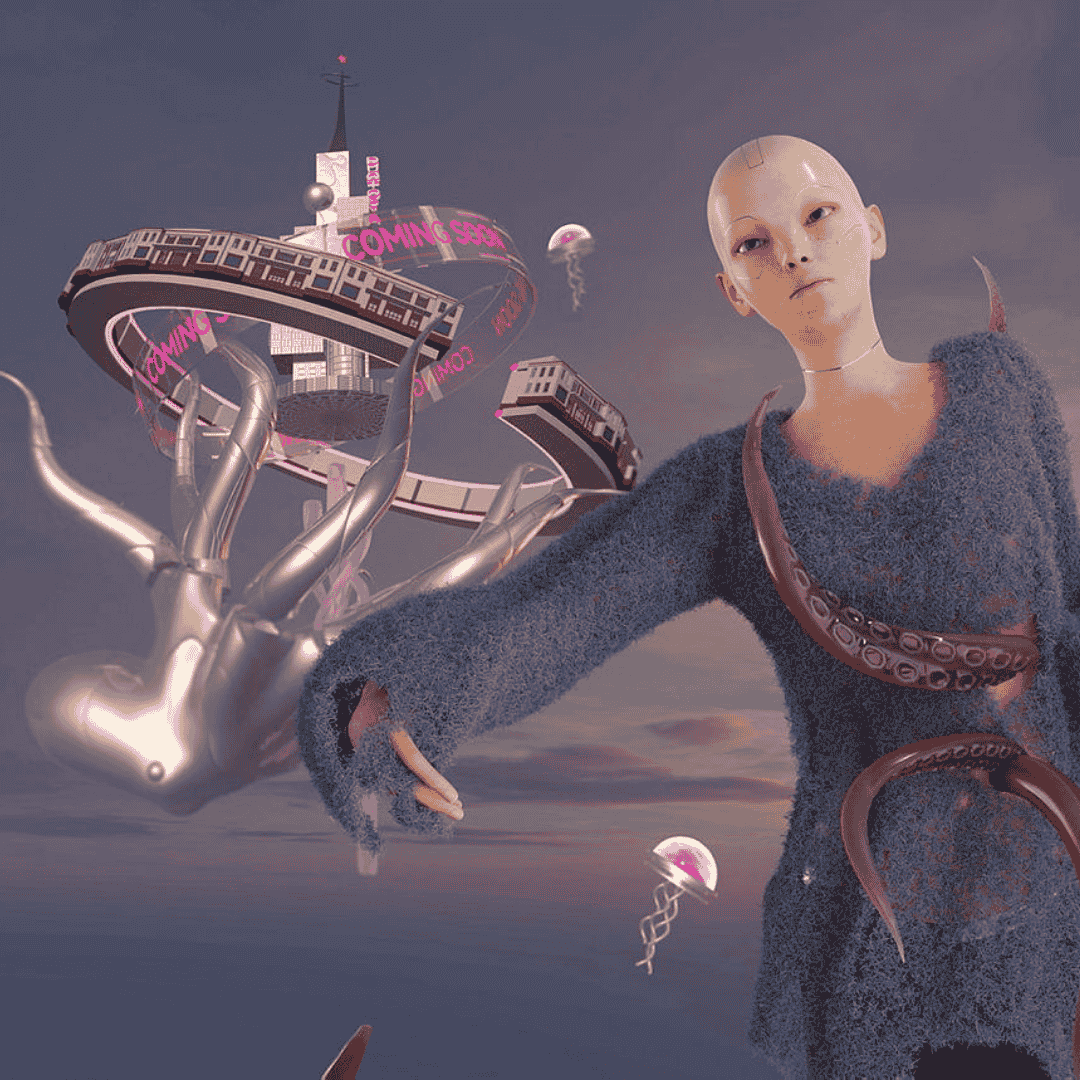
Multimedia pioneer Cao Fei captures the human heart

Among contemporary Asian creators, Beijing-based multimedia artist Cao Fei stands out as a defining narrative voice. Working across video, virtual reality, installation, and photography, her globally acclaimed career centers on a simple yet profound premise: amidst the whirlwind of rapid industrial advancement, hyper-capitalism, and sweeping technological change, art must always return to the core of the human condition.

Born in 1978 in Guangzhou, Cao Fei grew up on the frontlines of staggering societal evolution. Watching the countryside surrender to megacities, factory complexes, and high-tech infrastructure gave her a unique point on the modern world. Rather than viewing this rapid transition with nostalgia or pessimism, her works connect reality and imaginative fantasy.

A hallmark of Cao’s career is her fascination with the workplace, particularly automated logistics hubs and manufacturing floors. In iconic pieces like Whose Utopia and Asia One, she embeds her cameras inside functioning industrial facilities from textile plants to highly automated e-commerce distribution centers. Yet, instead of focusing solely on the cold efficiency of machinery or output metrics, she shifts her lens toward the individual laborers maneuvering through these vast, mechanized systems. Her films document the quiet desires, personal dreams, and unspoken emotional bonds of workers who navigate a world increasingly driven by algorithms and quotas.

Parallel to her exploration of physical industry, Cao Fei has consistently operated on the cutting edge of digital frontiers. Long before the concept of the metaverse entered mainstream vocabulary, she was constructing RMB City within online platforms like Second Life, exploring how virtual avatars allow people to seek identity, escape, and community in digital environments. Her projects often feature young people engaging in subcultures like cosplay, stepping out of suburban construction sites and into elaborate alter egos. For Cao, these virtual realms are not merely frivolous distractions; they represent vital spaces of self-expression where individuals reclaim agency against the pressure of uniform urban life.

Despite her focus on futuristic landscapes, automated networks, and virtual platforms, Cao Fei maintains that rootedness in heritage remains essential. Traditional culture, memory, and personal history act as indispensable anchors in a world constantly shifting beneath our feet. Whether reflecting on regional Cantonese roots, exploring local neighborhood history in Beijing, or depicting surreal futures, her work grounds high-tech environments in real human memory and emotion.


Ultimately, Cao Fei’s artistic vision offers a thoughtful, multi-layered reflection on modern life. By balancing documentation with surreal storytelling, her art reminds us that no matter how complex our machines, algorithms, or cities become, the central narrative of our time remains fundamentally human.

Similar Posts

  • | |

    The Sham Shaman

    In 1968, a graduate student in anthropology at the University of California, published a book that would reshape the publishing world. Titled The Teachings of Don Juan: A Yaqui Way of Knowledge. The book purported to be a faithful academic field report by Carlos Castaneda detailing his apprenticeship under an elderly Yaqui shaman named Don Juan Matus in the Mexican desert. Castaneda’s account became an overnight sensation as it blended desert mysticism, hallucinogenic plant rituals, and philosophical paradoxes. It sold millions of copies, earning him a doctorate from UCLA. This success made him a guru to icons like Bob Dylan, John Lennon, and Octavio Paz. A Life Built on Fabrications Long before he wrote about desert sorcery, Castaneda had mastered the art of reinventing himself. Born César Carlos Salvador Arana in Peru in 1925—the son of a humble watchmaker—he routinely rewrote his origin story. He claimed to have been born in Brazil, shaved years off his age, and concocted wild tales of fighting as a soldier in North Korea or working as a border spy. In reality, he fled Peru after fathering a child at thirteen, eventually making his way to Los Angeles in the 1950s. Ground-breaking Anthropological Discoveries. Yet beneath the celebrated field notes lay one of the most audacious literary fabrications in modern history. Don Juan Matus was not a real person. The desert apprenticeships never took place. Castaneda was not a devoted field researcher. He was a master illusionist who deceived prestigious academics and eager seekers alike. When Castaneda enrolled at UCLA, he found an academic environment eager for authentic indigenous wisdom and existential insight. Synthesizing disparate ideas into a singular narrative, he assembled Don Juan’s philosophical worldview by freely borrowing from European philosophy, Buddhist theology, ethnomethodology, and popular horror fiction. To his impressionable professors, the resulting texts appeared to be ground-breaking anthropological discoveries. Unraveling the Hoax While Castaneda’s books topped bestseller lists throughout the late 1960s and 1970s, critical cracks in his story soon began to widen into chasms. Skeptical researchers and anthropologists began scrutinizing the timeline and claims in his field notes. Archive Contradictions: UCLA library records revealed that on dates Castaneda claimed to be in the Sonoran desert learning shamanic secrets, he was actually signed into the university library reading room. Botanical and Cultural Errors: Experts on Yaqui culture noted that the spiritual concepts and language attributed to Don Juan bore almost no resemblance to authentic Yaqui traditions or language structures. Philosophical Echoes: Literary sleuths discovered that Don Juan’s most profound dialogues were near-verbatim adaptations of modern academic sociology and Western philosophical texts. Despite being systematically exposed by critics, Castaneda maintained his mystique. He avoided photo shoots, refused interviews, and cultivated an aura of secretive invulnerability. He also assured his devotees that any perceived discrepancies were simply part of a sorcerer’s duty to erase his personal history. The Guru’s Reclusive Cult and Legacy As public acclaim gave way to scholarly embarrassment, Castaneda retreated further into reclusiveness. In the 1990s, he launched a movement called Tensegrity. He promoted a series of physical movements he claimed were ancient Toltec magical passes. Critics quickly noted their striking resemblance to modern martial arts taught by a local Santa Monica instructor. Surrounding himself with a inner circle of devout disciples in Los Angeles, Castaneda governed his group with increasing paranoia until his death from cancer in 1998. Anthropology’s Ultimate Trickster Ultimately, Carlos Castaneda remains a complex figure in cultural history. His anthropological credentials were exposed as entirely fraudulent. His writings captured the yearning of an era desperate for spiritual transcendence beyond traditional structures. He stands as anthropology’s ultimate trickster. He’s a man who turned a fictional thesis into a million-dollar empire and proved that, given the right narrative, millions of people will gladly step through the looking glass.

  • How far can you drive after low fuel light comes on?

    If you fail to keep an eye on your fuel level while driving, your car could eventually come to a stop. When a car is about to run out of fuel, a warning indicator commonly known as the low fuel light illuminates on the dashboard. But how far can you actually drive once this light comes on? The answer can be useful if there isn’t a fuel station nearby. However, there is no single answer as it depends on several factors including the car’s make and model, model year, driving habits, fuel efficiency and road conditions. According to experts, once the low fuel warning light turns on, the vehicle cannot travel very far. The good news, however, is that it can usually go farther than many people expect. Experts say the warning light typically comes on when the fuel tank has around 10 to 15 percent of its capacity remaining. On average, small cars can travel about 20 to 30 miles (32–48 km) after the light comes on while larger vehicles may cover up to 50 miles (80 km). However, if the vehicle is old or the road conditions are poor, the remaining driving range may be significantly shorter. Cold weather can also increase fuel consumption reducing the distance the car can travel after the warning light appears. Experts further caution that continuing to drive for an extended period after the low fuel light comes on may damage the engine although driving a few additional miles is generally unlikely to cause any harm.

  • | |

    Ada Lovelace, the tech woman

    Long before the dawn of modern computers, a twelve-year-old girl named Ada Lovelace set her heart on how to fly. Rather than merely dreaming about the skies, she treated the challenge as a practical engineering problem. Beginning in early 1828, she meticulously studied avian anatomy and tested potential wing materials. Her experiments ranged from light paper and smooth silk to natural feathers. Lovelace even documented her findings in an illustrated manuscript she titled Flyology. Her pursuit only halted when her mother put an end to the project. A traditional mother who insisting that such whimsical ideas were a distraction from proper academic training. This tension between wild imagination and strict logic defined Lovelace’s upbringing.  Mother Annabella Byron was an intensely practical woman whose mathematical tendencies led her estranged husband, the tempestuous Romantic poet Lord Byron, to nickname her the Princess of Parallelograms. Shortly after Ada was born, Annabella separated from Byron. She further  separated the infant from her father’s chaotic influence. Lady Byron made it her mission to raise her daughter on a rigid diet of arithmetic, French and music. By doing so, the mother explicitly aimed to suppress any artistic interest she believed Ada might inherit from Byron. When Byron inquired about his young daughter, Annabella noted Ada applied her imagination strictly to mechanical problem-solving. Yet, despite her mother’s best efforts to extinguish her creative potential, Lovelace refused to treat reason and imagination as opposing forces. Instead, she fused them into a single approach to understanding the world. In early 1841, she pondered the true nature of imagination while identifying two distinct powers. First, she defined it as a combining faculty: the rare ability to find meaningful connections between entirely unrelated subjects. Second, more profoundly, she recognized imagination as a discovering faculty: the equipment that pierces the invisible world to reveal the hidden mechanics of science.   This hybrid worldview that Lovelace would later call poetic science is precisely what enabled her to look at Charles Babbage’s early mechanical calculating engines and see far past their raw math. While others saw mere gear-driven counting machines, Ada envisioned a future where machines could manipulate symbols, compose music, and run complex sequences of instructions. By bridging the emotional depth of her father’s romanticism with the rigorous structure of her mother’s mathematics, Ada Lovelace did not just become the world’s first computer programmer; she proved that groundbreaking technical innovation requires equal parts calculation and visionary artistry.

  • How baby shark built pinkfong’s empire

    When South Korean company SmartStudy uploaded a simple 90-second children’s song to YouTube in June 2016, few people could have imagined that it would become a worldwide sensation. The company now known as The Pinkfong Company, created the “Baby Shark” video which later became the most-watched video in YouTube history. It has now crossed more than 16 billion views. The company recently made another big move as its shares began trading on the Korea Exchange.  The stock rose by more than 9% at the start of trading. At the listing ceremony, CEO Kim Min-seok celebrated by playing a traditional drum while the company’s Baby Shark mascot stood beside him. SmartStudy was founded in 2010 with only three employees. According to Kim the first office was so small that the company struggled financially during its early months. It later focused on creating simple, educational and interactive content for children. That was when the idea for Baby Shark began to take shape. In 2022, the company changed its name to The Pinkfong Company inspired by its popular cartoon character, Pinkfong Fox.  Today it has more than 340 employees and offices in cities including Los Angeles, Tokyo and Shanghai. The Baby Shark melody was inspired by an old American camp song from the 1970s. Pinkfong gave it a faster beat simple lyrics and easy dance moves that children could quickly learn. The song did not become an instant hit.  However after its dance moves appeared in children’s programs across Southeast Asia social media users began sharing their own videos. The trend quickly spread around the world. Baby Shark soon became a major source of income for the company.  Toys animated shows licensing deals and live performances helped turn the song into a much bigger entertainment brand. The company also faced a copyright dispute in 2019 when an American composer accused it of copying his melody. Pinkfong argued that the song was based on a traditional folk tune. South Korea’s Supreme Court eventually ruled in the company’s favor removing a major legal concern ahead of its public listing. Today Baby Shark still contributes around 25% of the company’s revenue.  However Pinkfong’s newer franchise, Bebefinn, has grown even faster and now accounts for more than 40% of revenue. The company says it is working on new characters films and digital content to reduce its dependence on one hit song.  It also plans to explore artificial intelligence and use audience data to create content that better matches children’s interests. Many parents praise Pinkfong for making educational content fun and engaging while others feel some of its songs are too energetic. Still Baby Shark remains a familiar part of children’s birthday parties school events and family entertainment around the world.

  • Can you solve this tricky fruit math puzzle? 

    At first glance this looks like a simple math question for children. However the way it is designed makes it surprisingly difficult and many people end up with the wrong answer. In the puzzle each type of fruit has a different value. Your challenge is to figure out the value of each fruit and then calculate the final equation. The last line asks you to add one cherry one apple and three bananas. To solve it correctly you need to carefully work out the value of each fruit from the previous equations. For example the first equation shows three apples adding up to 30, so each apple is worth 10. The other equations reveal that each banana is worth 4 and each cherry is worth 1. Using these values: Apple = 10 Banana = 4 Cherry = 1 Final calculation: 10 + (3 × 4) + 1 = 23 Correct Answer: 23 Note If the original puzzle counts each banana as 1 because it changes from a bunch to a single banana or uses a different image in the last row the answer may change. The answer depends on the exact picture shown. The text you provided says 14 but based only on the values stated in the text (apple = 10, banana = 4, cherry = 1) the total is 23.

  • YouTube app ends support for Android 6 phones

    YouTube is the world’s most popular video-sharing service watched by billions of people every day. The YouTube app is widely used on smartphones but some users will soon no longer be able to use it on their devices. Google is ending YouTube app support and access for smartphones running the Android 6 operating system. After the end of July 2026, Android 7 or later will be required to watch YouTube through the app on Android phones. It is important to note that YouTube will not suddenly stop working on affected phones nor will all data be deleted. Instead, phones running Android 6 will gradually begin experiencing problems. When users open the app, they may see a message saying “Switch to YouTube” after which they will be redirected to the mobile YouTube website through their phone’s browser. The main reason for this change is that YouTube is constantly being updated while new features may not work properly on older operating systems. For this reason, Google is ending YouTube support for Android 6 smartphones. If you are using an older Android phone and lose access to the YouTube app, you can still watch YouTube through its website using a browser. Another solution is to switch to a newer smartphone that supports the YouTube app.

Leave a Reply

Your email address will not be published. Required fields are marked *