fake till you

Fake it till you break it: inside the deepfake era

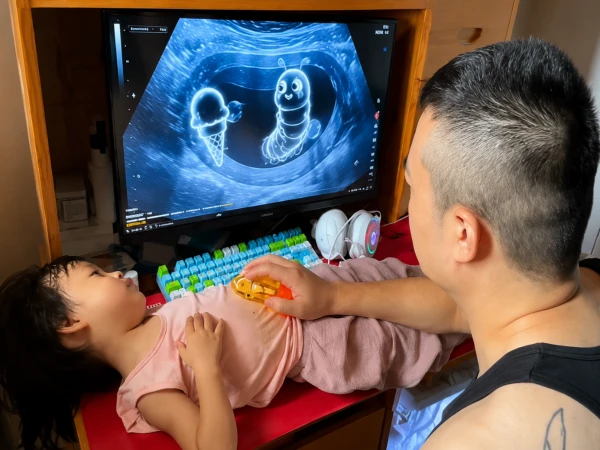
Previously, I believed that if one could see something, it could be trusted because seeing is believing. A video was proof. A voice recording was evidence. That belief is gone, and I don’t think we have fully sat with the implications. There is an abnormal shift happening. AI-generated images, voice cloning, face-swapping apps, and similar tools were supposed to expand how people express themselves, but instead they have slowly chipped away at what matters most: the belief that people can express themselves through their images and their words.

I attended a workshop under the project titled “Digital Trust and Free Expression in the AI Era” at Department of Media and Development Communication, University of the Punjab, supported by the U.S. Mission to Pakistan in partnership with the Pakistan-U.S. Alumni Network (PUAN) last week. During the discussions on digital trust. I took part in the discussion and shared my thoughts that we are now in a time where we must take this out of the realm of fun tech novelty and place it in the realm of a structural issue in how societies operate. Everyone says deepfakes are a “misinformation” issue, but this is not an adequate way to describe it. Misinformation is something that’s a false statement that can, in theory, be fact-checked. Deepfakes strike at the heart of video and audio credibility which have always been treated as vivid reality. When people realize that any clip can be fabricated, they stop trusting all clips, even real ones. This is what concerns me most. Fake things are believed and real things become deniable. Consider the implications of journalism, courts, political accountability, etc. If a politician is recorded saying something damaging, they can simply claim that it’s a “deepfake” and, depending on how much trust citizen have lost, people may believe them.

We are creating a society in which it is possible to negotiate authenticity and in which negotiable authenticity is a gift for those who wish to avoid consequences. I also face a conflict here: I strongly believe in free speech, satire, parody, art and provocation even with synthetic media. The same technology behind de-aged actors, resurrected voices, dubbing, and experimental AI is extremely creative, yet it is all connected to malicious deepfakes. There is no way to ‘clean’ a tool of its worst use-case. A hammer can break windows or build houses. I do not think banning synthetic media is the answer, nor do I support pre-emptive censorship. That path harms legitimate satire, journalism and art under the pretense of ‘preserving truth’. History does not look kindly on institutions that decide what is a “fair” fake. Freedom of expression has never been of consequence or friction, and right now, deepfakes have almost no friction.

The reality is there is no cost, disclosure, and accountability in using this technology deceptively. The issue is the imbalance. I believe the solution is not reducing synthetic tools but improving provenance. We need a digital watermarking, which cannot be “easily removed”: cryptographic signatures embedded into cameras, microphones and generative tools at the point of creation, so that the “unverified” label appears by default, not as an afterthought. Not to prohibit any content but to allow people to know what they are seeing before deciding whether to trust it.

Platforms have been allowed to operate without responsibility for too long. Convincing fakes can reach millions before correction and corrections never travel as far. This asymmetry is not natural; it is a design choice. Platforms can mark, rate or tag synthetic content at the time of dissemination. Most simply haven’t had to! But, beyond platforms, we must change our own instincts as individuals.

The old saying was “pics or it didn’t happen.” The new rule should be: “Who gains from believing this and can I verify it myself? A society that believes everything or worse, believes nothing is in danger. The deepfake age is not the age of AI; it is the consequences of a world where the cost of faking reality is near zero and the cost of establishing truth remains high. Freedom of expression should protect the most challenging and profound exchange of ideas, not the production of fake consent, fake evidence, or fake people. We can have creative freedom and still expect honesty about sources. These are not competing prioritie

These are not different objectives/priorities. However, if we pretend it’s a content-moderation footnote, we must make sure we are not waking up in a world where “fake it till you make it” has become ‘fake it till you break it” and by that time, it won’t be just one video or one lie that will break. It will be our fundamental ability to reach a shared understanding of reality.

The views, thoughts, and opinions expressed in this blog are solely those of the author and do not necessarily reflect the official policy or position of the U.S. Mission to Pakistan or USEFP/PUAN.

The writer, Mahnoor Ashraf Wattoo, is a student of Media and Development Communication at University of the Punjab, Lahore 

Similar Posts

  • Poor condition of roads in Dasht

    I want to draw the attention of the concerned authorities to the poor condition of roads in Dasht. Many roads are broken and full of potholes. During the rainy season, they become muddy and difficult to use. The damaged roads cause traffic problems and accidents. Students, patients, farmers, and other people face great difficulties while travelling. Sometimes vehicles are also damaged because of the bad roads. I request the concerned authorities to take immediate action and repair the roads in Dasht. Good roads are necessary for the safety and development of the area. I hope that the authorities will pay attention to this serious problem.

  • NASA shares breathtaking full moon photo

    People on Earth see a full Moon almost every month but have you ever wondered what it looks like from space? A NASA astronaut living aboard the International Space Station (ISS) has shared a breathtaking photo showing the full Moon from orbit. The image was released on July 29, when July’s full Moon appeared in the night sky. It was shared on social media by NASA astronaut Anil Menon. While people on Earth watched the full Moon rise above the horizon and shine brightly in the sky astronauts on the ISS enjoyed a completely different view. From space the Moon appears to glow brilliantly against the deep black background of the universe. NASA also shared a message encouraging people to take a moment to look up at the night sky. The space agency said that the full Moon remains one of nature’s most beautiful and timeless sights continuing to inspire people around the world with its beauty.

  • Can you spot the hidden mistake?

    Online picture puzzles often challenge people to look closely and find something unusual.  One such puzzle has caught the attention of many people. In the picture a woman can be seen standing in a kitchen and washing dishes. At first everything looks completely normal. But there is actually a strange mistake hidden in the scene. The puzzle is a simple test of your observation skills. Can you spot what is wrong? Take a close look at the picture. If you cannot find the mistake here is the answer. Look at the tea kettle. Its spout is placed unusually low on the kettle.  A kettle designed like this would not work properly because the tea could not flow out normally. Did you spot the mistake before reading the answer?

  • Anger control tips

    Do you often get angry over small things or take your frustration out on others?  If yes it may be time to pay attention. Health experts say frequent anger can affect both your mind and your body. Many people feel better after expressing their anger but they may not realize the damage it can cause. Experts say uncontrolled anger is linked to several health problems including heart disease digestive issues and poor sleep. Anger is a normal human emotion. In some situations it can motivate people to solve problems make better decisions and bring positive changes. However when anger becomes frequent or difficult to control it can harm both you and the people around you. Research suggests that intense anger can temporarily narrow blood vessels and affect how cells work increasing the risk of damage. It may also raise the chances of serious health problems such as heart attacks and strokes. •How to control anger Health experts recommend a few simple habits that can help you manage your emotions. •Stay physically active . •Regular exercise •improves sleep •reduces stress and •helps control emotions. If you feel your anger rising take a short break and step away from the situation until you feel calmer. Talk to someone you trust about your feelings instead of keeping everything inside. Practice yoga or relaxation exercises as they can improve both mental and physical well being. Learning to manage anger is not only good for your relationships it can also protect your long-term health.

  • AC mistake to avoid after heat

    After spending time outside in extreme heat switching on the air conditioner as soon as you get home may feel refreshing. However health experts say this habit can sometimes be harmful. According to doctors the body works continuously to keep its temperature balanced. In hot weather it cools itself by producing sweat and widening blood vessels. If you suddenly move from intense heat into a very cold room your body experiences a rapid temperature change. This is known as thermal shock. Experts say this sudden change may cause headaches sore throat coughing dizziness tiredness breathing problems or a feeling of discomfort. People with asthma allergies or other breathing conditions may be affected more seriously. Health specialists recommend resting for a few minutes in a shaded or normally cooled area after coming home instead of sitting directly in front of the AC. This gives your body time to adjust gradually. They also advise drinking enough water before entering a very cold room. Hot weather can lead to dehydration and staying hydrated helps reduce stress on the body. Another concern is that air conditioners can dry out the air which may dry the nose and throat. This can lead to throat irritation dryness or coughing especially if the AC is set to a very low temperature or the cold air blows directly on the body. Doctors say there is no need to avoid using an air conditioner during summer. Instead keep the temperature at a comfortable level drink plenty of water and avoid moving straight from extreme heat into a very cold environment. These simple steps can help protect your health and reduce the risk of heat related problems.

  • Solo travel finding its footing in Pakistan

    The image of travel in Pakistan is changing. At bus terminals in Rawalpindi, at Islamabad International Airport, and on trails in Hunza, a growing number of travellers are moving with just one thing in common — they are alone. Solo travel, once seen as unusual, is now a quiet but visible trend among Pakistanis. Industry data and tour operators say bookings by single travellers have risen steadily over the last two years, driven by social media, remote work, and a desire for independence. For decades, Pakistani travel meant family trips to Murree, Nathiagali, or Swat, or group tours arranged through agencies. That model is shifting. Nevertheless, reasons are practical and personal. Let’s say, no need to coordinate leave or budgets with others, or time to navigate new places on one’s own terms. These days , hostels, cafés, and trekking groups in places like Karimabad and Skardu have become meeting points for solo travellers. However, safety remains the top concern, especially for women. That is pushing both travellers and the industry to adapt. Hotels in major tourist towns now offer female-only dorms. Ride-hailing apps provide trip sharing. Also, the Ministry of Tourism has started listing registered guesthouses and guides on its website. Taking about the top destinations, Domestically, the most popular solo destinations of 2026 are, Hunza, Skardu, and Fairy Meadows for trekking and landscapes, Swat and Kalam for short trips, easier access. And Islamabad and Lahore, for weekend culture trips, history, and food walks. Internationally, Pakistanis traveling alone are choosing Turkey, Malaysia, and Saudi Arabia for Umrah-plus-tourism packages. Portugal and Japan are also rising for first-time solo travellers abroad due to safety and transit systems. But I would say Sri Lanka is the must go. For traveling solo, One of the biggest challenge is price. Single rooms and ‘single supplements’ on tours can add 20-30% to costs. However, to counter this, some operators are launching “solo-friendly” departures — group tours where you get your own room but share activities. To combat this, solo travellers usually travel in shoulder months and spend more on local experiences — guides, food, and home-stays. I am a travelwriter, who travels solo weather traveled domestically or internationally, my advise is basic precautions, let say, safe hotels, air travel, authentic agents and no home stays, since for my travel I only prefer top notch hotels, always get the travel plan from reputable travel agencies, and travel with the guide from company. Also, I avoid night life.

Leave a Reply

Your email address will not be published. Required fields are marked *