president approves military
|

President approves military and civil honours

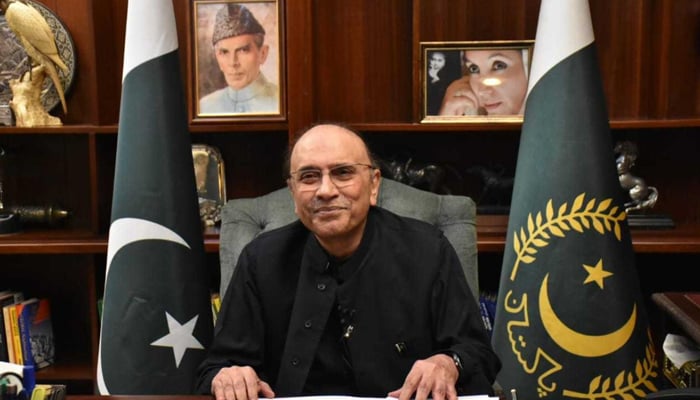
President Asif Ali Zardari has approved several summaries sent by Prime Minister Shehbaz Sharif, including military honours for 1,172 personnel of the armed forces and civil armed forces.

The approved honours recognise the services and contributions of personnel from various ranks and institutions. The awards will acknowledge their dedication, professionalism and service to the country.

President Zardari also approved the summoning of separate sessions of Parliament on August 17. The National Assembly will meet at 5pm, while the Senate will convene at 4pm.

In another significant decision, the president approved a special 100-day remission in the sentences of prisoners on the occasions of Independence Day and Eid Milad-un-Nabi ﷺ. The concession will provide eligible prisoners with relief in their sentences under the applicable rules and conditions.

President Zardari further approved national civil awards for citizens from various fields in recognition of their outstanding contributions and services. The honours cover individuals who have made notable contributions in their respective areas and brought recognition to the country.

The approvals form part of the president’s constitutional responsibilities and reflect the government’s efforts to recognise public service, honour outstanding contributions and provide relief to eligible prisoners on important national and religious occasions.

Similar Posts

  • | |

    More provinces or better governance? In Sindh, div…

    “Start With Punjab”: Saeed Sarbazi Calls for Pilot Model Karachi: Once again, the demand for new administrative units and provinces has been sparked — this time from within the government itself. Interior Minister Mohsin Naqvi’s recent statement has reignited the debate, raising questions about governance, service delivery, and political intent. Coming at a time when the current setup is widely described as a “hybrid system,” Naqvi is seen by many as representing the other partner in that arrangement. His call therefore carries weight beyond routine political rhetoric, forcing both parliament and the public to ask: is this about bringing the state closer to the people, or about redrawing Pakistan’s political map? MQM-P Backs Demand: “Engine of Pakistan’s Economy” The debate found immediate backing from MQM-Pakistan, which has once again strongly supported the idea of separating Karachi from Sindh. The party argues that the city, which generates the bulk of Pakistan’s revenue, should have control over its own resources so that what is earned in Karachi is spent on Karachi. Calling it the “engine of the entire Pakistan economy,” MQM-P maintains that an independent administrative setup for the metropolis is the only way to fix its decades-old issues of infrastructure, water, transport and governance. Sindh Government Rejects: “Dangerous Precedent” However, the Sindh government has strongly opposed the idea. Provincial leaders and ministers like Sharjeel Memon, Saeed Ghani and Nasir Hussain argue that carving out Karachi from Sindh will only deepen existing fault lines and promote hate and division among communities. They maintain that Karachi is an integral part of Sindh’s history, culture, and economy, and that separating it administratively would set a dangerous precedent for the federation. For them, the solution lies in better governance and resource allocation within the existing provincial structure, not in division. PML-N Opposition: “Will Never Be Approved” The Pakistan Muslim League-Nawaz has also come out in opposition to the proposal. A senior PML-N minister and veteran politician, Rana Sanaullah, Special Assistant to the Prime Minister on Political Affairs, stated in a TV talk show that any legislation aimed at dividing provinces into units would “never be approved” in the National Assembly. He also asserted that such proposals were never discussed in cabinet or in parliament. The party argues that such moves risk destabilizing national harmony, and that the focus should remain on strengthening local government systems within provinces rather than redrawing administrative boundaries. MQM-P Counter: Parliamentary Precedent Cited Commenting on PML-N’s remarks, MQM-Pakistan head Mustafa Kamal fired back, saying those who want to reorganize Pakistan into smaller administrative units have the political strength to do so. He argued whether the 26th or 27th amendment bills were discussed in cabinet before they were floated for approval in parliament. He disclosed that both the bills were presented on the day of passing and were passed unanimously even before discussion. “If a bill for new provinces is brought to the floor of the National Assembly, it would be passed — just as the 26th and 27th constitutional amendments were,” Kamal said. His statement signals MQM-P’s confidence that with the right backing, even a contentious legislative move can sail through parliament. Saeed Sarbazi’s Expert View: Ill-timed Debate, Governance Needed, Not Division Talking to this correspondent, senior journalist, news editor at a reputable daily and former president of the Karachi Press Club, Saeed Sarbazi said raising such a subject at this critical stage was ill-timed. With the country going through a severe economic meltdown amid the Iran-US conflict, he argued, separating Karachi from Sindh would not serve any purpose. Sarbazi pointed out a key administrative fact: “More than 65 percent of Karachi belongs to cantonment areas. So blaming the Sindh government for the state of 34 percent of the infrastructure is not fair.” For him, the debate distracts from the real issue of joint responsibility and better coordination between all stakeholders. Federal Responsibility: Revenue vs Investment Gap Sarbazi, a seasoned union worker turned leader, also highlighted the federal government’s obligations in the debate. “If Karachi is mini Pakistan, where the country’s most important ports are located and the entire Pakistan benefits from its structure and institutions, then it is obligatory on the Federal government to provide monetary support,” he stated. He cited the example of the National Highway M9 — a key CPEC project — which still remains a single lane in parts despite years of promises. “Till to-date the federal government has not completed the double lane highway,” Sarbazi said, arguing that Karachi generates the most revenue but gets the least direct federal investment in return. “Start With Punjab”: A Pilot Model Suggested by Sarbazi The former KPC president further added that the discussion should not be limited to Sindh alone. “Punjab Assembly has already passed a resolution to divide Punjab into South and Central Punjab,” Sarbazi noted. “If those who aspire to see how administrative units will function and become a model, then it should start from Punjab. If it presents a good governance model, then perhaps Sindh will follow.” His remarks suggest that instead of confrontation, a pilot model in Punjab could set the tone for the rest of the country. Power Politics and PPP’s Role in Sindh Saeed Sarbazi, who holds the unprecedented record of being elected unopposed along with his entire panel to the Karachi Press Club, stated that such tactics of creating more administrative units are often ignited by power corridors as a tool for arm-twisting political parties. “Though democratically elected governments have flaws, these can only be corrected through good governance,” he said. “Such arm-twisting only brings political instability in Pakistan.” Sarbazi emphasized that the role of the Pakistan Peoples Party in the Sindh government should not be underplayed. “It is serious about improving infrastructure in the province — by providing people with good transport, water at their doorstep, and by improving the sewage and drainage system.” The Way Forward: Merits, Concerns, and Alternatives As the debate over new provinces resurfaces, both merits and concerns demand attention. Proponents argue that smaller administrative units

  • | | |

    Pakistan rejects Indian claims, calls allegations …

    ISLAMABAD: Pakistan has rejected allegations by Indian Home Minister Amit Shah linking Islamabad to the arrest of alleged terror suspects in India, describing the accusations as part of a politically motivated campaign against Pakistan. Foreign Office spokesperson Tahir Hussain Andrabi said the allegations were baseless and appeared aimed at shifting attention away from India’s own internal security challenges. He accused New Delhi of using anti-Pakistan rhetoric for domestic political purposes. The remarks followed claims by Shah that Indian security agencies had detained more than 200 suspected militants allegedly connected to Pakistan during a nationwide crackdown across 14 states on August 12. Shah said the suspects were linked to what he described as the Shahzad Bhatti Network and alleged that the arrests had prevented planned attacks. Rejecting the claims, Andrabi said Pakistan had repeatedly faced accusations that he described as part of an ongoing campaign to portray Islamabad as responsible for security problems inside India. The spokesperson also levelled counter-allegations against New Delhi, accusing India of suppressing minorities and dissent at home while allegedly supporting terrorism and destabilising activities abroad. He maintained that such accusations could not divert international attention from what Pakistan considers India’s involvement in terrorism and subversive activities. Andrabi referred to Indian national Kulbhushan Jadhav, who was convicted by a Pakistani military court and remains in Pakistani custody, as evidence of Islamabad’s longstanding allegations of Indian involvement in activities against Pakistan. Pakistan called on the international community to reject what it termed unfounded allegations and to hold India accountable for what Islamabad describes as state-sponsored terrorism and destabilising activities in the region. Moreover, Pakistan has strongly rejected what it described as India’s attempt to reshape the history of the 2025 military confrontation through a recently produced documentary on “Operation Sindoor,” calling the production a highly dramatized and factually distorted portrayal of events. In a statement, Pakistan said the documentary relied on selectively edited interviews, emotional narration and cinematic reconstructions to present a version of the conflict designed primarily for domestic political consumption. It argued that the production failed to provide an objective account of the military engagements and instead sought to portray a disputed outcome as an unequivocal Indian victory. Pakistan also questioned the documentary’s chronology surrounding the Pahalgam incident of April 22, 2025. It said India had subsequently claimed that the alleged perpetrators of the incident were identified and eliminated on July 28, nearly three months after Operation Sindoor. Islamabad argued that this timeline raised questions about India’s assertion that the May 7 operation was specifically intended to punish those responsible for the Pahalgam attack. The statement further rejected India’s claim of “100 percent mission success,” maintaining that Pakistani forces had effectively responded to the Indian offensive during what Pakistan refers to as Marka-e-Haq. Islamabad claimed that eight Indian military aircraft were shot down during the confrontation and said Pakistan later launched Operation Bunyanum Marsoos, targeting military installations with precision-guided rockets and missiles, precision air-launched munitions, loitering munitions and artillery. Pakistan said the documentary itself contained admissions that undermined its portrayal of decisive Indian dominance. According to Islamabad, references by Indian military officials to Pakistani missile and drone activity, prolonged engagements along the Line of Control and the activation of Indian air-defence systems demonstrated that the confrontation involved significant military exchanges on both sides. The Pakistani statement also challenged New Delhi’s account of how hostilities ended. It noted that the documentary acknowledged communication between the two countries’ Directors General of Military Operations and an agreed cessation of military activity. Islamabad said this account was inconsistent with portraying the conclusion of the conflict as an unconditional Indian military victory, particularly given the role of international diplomatic engagement in facilitating the ceasefire. Pakistan further accused the documentary of presenting contradictory explanations for India’s approach to escalation. While the production reportedly emphasised surprise attacks, precision strikes and escalation dominance, it simultaneously portrayed India as deliberately restricting the scope of the conflict and offering Pakistan an opportunity to withdraw. Islamabad described the documentary as an attempt to create a politically convenient narrative rather than an impartial military assessment. It maintained that cinematic reconstructions and official claims could not alter the chronology of events, the military engagements or the losses suffered during the confrontation. Pakistan said it had no need to construct an alternative narrative around Marka-e-Haq, arguing that battlefield developments, diplomatic interactions and subsequent statements by Indian officials provided sufficient material for assessing the conflict. Reaffirming its stated commitment to regional peace and stability, Pakistan said its armed forces remained prepared to protect the country’s sovereignty and territorial integrity. It warned that any future military escalation would receive a strong response, while asserting that no subsequent narrative or media production could change the actual course of events on the battlefield.

  • |

    DC approves Rs4.14 billion District Health Authority budget for FY2026-27

    GUJRAT: Deputy Commissioner and Administrator District Health Authority (DHA) Gujrat Noor-ul-Ain Qureshi has approved a budget of more than Rs4.14 billion for the District Health Authority for the financial year 2026-27, with the largest allocation earmarked for salaries of healthcare workers and a significant share reserved for the uninterrupted supply of medicines in government health facilities. The budget was approved during a meeting chaired by the deputy commissioner at her office on Wednesday. The meeting was attended by Chief Executive Officer Health Dr Syed Atta ul Munim, Deputy Director Budget Health, and other relevant officials, who reviewed the proposed allocations and expenditure plan for the upcoming fiscal year. According to officials, the total approved budget stands at Rs4,141,211,000, covering salaries, medicines, utilities, contractual staff payments, recruitment and repair of health facilities across the district. Officials informed the meeting that Rs3.274 billion has been allocated for salaries and allowances of doctors, nurses, paramedics and other employees serving in the district health system. The allocation constitutes the largest portion of the annual budget and is aimed at ensuring uninterrupted payment of salaries to healthcare staff working in hospitals and primary healthcare facilities. A sum of Rs400 million has been reserved for the procurement and uninterrupted supply of medicines to government healthcare institutions, including the District Headquarters Hospital, Tehsil Headquarters Hospitals, Rural Health Centres (RHCs), Basic Health Units (BHUs) and other public health facilities operating under the District Health Authority. The meeting was further informed that Rs104 million has been allocated for the payment of electricity, gas, water and other utility bills to ensure smooth functioning of health institutions across the district. An additional Rs60 million has been earmarked for payments to doctors serving under the lump-sum pay package, enabling the authority to continue services in facilities where contractual medical professionals are performing duties. Officials also briefed the meeting that the remaining funds would be utilised for Expanded Programme on Immunisation (EPI) recruitments, repair and rehabilitation of healthcare facilities, and other operational requirements aimed at strengthening service delivery throughout the district. Deputy Commissioner Noor-ul-Ain Qureshi directed the health authorities to ensure transparent utilisation of public funds and stressed that every allocation should directly contribute to improving healthcare services for citizens. She emphasised the need for strict financial discipline and instructed officers to closely monitor expenditure throughout the financial year. The meeting also reviewed priority areas requiring financial support and discussed measures to maintain uninterrupted healthcare services in both urban and rural areas of the district. The approval of the annual budget comes as the District Health Authority seeks to improve service delivery, maintain essential medical supplies and address operational needs across Gujrat’s public healthcare network. Officials expressed confidence that timely release and efficient utilisation of funds would help strengthen healthcare services and improve access to treatment for residents across the district during the 2026-27 fiscal year.

  • Teen’s Family Mourns as Australian Suspect Faces Court Over Pattaya Killing

    PATTAYA, Thailand — The grieving family of a 17-year-old Thai girl whose body was discovered inside a suitcase in Pattaya has expressed profound devastation following the arrest of an Australian national in connection with her tragic death. The suspect was apprehended at Bangkok’s Suvarnabhumi Airport as he attempted to flee the country, bringing a swift […]

  • | |

    AJK polling extended amid rain, PPP alleges electi…

    Polling continued on Sunday in the second phase of the Azad Jammu and Kashmir (AJK) elections, with voters casting ballots in eight of the nine constituencies in the Muzaffarabad division and all 12 refugee constituencies. The polling process began at 8am and was initially scheduled to conclude at 5pm. However, an AJK Election Commission spokesperson announced a one-hour extension, allowing voters to cast their ballots until 6pm. Heavy rainfall forced authorities to postpone polling in LA-27 (Muzaffarabad-I), AJK Chief Election Commissioner Ghulam Mustafa Mughal said. More than 300 candidates are contesting the seats in the Muzaffarabad division and the 12 constituencies reserved for refugees settled in various parts of Pakistan. Meanwhile, Pakistan Peoples Party (PPP) Chairman Bilawal Bhutto-Zardari renewed his allegations of electoral irregularities, accusing the Pakistan Muslim League-Nawaz (PML-N) of attempting to influence the voting process during the second phase as well. In a post on X, Bilawal condemned what he described as an attack on PPP’s regional president Chaudhry Latif Akbar, who is also contesting from LA-31 (Muzaffarabad-V). He alleged that elements linked to the PML-N were responsible for the incident and claimed that PPP worker Mushtaq Shah was killed in the same constituency. Bilawal accused the PML-N of using intimidation and violence to interfere with the electoral process and called for the immediate arrest of those responsible for the alleged attack on Akbar and the killing of the party worker. In another statement, the PPP chairman alleged that attacks had targeted his party’s voters as well as the AJK president. He said the contest in Muzaffarabad had turned into a struggle between the PPP’s political principles and what he described as the PML-N’s use of threats, coercion and alleged rigging. The PPP also submitted a formal complaint to the AJK Election Commission, alleging that Akbar faced a physical assault while participating in election-related activities on polling day. The party named three individuals in connection with the incident and said it had initiated the process of registering a first information report (FIR). The PPP urged the Election Commission to investigate the alleged security failure and determine how the incident occurred despite security arrangements at the polling site. AJK Prime Minister Faisal Mumtaz Rathore, who belongs to the PPP, also took notice of the incident. He directed the chief secretary and inspector general of police to investigate the matter and ensure that those responsible face legal action.

  • | |

    Swat hosts flag rally in support of Pakistan army …

    A joint flag rally and patrol were held in Swat to demonstrate solidarity with the Pakistan Army and Khyber Pakhtunkhwa (KP) Police amid the prevailing security situation in the region. The event brought together security personnel and local residents in a show of unity aimed at reinforcing public confidence and promoting peace. According to official information, the rally featured participation from Pakistan Army personnel, KP Police officers, civilians, and children. Participants carried the national flag and expressed support for the country’s security forces while emphasizing the importance of cooperation between the public and law enforcement agencies. During the event, large crowds chanted patriotic slogans, including “Long Live Pakistan” and “Long Live Pakistan Army,” as the joint procession moved through key roads and public areas of Swat. The rally was accompanied by a coordinated patrol involving security vehicles and motorcycles, highlighting the continued presence of security forces across the district. The joint patrol was organized as part of ongoing efforts to strengthen security, reassure local communities, and enhance coordination between the Pakistan Army and the provincial police. Officials said such activities are intended to improve the public’s sense of safety while maintaining vigilance against potential security threats. Authorities stated that the initiative also aimed to send a clear message that the people of Swat stand united with the country’s security institutions against elements seeking to disrupt peace and stability. The visible participation of residents reflected community engagement in efforts to support law enforcement and contribute to a secure environment. Residents from different segments of society, including families and young people, took part in the event, underlining a shared commitment to peace and national unity. Organizers described the rally as a symbol of cooperation between citizens and security forces, stressing that maintaining peace requires collective responsibility and mutual trust. The flag rally comes as security agencies continue to monitor the situation in parts of Khyber Pakhtunkhwa and carry out measures aimed at ensuring public safety. Joint patrols and community outreach initiatives have become an important part of broader efforts to strengthen coordination between security institutions and local communities. Officials expressed confidence that continued collaboration between the Pakistan Army, KP Police, and the people of Swat would help preserve lasting peace and stability in the region. They emphasized that unity, vigilance, and public cooperation remain essential in addressing security challenges and safeguarding the progress made toward maintaining law and order.

Leave a Reply

Your email address will not be published. Required fields are marked *