more provinces better
| |

More provinces or better governance? In Sindh, div…

“Start With Punjab”: Saeed Sarbazi Calls for Pilot Model

Karachi: Once again, the demand for new administrative units and provinces has been sparked — this time from within the government itself. Interior Minister Mohsin Naqvi’s recent statement has reignited the debate, raising questions about governance, service delivery, and political intent. Coming at a time when the current setup is widely described as a “hybrid system,” Naqvi is seen by many as representing the other partner in that arrangement. His call therefore carries weight beyond routine political rhetoric, forcing both parliament and the public to ask: is this about bringing the state closer to the people, or about redrawing Pakistan’s political map?

MQM-P Backs Demand: “Engine of Pakistan’s Economy”

The debate found immediate backing from MQM-Pakistan, which has once again strongly supported the idea of separating Karachi from Sindh. The party argues that the city, which generates the bulk of Pakistan’s revenue, should have control over its own resources so that what is earned in Karachi is spent on Karachi. Calling it the “engine of the entire Pakistan economy,” MQM-P maintains that an independent administrative setup for the metropolis is the only way to fix its decades-old issues of infrastructure, water, transport and governance.

Sindh Government Rejects: “Dangerous Precedent”

However, the Sindh government has strongly opposed the idea. Provincial leaders and ministers like Sharjeel Memon, Saeed Ghani and Nasir Hussain argue that carving out Karachi from Sindh will only deepen existing fault lines and promote hate and division among communities. They maintain that Karachi is an integral part of Sindh’s history, culture, and economy, and that separating it administratively would set a dangerous precedent for the federation. For them, the solution lies in better governance and resource allocation within the existing provincial structure, not in division.

PML-N Opposition: “Will Never Be Approved”

The Pakistan Muslim League-Nawaz has also come out in opposition to the proposal. A senior PML-N minister and veteran politician, Rana Sanaullah, Special Assistant to the Prime Minister on Political Affairs, stated in a TV talk show that any legislation aimed at dividing provinces into units would “never be approved” in the National Assembly. He also asserted that such proposals were never discussed in cabinet or in parliament. The party argues that such moves risk destabilizing national harmony, and that the focus should remain on strengthening local government systems within provinces rather than redrawing administrative boundaries.

MQM-P Counter: Parliamentary Precedent Cited

Commenting on PML-N’s remarks, MQM-Pakistan head Mustafa Kamal fired back, saying those who want to reorganize Pakistan into smaller administrative units have the political strength to do so. He argued whether the 26th or 27th amendment bills were discussed in cabinet before they were floated for approval in parliament. He disclosed that both the bills were presented on the day of passing and were passed unanimously even before discussion. “If a bill for new provinces is brought to the floor of the National Assembly, it would be passed — just as the 26th and 27th constitutional amendments were,” Kamal said. His statement signals MQM-P’s confidence that with the right backing, even a contentious legislative move can sail through parliament.

Saeed Sarbazi’s Expert View: Ill-timed Debate, Governance Needed, Not Division

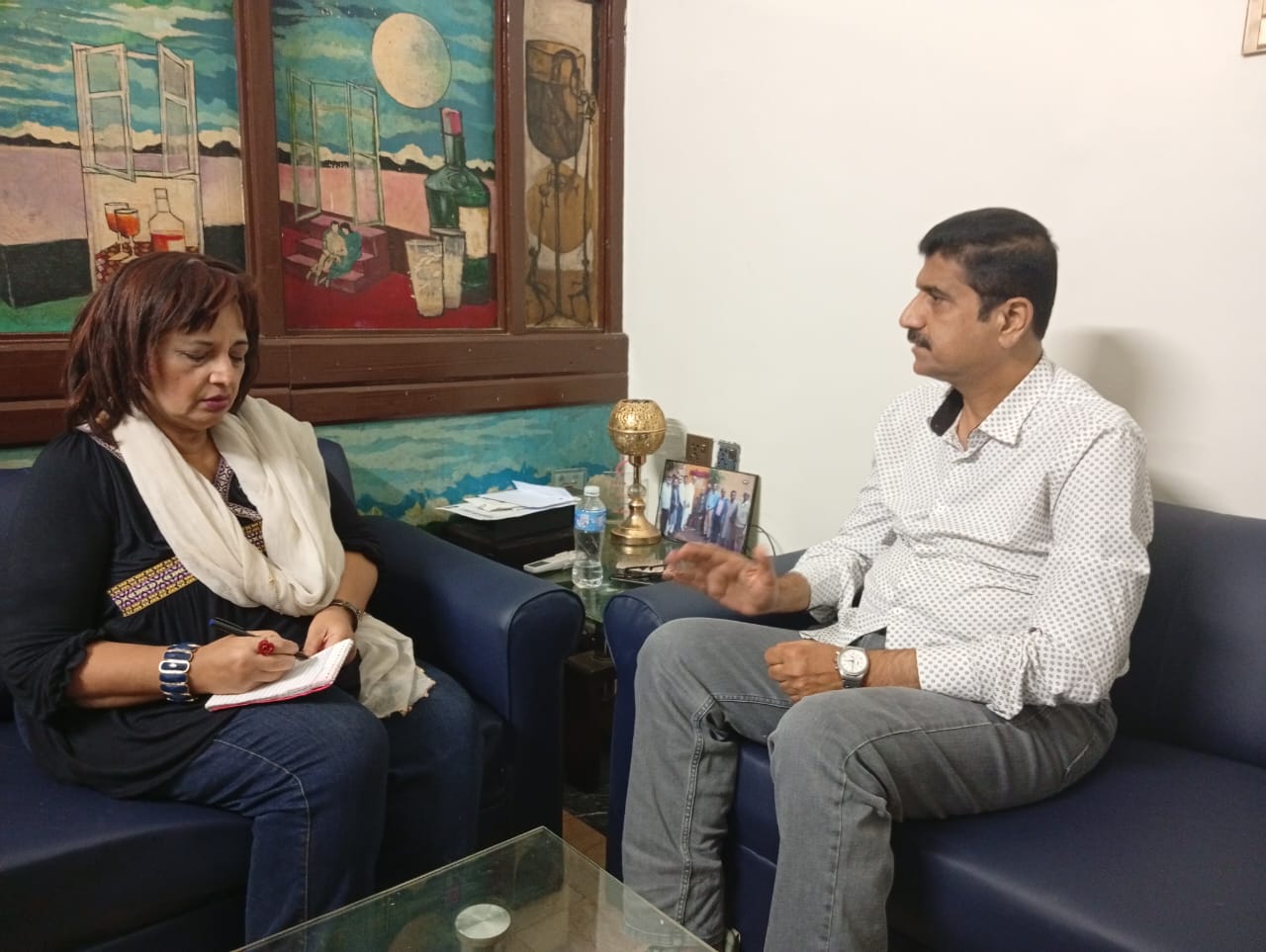
Talking to this correspondent, senior journalist, news editor at a reputable daily and former president of the Karachi Press Club, Saeed Sarbazi said raising such a subject at this critical stage was ill-timed. With the country going through a severe economic meltdown amid the Iran-US conflict, he argued, separating Karachi from Sindh would not serve any purpose. Sarbazi pointed out a key administrative fact: “More than 65 percent of Karachi belongs to cantonment areas. So blaming the Sindh government for the state of 34 percent of the infrastructure is not fair.” For him, the debate distracts from the real issue of joint responsibility and better coordination between all stakeholders.

Federal Responsibility: Revenue vs Investment Gap

Sarbazi, a seasoned union worker turned leader, also highlighted the federal government’s obligations in the debate. “If Karachi is mini Pakistan, where the country’s most important ports are located and the entire Pakistan benefits from its structure and institutions, then it is obligatory on the Federal government to provide monetary support,” he stated. He cited the example of the National Highway M9 — a key CPEC project — which still remains a single lane in parts despite years of promises. “Till to-date the federal government has not completed the double lane highway,” Sarbazi said, arguing that Karachi generates the most revenue but gets the least direct federal investment in return.

Start With Punjab”: A Pilot Model Suggested by Sarbazi

The former KPC president further added that the discussion should not be limited to Sindh alone. “Punjab Assembly has already passed a resolution to divide Punjab into South and Central Punjab,” Sarbazi noted. “If those who aspire to see how administrative units will function and become a model, then it should start from Punjab. If it presents a good governance model, then perhaps Sindh will follow.” His remarks suggest that instead of confrontation, a pilot model in Punjab could set the tone for the rest of the country.

Power Politics and PPP’s Role in Sindh

Saeed Sarbazi, who holds the unprecedented record of being elected unopposed along with his entire panel to the Karachi Press Club, stated that such tactics of creating more administrative units are often ignited by power corridors as a tool for arm-twisting political parties. “Though democratically elected governments have flaws, these can only be corrected through good governance,” he said. “Such arm-twisting only brings political instability in Pakistan.” Sarbazi emphasized that the role of the Pakistan Peoples Party in the Sindh government should not be underplayed. “It is serious about improving infrastructure in the province — by providing people with good transport, water at their doorstep, and by improving the sewage and drainage system.”

The Way Forward: Merits, Concerns, and Alternatives

As the debate over new provinces resurfaces, both merits and concerns demand attention. Proponents argue that smaller administrative units can ensure better governance, resource equity in neglected regions, and help curb heavy migration to urban centers by creating more economic hubs. Decentralization, they say, can also weaken feudal control and empower local political leadership. However, critics argue that instead of creating more units, existing local bodies should be strengthened with financial and administrative autonomy. They warn that new provinces would only increase bureaucracy, overhead costs, and public expenditure without guaranteeing service delivery. Other options being discussed include an empowered metropolitan government for Karachi, direct federal development packages for mega cities, and a constitutional review of the NFC award to ensure fair resource distribution.


In the end, as Saeed Sarbazi, put it: “Pakistan does not need more divisions on paper. It needs governance on the ground. Until the state delivers water, roads, and justice to every citizen, the map can be redrawn a hundred times and nothing will change.”

Meet the author:

The writer is a senior journalist and columnist covering crime, law, social issues, governance, energy, health, literature, and women and children’s rights across Pakistan’s leading English media houses.

Feedback: mediawomen2014@gmail.com
Similar Posts

  • |

    NCA, LCCA grounds finally get the upgrade

    Work has officially started on upgrading two of Pakistan’s key cricket facilities. Both the National Cricket Academy (NCA) and the LCCA ground are set to receive major upgrades, bringing them closer to international standards. According to sources, the first step has already begun. The boundary wall that separates the NCA and LCCA grounds is being taken down. This is expected to open up the space for a larger, more connected training hub. Once the wall is cleared, work will begin on a new pavilion at the LCCA ground. The pavilion will come equipped with modern facilities. The ground’s drainage system is also getting an upgrade as part of the same project. The National Cricket Academy itself is set for a bigger transformation. Sources say a modern gym will be added. A swimming pool is also part of the plan. Along with these, new training and rehabilitation facilities will be built specifically for national cricketers. Once finished, both grounds are expected to offer training facilities on par with international standards. Officials believe this upgrade will make a real difference in how players train and prepare going forward. Fitness levels, recovery, and overall match readiness are all expected to improve as a result. This move comes at a time when Pakistan cricket has faced repeated calls for better domestic infrastructure. Many current players have had to look abroad for facilities like rehabilitation centers and proper swimming pools. A setup like this could help change that. Combining the NCA and LCCA grounds into one upgraded space is also expected to simplify things for coaches and support staff. Managing schedules, monitoring fitness, and coordinating training sessions should become easier with everything centralized in one location. So far, no official timeline has been announced for when the project will be completed. Still, the early progress, especially the wall coming down, suggests that the plan is already moving forward without unnecessary delays. If everything goes as planned, this could turn out to be one of the more meaningful infrastructure upgrades for Pakistan cricket in recent memory. Giving players access to modern training resources at home, instead of depending on facilities overseas, could go a long way in supporting long-term player development. For now, all eyes remain on how quickly the project moves from demolition to full completion.

  • Hospital and Airline Tycoon Dr Prasert Prasarttong-Osoth Dies at 93

    BANGKOK — Dr Prasert Prasarttong-Osoth, the visionary founder of Thailand’s largest private hospital network and the airline that put Koh Samui on the global tourism map, has passed away at the age of 93. Bangkok Airways, Thai Airways rise in world rankings Dr Prasert died on Tuesday after being treated for an unspecified condition for […]

  • | |

    Bollywood stars warned over pan masala ads

    Three prominent Bollywood actors, including Shah Rukh Khan, Ajay Devgn and Tiger Shroff, have been warned by Maharashtra authorities over advertisements linked to a brand associated with a prohibited pan masala product. The warning was issued as Maharashtra steps up its food safety campaign and takes stricter action against businesses and products considered to pose health risks. According to the state Food and Drug Administration, the actors appeared in promotional material for Vimal-branded cardamoms. Authorities, however, said the brand is strongly associated with a pan masala product that is prohibited under relevant regulations. Officials expressed concern that advertising the associated brand could indirectly promote the banned product by keeping its name and identity familiar to consumers. The Maharashtra FDA has asked the three actors to provide explanations within 15 days. The notice also warned that continued use of the brand in promotional campaigns could reinforce consumer recognition of the prohibited product. The controversy comes as Maharashtra’s food safety authorities have intensified inspections across Mumbai and other parts of the state. Officials have recently taken action against restaurants and food businesses over hygiene and safety violations. Authorities have also targeted large retail and food chains as part of the wider campaign, including the closure of several outlets and warehouses. Pan masala remains a major consumer market in India despite concerns over its health effects. Medical experts have repeatedly warned that products containing areca nut can contribute to serious oral health problems and increase the risk of conditions that may develop into oral cancer, particularly when tobacco is also involved. The actors’ representatives have not publicly responded to the warning so far. The company associated with the Vimal brand has also not issued a response to the notice. The case has renewed debate over celebrity endorsements of products that may be marketed under one category while remaining closely associated with restricted or harmful products. It also places greater attention on the responsibility of public figures when promoting brands with controversial product lines.

  • | |

    Karachi watchman shot dead during suspected robber…

    Two people were killed in separate shooting incidents reported within an hour in different areas of Karachi on Thursday, prompting police to launch investigations into both cases. The first incident occurred in the Boat Basin police jurisdiction near Bath Island in Clifton, where a watchman was fatally shot outside a residential bungalow. Rescue officials shifted the victim’s body to Jinnah Postgraduate Medical Centre for legal formalities. According to Chhipa rescue officials, the deceased was identified as 40-year-old Mewa, who sustained a fatal gunshot wound to the chest. Initial information suggested that armed suspects opened fire after encountering resistance during an attempted robbery. However, Boat Basin Station House Officer (SHO) Riaz Niazi said the exact motive behind the killing had not yet been established. He confirmed that the victim originally belonged to the Thar region and was employed as a watchman at the bungalow where the incident occurred. The SHO said police were investigating all possible angles, including personal enmity and robbery, before reaching a final conclusion. Authorities are also attempting to obtain CCTV footage from the surrounding area to identify the suspects and reconstruct the sequence of events. In a separate incident, another man was shot dead near Link Road on the National Highway in the Bin Qasim area. The victim was also taken to Jinnah Hospital for medico-legal procedures. Bin Qasim SHO Faisal Rafiq identified the deceased as 40-year-old Bashir, a truck driver originally from Dera Ismail Khan. According to preliminary findings, Bashir was present at a truck terminal when unidentified assailants, who were allegedly lying in wait, opened fire on him. Police said the victim suffered three bullet wounds, including one to the chest. Investigators recovered three spent 30-bore pistol casings from the crime scene, which have been collected as forensic evidence. Officials believe the second shooting may have been motivated by personal enmity, although they emphasised that the investigation remains ongoing and no suspects have been arrested so far. The two fatal incidents highlight the continuing security challenges in Karachi, where police regularly investigate cases involving violent crime, targeted attacks, and robbery-related shootings. Authorities have appealed to the public to cooperate with investigators and provide any information that may assist in identifying those responsible.

  • | |

    Makkah Pact Seen as key to regional stability

      LAHORE, Aug 12 (APP): Senior journalists, defence analysts and experts have described the Makkah Joint Defence Pact between Pakistan, Saudi Arabia and Türkiye as a significant step towards regional peace, collective security and stronger defence cooperation. The views emerged during a panel discussion titled “Makkah Pact: Peace, Security and Stability”, organised by the Press Information Department (PID) Lahore. PID Lahore Director General Shafqat Abbas said the agreement aimed to strengthen peace, stability and mutual trust rather than target any country. He stressed the importance of diplomacy, dialogue and cooperation in resolving regional disputes. He said Pakistan, Saudi Arabia and Türkiye brought different strengths and experiences to the partnership, creating opportunities for cooperation in defence, diplomacy, trade and investment. Abbas also said Pakistan’s national strength should extend beyond defence and include education, science, technology, skilled human resources and a strong economy. He urged the country to turn its defence capabilities into broader economic gains through research, skills development and increased exports. Senior journalist and analyst Mujeebur Rehman Shami highlighted Pakistan’s achievements in defence and diplomacy but called for greater investment in education, science, technology and skills. He also stressed the need to increase exports and improve economic productivity. Journalist Salman Ghani said the three countries offered complementary strengths, with Pakistan contributing its defence capabilities, Saudi Arabia its economic influence and Türkiye its advanced defence industry and technology. He said the pact could also encourage investment and economic cooperation. Defence analyst Col (retd) Abid said Pakistan’s leadership and military diplomacy played an important role in developing the agreement. He noted that its impact could extend beyond defence to economic, diplomatic and strategic affairs. Other speakers, including Dr Faleha Afzal, Malik Salman, Dr Farzana Riaz and journalist Noorullah, called for greater unity among Muslim countries and urged Pakistan to pursue economic development alongside defence preparedness. The participants agreed that stronger cooperation between Pakistan, Saudi Arabia and Türkiye could contribute to regional peace and stability. They also emphasised dialogue, common interests and coordinated efforts to address shared challenges. At the end of the session, Shafqat Abbas thanked the participants and said such discussions helped promote informed public debate on important national and international issues.

  • Super El Niño to Hit Thailand with Extreme Heat and Drought, Expert Warns

    BANGKOK — Thailand is entering a Super El Niño phase that will bring extremely hot weather and a prolonged dry season, leading to drought conditions that could severely impact the agricultural sector, a leading environmental expert has warned. Thailand Braces for Scorching Heat and Violent Summer Storms This Week Sonthi Kochawat, a prominent climate analyst, […]

Leave a Reply

Your email address will not be published. Required fields are marked *