
Fiction

  • | |

    Modern fiction Is turning to non-human storytellers

    In contemporary literature, narrative perspective is being handed over to dogs, octopuses, whales, birds, and endangered wildlife. Talking animals have long been a fixture of children’s fables and folklore.  However, today’s literary fiction is doing something far more ambitious. Authors are adopting animal vantage points to grasp  profound existential questions, ecological grief, and the bewildering complexity of human society. Why readers and writers alike are suddenly captivated by animal narrators? This interest reveals much about our current cultural moment and the unique psychological role that fiction plays in times of global crisis. One of the most compelling reasons for the rise of animal storytellers is their ability to cut through human cynicism. We live in a world saturated with social media fatigue, and moral ambiguity. So, human characters often arrive with heavy psychological baggage. Readers may instantly judge a human narrator based on their socio-economic background, political leanings, or lifestyle choices. An animal narrator, by contrast, operates outside these human constructs. Whether it is a rescue dog observing a broken family or a pelican observing coastal transformation, an animal offers a clean perception. Their observations are rooted in immediate sensory experience: hunger, instinct, weather, fear, affection, and loyalty. Non-human narrators re-open channels of emotional honesty by stripping away political pretense. They allow readers to engage with burdening themes like grief, isolation and love. In literary theory, the concept of defamiliarization refers to the art of making the familiar look strange so that readers can see it clearly for the first time. Human beings have become accustomed to concrete jungles, light pollution, plastic waste, and digital distraction. To us, these phenomena are simply the backdrop of daily life. When we view through the eyes of a non-human entity, modern human habits suddenly appear bizarre. A bird that’s trying to navigate glass skyscrapers. Whale interpreting the deafening sonar of industrial ships. Forest mammal trying to cross a highway. They all illuminate the bizarre artificiality of human civilization. By shifting the vantage point, authors force readers to step outside their anthropocentric bubble. Thus, readers recognize how dramatically human choices disrupt the living ecosystem. We live in an era marked by accelerating biodiversity loss and climate instability. We own a reality that frequently induces emotional paralysis or denial in human populations. Directly reading about ecological devastation in news reports can lead to apathy or fatigue. Fiction narrated by animals offers a way to process ecological mourning on a deeply personal level. The abstract concept of climate change transforms into an immediate tragedy when the perspective is of an animal suffering habitat destruction. The non-human perspectives give dignity to  creatures that are seen as collateral damage in human progress. It transforms passive statistics into active, feeling individuals whose survival matters to the reader. At its core, the novel has always been an engine for cultivating empathy. For centuries, that empathy was restricted to other human beings of different cultures, genders, or eras. Modern fiction is taking the logical next step by stretching the boundaries of empathy beyond our own species. How do you depict a mind that experiences the world primarily through smell, echolocation, or instinct rather than human logic? Successful books navigate this by taking an imaginative leap with scientific understanding. Thereby, resisting the urge to turn animals into simple humans in fur or feathers. In doing so, they remind us that human intelligence is not the only valid way of experiencing reality. The surge in animal-led fiction reflects a growing realization that human stories do not exist in a vacuum. Our reluctance to listen to non-human perspectives has come at a high cost. Modern literature is not retreating from reality into fantasy. It is confronting our reality with clarity. It is reminding us of the wild world we share and the urgent need to preserve it.  
  • | |

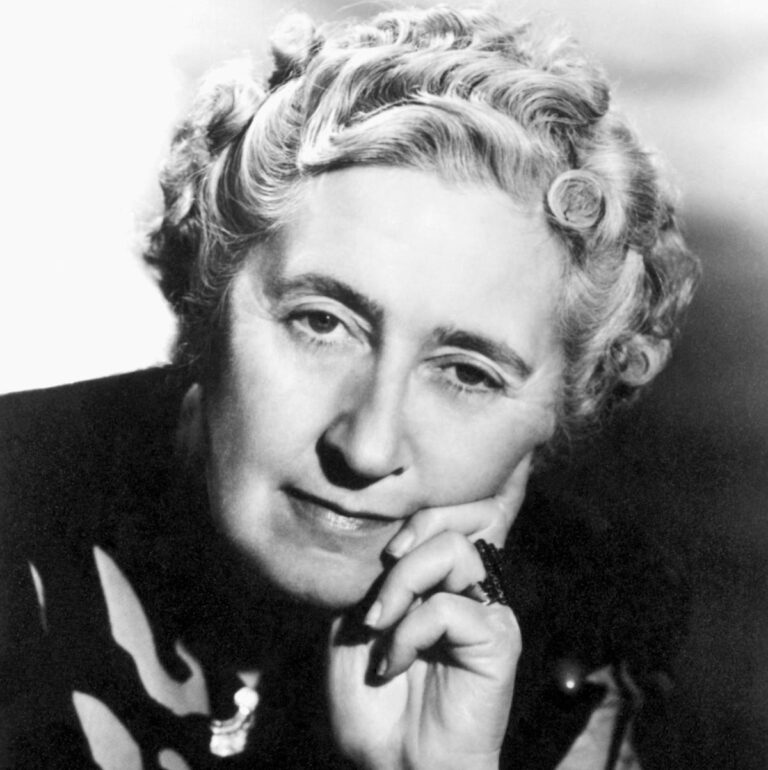
    Decoding the genius of Agatha Christie

    When readers open a detective novel by Agatha Christie, they often expect hidden motives and a dramatic reveal. Yet, behind the elaborate plots and suspenseful twists lies something far deeper. It is a masterclass in human psychology. Christie is celebrated globally as the Queen of Crime. However, her legacy rests on her profound grasp of human nature, emotion, and behavior. Beyond “Who [has] done it?” At first glance, a classic crime novel centers on a simple formula: a crime is committed, evidence is gathered, and a perpetrator is exposed. However, Christie’s narratives stand apart because she recognized that every criminal act is fundamentally driven by internal human conditions. It can be jealousy, greed, fear, desperate love, betrayal or pride. Her stories serve as an investigation into what happens when everyday human emotions turn into extraordinary actions. Christie demonstrated that a person’s surface appearance rarely tells the whole story. In her fictional world, a polite neighbor or a charming gentleman could conceal dark secrets. Christie challenged her readers to look beneath pleasant facades and observe the subtle tension between public personas and private motives. A Tale of Two Detectives Nothing illustrates Christie’s psychological acuity better than her two iconic sleuths. The meticulous Belgian detective Hercule Poirot and the observant villager Miss Jane Marple. Their methods and personal backgrounds could not be more distinct.  Yet, both figures share an uncanny reliance on psychological insight rather than physical evidence alone. Poirot prioritizes method, order, and intellectual analysis. He famously encourages paying attention to the little grey cells of the brain. Poirot understands that people inevitably reveal their true character through body language and small inconsistencies. Poirot allows suspects to expose themselves by asking precise questions and observing subtle emotional shifts. In contrast, Miss Marple operates from the quiet routine of the small English village of St. Mary Mead. Despite her gentle demeanor and knitted shawls, Miss Marple possesses a sharp mind shaped by decades of watching human behavior in a small community. She operates on the principle that human nature is universal. People react to passion, greed, and fear in remarkably similar ways. Her ability to draw parallels between a suspect’s behavior and local village gossip allows her to solve complex murder cases. The Art of Patience In a fast-paced world where hasty judgments and decisions are common, Christie’s stories offer a lesson in the value of patience, active listening, and careful observation. Her detectives succeed precisely because they resist early conclusions. They listen to what is said and  what is left unsaid. This approach reflects many real-world disciplines, including psychotherapy, journalism, and conflict resolution. So, understanding another person requires suspending immediate judgment and noticing subtle nuances. Christie turns her audience into active participants in a process of empathetic inquiry. For generations of fans, revisiting Christie’s novels or watching cinematic adaptations is more than an intellectual exercise. It is a warm, comforting ritual. Many readers recall discovering her books during youth or sharing screen adaptations with family members. The nostalgic atmosphere of early 20th-century trains, country manors, and seaside resorts provides a captivating backdrop for timeless human dramas. Decades after her death, Agatha Christie remains one of the most widely read authors in human history. Her popularity persists not because audiences simply enjoy detective stories, but because the complexity of human nature never grows old. Her work continues to remind us that behind every smile, silence, or stray comment lies a story waiting to be understood.  

  • | | |

    The silence of the state

    Al Jazeera’s digital domain was restricted in Pakistan following its critical coverage of regional unrest and local election turmoil. Pakistan had become the second country after Israel to ban the Qatari broadcaster. While the statement makes for a soundbite, it oversimplifies both history and the mechanics of state censorship. In reality, the history of sovereign states attempting to mute inconvenient journalism is long, systemic, and filled with precedent. The Reality Behind the Headlines The recent digital restrictions in Pakistan emerged after the network broadcast extensive ground coverage of civil protests, Internet shutdowns, and election-related violence in Pakistan-administered Kashmir. State authorities responded by accusing the international news organization of yellow journalism and selective reporting. Shortly after, users across the country reported that the network’s website had become inaccessible. Repeated bans on Al Jazeera However, this action makes Pakistan the first nation to follow Israel’s 2024 ban overlooks press suppression. Over the past two decades, Al Jazeera has faced repeated office closures, revocations and total broadcast bans across numerous jurisdictions. Egypt (2013): Following political upheaval, the government shut down the network’s local operations and detained several of its journalists under allegations of threat to national stability. The Gulf Blockade (2017): During a severe diplomatic rift, Saudi Arabia, the United Arab Emirates, Bahrain, and Jordan blocked the channel’s signals and shuttered its regional bureaus. Israel (2024): Emergency legislation empowered authorities to halt local broadcasts, raid offices, and seize transmission equipment over national security claims. Far from being a rare sequel, the administrative impulse to silence an uncomfortable mirror is an old story retold. The Architecture of Banishment In literary traditions, the suppression of speech is rarely about the words themselves; it is about who holds the authority to define reality. George Orwell  observed in 1984 that the primary goal of totalitarian control is to limit the perimeter of thought by controlling the historical record. When a state apparatus brands unfavorable reporting as inherently fraudulent or subversive, it engages in an act of narrative containment. The label of yellow journalism becomes a rhetorical wall. This label shield the public from realities that disrupt official consensus. This dynamic reflects the bureaucratic absurdity depicted in Franz Kafka’s The Castle, where an elusive authority governs from above while remaining immune to direct questioning. In Kafka’s vision, the citizen is caught in a maze of unwritten rules and opaque decrees, where seeking transparency is treated as an act of insubordination. When digital portals are quietly restricted without formal public legislation or explicit judicial oversight, the state operates within a similarly Kafkaesque realm. The silence itself becomes an instrument of governance. The Illusion of Total Control There is a profound irony in modern media suppression. In classical literature, exile was absolute. A banished figure like Ovid was removed physically from the city center, their voice fading at the empire’s edges. Today, however, censorship in a hyper-connected world is an exercise in futility. Blocking a website or pulling a broadcast signal rarely extinguishes the narrative. Instead, it often draws greater international scrutiny to the very events the state wished to obscure. A phenomenon akin to the Streisand effect.   When governments resort to digital blockades, they reveal a fundamental fragility. True political stability rests on the capacity to withstand criticism.  To edit reality is like trying to stop the tide by breaking the hourglass. The water continues to rise, and the story, inevitably, finds another way to be told.