celebrate international youth

KP to celebrate International Youth Day at University of Peshawar

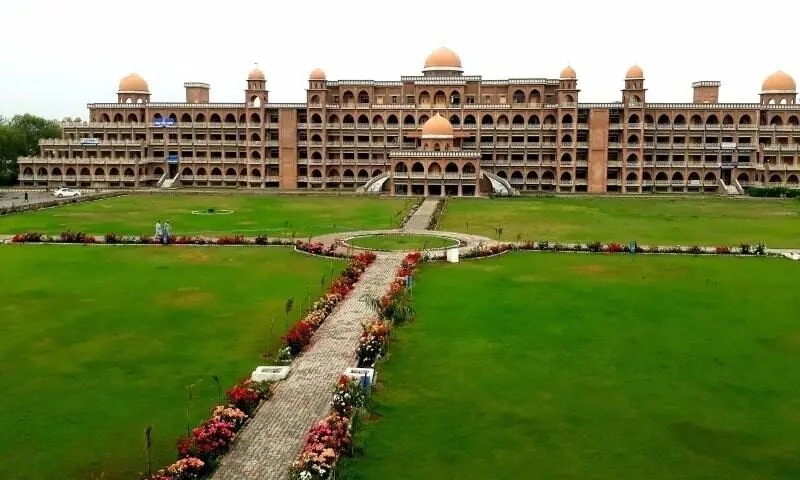
PESHAWAR: The Directorate of Youth Affairs, Government of Khyber Pakhtunkhwa, will organise a programme to mark International Youth Day 2026 at Sahibzada Abdul Qayyum Hall, University of Peshawar, on Wednesday, August 12, from 2pm to 6pm.

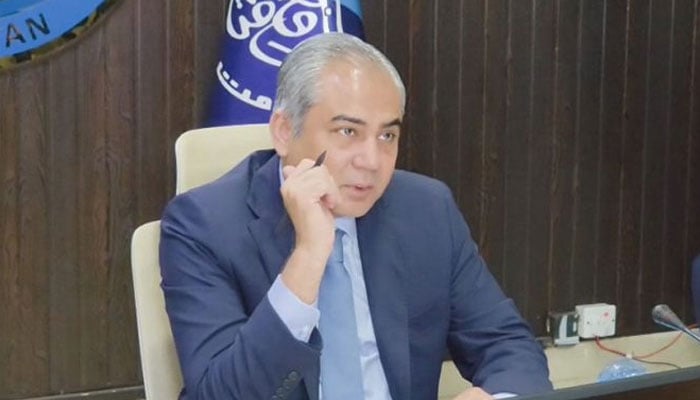
Chief Minister Khyber Pakhtunkhwa Sohail Afridi will attend the event as the chief guest, while Advisor to the Chief Minister for Sports and Youth Affairs Taj Muhammad Khan Tarand will also participate.

The event has been planned as a celebration of the passion, potential and power of youth and will feature a range of activities aimed at recognising young people’s achievements and providing them with a platform for expression and engagement.

A key feature of the programme will be a panel discussion featuring Akif Khan, Sumaira Shams, Samar Khan, Abaseen Yousafzai, Junaid of Jamboys and Asif Qurashi.

The programme will also include the Youth Excellence Awards, through which outstanding young people will be recognised for their achievements and contributions.

A youth anthem will be launched during the event, with Mehtab Ziyab associated with its presentation.

The celebrations will also feature live music performances by Tamash Band and Junaid Kamran Siddique, besides a segment featuring inspirational stories.

Director Youth Affairs Abbas Khan Afridi said the event was being organised to celebrate the talent, energy and achievements of young people in Khyber Pakhtunkhwa.

He said the Directorate remained committed to creating opportunities for young people to showcase their abilities, develop their potential and play a constructive role in society.

“Our youth possess immense talent, creativity and potential. It is our responsibility to provide them with platforms where their abilities can be recognised and their voices can be heard,” Mr Afridi said.

He added that the International Youth Day celebrations would bring together young people from different backgrounds and provide them an opportunity to engage with distinguished personalities, share ideas and celebrate youth achievements.

The event carries the message “Empowering Youth, Shaping the Future” and will run from 2pm to 6pm at Shahzebda Abdul Qayyum Hall, University of Peshawar.

Similar Posts

  • | |

    Sugar mills seek approval to export 585,000 tonnes…

    The Pakistan Sugar Mills Association (PSMA) has requested the federal government to allow the export of 585,000 tonnes of surplus sugar, saying the country has sufficient stocks to meet domestic demand while supporting sugarcane growers ahead of the next crushing season. In separate letters addressed to Deputy Prime Minister Ishaq Dar and the Minister for National Food Security, the association urged the government to grant immediate permission for sugar exports, as it has done in previous years. According to the letters, Pakistan had 3.4 million metric tonnes of sugar in stock as of July 15, 2026, while the country’s average monthly consumption stands at approximately 567,000 metric tonnes. The association said that even before the start of the upcoming crushing season, an estimated 1.158 million metric tonnes of sugar would remain in stock, ensuring ample supplies for domestic needs. PSMA further stated that another bumper sugarcane crop is expected during the next crushing season, which is projected to produce around 8 million metric tonnes of sugar—well above the country’s annual requirement. The association warned that with the sugarcane sowing season approaching, growers are facing uncertainty due to concerns over excess sugar stocks and limited storage capacity. It urged the government to allow the export of surplus sugar, including stocks held as strategic reserves, within one month of the beginning of the new crushing season. According to the association, timely exports would help stabilise the domestic market, create storage space for the new crop, and ensure better returns for sugarcane farmers

  • | |

    Makkah pact hailed as boost for regional peace and…

    LAHORE: Senior journalists, defence analysts and experts have described the Makkah Joint Defence Pact between Pakistan, Saudi Arabia and Türkiye as a significant step towards strengthening regional peace, collective security and strategic cooperation. The views were expressed during a panel discussion titled “Makkah Pact: Peace, Security and Stability,” organised by the Press Information Department (PID) Lahore. PID Lahore Director General Shafqat Abbas said the agreement was not directed against any particular country but was intended to strengthen peace, stability, mutual confidence and collective security. He stressed that dialogue, diplomacy and cooperation should remain the preferred means of resolving regional disputes. He said Pakistan, Saudi Arabia and Türkiye brought different strengths and experiences to the partnership, creating opportunities for closer cooperation in defence, diplomacy, economics and strategic affairs. According to him, modern national power extended beyond military strength and depended equally on a strong economy, quality education, scientific advancement, technology, skilled human resources and effective diplomacy. Shafqat Abbas called for greater efforts to convert Pakistan’s defence capabilities and achievements into economic opportunities through investment in education, research, technology, skills development and exports. He said a combination of strong defence and economic stability could enable Pakistan to play a more influential role internationally. Senior journalist and analyst Mujeebur Rehman Shami highlighted Pakistan’s achievements in defence, diplomacy and foreign relations since independence. He praised Pakistani diplomats for enhancing the country’s international standing despite limited resources and stressed the urgent need to improve education, technical skills, research and scientific development. He also called for higher exports, improved productivity and stronger economic policies, saying that Pakistan’s defence successes should ultimately contribute to broader economic progress. Senior journalist Salman Ghani said the pact combined the unique strengths of its three members, describing Pakistan as a country with significant defence capabilities, Saudi Arabia as a major economic power and Türkiye as an important player in defence technology and military production. He said the partnership could open new avenues for investment, economic cooperation and regional stability. Defence analyst Colonel (retd) Abid said Pakistan’s political and military leadership had played an important role in developing the agreement. He noted that the pact carried implications beyond defence and could influence regional diplomacy, economic relations and strategic cooperation. Former Vice Chancellor of Home Economics University Dr Faleha Afzal said the agreement had further demonstrated Pakistan’s potential role in promoting peace and stability and expressed hope that other Muslim countries would eventually participate in similar cooperative initiatives. Columnist Malik Salman stressed the importance of mutual trust and collective security among Muslim countries, while urging Pakistan to maintain a balance between defence preparedness and economic development. Government College University Lahore Urdu literature professor Dr Farzana Riaz said the pact could create new opportunities for unity and cooperation among Muslim countries and encourage joint efforts to address shared regional challenges. Journalist Noorullah said the agreement could contribute to greater peace and stability in the region, but stressed the need for a comprehensive strategy to convert Pakistan’s strategic and defence strengths into tangible economic and diplomatic gains. The participants agreed that closer cooperation among Pakistan, Saudi Arabia and Türkiye could have wider implications for regional peace, defence coordination, diplomacy and economic development. They called on Muslim countries to overcome differences, focus on common interests and pursue peace, development and collective security through dialogue and coordinated efforts. Concluding the session, Shafqat Abbas thanked the participants and said discussions of this nature were important for increasing public understanding of major national and international developments and encouraging informed debate.

  • | |

    4.8-magnitude earthquake jolts Zhob, Chaman

    QUETTA: Earthquake tremors were felt in Zhob and Chaman districts of Balochistan, triggering panic among residents. According to the Seismological Centre, the earthquake had a magnitude of 4.8 on the Richter scale. Its depth was recorded at 15 kilometres below the Earth’s surface. The epicentre of the earthquake was located around 122 kilometres northeast of Zhob, according to the seismic monitoring authorities. The tremors were felt in several areas, causing fear and anxiety among local residents. Many people rushed out of their homes as a precautionary measure. Residents were seen reciting the Kalma Tayyaba while gathering in open areas to avoid any possible danger from the earthquake. The sudden tremors caused concern among citizens, particularly because of the possibility of aftershocks. People remained cautious and stayed outside their homes for some time. Authorities and local administration remained alert following the earthquake. Emergency services were also monitoring the situation in the affected districts. So far, no casualties or property damage have been reported as a result of the earthquake. Officials are continuing to assess the situation and monitor for any further seismic activity. Earthquakes are relatively common in parts of Balochistan because of the region’s geological setting. Authorities generally advise residents to remain calm during tremors and move to safer open areas after leaving buildings if necessary.

  • | |

    Mohsin Naqvi reviews 24/7 NADRA center

    Lahore: Federal Interior Minister Mohsin Naqvi paid a visit to the 24/7 NADRA Mega Center at Shimla Pahari, where he inspected the services and facilities available to the public. During the visit, he expressed satisfaction with the center’s performance and praised the quality of services being provided to citizens. The minister interacted directly with visitors applying for identity cards and other official documents, listening to their concerns and seeking feedback on the overall service experience. He also toured different service counters, met NADRA staff, and reviewed operational arrangements to ensure efficient public service delivery. Responding promptly to public complaints, Mohsin Naqvi directed officials to immediately resolve the issues faced by two citizens. He also took notice of complaints regarding excessive parking charges outside the center and called for appropriate action to address the matter. Highlighting the importance of improving public services, the interior minister announced that the system for accessing the Family Registration Certificate (FRC) track record would be streamlined to make the process more efficient and user-friendly. Recalling his previous visit to the Shimla Pahari NADRA Center, Naqvi said he was encouraged by the positive feedback received from citizens. He emphasized that public trust and satisfaction remain the true measure of an institution’s success and commended NADRA Chairman and the entire team for their dedication and performance in serving the people.

  • | |

    NDMA issues flood alert until July 24

    Islamabad: Pakistan’s National Disaster Management Authority (NDMA) has issued a nationwide flood and landslide alert until July 24, warning residents of possible flash floods, rising river levels, and dangerous weather conditions caused by ongoing monsoon rains. According to the NDMA spokesperson, heavy rainfall is expected to increase water flow in rivers, seasonal streams, and mountain channels across several parts of the country. Authorities have advised the public to avoid unnecessary travel, stay away from flood-prone areas, and follow official safety instructions. The alert highlights a significant risk of flash flooding in Gilgit-Baltistan, particularly in the districts of Hunza, Shigar, and Ghanche. Rivers including Shimshal, Hunza, Chapursan, Shigar, Shyok, and Hushe are expected to experience a rapid rise in water levels. In Azad Jammu and Kashmir (AJK), water levels may increase in the Jhelum, Neelum, Poonch, and Mahl rivers, as well as Betar Nullah, Bhimber Nullah, Kanshi River, and several tributaries connected to the Jhelum and Poonch river systems. The NDMA has also warned of possible flash floods in Khyber Pakhtunkhwa, affecting the Chitral, Kabul, Swat, and Panjkora rivers. Local streams in Khyber, Kurram, Orakzai, Kohat, Bannu, Karak, Hangu, Lakki Marwat, North and South Waziristan, Bajaur, Mohmand, Mansehra, Buner, and Swabi are also at risk due to intense monsoon rainfall. In Punjab, flood threats remain high in the hill torrents of Dera Ghazi Khan, the Soan River, and the Potohar region. Similar conditions are expected in northeastern Balochistan. The NDMA further warned of high-level flooding in the Chenab River near Marala and the upper reaches of the Jhelum River near Mangla. Several seasonal streams, including Dora, Dota, Dwara, Bhimber, Halsey, Aik, Plakhoo, Bein, Basantar, Dek, and Sukhi Nullah, may also experience sudden increases in water flow. The authority also noted that any release of water from India’s Thein, Pong, and Bhakra dams could significantly increase water levels in the Ravi and Sutlej rivers, potentially worsening flood conditions downstream. The NDMA has urged citizens to stay informed through official weather updates, avoid crossing flooded roads or streams, and cooperate with local authorities to ensure public safety during the ongoing monsoon season. This version is optimized for search engines while remaining clear, informat

  • | | |

    Supreme Court bars fresh claims after final contra…

    ISLAMABAD: The Supreme Court of Pakistan has ruled that contractors cannot pursue additional financial claims or seek arbitration after voluntarily accepting a final settlement, reinforcing the binding nature of contractual agreements. A three-member bench headed by Chief Justice Yahya Afridi, alongside Justice Irfan Saadat Khan and Justice Aqeel Ahmed Abbasi, dismissed a petition seeking permission to appeal against an earlier ruling of the Peshawar High Court. Justice Irfan Saadat Khan authored the judgment. The dispute originated from a construction contract awarded in December 1993 for the Hayatabad Medical Complex in Peshawar. During the project, the contractor sought additional payments, citing delays and funding shortages. According to the judgment, the company later accepted Rs88.555 million as final payment and signed a No Demand Certificate, formally giving up its right to pursue further financial claims under the contract. Despite the settlement, the contractor subsequently approached the courts seeking arbitration over additional demands. The trial court and the Peshawar High Court rejected the request, and the Supreme Court has now upheld those decisions. The apex court clarified that once a party willingly accepts final payment and signs a No Demand Certificate, it cannot reopen financial claims or invoke arbitration unless it can establish that the settlement was secured through fraud, coercion or undue influence. The court stressed that voluntarily concluded agreements must remain enforceable, particularly in public-sector development projects where contractual certainty is essential. It warned that allowing settled disputes to be reopened without evidence of wrongdoing could weaken confidence in contracts and create uncertainty in commercial dealings.

Leave a Reply

Your email address will not be published. Required fields are marked *