| | |

Supreme Court bars fresh claims after final contra…

ISLAMABAD: The Supreme Court of Pakistan has ruled that contractors cannot pursue additional financial claims or seek arbitration after voluntarily accepting a final settlement, reinforcing the binding nature of contractual agreements.

A three-member bench headed by Chief Justice Yahya Afridi, alongside Justice Irfan Saadat Khan and Justice Aqeel Ahmed Abbasi, dismissed a petition seeking permission to appeal against an earlier ruling of the Peshawar High Court. Justice Irfan Saadat Khan authored the judgment.

The dispute originated from a construction contract awarded in December 1993 for the Hayatabad Medical Complex in Peshawar. During the project, the contractor sought additional payments, citing delays and funding shortages.

According to the judgment, the company later accepted Rs88.555 million as final payment and signed a No Demand Certificate, formally giving up its right to pursue further financial claims under the contract.

Despite the settlement, the contractor subsequently approached the courts seeking arbitration over additional demands. The trial court and the Peshawar High Court rejected the request, and the Supreme Court has now upheld those decisions.

The apex court clarified that once a party willingly accepts final payment and signs a No Demand Certificate, it cannot reopen financial claims or invoke arbitration unless it can establish that the settlement was secured through fraud, coercion or undue influence.

The court stressed that voluntarily concluded agreements must remain enforceable, particularly in public-sector development projects where contractual certainty is essential. It warned that allowing settled disputes to be reopened without evidence of wrongdoing could weaken confidence in contracts and create uncertainty in commercial dealings.

Similar Posts

  • | | |

    PPP accuses PML-N of rigging Azad Kashmir election…

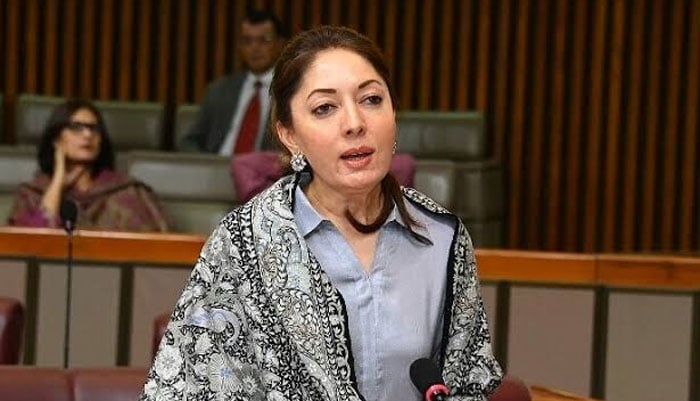
    The Pakistan Peoples Party has accused the Pakistan Muslim League-Nawaz of electoral irregularities during the Azad Kashmir elections. PPP leaders made the allegations during a press conference in Islamabad on Monday. PPP leader Sharmila Faruqui alleged that the PML-N was attempting to form a government in Azad Kashmir through rigging. She questioned claims that migrant seats had already been secured by the ruling party. Faruqui also criticised the Punjab government over its spending priorities. She questioned the concentration of development funds in Lahore and asked what had been done for other parts of the province. She said the PPP had avoided politicising incidents involving collapsed roofs in Punjab. However, she called for stronger measures to protect women and children. Faruqui also raised concerns about crime and law enforcement in Punjab. She referred to an alleged incident involving a girl with a mental disability in Lahore and criticised the police response. She further alleged that the Crime Control Department had carried out hundreds of encounters. According to her, the department had conducted around 670 encounters. Faruqui questioned whether the government was giving sufficient importance to courts and due process. She also claimed that a large majority of reported child abuse cases had occurred in Punjab. The PPP leader questioned the effectiveness of governance in cities where children and vulnerable citizens do not feel safe. Another PPP leader, Shahla Raza, also accused the PML-N of manipulating the Azad Kashmir election process. Raza claimed that the PML-N had entered the elections expecting to secure around 12 seats. She alleged that irregularities were reported in several constituencies because the party feared an outcome similar to the political situation in Gilgit-Baltistan. Raza said the alleged incidents demonstrated serious concerns about the credibility of the electoral process. She claimed that the Election Commission had received 26 complaints before 1pm on election day. She also alleged that election-related material was taken from police personnel and that gunfire occurred during the incidents. Raza further claimed that a PPP member of the National Assembly was shot. The PPP leaders called for greater transparency in the electoral process. They also urged authorities to investigate complaints submitted during polling. PPP leader Palwasha Khan said her party remains an ally of the PML-N at the federal level. However, she stressed that the PPP would not remain silent if it believed that the government was taking an incorrect step. Khan said the president has constitutional powers regarding official summaries and can act according to the law. She made it clear that the PPP considers itself a political partner rather than a subordinate of the PML-N. She warned that the government could face difficulties in achieving its political objectives if it ignored concerns raised by its allies. The allegations have added to political tensions surrounding the Azad Kashmir elections. The PPP and PML-N are coalition partners at the federal level. However, differences between the two parties have emerged over the election process and political developments in Azad Kashmir. The allegations made by PPP leaders have not, by themselves, established that electoral fraud occurred. The claims are expected to be examined by the relevant electoral and legal authorities.

  • |

    Pakistan’s trade deficit surges 25% to nearly $4 billion in July 

    ISLAMABAD: Pakistan’s trade deficit expanded sharply during the first month of the new fiscal year, reaching nearly $4 billion in July, as a strong rise in imports continued to outpace export growth, highlighting persistent weaknesses in the country’s external sector despite a series of incentives announced for exporters. According to the latest figures released by the Pakistan Bureau of Statistics (PBS), the country’s trade deficit widened to $3.95 billion in July 2026, compared to $3.16 billion recorded during the same month last year. The deficit increased by approximately $794 million, representing an annual rise of 25.2%. The widening gap was primarily driven by a substantial increase in imports, which climbed to $6.9 billion from $5.8 billion in July 2025. This reflects an increase of more than $1 billion, or 18% year-on-year, indicating stronger demand for imported goods and raw materials. Exports Show Growth but Remain Below Key Milestone While Pakistan’s exports registered positive growth, they once again failed to cross the important $3 billion monthly mark. Exports reached $2.94 billion, falling short of the milestone by around $61 million. On an annual basis, exports increased by 9.5%, adding nearly $256 million compared to July last year. Although the improvement reflects steady recovery in overseas shipments, analysts believe the pace remains insufficient to counter the rapid expansion in imports. Exports had crossed the $3 billion threshold in January 2026, touching approximately $3.05 billion, but the country has been unable to maintain that level in the months that followed. Tariff Reforms Under Scrutiny The latest trade figures have renewed debate over Pakistan’s tariff liberalisation policy, introduced under broader economic reforms supported by international financial institutions, including the World Bank and the International Monetary Fund (IMF). The government has gradually lowered tariff barriers to increase competition and integrate Pakistan more closely into global markets. However, economists argue that the economy was opened before domestic industries were provided with sufficient support to compete effectively. Business leaders have repeatedly pointed out that exporters continue to face high energy prices, elevated financing costs, tax-related uncertainties and exchange rate volatility, all of which reduce their competitiveness in international markets. Earlier projections by the World Bank had suggested that tariff reforms would increase exports by 14% while limiting import growth to around 7%. However, the latest figures suggest imports have grown much faster than anticipated, while export gains have remained comparatively modest. Government Rolls Out Fresh Export Incentives To strengthen export performance, the federal government has announced a series of financial support measures during the current fiscal year. In the federal budget, Prime Minister Shehbaz Sharif reduced the minimum and advance tax on exporters to 1.25% and abolished the 10% super tax on export earnings in an effort to improve liquidity and encourage investment in export-oriented industries. More recently, the government approved a Rs98 billion export support package aimed at improving competitiveness and increasing foreign exchange earnings. Under the revised Export Finance Scheme (E-EFS), exporters will be able to obtain six-month working capital loans at an interest rate of 8.5%, with the government absorbing 5 percentage points of the financing cost. The subsidy for this component alone is estimated at Rs58 billion during the current fiscal year. ECC Approves New Financing Facilities The Economic Coordination Committee (ECC) has also expanded access to concessional financing by increasing the ceiling of the existing short-term financing portfolio from Rs1 trillion to Rs1.5 trillion. In addition, the committee approved the launch of a new Long-Term Growth Financing Facility, allowing exporters to access loans at an interest rate of 2% for the first two years, followed by a fixed 5% rate for the subsequent eight years. The government has also introduced a performance-based rebate scheme, effective from July 1, 2026, with an estimated annual allocation of Rs15 billion. Under the programme, exporters recording annual export growth of up to 10% over the previous year will receive a rebate equal to 1% of the incremental export value, while exporters achieving growth exceeding 10% will qualify for a 2% rebate on additional exports. Long-Term Challenges Persist Despite successive incentive packages introduced over several decades, Pakistan continues to struggle with achieving sustained export-led growth. Industry observers note that no single Pakistani exporter has generated $1 billion in annual export earnings, underscoring the structural challenges facing the country’s export sector. These challenges include limited product diversification, low industrial productivity, rising production costs, inconsistent policy implementation and insufficient value addition. Monthly Performance Offers Some Relief On a month-on-month basis, the trade data presented a more encouraging picture. Exports increased by 31% in July compared to June, rising by approximately $697 million, while imports remained largely unchanged at around $6.9 billion. As a result, the monthly trade deficit narrowed by nearly 15%, or around $709 million, compared with the previous month.

  • Thailand Summons Iranian Envoy Over Attack on Thai Cargo Ship

    BANGKOK — Thailand has sought an explanation and an apology from Iran over its attack on a Thai-flagged cargo vessel near the Strait of Hormuz on Wednesday, which damaged the ship and left three crew members still missing, the Foreign Ministry announced. Thai Cargo Ship Attacked Near Strait of Hormuz, Three Crew Missing Iranian Ambassador […]

  • |

    Meloni demands probe into Bologna death after violent clashes

    Italian Prime Minister Giorgia Meloni has called for a thorough investigation into the death of a man during a police operation in Bologna, while strongly condemning violent protests that left dozens of police officers injured. The incident occurred in the Pilastro area of Bologna, where police were called to respond to reports of an aggressive man damaging a vehicle. The man, identified as Moroccan-born Abderrahim Fakir, died following the confrontation with police. Meloni said all facts surrounding the incident must be established through a transparent investigation. She stressed that the truth should be determined without bias and that responsibility should be identified based on evidence. The situation later escalated when protesters gathered in Bologna and clashes broke out with police. Demonstrators threw firecrackers, bottles and chairs at law enforcement personnel, prompting police to use tear gas and water cannons to control the crowd. Police officials said 56 officers were injured during the violent demonstrations. Meloni condemned the attacks on security personnel, saying violence could not be justified under any circumstances. Authorities have launched an investigation into the man’s death. Bologna police said body-camera footage from the officers involved would be handed over to investigators as part of the inquiry. According to initial reports, officers attempted to calm Fakir before using pepper spray and restraining him while trying to place him under arrest after he allegedly became aggressive. The incident has triggered political debate across Italy, with opposition parties demanding accountability and government supporters defending the actions of police officers. Meloni accused some protesters of using the incident as an excuse to create unrest rather than seeking justice. She said those responsible for attacking police and damaging public property were pursuing confrontation instead of the truth.

  • | |

    Goats caught riding a green bus in Oregon in viral…

    An unusual incident in Portland, Oregon, has caught the attention of social media users after two stray goats were spotted entering a public bus station and briefly boarding a green bus. The bizarre incident reportedly took place at a bus station on Division Street, where authorities received a 911 call about two goats wandering freely around the area. What happened next turned an ordinary day into an amusing story for local commuters. According to the local transport authority, security camera footage showed the two goats calmly entering the station. The animals then appeared to board a nearby bus before eventually getting off and walking toward a shopping center in the area. The sight of the unexpected passengers quickly became the highlight of the incident. Rather than causing major disruption, the goats seemed to explore the station and bus as if they were simply looking for their next destination. Police were alerted and began searching the area after receiving the report. However, by the time officers arrived, the goats had disappeared. Their whereabouts remained unknown. The local transport authority also responded to the unusual incident with a humorous message, jokingly raising questions about where the goats had come from, where they were going and whether they had valid tickets for their journey. The incident has since attracted attention online, with the unusual footage providing plenty of entertainment for viewers. While public transportation is normally associated with human passengers, the appearance of two goats on a bus created a memorable and amusing moment. The goats ride green bus incident is another example of how unexpected moments captured on security cameras can quickly become viral stories. For the goats, however, the brief bus adventure may simply have been another day of exploring their surroundings. The incident ended without reports of injuries, and authorities were left with more questions than answers about the animals’ unexpected public-transit adventure

  • |

    Zelenskyy warns Egypt of Black Sea food security threats as Russia rejects maritime ceasefire

    Ukrainian President Volodymyr Zelenskyy has cautioned Egyptian President Abdel Fattah al-Sisi that ongoing Russian strikes on commercial shipping in the Black Sea pose a direct threat to regional food security and grain exports across Africa and the Middle East. Speaking via X, Zelenskyy noted that significant supply reductions are already driving up global grain prices and warned of severe consequences if attacks on cargo vessels persist. In response to proposals for a maritime truce, Russian Foreign Ministry spokesperson Maria Zakharova rejected a third-party proposal from Kyiv to halt strikes on civilian shipping. Moscow dismissed the initiative as a “half-measure” that would merely grant Ukrainian forces operational breathing space, accusing Kyiv of attempting to destabilise Black Sea shipping routes. The diplomatic standoff coincides with several broader geopolitical developments across the region. Russian authorities acknowledged domestic petrol shortages after a Ukrainian strike forced the six-month closure of the Orsk oil refinery, located 1,300 km from the front line. Meanwhile, Polish officials warned that Russian cyber actors are exploiting historical grievances over World War II massacres to strain relations between Warsaw and Kyiv. Further escalating regional concerns, Romanian defence officials confirmed that a second unidentified drone crashed inside NATO territory near the border village of Plauru, whilst Russian President Vladimir Putin reaffirmed deep security cooperation with North Korean leader Kim Jong-un during commemorations marking the end of Japanese colonial rule.

Leave a Reply

Your email address will not be published. Required fields are marked *