more than sunshine

More than sunshine for Vitamin D

Vitamin D is important for strong bones a healthy immune system and many other body functions.

It is often called the “sunshine vitamin” because the body can produce it when the skin is exposed to sunlight.

However a new study suggests that spending more time in the sun may not be enough to raise vitamin D levels especially for people who already have a deficiency.

The study published in the European Journal of Clinical Nutrition, followed 299 older adults most of whom had low vitamin D levels.

During the summer participants spent more time outdoors so researchers could see whether sunlight increased their vitamin D.

The researchers found that sunlight alone had only a limited effect on vitamin D levels in people with a deficiency.

They said that eating vitamin D-rich foods such as fatty fish and fortified dairy products and taking supplements when needed are more effective ways to improve vitamin D levels.

Most adults need about 1,500 to 2,000 IU of vitamin D each day, depending on their health needs and medical advice.

Vitamin D plays an important role in keeping bones strong supporting the immune system and may also help lower the risk of certain long-term health conditions.

Experts estimate that around one billion people worldwide have low vitamin D levels.

Similar Posts

  • Many smokers still miss major health risks

    A new study has found that public understanding of the health risks of smoking has improved only slightly over the past 20 years. Researchers studied more than 240,000 smokers from 46 countries. Most participants knew that smoking can cause lung cancer.  However far fewer were aware that smoking can also greatly increase the risk of heart disease heart attacks and strokes. Gaps in public awareness The study also found that many smokers do not fully understand the dangers of secondhand smoke.  They may not know that breathing in someone else’s cigarette smoke can also increase the risk of heart disease heart attacks and strokes. The research was published in the journal BMJ Open. Researchers said that despite health warnings on cigarette packs tobacco control policies and years of public awareness campaigns important gaps in knowledge still remain. Heart risks often overlooked Lead author Janet Chung Hall, a scientist with the University of Waterloo’s International Tobacco Control Policy Evaluation Project said the lack of awareness about the serious effects of smoking and secondhand smoke is concerning. Experts estimate that smoking related heart and blood vessel diseases cause more than two million deaths worldwide every year. The researchers say stronger public health campaigns are needed to help people understand that smoking does not only damage the lungs. It can also seriously affect the heart and blood vessels. Better awareness of these risks could encourage more smokers to quit and help reduce the harmful effects of tobacco on both smokers and people around them.

  • Favoritism in Schools

    Hani Rasheed Through the pages of your esteemed newspaper, I wish to draw attention to the growing problem of favoritism in schools. Education is meant to provide equal opportunities to every student, but favoritism is destroying the spirit of fairness and merit. In many schools, some students receive special attention and better opportunities because of their personal connections or background. Meanwhile, hardworking and deserving students are often ignored. This creates disappointment among students and damages their confidence. Favoritism also teaches young people a dangerous lesson: that success depends on connections rather than hard work and talent. If this issue is not addressed, it will negatively affect the future of our education system. The authorities must take strict action against favoritism and ensure equal treatment for every student. Teachers and school administrations should promote merit, justice and fairness. I hope your newspaper will highlight this important issue and urge the authorities to take immediate steps to end favoritism in schools

  • Baby Shark star makes K-Pop comeback

    Park Ji-won, who became famous as a child after appearing in the viral “Baby Shark Dance” video has returned to the music world after nearly a decade. Now known as “Baby Shark Boy,” Park is starting a new journey as a K-pop singer. He has released his first digital single “WAVE.” Park appeared in the “Baby Shark Dance” video when he was just seven years old.  The video later became the most watched video in YouTube history gaining billions of views around the world. His new solo music project is supported by The Pinkfong Company, the owner of the “Baby Shark” copyright. Park said he is thankful that people still remember him after so many years. He believes the love for “Baby Shark” inspired him to reconnect with people through music. The “Baby Shark” song was released in 2016 and its famous video has now crossed 17.2 billion views.  The song became a worldwide hit, inspiring dance trends parodies and countless social media posts. “Baby Shark” has even been played at the White House while famous figures such as Donald Trump and Elon Musk have mentioned the popular song. After his early success, Park also appeared in other Pinkfong projects. His new single “WAVE” begins with a sound that reminds listeners of “Baby Shark” before moving into a modern electro pop style.  Park also helped write the lyrics for the song. After becoming famous as a child Park is now ready to build a new identity in the K-pop world.

  • Weight loss drugs may raise hair loss risk

    A new study suggests that some widely used weight loss medicines may increase the risk of hair loss (alopecia). These medicines are mainly prescribed to treat type 2 diabetes and obesity. They work by copying natural hormones in the body that help control blood sugar levels and reduce appetite making it easier for some people to lose weight. Researchers from the University of Pennsylvania Health System compared people taking GLP-1 medications with those using other diabetes treatments. They found that people using GLP-1 drugs appeared to have a higher rate of hair loss. The study also noted that U.S. health regulators have received many reports of hair loss after the use of semaglutide and tirzepatide. According to the UK’s Medicines and Healthcare products Regulatory Agency (MHRA) there were 399 reports of hair loss linked to tirzepatide in 2026, compared with 541 reports the previous year. For semaglutide, 148 reports were received in 2026 while 164 reports were recorded the year before. Experts say the findings show a possible link between these medicines and hair loss. However they stress that more medical research is needed to confirm whether the drugs are directly responsible.

  • Science explains why ancient Egyptians worshipped the baboon

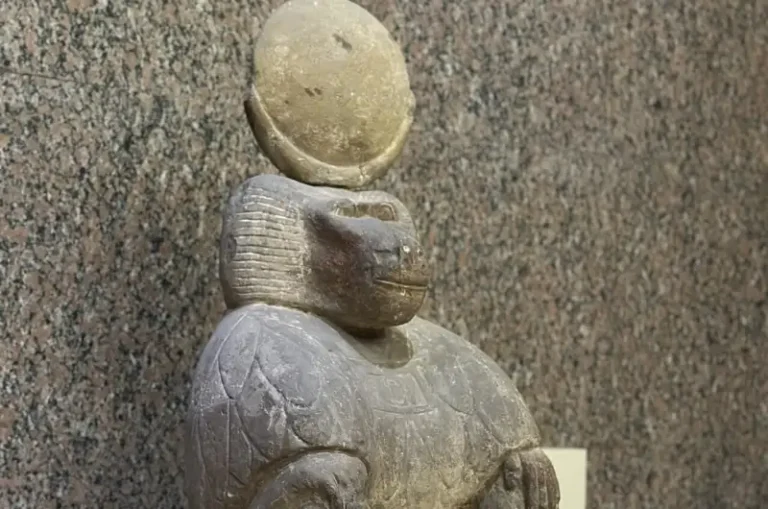
    In the vast pantheon of ancient Egypt, deities were frequently portrayed as living creatures. Anubis assumed the form of a sleek jackal, Hathor appeared as a majestic cow, and Horus was depicted as a fierce falcon. In almost every instance, a single animal species was tied to a single divine figure. However, the deity Thoth who’s the ancient Egyptian god of wisdom, writing, magic, and the moon stood out. Ancient artists and priests portrayed Thoth in two completely different animal forms. First, the slender, wading sacred ibis (Threskiornis aethiopicus). Second, the stocky, silver-furred sacred baboon (Papio hamadryas). For centuries, Egyptologists and anthropologists struggled to explain why two such different animals were chosen to represent the exact same lunar god.  The sacred ibis seemed to make intuitive sense. Its curved, arching beak resembles a delicate crescent moon. Its black-and-white plumage aligns with classical lunar motifs. The sacred baboon remained an enigma. Baboons were not even native to the Nile Valley. Egyptians had to import them from regions thousands of miles to the south at immense expense and difficulty. Furthermore, across most neighboring African cultures, baboons were viewed with hostility as agricultural pests that destroyed crops. A groundbreaking study published in the journal Time and Mind by a team of researchers from the University of St Andrews and Dartmouth College has finally understood the case. The researchers caught a glimpse into the psychological and spiritual world of ancient Egypt. Professor Catherine Hobaiter at the University of St Andrews led the research team sought to move past human visual perception. Human color judgment is naturally subjective and heavily influenced by cultural assumptions. To eliminate this bias, the scientists utilized spectroscopy. It’s a technique that measures the precise light wave frequencies reflected off physical surfaces. Using spectroscopic measurements, the researchers analyzed the physical light signatures emitted by the plumage of the sacred ibis and the thick coat of the sacred hamadryas baboon. Then, compared those measurements to the light wave frequencies given off by actual moonlight. The findings were astonishingly clear. Both the silver-white fur of the hamadryas baboon and the bright feathers of the sacred ibis possess spectral profiles that are practically identical to the reflected light of the moon. This discovery reveals that the ancient Egyptians were intentional in their religious symbolism. Ancient Egyptians had access to multiple bird and primate species. They were well-acquainted with at least three distinct types of ibises and several other monkey species, including green vervet monkeys and patas monkeys. Yet, out of all available animals, they specifically selected the single white ibis species and the single silver-furred baboon species. The new research demonstrates that the ancient Egyptians recognized an inherent physical connection between these animals and the night sky. To the Egyptian mind, divinity was not an abstract concept restricted to invisible realms. In fact, it was tangibly embodied in the natural environment. When an ancient observer looked upon a hamadryas baboon sitting under the night sky, its coat reflected the exact spectral radiance of the full moon shining overhead. Physical artifacts, temple walls, and mummified remains have revealed much about what ancient Egyptians built and worshipped. However, opportunities to understand how they perceived the world around them are exceptionally rare. Scientists have provided a rare window into ancient human consciousness. Science proved that to the people of the Nile, a baboon’s silver coat was quite literally the embodiment of heavenly light on Earth.  

  • Chickenpox cases rise in Gaza

    The United Nations has warned that chickenpox cases are increasing among displaced children in Gaza. Around 9,300 cases have been reported over the past two weeks with more than half recorded in Khan Younis. According to the UN Office for the Coordination of Humanitarian Affairs (OCHA) overcrowded displacement camps piles of garbage limited access to clean water and damaged sewage systems are creating ideal conditions for infectious diseases to spread. As a result chickenpox is becoming a serious public health concern. The UN said respiratory illnesses and skin diseases remain the most common health problems in Gaza. Waterborne diseases are also increasing especially in the Khan Younis area due to poor sanitation and contaminated water. Last week alone more than 18,000 new cases of skin-related illnesses including chickenpox external parasitic skin infections and impetigo were reported. The report also said Gaza’s healthcare system has been badly damaged by the ongoing war. Many hospitals and medical facilities have been destroyed or damaged while shortages of medicines fuel and medical supplies continue to affect healthcare services. According to the Palestinian Ministry of Health, since the war began more than 73,250 Palestinians have been killed and 173,751 injured. The ministry also said that around 90% of Gaza’s infrastructure has been damaged or completely destroyed.

Leave a Reply

Your email address will not be published. Required fields are marked *