chickenpox cases rise

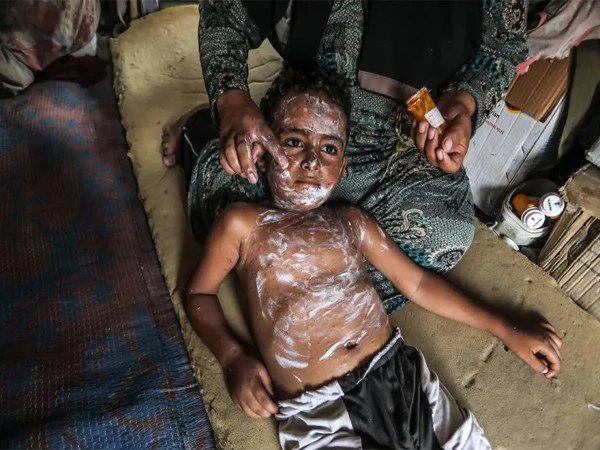
Chickenpox cases rise in Gaza

The United Nations has warned that chickenpox cases are increasing among displaced children in Gaza.

Around 9,300 cases have been reported over the past two weeks with more than half recorded in Khan Younis.

According to the UN Office for the Coordination of Humanitarian Affairs (OCHA) overcrowded displacement camps piles of garbage limited access to clean water and damaged sewage systems are creating ideal conditions for infectious diseases to spread.

As a result chickenpox is becoming a serious public health concern. The UN said respiratory illnesses and skin diseases remain the most common health problems in Gaza.

Waterborne diseases are also increasing especially in the Khan Younis area due to poor sanitation and contaminated water.

Last week alone more than 18,000 new cases of skin-related illnesses including chickenpox external parasitic skin infections and impetigo were reported.

The report also said Gaza’s healthcare system has been badly damaged by the ongoing war. Many hospitals and medical facilities have been destroyed or damaged while shortages of medicines fuel and medical supplies continue to affect healthcare services.

According to the Palestinian Ministry of Health, since the war began more than 73,250 Palestinians have been killed and 173,751 injured.

The ministry also said that around 90% of Gaza’s infrastructure has been damaged or completely destroyed.

Similar Posts

  • Which plane seat is safest?

    Many people choose to travel by air because it is fast comfortable and one of the safest ways to get from one place to another.  However when an airplane accident happens many passengers wonder. Is there a seat that offers a better chance of survival? The good news is that air travel remains far safer than traveling by road or rail. Although plane crashes often receive worldwide attention because they are rare and serious the number of deaths from aviation accidents is much lower than from road accidents. According to global aviation safety data flying has one of the lowest accident and death rates of any form of transportation. Is there a safest seat? There is no seat that can guarantee survival in every accident.  Aviation experts say the outcome depends on many factors including the type of crash the speed of the aircraft and where the impact occurs. However studies of past accidents suggest that some seats may provide a slightly better chance of survival in certain situations. What research shows A review of airplane crashes over 35 years found that middle seats in the rear section of the aircraft had the lowest death rate, around 28%.  By comparison seats in the middle section of the plane had a higher death rate. Another study by Popular Mechanics which examined crashes between 1971 and 2005 found that passengers sitting in the back of the plane were up to 40% more likely to survive than those sitting closer to the front. Why the back may be safer Aviation experts explain that the front of the aircraft often absorbs the first impact during some types of crashes.  Because of this passengers seated in the rear may have a better chance of surviving in certain accidents. The back of the aircraft is also closer to the rear emergency exits which may help passengers leave the plane more quickly if an evacuation is needed. But every crash is different Experts also warn that there is no “perfect” seat. Some crashes affect the rear of the aircraft first while others damage the front or middle section. In accidents involving mountains the ocean or explosions survival may depend more on the nature of the crash than on where a passenger is sitting. For example if a plane crashes into a mountain or falls into the sea the chances of survival are often very low regardless of seat location. Emergency exit seats can help Passengers sitting near emergency exits may be able to leave the aircraft faster after a crash provided the exits remain usable.  Quick evacuation is often an important factor in survival. What Aviation Authorities Say The US Federal Aviation Administration (FAA) says no part of an airplane is officially considered safer than another. Survival depends on many factors, including the type of accident the force of the impact fire and how quickly passengers can evacuate. Research suggests that seats near the back of the aircraft especially the middle seats in the rear section may offer a slightly better chance of survival in some crashes. However no seat can guarantee safety. The most important thing passengers can do is wear their seat belt listen to the safety briefing and follow the cabin crew’s instructions.  These simple steps can make a big difference in an emergency.

  • Hair dye after Cancer treatment

    For many cancer survivors seeing their hair grow back is more than a cosmetic change. It is a sign of recovery and a return to normal life. As new hair appears many people want to cover gray hair or try a new color. However health experts say it is important not to rush into using hair dye. Chemotherapy and radiation are designed to destroy fast growing cancer cells but they also affect healthy hair follicles. This is why many patients lose their hair during treatment. When hair grows back it is often thinner softer, drier and more sensitive than before. The scalp may also remain delicate for several months. Doctors warn that using permanent hair dye too soon after treatment can irritate the scalp cause allergic reactions and damage new hair. It may also slow healthy hair growth while the scalp is still healing. Several studies have looked at the possible risks of hair dye. A large study by the US National Institute of Environmental Health Sciences involving more than 46,000 women found that frequent use of permanent hair dye and chemical hair straighteners was linked to a slightly higher risk of certain types of breast cancer. Another long term study by the Harvard T.H. Chan School of Public Health, which followed more than 117,000 women over 36 years found that hair dye did not increase the risk of most cancers. However long term use of permanent dyes was linked to a small increase in the risk of some types of breast skin and ovarian cancers. Experts advise cancer survivors to carefully read the ingredients before buying any hair dye. Chemicals such as PPD (para-phenylenediamine), ammonia, hydrogen peroxide parabens, and phthalates may be harmful to sensitive skin and newly grown hair. Most doctors recommend waiting at least six months after completing chemotherapy before using permanent hair dye. This gives the scalp and hair enough time to recover. Patients who had scalp cooling or radiation to the head should only use hair dye after getting approval from their doctor. During the first six months after treatment experts suggest avoiding chemical hair dyes and keeping the scalp well moisturized.  Even after six months patients should speak with their oncologist before coloring their hair. Safer options include pure henna or natural herbal dyes that do not contain added chemicals. Ammonia free and peroxide-free semi permanent dyes may also be suitable.  Temporary root powders and color mascaras are another option because they wash out with shampoo. Experts also recommend doing a patch test 48 hours before using any hair color to check for allergies or skin irritation. Whenever possible choose coloring methods that reduce direct contact between the dye and the scalp. Doctors say that caring for your hair again after cancer treatment is an important step in recovery. However taking a careful approach choosing safer products and speaking with your doctor first can help protect your hair and scalp while they continue to heal.

  • A glass of fruit juice may lift your mood

    Feeling stressed, low or unhappy from time to time is common.  A recent study suggests that adding a small glass of 100% fruit juice or a fruit smoothie to your daily diet may help improve your mood. Researchers from Newcastle University studied 42 people who normally ate very few fruits and vegetables.  The participants were divided into groups and followed for four weeks. The researchers then looked at changes in their diet and mood. The results showed that people who added a glass of natural fruit juice to their daily diet experienced better mood and lower levels of stress. Some people worry that fruit juice contains natural sugar and may be unhealthy. However during this short study researchers did not find any harmful effects on the participants physical health. Researcher Courtney Neal said that eating several portions of fruits and vegetables every day can be difficult for some people.  Having a small glass of 100% fruit juice or a smoothie can be an easy way to add more nutrients to the diet. Newcastle University lecturer oliver Shannon said the results were encouraging but more research is needed especially among people dealing with mental health problems. However this does not mean people should start drinking large amounts of juice. The study focused on small amounts of 100% fruit juice or smoothies while eating whole fruits and vegetables remains important. Experts also stress that depression is a complex mental health condition.  Fruit juice should not be considered a treatment for depression. Anyone experiencing long lasting sadness stress or loss of interest in daily life should speak with a doctor or mental health professional.

  • Tomato for fresh and glowing skin

    Tomatoes are a common ingredient in the kitchen but they are also used in many home skincare routines.  They contain vitamin C and antioxidants which may help make the skin look brighter and fresher.  Some people also use tomato based remedies to help reduce the appearance of spots and breakouts. Tomato and yogurt face mask A simple tomato mask can be used to refresh dull looking skin.  Mash one tomato and mix it with a small amount of yogurt. Apply the mixture to your face and leave it on for about 20 minutes. Then rinse with clean water. This mask may help the skin feel fresh especially after spending time in the sun. Tomato and lemon for tanned skin Tomato and lemon are sometimes used as a home remedy for sun tanned skin.  Cut a few pieces of tomato and add some lemon juice. Apply the mixture gently to the affected areas. After a short time lightly massage the skin with a little water and rinse it off. However lemon can irritate the skin so people with sensitive skin should avoid this remedy. Tomato and Multani Mitti for blackheads Tomato juice can be mixed with Multani Mitti to make a simple face paste.  Apply it to the face and leave it for around 15 minutes. Add a little water gently massage the skin and then wash your face with lukewarm water. Tomato and sugar scrub Tomato and sugar can be used as a gentle homemade scrub.  Cut a tomato in half and add about one teaspoon of sugar. Once the sugar becomes slightly wet gently move the tomato over the skin without rubbing too hard.  This may help remove dead skin cells and leave the face feeling cleaner. Tomato and lemon for fine lines Some people also use a mixture of tomato and lemon juice as a home remedy for fine lines. Mix two teaspoons of tomato juice with two teaspoons of lemon juice. Apply a small amount with cotton and leave it on for about 15 minutes before washing your face. Be careful with home remedies Not every natural ingredient is suitable for every skin type.  Before applying any homemade skincare remedy to your face, test a small amount on a limited area of skin first. If you experience burning itching redness or irritation wash it off immediately.  People with sensitive skin should be especially careful with acidic ingredients such as lemon juice.

  • Many smokers still miss major health risks

    A new study has found that public understanding of the health risks of smoking has improved only slightly over the past 20 years. Researchers studied more than 240,000 smokers from 46 countries. Most participants knew that smoking can cause lung cancer.  However far fewer were aware that smoking can also greatly increase the risk of heart disease heart attacks and strokes. Gaps in public awareness The study also found that many smokers do not fully understand the dangers of secondhand smoke.  They may not know that breathing in someone else’s cigarette smoke can also increase the risk of heart disease heart attacks and strokes. The research was published in the journal BMJ Open. Researchers said that despite health warnings on cigarette packs tobacco control policies and years of public awareness campaigns important gaps in knowledge still remain. Heart risks often overlooked Lead author Janet Chung Hall, a scientist with the University of Waterloo’s International Tobacco Control Policy Evaluation Project said the lack of awareness about the serious effects of smoking and secondhand smoke is concerning. Experts estimate that smoking related heart and blood vessel diseases cause more than two million deaths worldwide every year. The researchers say stronger public health campaigns are needed to help people understand that smoking does not only damage the lungs. It can also seriously affect the heart and blood vessels. Better awareness of these risks could encourage more smokers to quit and help reduce the harmful effects of tobacco on both smokers and people around them.

  • AI Video imagines birds as weapons

    China has released an AI generated video showing birds being used as weapons in a fictional future war. The video uses artificial intelligence to create an imaginary scene in which advanced technology turns birds into tools for military purposes. The unusual concept has attracted attention on social media. A fictional look at future warfare The AI made video presents an imagined version of future warfare and shows how new technology could be used in unexpected ways. It does not show a real military operation. Instead it appears to be a creative representation of how artificial intelligence and advanced technology might influence future battles. https://x.com/saraanwar45/status/2086866754677190751?ref_src=twsrc%5Etfw%7Ctwcamp%5Etweetembed%7Ctwterm%5E2086866754677190751%7Ctwgr%5Ed3bc601aa804c21c9cb186006047ab35f9b3b5b3%7Ctwcon%5Es1_c10&ref_url=https%3A%2F%2Furdu.samaa.tv%2F2087358205 Social media reacts After the video appeared online social media users shared different opinions about the unusual idea. Some found the concept surprising while others viewed it as an interesting example of how AI can create fictional images of future warfare. The video has also sparked discussion about the possible role of artificial intelligence in future military technology and how AI could be used to imagine new forms of warfare.

Leave a Reply

Your email address will not be published. Required fields are marked *