body fat new
| | |

Body fat new study reveals its crucial role in met…

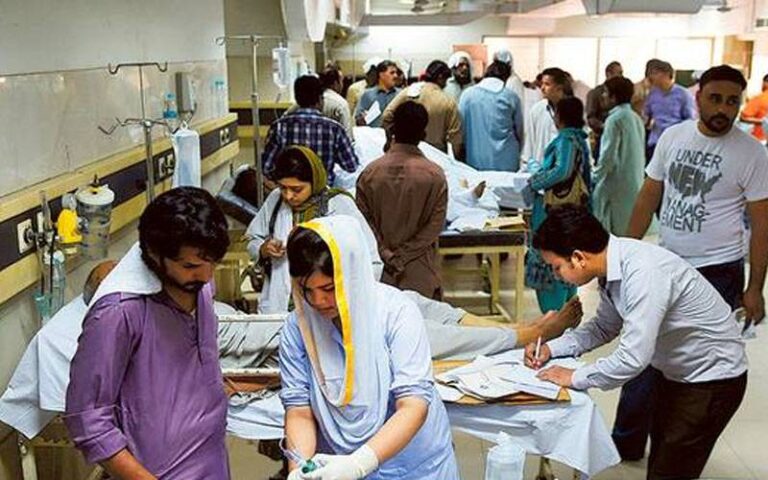
A new scientific study has highlighted that body fat is much more than a source of extra weight. Researchers say fat tissue functions as an essential organ that helps regulate metabolism, stores energy, and produces hormones needed for the body’s normal functioning.

According to the researchers, while excessive body fat is widely associated with conditions such as diabetes and heart disease, having too little body fat can also pose serious health risks. The findings suggest that maintaining a healthy balance of body fat is important for overall metabolic health.

The study focused on a rare inherited disorder known as Familial Partial Lipodystrophy Type 2 (FPLD2). People with this condition lose fat from specific parts of the body or experience abnormal fat distribution, increasing their risk of diabetes and other metabolic disorders.

A research team led by American endocrinologist Dr. Elif Oral examined patients with the condition and found that affected fat cells develop significant structural and functional abnormalities. These changes can disrupt the body’s metabolism and contribute to a range of health complications.

To better understand the disease, scientists created a mouse model in which the Lamin A/C gene was switched off only in fat cells. This is the same gene known to be affected in individuals with FPLD2. The model allowed researchers to closely examine how defects in fat tissue influence the body’s metabolic processes.

Researchers believe the findings could improve understanding of rare fat disorders while also opening new avenues for the development of treatments for diabetes and other metabolic diseases. The study reinforces the idea that healthy fat tissue plays a vital role in maintaining the body’s balance and overall well-being.

Similar Posts

  • |

    Indian officer suspended after firing rifle during student protest

    Indian authorities have suspended a police officer after he fired an AK-47 rifle into the air while attempting to disperse student protesters in the eastern state of Bihar. The incident has intensified criticism of the government’s handling of nationwide demonstrations that recently led to the resignation of Education Minister Dharmendra Pradhan. The confrontation took place on Saturday in the city of Siwan, where students were protesting against alleged irregularities in national examinations and broader concerns about unemployment. Videos shared on social media showed a police officer in riot gear running toward a crowd of protesters before pointing his assault rifle into the air and firing at least three rounds. Police later confirmed that the footage was authentic. Senior Bihar police official Nilesh Kumar said no one was injured during the incident. He explained that the suspended officer belonged to an intelligence unit that normally deals with dangerous criminals and had been issued the rifle as part of his official duties. However, Kumar said the weapon was used inappropriately because the protesters were students and did not pose a threat that justified such action. He said the officer’s conduct could not be defended under any circumstances and confirmed that disciplinary proceedings had begun. According to Kumar, further action will be taken following an investigation into the incident. The protests began after question papers for a national medical college entrance examination were leaked in May. More than two million students had taken the exam before authorities were forced to order a retest because of the security breach. The controversy sparked widespread anger among young people who accused the government of failing to protect the integrity of the examination process. As demonstrations grew larger, students also began raising concerns about rising unemployment and fears that artificial intelligence could reduce future job opportunities, especially in India’s information technology and outsourcing sectors. These issues helped expand the movement beyond the examination scandal, drawing support from students across different parts of the country. Public pressure eventually led to the resignation of Education Minister Dharmendra Pradhan, who stepped down after nearly five weeks of protests. Despite the resignation, demonstrations have continued as students demand broader reforms and greater accountability from the government. The police response has faced increasing criticism. Officers have been accused of using excessive force against demonstrators, including beating students with batons and firing tear gas during a large march toward India’s parliament in New Delhi earlier this month. Human rights advocates and opposition leaders argue that authorities have responded too aggressively to mostly peaceful protests. Speaking in parliament, Congress Party president Mallikarjun Kharge condemned the police action and described it as one of the most serious attacks on democratic rights in recent years. He said reports that an assault rifle had been used against student protesters in Bihar were deeply troubling and called for those responsible to be held accountable. Parliamentary proceedings were repeatedly disrupted as opposition lawmakers raised the issue and demanded answers from the government. Ministers did not immediately respond before both houses were adjourned amid heated exchanges. The controversy also drew attention from India’s judiciary. Supreme Court Justice Ujjal Bhuyan expressed concern about what he described as the shrinking space for people to express different opinions in the country. In a public speech, he said the right to voice opinions and participate in peaceful demonstrations is a fundamental freedom guaranteed to every citizen. His remarks were seen as an unusual intervention by a sitting judge and added to growing calls for restraint in the handling of public protests.

  • |

    Russia questions reported US-Türkiye arms transfer to Ukraine

    Russia has raised concerns over reports that the United States and Türkiye may facilitate the transfer of a large stockpile of American-made weapons and ammunition to Ukraine. Russian Foreign Ministry spokeswoman Maria Zakharova said recently released documents from the US Congress indicate that the proposed shipment could include a substantial quantity of offensive weapons. According to her, the documents refer to 12 multiple rocket launch systems, more than 2,500 unguided cluster munitions for those systems, around 47,000 203mm cluster artillery shells and 70 ATACMS short-range missiles. Zakharova said Moscow was particularly concerned about what she described as unanswered questions surrounding the reported re-export arrangement. She questioned who initiated the proposal, how the weapons would be transported and when the reported shipment could reach Ukraine. The Russian spokeswoman also criticised Washington and Ankara for their alleged involvement, arguing that both countries have previously presented themselves as potential contributors to diplomatic efforts aimed at resolving the Ukraine conflict. According to Zakharova, supplying additional weapons to Ukraine would not fundamentally alter the military situation but could increase the scale of destruction and casualties. She warned that further arms deliveries could also have broader consequences for Russia’s relations with both the United States and Türkiye. Moscow also questioned Türkiye’s position because Turkish authorities have previously made assurances about limiting the supply of lethal weapons to Ukraine. Zakharova said that adopting peace-oriented rhetoric while simultaneously facilitating military support for Kyiv could damage mutual trust between the countries involved. The Russian Foreign Ministry has reportedly sought explanations from both Washington and Ankara following the information contained in the US congressional documents. Zakharova urged the parties involved to reconsider the situation before any reported transfer moves forward. She said there was still an opportunity for the countries concerned to assess the potential consequences of the proposed arms shipment. The allegations come as international efforts to address the Ukraine conflict continue alongside ongoing military operations

  • |

    Trump rejects Justice Department findings on Lincoln Memorial Reflecting Pool damage

    US President Donald Trump has publicly rejected the findings of his own Justice Department after federal prosecutors concluded that construction problems, rather than vandalism, were responsible for damage to the recently renovated Lincoln Memorial Reflecting Pool in Washington. In a post on his Truth Social platform on Saturday, Trump said he strongly disagreed with US Attorney for the District of Columbia Jeanine Pirro and insisted that vandals were responsible for the damage. He argued that although there may have been issues with the construction work, the main cause of the deterioration was deliberate vandalism. The disagreement follows a court filing submitted on Friday by Jeanine Pirro and Assistant US Attorney Michael Spence, who asked a judge to dismiss the government’s case against David Hearn, a 67 year old former Olympian. Hearn had been accused of damaging the Reflecting Pool, an allegation that became part of a wider debate over the Trump administration’s renovation project in the nation’s capital. According to the filing, newly received documents from the Department of the Interior showed that the problems were linked to a rushed and defective installation process. Prosecutors said the pool’s lining experienced repeated failures during construction and that extensive peeling occurred across the surface because of installation defects rather than intentional damage. The Lincoln Memorial Reflecting Pool underwent a renovation costing around 14.7 million dollars. Soon after the project was completed, the site experienced several problems, including algae growth that turned the water green and sections of the blue lining peeling away. The issues attracted public criticism and raised questions about the quality of the renovation work. Throughout the controversy, Trump repeatedly claimed that vandals had deliberately damaged the pool. Following the Justice Department’s decision to withdraw the case, he continued to defend that position. In another social media post, the president shared previously released video footage from the US Park Police that he said supported his claim. He argued that the footage showed people damaging the Reflecting Pool while maintenance workers were cleaning algae from the water. However, the video does not clearly show acts of vandalism. It remains unclear whether the individuals seen in the footage were intentionally damaging the lining or simply handling material that had already begun peeling because of the reported construction flaws. The Justice Department has not publicly responded to Trump’s criticism. Jeanine Pirro’s office also did not immediately comment on the president’s remarks. The dispute highlights a rare public disagreement between President Trump and his own administration’s legal team. While federal prosecutors have concluded that faulty construction caused the damage, the president continues to argue that criminal vandalism was primarily responsible, keeping the controversy surrounding the renovation project in the public spotlight.

  • |

    Turkish President Erdogan: Makkah pact to reshape regional security

    Turkish President Recep Tayyip Erdogan has said the joint defence agreement signed by Türkiye, Pakistan and Saudi Arabia will strengthen security cooperation and contribute to peace and stability in the region. In a statement posted on his X account, Erdogan said he visited Makkah at the invitation of Saudi Crown Prince and Prime Minister Mohammed bin Salman. During the visit, Erdogan said he met with Crown Prince Mohammed bin Salman and Pakistani Prime Minister Shehbaz Sharif. The three leaders subsequently signed a joint defence agreement, according to Erdogan. He said the agreement is based on the principle of collective defence and would further strengthen security and military cooperation among the three countries. Erdogan said the pact would also encourage joint projects in the defence industry and facilitate stronger cooperation in combating terrorism. The Turkish president said the agreement reaffirmed the right to self-defence recognised under Article 51 of the United Nations Charter. He stressed that the agreement was not directed against any country. Instead, Erdogan said the pact remained open to brotherly countries that seek peace, prosperity and stability in the region. He added that Türkiye would continue to pursue its principled position of resolving conflicts and crises through dialogue and diplomacy. Erdogan also expressed hope that the visit to Makkah and the agreement reached by the three countries would bring peace, stability and prosperity to the wider region. The agreement marks a significant step in defence cooperation between Türkiye, Pakistan and Saudi Arabia and establishes a framework for closer coordination against shared security threats.

  • The Loss of Privacy in the Modern World

    By Sania Rahim Have you ever noticed how much of your life exists online? From social media posts and online shopping to mobile apps and search engines, almost everything we do leaves a digital footprint. Technology has made communication faster, improved access to information, and made daily life more convenient. However, it has also created a serious problem: the loss of privacy. Many people share personal information without realizing how easily it can be collected, stored, analyzed, and even misused. In today’s digital world, protecting privacy has become more important than ever before. One of the main reasons for the loss of privacy is the widespread use of social media. Millions of people share their photos, locations, opinions, and personal experiences every day. While social media helps people stay connected with friends and family, it also allows strangers, advertisers, and even cybercriminals to access personal information. Many users do not read privacy policies or adjust their privacy settings, making their accounts and personal data more vulnerable to misuse. Another major concern is the collection of personal data by websites, online platforms, and mobile applications. Many apps request access to our contacts, camera, microphone, location, and other personal information, even when such access is not necessary for their services. This data is often used to provide personalized advertisements or improve user experience, but it may also be shared with third parties without users fully understanding how their information is being handled. In some cases, data breaches expose the personal details of millions of people. The loss of privacy can have serious consequences. It increases the risk of identity theft, online scams, cyberbullying, financial fraud, and unauthorized access to personal accounts. Once information is uploaded to the internet, it is often difficult—or even impossible—to remove it completely. A single careless post or data leak can damage a person’s reputation, affect future education or employment opportunities, and threaten personal security. Protecting privacy requires both awareness and responsibility. People should create strong and unique passwords, enable two-factor authentication, avoid sharing sensitive information online, and carefully review the permissions they grant to apps and websites. They should also update their software regularly and think carefully before clicking suspicious links or downloading unknown files. Schools, families, and governments should educate people about digital safety, cybersecurity, and responsible online behavior. Privacy is not just a personal preference; it is a basic human right. As technology continues to advance, we must enjoy its benefits without sacrificing our security, freedom, and personal privacy. By making informed choices, using technology responsibly, and respecting the privacy of others, we can help build a safer, more secure, and more trustworthy digital world for future generations.

  • | |

    UK rapper Yung Filly acquitted of rape but convicted of assault in Western Australia

    British social media personality and rapper Yung Filly, whose real name is Andrés Felipe Valencia Barrientos, has been found not guilty of raping a fan in his hotel room following a performance in Hillarys, Western Australia. A jury at the District Court of Western Australia in Perth delivered the verdict on Friday after an eight-day trial, acquitting the 30-year-old on three counts of sexual penetration without consent, an assault charge involving an alleged slap, and a choking charge. However, the jury convicted Barrientos on two counts of assault occasioning bodily harm related to bite marks inflicted on the woman’s neck and breast during the encounter. The jury remained hung on three additional counts of sexual penetration without consent. Barrientos, who denied all charges and maintained that the acts were consensual, wept as the decision was announced. He remains free on bail until 21 August, when a court date will be set to determine his sentencing for the assault convictions and decide whether prosecutors will seek a retrial on the unresolved rape charges.

Leave a Reply

Your email address will not be published. Required fields are marked *