human fridge cools

Human fridge cools in minutes

As temperatures in Japan climb to 38°C and the government issues heatstroke warnings two Japanese companies have introduced an unusual solution to help people stay cool a personal “human fridge.”

The device is a portable cooling box made of stainless steel. A person sits inside on a built in chair while powerful cold air is blown around the head neck shoulders and back.

According to the companies this can lower the body’s temperature by up to 5°C helping users cool down quickly.

The cooling box keeps the inside temperature at 15°C and automatically turns off after 20 minutes

For safety.

The unit measures 84 inches tall and 47 inches wide. It uses less electricity than a traditional air conditioner with an estimated operating cost of 16 yen per hour.

The companies say the device cools the entire body faster than a regular AC and is easy to move from one place to another.

It is designed for locations where people work outdoors or in very hot conditions.

According to the manufacturers users begin to feel noticeably cooler within five minutes and spending around 10 minutes inside may help reduce the effects of extreme heat and heatwave symptoms.

Similar Posts

  • |

    Walking through time: A personal journey inside Na…

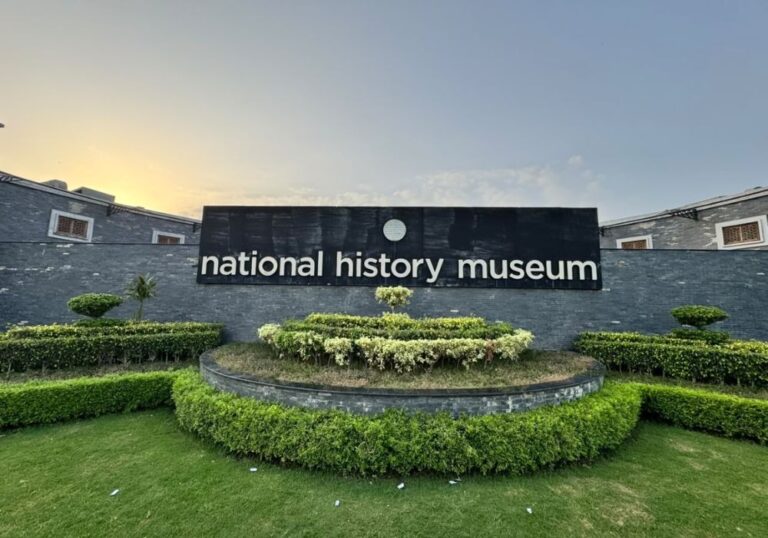
    The rain had just stopped when I reached Lahore’s National History Museum. The roads were quieter than usual, the air felt fresh and, for the first time in weeks, I wasn’t in a hurry. I had postponed this visit for years, ever since a brief stop during my internship at the Lahore Museum left me wishing for more time. This Sunday, I finally had it. I have also realised something over the past few weeks. Waiting for friends before exploring new places often means never going at all. So I decided to spend the afternoon on my own, following nothing except curiosity. As I entered the museum, Floor Supervisor Tabish welcomed me and arranged a guided tour with Muhammad Shamsher, a PhD scholar in History who also serves as one of NHM’s guides. His explanations never sounded like a lecture. Instead, he connected historical events with the people behind them, making every gallery feel like part of one continuing story. Growing up, I believed museums were places where objects sat behind glass while visitors quietly read information panels. That idea came from childhood visits to museums in Islamabad, Taxila and Harappa, and later from my internship at Lahore Museum. The National History Museum challenged that idea completely. Through digital displays, sound, projection and interactive exhibits, history became something to experience rather than simply observe. Every gallery encouraged visitors to slow down and become part of the story unfolding around them. One exhibit that caught my attention focused on the making of Minar-e-Pakistan. Like many Pakistanis, I had always admired the monument without knowing much about the person who designed it. The museum introduced architect Nasreddin Murat-Khan and displayed photographs that offered a glimpse into the creative process behind one of Pakistan’s most recognisable landmarks. It reminded me how often we celebrate monuments while forgetting the people who imagined them. The journey then moved towards Partition, where history became deeply personal. The restored railway carriage, once part of the North Western Railway, stood quietly inside the gallery. Visitors could step inside and experience a virtual reality presentation recreating the migration of 1947. I had watched countless documentaries and films about Partition, but sitting inside that carriage created an entirely different feeling. The sounds, voices and uncertainty surrounding the experience made history feel much closer than any textbook ever could. The museum then shifted from the birth of Pakistan to the challenge of building a new country. One gallery recreated the early government offices established after independence. I found myself studying old files, furniture and official records, imagining the enormous responsibility carried by those tasked with running a newly created nation. Nearby, early Pakistani passports were displayed inside glass cases. Different in design from today’s passports, they represented the same hope of a country beginning to define its identity. Another section I found especially engaging was Camera from the Past. Visitors could stand before a vintage-style camera and have their photograph taken, creating a small connection between the present and the past. The gallery also highlighted photographer Aziz Ahmed Azmi, whose images documented Pakistan’s early years. Looking at his work, I realised that photographs often become history long after the moment they capture has passed. Perhaps the gallery where I spent the most time was Popular Culture. Having studied Mass Communication with a specialisation in Theatre, Film and Television and continuing to work in journalism, I naturally found myself drawn towards the colourful Lollywood posters and displays celebrating Pakistan’s cinematic heritage. Reading about Azra, the country’s first colour film, and Zinda Laash, Pakistan’s first horror film, reminded me how rich our film history is, even if many younger audiences know little about it today. Before leaving, I also explored Husn-e-Hunar, an exhibition celebrating Pakistan’s traditional craftsmanship. Alongside literature, music and cultural displays, it served as a reminder that a nation’s identity is shaped not only by political events but also by its artists, craftsmen and storytellers. When I stepped back outside, I realised I had spent far longer inside the museum than I had planned. I didn’t leave with pages of notes or dozens of photographs. Instead, I left with a greater appreciation for how history can be presented when museums invite visitors to participate rather than simply observe. The National History Museum doesn’t just preserve Pakistan’s past. It encourages visitors to pause, ask questions and discover the stories that continue to shape the country today.

  • |

    Workers discover gold while replacing sewer line

    When a drainage or sewerage line is replaced, workers generally expect to find nothing more than waste and garbage inside it. However, during routine renovation work in Belgium, workers made an astonishing discovery: gold worth billions of Pakistani rupees. The incident took place in Sint-Gillis-Dendermonde, Belgium. Workers were replacing a sewer line during the renovation of a building. They removed part of the foundation to install new pipes when they noticed something shining underground. At first, they thought they had found one-euro coins but they soon realized that the objects were actually gold. According to Mario, the workers’ manager, “I looked carefully and picked up the gold. Then we dug further and found more coins and gold pieces. It was an incredible experience.” He said that in his 33 years of construction work, he had never experienced anything like this before. An 18-year-old student working with the team said that at first they could hardly believe what they had found because they had never expected to discover gold. After the treasure was examined, it was estimated to be worth around $14 million equivalent to more than Rs2.5 billion. Unfortunately for the workers, they were unable to keep the treasure and had to hand it over to the police. The treasure is currently being kept by a charitable organization.It is still unclear who originally owned the gold. However, the building was reportedly once owned by a wealthy family. Under Belgian law, the original owner can claim such a treasure within five years. If no claim is made during that period, the treasure will be divided between the person who discovered it and the owner of the property.

  • HEC new weighted policy: putting weight on research credibility

    By Ali Abbas Pakistan’s Higher Education Commission (HEC) new weighted research policy has surely raised an eyebrow among a few academics nationwide. Before further dissecting the policy and its implications, it is pertinent to understand the role of HEC as a regulatory authority, which can help clear the air to a greater extent. As stated, “Regulatory”, it is important to accept that the Higher Education Commission of Pakistan is there to implement quality checks irrespective of the decision being popular or unpopular. So, with this lens, it is easy to understand why HEC is weighing this bold step of assigning weights to authorship and what must have been the shortcomings in the previous policy, despite the earlier policy’s apparent benefits. The new policy values first authors and corresponding authors more, acknowledging a reward for the initiators and potential stakeholders in the event that there are more than 3 authors. While HEC is not stopping co-authorship, it aims to credit researchers who have genuine contributions and are adding value as a lead or major contributor. It is entirely up to contributors to choose the number of other co-authors and their desired contribution and commitment in the research article. In fact, this should rather be seen as a measure of transparency that researchers who are expecting to get fewer marks for co-authorship will be doing less work in contrast to the first author. That can actually act as a yardstick for them to allocate their time to multiple projects to get their respective share/ count. However, not to undermine the researchers whose genuine intent surrounds a higher number of publications in less time with real contribution, it is a welcoming sign for authors who stay away from relationship-based and aided research. So, HEC, being a quality custodian of education and research practices for HEIs, has come up with a stance to curb research mills, fraudulent research, and fake authorship, where publications in friends’ journals and contributions following quid pro quo are compensated. And one never knows when these researchers who have worked as co-authors or fall last in the author list make it to the classes; their share of knowledge and impact may be a concern at times as well. The problem is even bigger, as not only papers with 20+ authors can be found, but researchers are co-authoring in different fields that may be beyond cross-domain collaboration. This is where HEC might have to respond and find this weighted policy as damage control.  Well, this research’s credibility is not Pakistan’s dilemma only, but something that is a world issue in a higher education setting. And when HEC addresses these concerns, it might act as a benchmark for other nations’ education systems, especially for the education and accreditation councils of similar demographics. Whether one favors or opposes it, HEC has devised something that raises major concerns, and that is to curb the need to distinguish between real and fake contributors. Now comes the point of demotivating international contributions from this weighted system, as raised by the affected prospective contributors. Well, though not every policy can avoid its collateral, the overall gain may be exploited as well. It is to be remembered that international collaborators are not to be linked with those weights; they can continue to collaborate at any number in the author list as they used to be, i.e., first or second or third, etc. In this case, the logic for local authors will remain the same as stated above about their respective contributions and rewards. The time and effort can then help in identifying multiple avenues as well. Again, there are always two sides to a coin, and in the current dynamics, where co-authorship has appeared to be a business deal, the side with the assigned weights policy bears more weight. Also, on the other hand, the offset can be made by allocating funds and instructing HEIs to devote funding to Gold open access, thus accelerating the pace of the first-author research. All in all, the new policy hints at increasing competitiveness and research credibility while leaving it to the test of time to see if it turns out to be a value addition for researchers by choice or by chance. About the author: Ali Abbas, PhD, works at Beaconhouse National University. He can be reached at aabbas724@gmail.com

  • |

    Percy Bysshe Shelley’s “Mont Blanc”

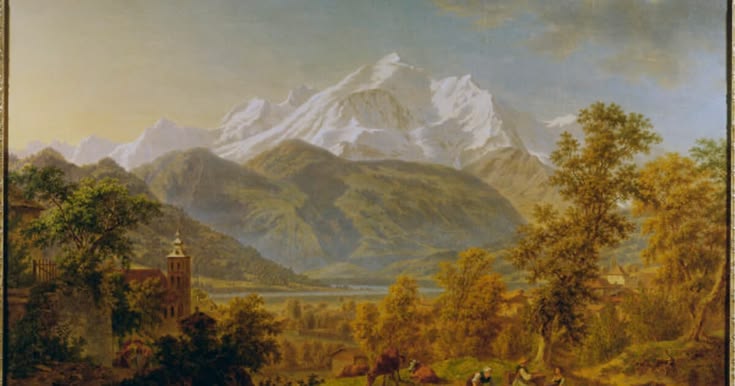
    In Romantic-era poetry, Percy Bysshe Shelley’s “Mont Blanc: Lines Written in the Vale of Chamouni” (1816) stands as the ultimate meditation on the romantic sublime. He wrote it during the second generation of English Romanticism alongside Lord Byron and John Keat.  Shelley used the terrifying scale of the Alpine peak to launch questions about perception, human consciousness and the unseen forces governing the cosmos. While early Romantics like William Wordsworth often found moral harmony and divine comfort in nature, Shelley’s philosophical temperament brought a different energy. For Shelley, nature was not a benevolent mother figure, but an indifferent, boundless, and overwhelming energy. Shelley engages directly with the concept of the Sublime. The sublime is an aesthetic experience where vastness or power induces a feeling of terrifying awe. It makes the human observer feel physically insignificant while mentally elevated. Rather than finding traditional religious comfort in the mountain’s height, Shelley explores his philosophical atheism. He views Mont Blanc as a symbol of Necessity or an impersonal power that governs existence. Throughout the five-part poem, Shelley constructs a series of striking visual and philosophical wonders. Shelley opens the poem by comparing human thought to a river flowing through a ravine. The “everlasting universe of things” rolls through human perception. Human consciousness is both passive (receiving impressions from the grand landscape) and active (shaping those impressions into meaning). The everlasting universe of things Flows through the mind, and rolls its rapid waves… Looking up at Mont Blanc, Shelley does not describe a peaceful picture-postcard landscape. Rather, he depicts a wild, chaotic realm of ice, rock, and storm. He envisions the mountain as a primordial arena where “the old Earthquake-daemon taught her young / Ruin”. The glaciers are slow-moving “frozen floods” that flatten forests and rocks with silent force. Shelley reflects on what lessons this silent mountain holds for humanity. The mountain possesses a mysterious tongue that teaches a lesson. To Shelley, Mont Blanc speaks an unspoken truth that can repeal large codes of fraud and woe (i.e., tyrannical dogmas, religious orthodoxies, and political oppression). Nature’s unyielding reality strips away human pretense. The poem reaches its dramatic climax by returning to the relationship between the peak and human thought. Shelley notes that the mountain remains still, snowy, and serene high above human affairs. He closes with a famous philosophical question: And what were thou, and earth, and stars, and sea, If to the human mind’s imaginings Silence and solitude were vacancy?  The mountain’s grandeur is real, but its meaning exists because the human imagination is there to perceive it. Without the human mind to process wonder, the immense universe would merely be an empty void.  

  • Unemployment

    Through the columns of your newspaper, I want to draw the attention of the concerned authorities towards the growing problem of unemployment in our country. Unemployment is a serious problem, especially among educated young people. Many students complete their education but cannot find suitable jobs. Due to unemployment, people face poverty, frustration, and many social problems. It also slows down the progress of the country. The government should create more job opportunities and encourage industries and small businesses. Technical and vocational education should also be promoted so that young people can learn useful skills and earn a living. I hope the concerned authorities will take immediate steps to control unemployment and provide better opportunities for our youth.

  • Multani mitti for oily skin

    You do not always need expensive beauty products to keep your skin clean, fresh and healthy. Multani Mitti also known as Fuller’s Earth has been used in home beauty routines for many years. It is especially popular among people with oily skin because it can help absorb extra oil and remove dirt from the skin. Multani Mitti can be used occasionally as a simple face mask but it should not be considered a cure for every skin problem. A healthy skincare routine should also include regular cleansing proper moisturizing a balanced diet and protection from the sun. Helpful for oily skin Oily skin can make the face look shiny, and some people may also experience breakouts.  Multani Mitti can absorb some of the extra oil and leave the skin feeling cleaner. To make a simple mask mix Multani Mitti with water or rose water to form a smooth paste. Apply it gently to the face and wash it off before it becomes completely dry. For soft and fresh looking skin For a softer and fresher feel, you can mix a small amount of honey with Multani Mitti. Honey may help prevent excessive dryness while Multani Mitti can help remove excess oil and dirt from the skin. Apply the mask for a few minutes and then rinse it off with lukewarm water. For acne prone skin If you have pimples it is better to keep your skincare routine simple instead of trying many different home remedies.  Multani Mitti mixed with water can be used occasionally but it is not a treatment for severe acne. If you have painful pimples swelling serious irritation or ongoing breakouts it is better to consult a dermatologist. Use it gently as a scrub Some people mix Multani Mitti with gentle ingredients, such as finely ground almonds and use it as a face mask. However avoid rubbing the face harshly. Strong scrubbing can damage the skin’s protective barrier and may cause redness dryness or irritation. For dull or tanned skin Spending a lot of time in the sun can make the skin look dull or tanned. A simple Multani Mitti mask may help the skin feel clean and refreshed but it is not a permanent treatment for sun tan. Using sunscreen regularly is much more important for protecting the skin from harmful sunlight. Be careful if you have sensitive skin Natural ingredients are not suitable for everyone. Multani Mitti may cause dryness or irritation in some people especially those with sensitive skin.  Adding strong ingredients such as lemon or tomato may increase the risk of irritation. Before trying a new face mask apply a small amount to a limited area of skin first. If you notice burning itching redness or irritation wash it off immediately and stop using it. For healthy and fresh looking skin a simple skincare routine and regular sun protection are more important than using many beauty products.

Leave a Reply

Your email address will not be published. Required fields are marked *