workers discover gold
|

Workers discover gold while replacing sewer line

When a drainage or sewerage line is replaced, workers generally expect to find nothing more than waste and garbage inside it. However, during routine renovation work in Belgium, workers made an astonishing discovery: gold worth billions of Pakistani rupees.

The incident took place in Sint-Gillis-Dendermonde, Belgium. Workers were replacing a sewer line during the renovation of a building. They removed part of the foundation to install new pipes when they noticed something shining underground.

At first, they thought they had found one-euro coins but they soon realized that the objects were actually gold.

According to Mario, the workers’ manager, “I looked carefully and picked up the gold. Then we dug further and found more coins and gold pieces. It was an incredible experience.” He said that in his 33 years of construction work, he had never experienced anything like this before.

An 18-year-old student working with the team said that at first they could hardly believe what they had found because they had never expected to discover gold. After the treasure was examined, it was estimated to be worth around $14 million equivalent to more than Rs2.5 billion.

Unfortunately for the workers, they were unable to keep the treasure and had to hand it over to the police. The treasure is currently being kept by a charitable organization.It is still unclear who originally owned the gold. However, the building was reportedly once owned by a wealthy family.

Under Belgian law, the original owner can claim such a treasure within five years. If no claim is made during that period, the treasure will be divided between the person who discovered it and the owner of the property.

Similar Posts

  • The Triangle of Trust and Tension: Pakistan, Afghanistan, and India

    By Engr. Saqlain Abid Geography is destiny. A nation cannot choose its neighbours, but it can choose how to live with them. The strongest defence in any democracy is not perpetual conflict but sustained diplomacy, confidence-building measures, and peaceful negotiations. Pakistan and Afghanistan are two countries bound by centuries of shared history, religion, culture, and ethnic ties. Yet, what was once described as a brotherly relationship has gradually transformed into one defined by mistrust, accusations, and strategic competition. Today, India has emerged as the third player in this evolving regional triangle.   What exactly went wrong? How did decades of goodwill give way to blame games and border tensions? And why is India now finding greater strategic space in Afghanistan? These questions have become even more relevant following Amnesty International’s allegations regarding Pakistan’s reported airstrikes on the Omeed Rehabilitation Centre near Kabul on 14 March. The organisation questioned Pakistan’s justification for the operation, while Islamabad firmly rejected the allegations and maintained that its forces targeted legitimate security threats. The competing narratives deserve careful examination.   The first perspective is that of Afghanistan. Following the withdrawal of US forces in 2021, Pakistan welcomed the Taliban’s return to power. General Faiz Hameed, then ISI chief, was closely associated with the Doha process, while the government of Imran Khan projected Pakistan as a key mediator in Afghanistan’s political transition. Relations initially appeared warmer than they had been for years.   However, the atmosphere soon changed. One of the major turning points was the case of Sharifullah, an alleged ISIS-K commander. Pakistan argued that his arrest strengthened its claims regarding cross-border terrorism and militant networks operating from Afghan territory. The Taliban leadership rejected these accusations, insisting that Afghanistan should not be blamed for Pakistan’s internal security challenges.   Instead of responding through military escalation, Kabul gradually diversified its diplomatic and economic partnerships. Trade with India expanded while commerce with Pakistan declined. Afghanistan increasingly relied on Iran’s Chabahar Port and the India-built Zaranj–Delaram Highway to reduce dependence on Pakistani transit routes. Although these alternatives are longer and more expensive, Kabul appears willing to pay that price in pursuit of greater strategic autonomy. For the Taliban government, sovereignty has become closely linked with economic independence.   The controversy surrounding the reported strike on the Omeed Rehabilitation Centre further widened the trust deficit. Human rights organisations questioned Pakistan’s account of the operation, while Islamabad maintained that the target was linked to militant activity and defended its actions as part of its counterterrorism campaign. The differing claims remain disputed and continue to shape international perceptions.   Pakistan’s narrative is considerably different. Islamabad maintains that the resurgence of Tehreek-e-Taliban Pakistan (TTP) attacks represents one of its greatest national security challenges. Successive governments have argued that militant groups continue to exploit Afghan territory to launch attacks inside Pakistan. From Islamabad’s perspective, stronger military action became unavoidable because diplomatic engagement failed to produce sufficient cooperation.   The arrest of Sharifullah also carried broader geopolitical significance. Pakistan’s intelligence cooperation with the United States strengthened Islamabad’s engagement with Washington. At the same time, the government accelerated the repatriation of undocumented Afghan migrants, arguing that national security required stricter border management. Critics viewed these measures as increasing pressure on the Taliban government, while Pakistan defended them as sovereign decisions taken in the national interest.   Perhaps the greatest strategic miscalculation, however, was underestimating how quickly a trusted partner could seek new alliances. History shows that when friends become rivals, they often understand each other’s vulnerabilities better than long-standing adversaries.   India forms the third side of this regional triangle. Over the past two decades, New Delhi has invested billions of dollars in Afghanistan through reconstruction projects, infrastructure, education, and trade. As relations between Islamabad and Kabul have deteriorated, India has found greater diplomatic space to strengthen its presence. Development assistance, expanding trade, and improved connectivity have gradually transformed India into an increasingly influential partner for Afghanistan.   The result is a new regional reality. Pakistan views Afghanistan primarily through the lens of security. Afghanistan seeks strategic independence and diversified economic partnerships. India has capitalised on the growing mistrust by expanding its diplomatic and commercial footprint.   Geography cannot be changed, but policies can. Pakistan and Afghanistan will remain neighbours regardless of political differences. Continued confrontation will benefit neither country, while diplomacy, intelligence cooperation, and mutual respect remain the only sustainable path forward. The future of South Asia will depend not on military victories but on whether Islamabad, Kabul, and New Delhi choose cooperation over confrontation.

  • Easy dandruff care tips for healthy hair

    Easy dandruff care tips for healthy hair. Along with proper hair care some simple home remedies may help manage dandruff. Neem Neem has been used for many years for skin and hair care. You can make a simple hair mask by mixing crushed neem leaves with yogurt.  Apply it to the scalp for about 20 minutes and then wash it off. Neem is known for its antifungal properties which is why neem oil and other neem based hair products are often used for scalp care. Amla Amla is another popular ingredient in traditional hair care. Mix amla powder with water to make a paste.  You can also add a few basil leaves. Apply the paste to your scalp for around 30 minutes and then wash your hair with a mild shampoo. Fenugreek seeds Fenugreek seeds are also commonly used for hair and scalp care. Soak the seeds in water overnight. Grind them the next morning to make a paste and apply it to your scalp. Leave it on for about 30 minutes before washing your hair properly. Choose the right shampoo If dandruff keeps coming back using an anti-dandruff shampoo may be more helpful than relying only on home remedies.  Regular hair washing can help remove excess oil dead skin and flakes from the scalp. Eat a balanced diet A healthy diet is also important for healthy hair and skin. Try to include enough protein, vitamins minerals and healthy fats in your daily meals. When should you see a Doctor? If dandruff becomes severe or causes intense itching redness sores or does not improve with anti dandruff shampoo it is better to consult a dermatologist. In some cases symptoms that look like ordinary dandruff may actually be caused by conditions such as seborrheic dermatitis eczema or another skin problem.

  • | | | |

    Pakistan, Qatar push US-Iran 10-day ceasefire plan

    WASHINGTON/DOHA: Pakistan, Qatar and Egypt have stepped up diplomatic efforts to prevent a wider conflict in the Middle East by proposing a 10-day ceasefire between the United States and Iran, according to a report by US news outlet Axios. However, neither side has yet agreed to the proposal as military tensions continue to escalate. The report said regional mediators are working behind the scenes to create space for diplomacy after days of intense hostilities between Washington and Tehran. The proposed ceasefire aims to temporarily halt military operations, restore maritime security in the Strait of Hormuz and open the door for renewed negotiations. According to sources familiar with the mediation efforts, the proposal has been shared with both governments, but officials in Washington and Tehran have so far withheld their approval. Diplomats say both countries appear determined to strengthen their military positions before considering any pause in fighting. The report added that US President Donald Trump is weighing two key options. The first is to endorse a limited 10-day ceasefire that could reduce regional tensions and revive diplomatic talks. The second involves expanding military operations alongside Israel in an effort to increase pressure on Iran and force concessions over security and nuclear issues. US officials quoted in the report said no final decision has been made, adding that developments over the coming days are expected to determine Washington’s next move. Despite several days of military operations, the report noted that the United States and Israel have not succeeded in eliminating Iran’s influence over the strategically vital Strait of Hormuz, through which a significant portion of the world’s oil supplies passes. Analysts warn that any prolonged disruption in the waterway could have serious consequences for global energy markets. The report also highlighted growing domestic pressure on the Trump administration as rising fuel prices in the United States fuel public concern over the economic cost of continued military action. Diplomatic momentum reportedly suffered a setback after two American soldiers were killed in an Iranian missile attack in Jordan over the weekend. Following the incident, Washington is said to have adopted a tougher stance while continuing diplomatic contacts. A senior US official confirmed that backchannel discussions remain active but stressed that the United States intends to respond to the deaths of its troops. The official added that military operations could continue for as long as President Trump considers necessary. Regional sources nevertheless expressed cautious optimism, saying negotiations remain the best path forward, as neither Washington nor Tehran is believed to be in a position to impose a lasting solution through military means alone.

  • Three hours with Nawaz Sharif: reflections on a leader looking to the future

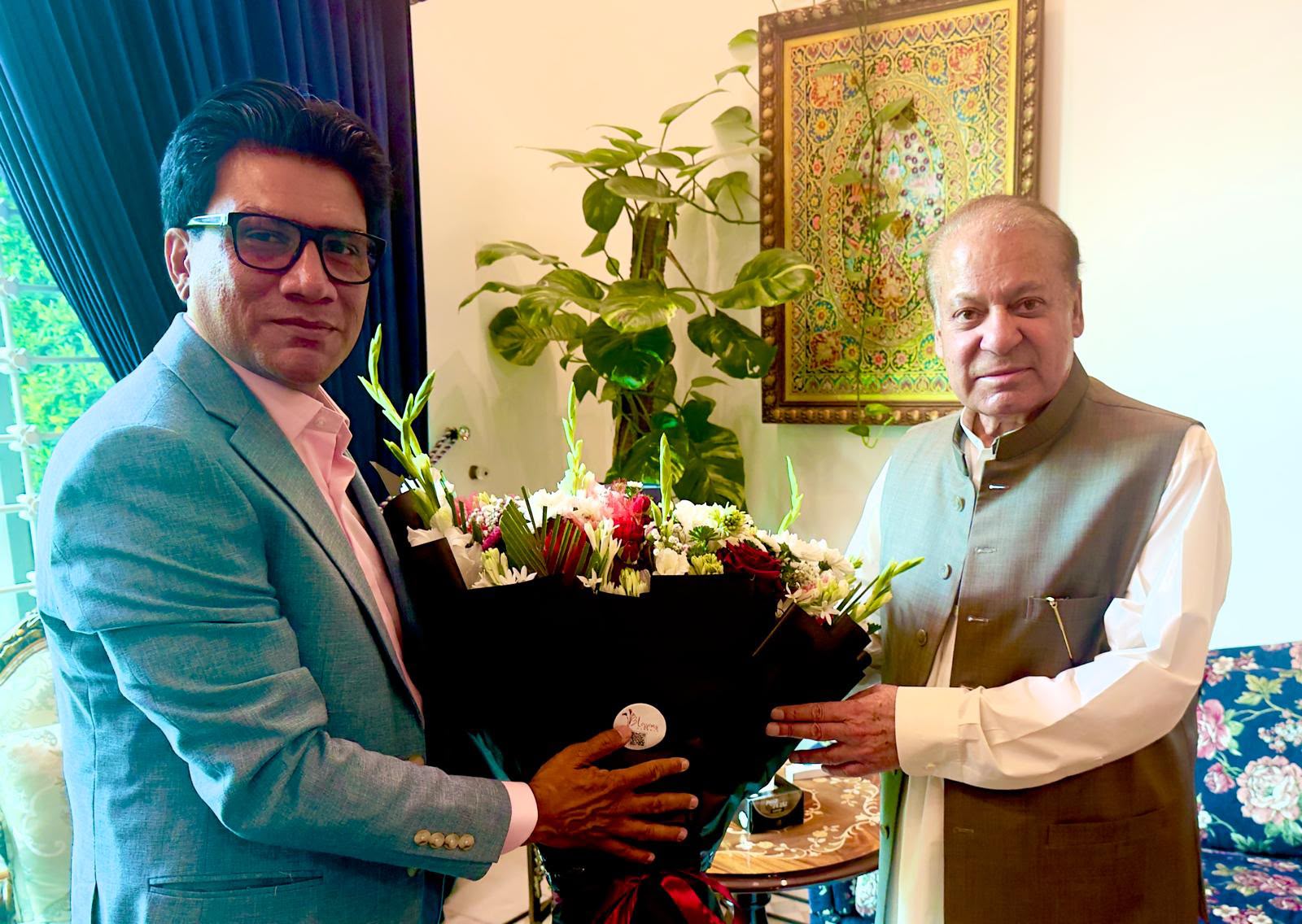
    On Friday, I had the opportunity to spend nearly three hours with former Prime Minister and President of the Pakistan Muslim League (Nawaz), Mian Muhammad Nawaz Sharif, at his Jati Umra residence in Raiwind. We offered Jumma prayers together, shared lunch and held an extensive discussion on Pakistan’s political landscape. It was more than a courtesy meeting; it provided a rare opportunity to observe, first-hand, the thinking of a leader who remains deeply involved in shaping the direction of his party and closely following the country’s political developments. The meeting came at a significant moment for the PML-N. Following the party’s recent success in the Azad Jammu and Kashmir elections, there is renewed confidence within its ranks. Nawaz Sharif appeared optimistic, composed and fully focused on the challenges and opportunities that lie ahead. What struck me first was his health and energy. Nawaz Sharif was in excellent spirits, displaying the confidence and composure of a politician who believes his party is firmly back on the front foot. There was no sense of retirement or political detachment. Instead, there was a clear focus on governance, organisation and preparing for the future. The recent PML-N victory in the Azad Kashmir elections has undoubtedly reinforced that confidence. For the party, the result was more than just another electoral success; it was an affirmation that its political message continues to resonate with voters. Nawaz Sharif spoke with satisfaction about the outcome, viewing it as an important milestone in the party’s broader revival. He was equally appreciative of the performance of the Punjab Government under Chief Minister Maryam Nawaz Sharif. In his view, the provincial administration has demonstrated that governance and public service remain the strongest political currency. Whether through infrastructure, public welfare initiatives or administrative reforms, he believes Punjab is once again becoming the party’s showcase of governance. Prime Minister Muhammad Shehbaz Sharif also received praise during our conversation. Nawaz Sharif expressed confidence in his younger brother’s efforts to steer Pakistan towards economic stability, strengthen institutions and improve the country’s international standing during a challenging period. His remarks reflected a leadership that sees continuity and coordination within the party as one of its greatest strengths. Perhaps the most significant observation from the meeting was Nawaz Sharif’s continued command of the PML-N. Despite years away from active frontline politics, he remains the party’s central strategic figure. Senior leaders continue to look towards him for direction, while party workers still regard him as the movement’s principal source of political inspiration. Much has been written about Nawaz Sharif’s return to Pakistan and his re-emergence in national politics. Yet spending time with him offered a clearer picture than any public rally or television appearance could provide. He is not merely observing events from the sidelines; he is actively shaping the party’s direction, evaluating political developments and planning for the future. My own conclusion from this meeting is straightforward. Nawaz Sharif remains fully engaged, firmly in command of the PML-N and focused on leading his party into the next general elections whenever they are held. Whether one agrees with his politics or not, it would be a mistake to underestimate his influence or his determination. Pakistan’s political landscape continues to evolve rapidly. But after spending three hours with Nawaz Sharif on Friday, one thing appears certain: he believes his political journey is entering a new phase, not its final chapter, and he intends to remain at the centre of Pakistan’s political discourse for years to come.

  • How far can you drive after low fuel light comes on?

    If you fail to keep an eye on your fuel level while driving, your car could eventually come to a stop. When a car is about to run out of fuel, a warning indicator commonly known as the low fuel light illuminates on the dashboard. But how far can you actually drive once this light comes on? The answer can be useful if there isn’t a fuel station nearby. However, there is no single answer as it depends on several factors including the car’s make and model, model year, driving habits, fuel efficiency and road conditions. According to experts, once the low fuel warning light turns on, the vehicle cannot travel very far. The good news, however, is that it can usually go farther than many people expect. Experts say the warning light typically comes on when the fuel tank has around 10 to 15 percent of its capacity remaining. On average, small cars can travel about 20 to 30 miles (32–48 km) after the light comes on while larger vehicles may cover up to 50 miles (80 km). However, if the vehicle is old or the road conditions are poor, the remaining driving range may be significantly shorter. Cold weather can also increase fuel consumption reducing the distance the car can travel after the warning light appears. Experts further caution that continuing to drive for an extended period after the low fuel light comes on may damage the engine although driving a few additional miles is generally unlikely to cause any harm.

  • |

    Gen Z-led protest movement poses major challenge to Modi government in India

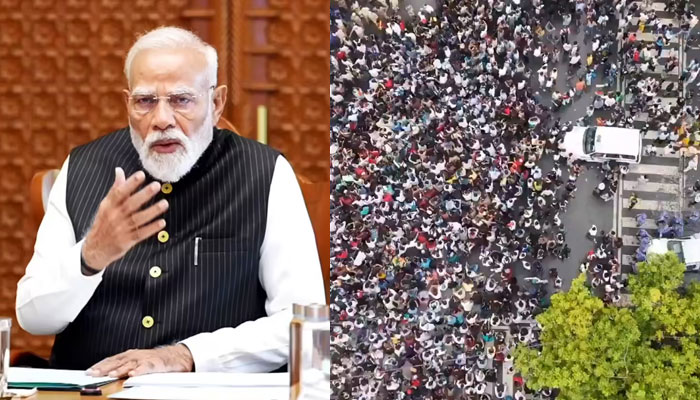
      India is witnessing a significant wave of youth-led protests that has intensified political pressure on Prime Minister Narendra Modi’s government during its third consecutive term. The growing movement, driven largely by Generation Z, has emerged as one of the most prominent public challenges to the current administration, reflecting widespread dissatisfaction over unemployment, alleged examination scandals, and concerns about the country’s education system. The protest movement has gained momentum through a platform known as the “Cockroach Janata Party,” which has become a symbolic outlet for the frustration of young Indians. Although the name began as a satirical expression on social media, it has rapidly evolved into a broader movement that has attracted thousands of participants across different regions. The campaign highlights the growing anger among students and young professionals who believe that the government has failed to address issues affecting their future. The movement received further attention following the hunger strike and reported forced removal of activist Sonam Wangchuk, developments that protesters say strengthened public support for the demonstrations. Many participants argue that such actions have reinforced concerns about the government’s response to peaceful dissent and have encouraged more young people to join the protests. According to a reports , the demonstrations are being viewed as the biggest wave of public pressure faced by Prime Minister Modi since the beginning of his third term in office. The protests are rooted in several long-standing grievances, including examination irregularities, rising unemployment among educated youth, and declining confidence in India’s education system. Protesters believe that these issues have seriously affected career opportunities and undermined trust in public institutions Tensions escalated during a protest march toward the Indian Parliament, where clashes broke out between demonstrators and security personnel. Authorities attempted to stop protesters from reaching the Parliament complex, leading to confrontations that further heightened the political atmosphere Official figures released after the clashes stated that at least 180 people were injured, including 118 police officers and 60 protesters. The remaining injured individuals were not immediately identified. In response to the unrest, authorities temporarily suspended mobile internet services in several sensitive areas of the city, citing security concerns. Such restrictions have drawn criticism from rights groups and civil society organizations, which argue that internet shutdowns limit communication and restrict access to information during times of public unrest. One of the protesters’ primary demands is the resignation of the country’s Education Minister. Demonstrators argue that accountability is necessary in light of the alleged examination controversies and the broader crisis facing the education sector. The movement continues to be led primarily by young people, and many observers describe it as the collective voice of Generation Z demanding greater transparency, fairness, and employment opportunities. According to Deutsche Welle (DW), the campaign initially began as a satirical online movement but quickly transformed into an organized nationwide protest. What started as digital criticism on social media has evolved into large-scale street demonstrations that reflect deep frustration among young Indians over limited job prospects, educational challenges, and uncertainty about their future. As the movement continues to expand, political analysts believe it represents a critical test for the Modi government. Whether the administration chooses dialogue, policy reforms, or stronger security measures in response to the protests could significantly influence public opinion and shape India’s political landscape in the months ahead.

Leave a Reply

Your email address will not be published. Required fields are marked *