immortal king gilgamesh
| |

The immortal king: Gilgamesh

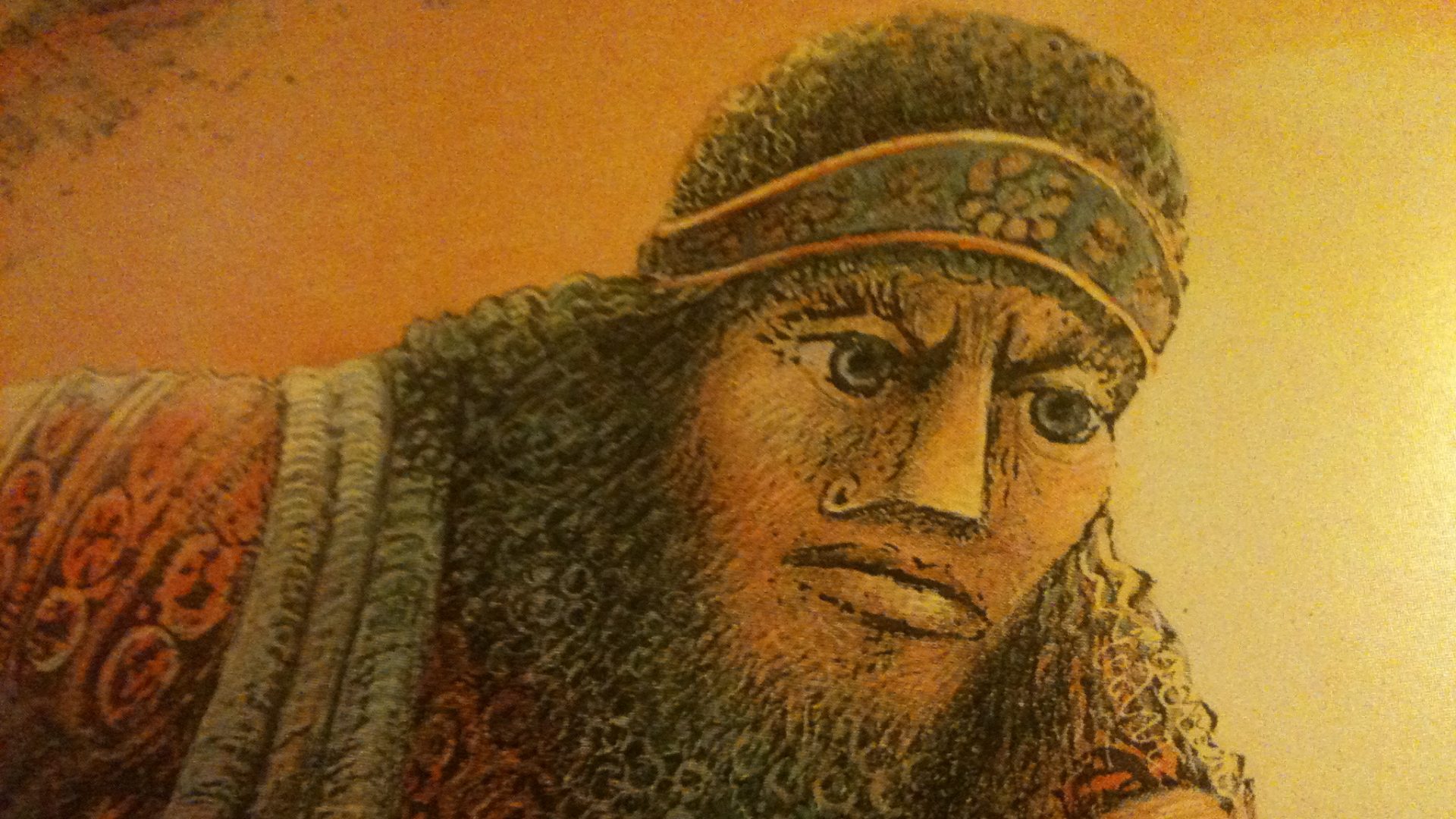
The Epic of Gilgamesh chronicle a ruler whose reach eclipsed his own era. King Gilgamesh of Uruk was celebrated across the Fertile Crescent for his unmatched strength, towering city walls, and unyielding ambition. He was a mythical hero, two-thirds god and one-third man.

The Influence of King Gilgamesh

Over ancient kings and foreign lands, his influence was absolute. Monarchs who succeeded him across Sumer, Akkad, and Assyria measured their own majesty against his legacy.  Moreover, those realms seek to embody his wisdom and claim a dominion as legendary as the one he forged before the great waters swept the earth.

He Who Saw the Deep..

He saw what was secret, discovered what was hidden,

He brought us a tale of the days before the Flood.

The Ancient Mesopotamia

In recent archaeology, the shadow of Mesopotamia’s heroic past continues to reemerge in unexpected ways. Modern researchers conducting glacial surveys on Turkey’s Mount Ararat have begun mapping shrinking ice fields to retrieve core samples. Historically, Mount Ararat is the high peak linked with ancient flood mythologies.  This pioneering study seeks to extract a continuous chronicle of human activity, ancient agriculture and metal smelting preserved in ice layers spanning thousands of years. The studies offer a direct physical record of the environmental world that ancient Mesopotamian civilizations inhabited.

Search For The Unknown

This convergence of epic poetry and modern science reveals that the search for what was hidden remains as vital today as it was in antiquity. The ancient scribes etched Gilgamesh’s story into clay tablets. They recorded a hero who traveled to the ends of the earth to seek secrets of mortality and natural catastrophe. The story of the great deluge, brought back by Gilgamesh from the edge of the known world. It functioned both as a sobering warning and as a testament to the fragile line between human pride and nature’s fury.

The Truth

Today, scientists analyze ice layers and ancient cuneiform archives across the Middle East. Furthermore, we are reminded of the power of memory. Kings and empires inevitably turn to dust. Yet, the insights gathered by those who dare to look into the deep endure across millennia remain forever. Gilgamesh’s journey teaches us that true power lies not in martial conquest or monumental stone. Rather, it’s in the wisdom preserved for generations that follow. True power is a truth as resonant in our modern era as it was in the ancient halls of Uruk.



Similar Posts

  • | | |

    Omar Musa secures 2026 Miles Franklin Award with Fierceland

    Omar Musa has been named the winner of the prestigious 2026 Miles Franklin Literary Award for his novel, Fierceland. Recognized as Australia’s most celebrated literary prize, the award honors novels of the highest literary merit that explore Australian life in all its phases. Musa’s victory highlights a powerful shift in the country’s literary landscape, celebrating a work that fearlessly confronts historical legacies while weaving together rich cultural folklore. Deconstructing Colonial Narrative Frameworks At the core of Fierceland lies an ambitious, multi-layered critique of Joseph Conrad’s classic 1899 novella, Heart of Darkness. Where Conrad’s seminal text depicted the non-Western world through a lens of exoticism, peril, and foreign mystery, Musa flips the narrative on its head. He reclaims the riverlands and lush rainforest environments not as places of terrifying obscurity, but as vibrant ecosystems steeped in history, memory, and indigenous knowledge. The True “Darkness” Musa confronted the colonial storytelling. In fact, he challenges readers to examine how Western literature has historically framed non-Western landscapes and their people. Fierceland presents the journey inward as a descent into moral decay. This journey is an essential process of unlearning, confrontation and reclamation. The novel demonstrates that the darkness lies within the unchecked impulses of imperial exploitation. It also compels the reader to not surrender to the historical erasure. The Role of Spectral Presence and Cultural Folklore Ghosts and supernatural forces drift consistently throughout the narrative of Fierceland. These forces serve as both literal story elements and profound allegorical symbols. Rather than functioning purely as horror tropes, these spectral figures act as guardians of history and physical manifestations of unhealed wounds. Musa attributes this atmospheric depth to his upbringing and heritage. He reflects on the influence of his family and heritage. Musa noted that ghost stories are deeply woven into the fabric of Malaysian culture. Growing up, he listened to his father recount haunting tales from his homeland. He developed an early appreciation for oral traditions where the living and spiritual realms continually intersect. In Fierceland, these inherited myths explore themes of displacement, grief, and ancestral connection.  These myths gave a voice to forgotten histories that refuse to remain buried. A Multidisciplinary Voice in Modern Storytelling Musa’s background is of an acclaimed spoken-word poet, hip-hop artist, and woodcut printmaker. His own roots shine brightly throughout the pages of Fierceland. The prose is defined by a rhythmic, visceral cadence that reflects his poetic mastery. His ability to blend social commentary with lyricism creates a sensory reading experience.   Winning the 2026 Miles Franklin Literary Award positions Musa as one of the most compelling voices. The judging panel has recognized the evolving nature of Australian literature. Fierceland stands as a testament to the power of reclaiming narrative agency. The novel proves that when old myths are critically dissected, extraordinary stories can emerge.

  • |

     Why collectors pay millions for fractured porcelain

    There is a low-frequency hum inside an antique shop, an acoustic hush from dust and centuries of quiet survival. It is often the wounded object that commands the most reverence amidst the polished mahogany and gleaming silver. A spiderweb hairline fractured across the belly of a Qing dynasty jar; a cobalt Blue Willow plate stitched together with iron staples; a tea bowl held in delicate cohesion by golden veins of lacquer. In a modern economy obsessed with pristine surfaces and factory precision, these fractured ceramics defy logic. They do retain value despite their damage. Often, they derive their singular majesty precisely because they broke. The art market regularly bears witness to this quiet paradox. At major auction houses in London and New York, porcelain pieces bearing dramatic structural fractures, historic restorations or visible fractures routinely sell for astronomical sums. When a cracked 18th-century Chinese brush washer or a chipped Song Dynasty bowl is launched, purists do not turn away. Instead, connoisseurs see a vessel that has successfully negotiated with time. A pristine artifact can feel like an untouched relic in a glass museum case. A cracked ceramic, however, carries the irreplaceable friction of human history. This romantic obsession with fracture finds its deepest philosophical roots in the Japanese tradition of Kintsugi: literally, golden joinery. In 15th-century Japan, legend holds that the shogun Ashikaga Yoshimasa sent a damaged Chinese tea bowl back to China for repair. It returned bound by heavy and unsightly metal staples. Japanese craftsmen was displeased and sought a more poetic solution. He bonded the porcelain shards with Japanese lacquer dusting it with powdered gold. Rather than disguising the trauma, Kintsugi illuminated the break. This technique transformed a domestic accident into a radiant architecture of resilience. When collectors haunt dim antique parlors today for cracked celadon or worn earthenware, they are participating in a quiet rebellion against the disposable. We live in an era of engineered obsolescence where a small fracture on a smartphone screen renders the entire device wasted. Antique ceramics represent the opposite: fired earth that withstands centuries, absorbing the touch of generations, bearing scars as badges of longevity. A crack proves that the vessel was used, held, washed, dropped, mourned and salvaged. It shifts the object from a passive decoration to an active survivor. Even the historical methods of repair have become prized antiques in their own right. Before gold lacquer was widely available, 18th and 19th-century itinerant tinkerers repaired heirloom china using metal staples. They were drilling tiny holes on either side of a split and hammering in delicate bronze or iron rivets. To a contemporary eye, these industrial-looking stitches might seem like visual vandalism. Yet, to collectors of stapled china, those iron rivets are exquisite evidence of human ingenuity and resourcefulness from an era when nothing precious was ever casually thrown away.   Ultimately, the enduring value of cracked porcelain in antique shops lies in what it reflects about our own human condition. Perfection is intimidating, fragile and ultimately unfeeling. Rupture, on the other hand, is universal. When a buyer pays for a cracked jar, they are purchasing a physical manifestation of survival. They acquire a tangible reminder that broken things can be mended, that wounds can be highlighted with beauty and that time does not diminish value, but rather confers it.

  • |

    How the art of Tsundoku quietly transforms our minds

    Walk into the home of almost any avid reader, and you are bound to encounter the unread shelf. The uncracked spines perched on nightstands, overflowing from crowded bookshelves, or quietly gathering dust in living room corners. For years, Western cultural narratives have framed these unread collections as evidence of poor self-discipline, financial wastefulness, or half-baked literary ambitions. However, behavioral psychology and cultural reporting offer a far richer perspective. This habit is known in Japanese as tsundoku. It is not an intellectual failure. It is passionately human. It is rather psychologically beneficial relationship with knowledge, identity, and curiosity. The word tsundoku dates back to Japan’s Meiji era in the late nineteenth century. It cleverly fuses tsunde-oku (to pile things up for later) with dokusho (reading). This habit is unlike hoarding, which carries clinical connotations of distress and emotional attachment to clutter. tsundoku is characterized by a playful, optimistic spirit. It describes the act of gathering books with every intention of absorbing them, even if time inevitably falls short of ambition. In order to understand why so many people practice tsundoku, psychologists look at how the human brain processes reward and anticipation. When you pick up an intriguing volume in a bookstore, your brain’s neural circuits trigger a sudden release of dopamine. Interestingly, this neurochemical hit does not wait for you to actually finish the final chapter. The simple act of purchasing a book acts as a pivot for the learning experience itself. In that single moment of acquisition, your brain projects a vivid future self. One that’s sitting quietly by a window, sipping tea, and expanding their wisdom. The purchase satisfies a psychological longing for growth, even before page one is turned. Furthermore, an unread collection creates what essayists and thinkers call an antilibrary. The read books truthfully represent the territory of knowledge you have already conquered. In contrast, unread books serve as a physical map of your own ignorance. Surrounding yourself with stories you have yet to explore harbours intellectual humility. It keeps you constantly aware that the world is far larger, richer, and more complex than your current understanding. In a fast-paced modern culture obsessed with optimization, tracking goals and productivity metrics, an unread stack stands as a testament of pure potential. There is also immense emotional comfort in physical books. Unlike endless, urgent digital feeds or unread emails, physical volumes sit silently without making demands. They anchor a home, offering a tactile, grounding presence that reflects who you were when you bought them and who you hope to become in the future. So, if your personal library continues to consume your available free time, resist the urge to feel guilty. Those unread pages are not a monument to broken promises. They are a physical testament to a hungry mind that refuses to stop asking questions.  

  • |

    The quiet trade between maturity and pure joy

    Grown-ups are not good at masking their concerns, although they can hide their delight and curiosity surprisingly well. Whereas with children it is the other way round. Children can tactfully mute their anxiety and conceal their sorrow, but will struggle not to express their excitement. That is what growing up means, in some simple way: learning to repress all expressions of pure happiness and joy. This quote exposes a subtle tragedy embedded within the journey to maturity. To become an adult, the passage suggests, is not merely to gain years or acquire responsibilities. Rather, it is to master the delicate art of emotional inversion. We trade the radiant honesty of childhood for a guarded composure. We learn to keep our wonder under lock and key while allowing our worries to spill openly across our brows. In recent cultural discourse and ongoing public health conversations surrounding wellness, psychologists have increasingly noted a pervasive phenomenon. The modern adult’s profound struggle with joy anxiety and burnout. Recent reports on workplace psychology and mental health trends reveal that adults frequently censor their enthusiasm to maintain a professional facade of stoicism and control. Society rewards composure and treats exuberance with suspicion, equating solemnity with competence. As a result, millions of people navigate their daily lives wearing a heavy armor of stress while systematically burying their moments of genuine awe, playfulness, and delight. When we observe children, their emotional mechanics operate in reverse. A child facing uncertainty or sorrow often swallows their tears to fit into the mysterious world around them. Yet, when confronted with something marvelous like a beetle on a leaf, a splash of rain, or an unexpected gift, their joy erupts without permission. It dances in their eyes and bursts into unfiltered laughter. Their happiness is an open room with no doors. For adults, however, delight becomes a secret kept strictly within. We learn to suppress the gasp of wonder, to filter our laughter into a polite smile and to temper our excitement lest we appear naïve or unprofessional. Meanwhile, our anxieties: the constant calculus of bills, schedules, deadlines, and social expectations leak out uncontrollably through furrowed brows, sighing lips, and taut shoulders. We become masters at channeling our burdens while keeping our light hidden in the shadows. This loss of expressive freedom raises a crucial question about the true cost of maturity. Must growing up inevitably mean muting our light? Reclaiming our capacity for uninhibited joy requires an intentional unlearning of the rules we spent decades acquiring. It demands that we grant ourselves permission to be thrilled without reservation, to wonder without apology, and to let our happiest moments spill freely into the open world. True maturity might not be the complete suppression of enthusiasm. It’s the courage to let unfiltered delight break through the cracks of our daily routine once more.

  • |

    The evolution of the modern literary hero

    For millennia, the literary hero was defined by extraordinary grandiosity. From Gilgamesh navigating epic wildernesses to Achilles demanding battlefield glory, ancient narrative traditions favored figures of superhuman strength, divine lineage, and absolute moral certainty. These classic archetypes reflected societies that sought order in chaos through idealized figures who conquered external monsters and conquered impossible odds. Yet, as civilization evolved, so too did our definition of heroism. The story of global literature is, in many ways, the gradual dismantling of the perfect hero in favor of someone far more recognizable: ourselves. The shift began in earnest during the European Renaissance and accelerated through the rise of the novel in the eighteenth and nineteenth centuries. Readers began turning away from mythic kings and gods, seeking stories that reflected the complex realities of ordinary life. Authors like Cervantes with Don Quixote poked affectionate fun at chivalric romance, replacing invincible knights with well-meaning, delusional dreamers. By the nineteenth and early twentieth centuries, writers like George Eliot, Fyodor Dostoevsky, and James Joyce completely reshaped the landscape. Heroism moved inward. The primary battleground was no longer a blood-soaked field of armor. It’s transformed into the unseen terrain of human conscience, social expectation, and psychological angst. In modern and contemporary literature, the classical hero has largely given way to the complex protagonist or antihero. Today’s readers are naturally suspicious of flawless saviors. We recognize that perfection in storytelling is flat, predictable, and fundamentally false. Instead, modern narrative arcs celebrate figures characterized by vulnerability, moral ambiguity, and deep personal flaws. Characters like Jay Gatsby, Arthur Pendelton, or Holden Caulfield resonate not because they always make noble choices, but because their struggles with identity, grief, and societal pressure mirror our own daily conflicts. Moreover, modern literature has democratized who gets to be a hero. Where ancient myths strictly reserved heroism for powerful men of noble birth, contemporary fiction centers voices that were historically marginalized or silenced. Today’s protagonists reflect diverse racial, economic, gender, and neurodivergent experiences. Heroism in the modern era is rarely about wielding a magical sword to slay a dragon; it is about surviving systemic pressure, demonstrating radical empathy, reclaiming identity, or simply deciding to get out of bed and keep going in an unpredictable world. This historical transformation underscores a profound truth about human nature. We no longer look to literature for godlike ideals to worship from afar. Instead, we look into the literary mirror to see our own fractures, uncertainties, and quiet triumphs validated on the page. The modern literary hero reminds us that courage does not require perfection. Rather, it requires the willingness to remain human despite everything.  

  • Thailand Honors King Bhumibol on Father’s Day and World Soil Day

    BANGKOK – Thailand commemorates a day of profound national significance each December 5, celebrating both Father’s Day and World Soil Day in honor of the birthday of His Majesty the late King Bhumibol Adulyadej The Great. Since 1960, this national holiday has united Thais in paying tribute to paternal figures and in reflecting upon the […]

Leave a Reply

Your email address will not be published. Required fields are marked *