kashmir beyond geographic
|

Kashmir is beyond a geographic location

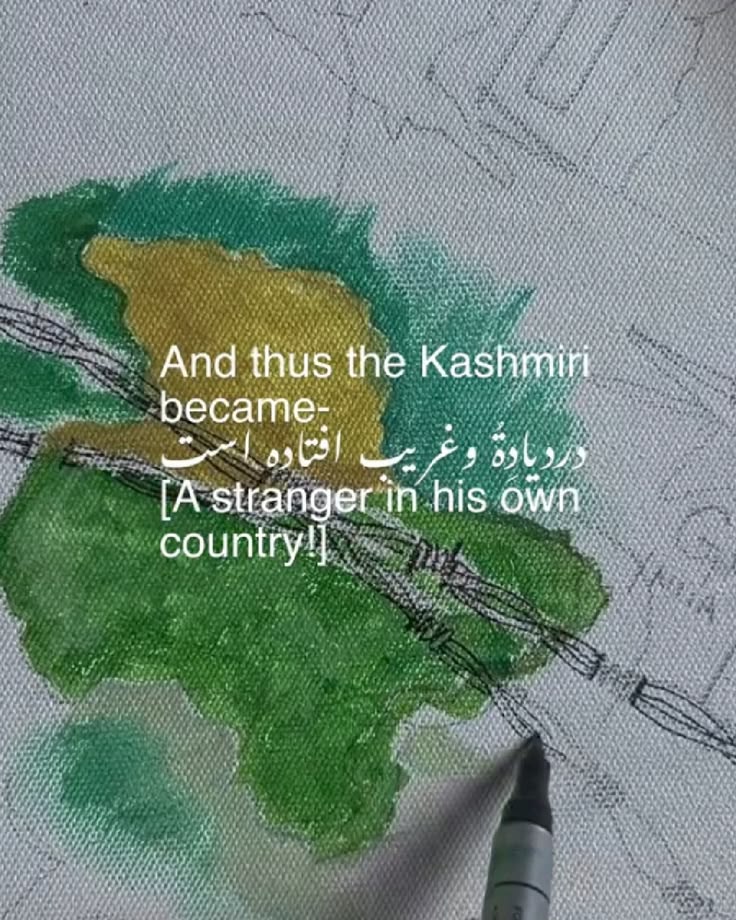
For centuries, Kashmir has occupied a singular space in the poetic imagination. It is a region defined by a paradox. On one hand, earthly paradise of pristine lakes, towering snow-capped peaks and crimson autumn chinars. On the opposite, centuries of political upheaval, exile and grief. In literature, Kashmir is beyond a geographic location. It is a metaphor for divine beauty, and a testament to human endurance. The poetic tradition of Kashmir took root in spiritual mysticism and poignant lyricism during the medieval period.

In the 14th century, the mystic poet Lal Ded pioneered the Vakh: four-line spiritual verse couplets in the Kashmiri vernacular. Her poetry bridged Hinduism and Sufism. It’s essence was inner purity, liberation, and the transcendence of physical suffering.

I searched for my Self until I grew weary,

No one, I thought, could reach this hidden knowledge.

I plunged into it, and there found the jar of nectar.

Habba Khatoon was known as the Nightingale of Kashmir. The 16th-century peasant-turned-queen introduced the Lol: a short, melodic form of love lyric. Her husband, King Yousuf Shah Chak, was exiled by the Mughal Emperor Akbar. Then, her poetry transformed into immortal songs of separation and longing.

The spring has come, but you have not returned;

My heart bleeds like the red bloom of the pomegranate.

During the Mughal and Persian era, Kashmir became synonymous with heavenly superiority. The iconic Persian couplet often attributed to Amir Khusrow or Mughal Emperor Jahangir summarized this adoration:

Agar firdaus bar roo-e zameen ast,

Hamin ast-o hamin ast-o hamin ast.

(If there is a paradise on the face of the earth, it is this, it is this, it is this.)

In the 20th century, Allama Iqbal, whose ancestors hailed from Kashmir, brought a nuanced perspective to this paradise. In works like Javid Nama, he celebrated Kashmir’s breath-taking landscape while lamenting the subjugation and suffering of its people. He reflected on the region’s immense dormant potential in Payam-e-Mashriq:

​Pani tere chashmon ka hai aab-e-hayat,

Aur tere kohsar hain qasran-e-kibriya.

​The water of your natural springs is the elixir of life,

And your mountain ranges are towering palaces of divine grandeur.

Iqbal’s verse moved beyond aesthetic wonder, using poetry as a call to dignity, resilience, and self-realization for the Kashmiris.

In modern poetry, Kashmir’s narrative shifted dramatically toward exile, memory, and war. No poet captured this transition more powerfully than Agha Shahid Ali (1949–2001). He wrote primarily in English while employing traditional Urdu ghazal forms. Ali gave voice to the tragedy of late 20th-century Kashmir. In his seminal collection, The Country Without a Post Office (1997), Kashmir becomes a landscape of ghost letters, curfews, and faded memories.

I write on fallen leaves and floating petals,

I write to you from a country without a post office.

Ali’s verse knits together global literary influences from Mahmoud Darwish to James Merrill. His poetry creates a poignant eulogy for a lost homeland.

Their memory is anything but green, an white-hot fire.

They burn down Kashmir in my veins.

From the ascetic reflections of Lal Ded to the haunting elegies of Agha Shahid Ali, poetry has served as Kashmir’s truest archive. A disputed land of changing maps, borders, and historical conflicts. It’s the poetry that preserves the living soul of the land. The verses anchor its beauty, its heartbreaks, and its unyielding hope. Kashmir remains forever intact. It is an eternal paradise written in ink, surviving through the memory and voices of its poets.

 

Similar Posts

  • Important of Diplomacy in Modern Conflicts

    By Dhani Bux Wassan Peace cannot be kept by force it can be achieved by understanding (Albert Einstein). In an increasingly interconnected world, disputes and tensions among nations have become more complex, involving geopolitical rivalries, ethnic and religious conflicts, ideological differences, civil unrest, and cyber warfare. These challenges threaten global peace and stability, and destroy the hustle and bustle of cities, turning them into ashes. These assaults lead to violence against innocent people . Amidst humanitarian crises and violence, diplomacy plays a crucial role in maintaining global peace, stability, and mutual prosperity among nations. Diplomacy is the most effective way to mediate disputes among nations through negotiations and table talks, preventing major conflicts and saving thousands of innocent lives. It is a manifestation of wisdom and dialogue. Modern conflicts are far more violent and complex than traditional wars. They arise from the struggle for power, competition over resources, territorial disputes, political instability, nationalism, separatism, and economic inequality. These conflicts have transformed cities into ruins, leaving streets littered with debris and countless lives lost. Millions of people have been displaced, deprived of education, healthcare, and shelter, and forced to live in extreme poverty. They have also left mothers, fathers, sisters, brothers, and children waiting in vain for their loved ones who never returned from the battlefield. Now, let us turn our attention to the Israel–Palestine war. Since October 7, 2023, the conflict has continued for more than 1,000 days. According to the Gaza Health Ministry, more than 73,000 Palestinians have lost their lives, while millions have been displaced and face severe humanitarian conditions. Similarly, the Russia–Ukraine war has continued for more than 1,600 days. The conflict has destroyed homes, schools, hospitals, and vital infrastructure, forcing millions to flee their homes and seek refuge in neighboring countries. History reminds us that when regional conflicts escalate into world wars, the world loses its path to peace. The First and Second World Wars claimed millions of lives and devastated entire nations. If diplomacy fails and violence prevails, humanity risks repeating the tragedies of the past. Therefore, dialogue, cooperation, and peaceful negotiation remain the only sustainable path. As modern conflicts continue to grow the importance of diplomacy cannot be overstated. Diplomacy provides nations with a peaceful means of resolving disputes through dialogue and compromise rather than violence. It prevents misunderstandings from escalating into armed conflicts and helps build trust and cooperation among nations. Strong diplomatic relations create a stable environment that encourages economic growth, attracts foreign investment, expands trade, and creates employment opportunities. Moreover, diplomacy facilitates humanitarian assistance, strengthens regional cooperation, and promotes lasting peace.In an increasingly interconnected world, it remains the most effective instrument for achieving peace, stability, and shared prosperity. History demonstrate that diplomacy repeatedly succeeded where military cops failed .The Camp David Accords (1978) ended decades of hostility between Egypt and Israel, proving that persistent dialogue can transform long-standing enemies into peace partners. Similarly, the Good Friday Agreement (1998) brought an end to years of violence in Northern Ireland through negotiation and political compromise. The Dayton Peace Agreement (1995) ended the devastating Bosnian War, while the Indus Waters Treaty (1960) between Pakistan and India has endured despite multiple wars, demonstrating that diplomatic agreements can survive even during periods of intense political tension. These examples illustrate that meaningful dialogue, mutual respect, and sustained negotiations often achieve what military force cannot. As former UN Secretary-General Kofi Annan wisely observed, “More than ever before in human history, we share a common destiny. We can master it only if we face it together.” In modern world conflicts strengthening diplomacy is essential for building a peaceful, stable, and prosperous future. Governments should prioritize dialogue over confrontation, invest in skilled diplomacy, and promote mutual trust through regular communication. International organizations, regional alliances, and civil society also have an important role in facilitating peaceful negotiations and resolving disputes before they escalate into violence. At the same time, nations must uphold international law, respect sovereignty, and work together to address shared challenges such as climate change, terrorism and cyber threats. By embracing cooperation instead of conflict, diplomacy can prevent wars, protect human lives, and lay the foundation for lasting global peace and sustainable development. To conclude, diplomacy remains the cornerstone of peace and stability in an increasingly turbulent world. While modern conflicts have become more complex due to geopolitical rivalries, technological advancements, and transnational threats, dialogue and cooperation continue to offer the most effective path to lasting solutions. Military force may end battles, but only diplomacy can build enduring peace, restore trust, and promote mutual understanding among nations. As global challenges continue to transcend borders, the international community must strengthen diplomatic institutions, uphold international law, and foster a culture of cooperation. A peaceful and prosperous future depends not on the power of weapons, but on the wisdom of dialogue and the commitment to resolve differences through diplomacy. (The writer is Larkana Cadet College student)

  • The Disappearing Baloch Culture

    Hani Rasheed Through the pages of your newspaper, I want to draw attention to the gradual disappearance of Baloch culture. We proudly call ourselves Baloch, but sadly, many of us are no longer following our own traditions, values and cultural practices. Our language, traditional dress, customs and respect for elders are slowly being replaced by modern influences. Modern life is not wrong, but forgetting our identity is a serious concern. Our culture is our history and a symbol of our identity. If we do not protect it today, future generations may know the word “Baloch” but forget the true meaning of Balochi culture. The government, schools and families should work together to promote Balochi language, traditions and cultural values. Young people should be encouraged to learn about their history and respect their cultural roots. I hope your newspaper will highlight this important issue and encourage people to protect our beautiful Baloch culture.

  • Robot dogs take over night security

    As artificial  intelligence enters more parts of daily life even security jobs are beginning to change. In Atlanta robotic dogs are now being used to guard homes and residential areas  at night. According to foreign media reports the new system has been introduced at residential complexes in the US city of Atlanta where robotic dogs have replaced human guards for night patrols. Equipped with cameras sensors and AI technology the robot dogs move around the complexes and monitor their surroundings. They can detect unusual or suspicious activity while human operators control and monitor them from a distance. At first some residents found the robots unusual but they have gradually become  familiar with them.  Residents say the robots provide a new layer of security and may help reduce crime in the area. With AI developing rapidly robotic security could become more common in homes apartment buildings streets and shopping areas in the future.

  • Brain molecule may improve sleep

    Millions of people around the world struggle with insomnia and other sleep problems. Now scientists in China have identified a natural brain molecule that may help explain how the body knows when it is time to sleep. The discovery could lead to safer and more effective sleep medicines in the future. The study published in Nature Neuroscience found that a natural molecule called tryptamine (TrpA) plays an important role in increasing the body’s need for sleep. Researchers say this molecule sends signals to the brain that it is time to rest. Experts explained that good sleep is essential for overall health. During sleep the brain organizes memories stores information and removes waste that builds up during the day. However many people do not get enough sleep because of insomnia stress depression anxiety or problems with the body’s internal clock also known as the circadian rhythm. To better understand the process researchers studied mice which are active at night and pigs which are active during the day. Using a special fluorescent sensor they measured the amount of tryptamine in the animals’ cerebrospinal fluid at different times. The scientists found that the longer the animals stayed awake the higher their tryptamine levels became. This suggests that the molecule reflects the body’s natural “sleep pressure” the growing need for sleep after spending many hours awake. The team also discovered that active nerve cells release tryptamine while the body is awake. The molecule then attaches to a receptor called GPR139 which activates sleep promoting nerve cells in an area of the brain known as the hypothalamic preoptic area. In the next stage of the study researchers tested experimental compounds that activated the GPR139 receptor. The results showed that the animals slept longer and experienced better quality sleep. Scientists say finding the same results in both mice and pigs suggests that this biological system may also exist in humans. If future studies confirm this the discovery could help develop new treatments for insomnia and other sleep disorders that are safer more effective and have fewer side effects than many current sleep medications.

  • Japan’s PM shares funny cockroach story

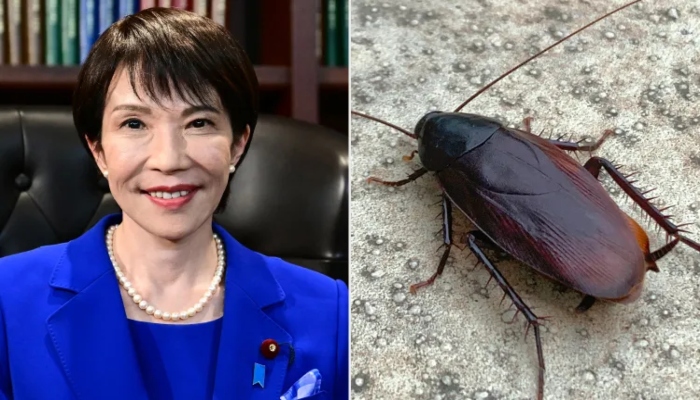
    Japanese Prime Minister Sanae Takaichi has shared a surprising story about finding a cockroach at her official residence in Tokyo. The 65 year old prime minister recently answered questions about the residence on X, formerly known as Twitter. She was more scared of a Cockroach than a ghost One person asked Takaichi if she had ever seen a ghost at the official residence which has been the subject of various ghost stories. She said she had never seen a ghost there but she did have a frightening experience with a cockroach. Takaichi explained that she had never seen a cockroach while living in accommodation provided for lawmakers.However after moving into the prime minister’s official residence she once spotted one near her feet. She said she had carefully cleaned the floor under her dining table and removed food crumbs. So when a cockroach suddenly appeared she was hocked. Why she did Not Kill It Interestingly, Takaichi decided not to kill the insect. She explained that she has loved the Japanese manga Phoenix since childhood. The story focuses on themes of life death and rebirth. Because of this she said she could not bring herself to kill the cockroach. Instead she thought that perhaps the insect was also part of the long cycle of life and rebirth. So, she left the cockroach in the room and walked away. Her secretaries took action Takaichi said she tolerated the situation for some time and hoped the cockroach would eventually leave on its own. However when she told her secretaries about it they became frightened. One of them eventually arranged an operation to remove the unwanted visitor. After that Takaichi did not see another cockroach at the residence. She felt surprisingly lonely The funny part of the story came afterward. Although Takaichi felt relieved that the cockroach was gone she admitted that she also felt a little lonely and sad. She said she experienced both relief and a strange sense of loneliness after the insect disappeared.

  • Never leave these items in your car

    The rainy season brings relief from the heat but it can also damage your car and the items kept inside it. Moisture rising humidity changing temperatures and water leaks can ruin electronics important documents and other valuable belongings. Some items can even become safety risks if left in the car. Here are some things you should never leave inside your vehicle during the rainy season. •Electronics can be damaged Laptops smartphones tablets cameras power banks portable speakers flashlights and wireless earbuds can all be affected by heat and moisture. High humidity inside a parked car may damage their batteries and internal parts reducing their performance or making them stop working. •Keep important documents safe Avoid leaving passports insurance papers educational certificates property documents or other important papers in your car. Moisture can cause paper to become damp, grow mold or become unreadable. •Medicines may lose their effect Some medicines including insulin inhalers and liquid medicines need to be stored at the right temperature. Leaving them inside a hot or humid car may reduce their effectiveness and could put your health at risk. •Leather items and wet umbrellas can cause problems Leather wallets belts shoes and bags can absorb moisture develop bad smells and become permanently damaged. A wet umbrella left inside the car can also increase humidity leading to mold and unpleasant odors. •Wet clothes and gym bags can smell Damp clothes or used gym bags left inside a vehicle can become a breeding ground for bacteria and mold. This can leave your car with a strong unpleasant smell. •Valuable items can attract thieves Never leave mobile phones, laptops handbags jewelry or other expensive items in plain sight. Besides the risk of weather damage visible valuables can make your car a target for theft. •Simple ways to protect your car Keep your car clean and dry during the rainy season.  Remove wet items as soon as possible use moisture absorbing packs such as silica gel inside the vehicle and keep the windows fully closed during rain. Regularly dry the floor mats and air out the car whenever the weather is clear. •A quick check can prevent big losses Before locking your car take a few seconds to check the inside. This simple habit can protect your valuables keep your vehicle fresh and dry and help you avoid unnecessary damage and costly repairs during the rainy season.

Leave a Reply

Your email address will not be published. Required fields are marked *