metamorphosis mass rebellion

From metamorphosis to mass rebellion:  India’s “Cockroach Janta Party” 

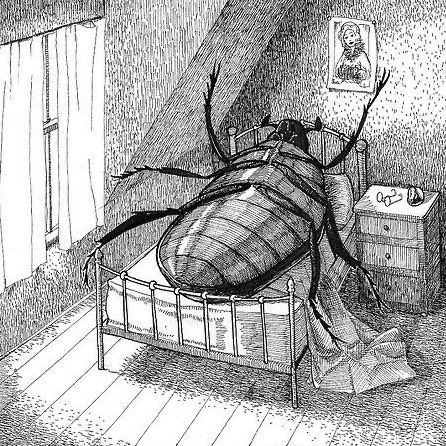
When Franz Kafka penned The Metamorphosis in 1915, he captured the existential horror of Gregor Samsa. A dutiful young clerk who wakes up transformed into a monstrous insect (Ungeziefer). Gregor’s tragedy is not his physical revulsion. It’s how his transformation strips him of human dignity in the eyes of authority and his own family. Reduced to an unwanted pest, Gregor is isolated, degraded, and ultimately left to die as a useless burden to a capitalist system. In May 2026, a similar socio-political dynamic unfolded in real life. It triggered a political phenomenon in India and then, the rise of the Cockroach Janta Party (CJP).

The movement was born out of an explosive judicial exchange. While hearing a routine legal petition, Chief Justice of India Surya Kant directed frustration toward unemployed youth, activists, and independent journalists. Dismissing their systemic critiques, he referred to them as parasites of society. He likened jobless young citizens who take to social media or activism to cockroaches who lack professional stability. The remark hit across a country where nearly 40% of young graduates face severe unemployment and widespread examination leaks (such as the NEET-UG) continuously derail youth aspirations. Rather than slinking into the shadows like Kafka’s Gregor, the affected youth weaponized the insult.

 Institutional View: Youth = “Cockroaches / Parasites”

Resistance Response: Subversion through Satire & Mass Action

 Ultimate Outcome: An “Exterminator’s Nightmare” (Mass Force)

Within 24 hours of the courtroom remarks, communications strategist Abhijeet Dipke launched the Cockroach Janta Party. A satirical parody on the ruling Bharatiya Janata Party (BJP). The platform’s initial setup was steeped in self-deprecating irony.

The Tagline: “Voice of the Lazy & Unemployed“.

Membership Criteria: Open to anyone who identified as unemployed, lazy, chronically online, and able to rant professionally.

The Digital Explosion: Within days, the CJP’s social media handle amassed over 22 million followers, eclipsing the official accounts of major political parties. Opposition figures, MPs, and prominent activists joined in, amplifying its reach.

The CJP represents a classic instance of subversive identity reclaim. Much like marginalized movements throughout history, Indian youth embraced the dehumanizing label assigned to them by elite institutions. By self-identifying as cockroaches, they exposed the establishment’s disdain for citizens struggling under economic stagnation and institutional failure. What began as a digital meme swiftly morphed into a formidable political force. The CJP mobilized offline.  Aligned with education-reform hunger strikes led by activists like Sonam Wangchuk and demanding the resignation of key government ministers over exam leaks. Just as Kafka’s protagonist faced violence when he tried to step out of his room, the state met the Cockroach march toward Parliament with heavy-handed resistance. The state put blockades, tear gas, and account withholdings under national security provisions. Ultimately, the Cockroach Janta Party illustrates the ultimate inversion of Kafka’s tragedy. Gregor Samsa died alone in silent isolation. Whereas millions of young adults proved that when an entire generation is labeled as vermin, they do not quietly perish. They swarm.
 

Similar Posts

  • |

    Subjective aesthetics versus literary brilliance

    Litigation over artistic quality reveals more about the critic’s personal taste and ideological leanings than it does about the intrinsic value of the literature itself. A prominent Bangladeshi academic initiated a debate across literary circles when a short video clip went viral online. In this brief excerpt from a presentation delivered at a university literary festival, the scholar dismissed the acclaimed author Shahidul Zahir. He claimed that Zahir does not even qualify as a third-rate artist. He  labeled him instead as a third-class writer whose language is thoroughly uninteresting. He similarly critiqued another modern Bengali prose writer, Akhteruzzaman Elias. For this case, he dismissed his writing style as endlessly monotonous. This judgment raises critical questions about literary aesthetics and the metrics used to evaluate global literature. Does a critic’s subjective boredom justify reducing a writer’s work to a low rating? Analytically, the fiction of Shahidul Zahir demonstrates the exact qualities that define world-class literature. Shahidul Zahir was never a conventional storyteller who somehow aimed to comfort his audience. Rather than offering comfortable narratives, his work exposes uncomfortable truths beneath established historical accounts. His portrayal of wartime violence, political opportunism, and societal compromise during and after the 1971 Liberation War forces readers to confront disturbing realities. Zahir connects the grim details of local life with magical and surreal elements. He utilizes oral storytelling traditions. He also combined surreal metaphors with layered depictions of the human condition. His narratives have bizarre occurrences such as animals acting as caretakers or war collaborators feeding human flesh to animals appear surprisingly believable against the background of ordinary towns like Sirajganj or Old Dhaka. His surrealism reflects real-world atrocities that were often equally unimaginable far from being mere fantasy. The academic’s critique centered primarily on two claims. Firstly, Zahir’s writing is dull. Secondly, his portrayal of the 1971 war is historically inaccurate. However, a closer look at these claims exposes significant flaws in the critic’s premise. The critic in question strongly favors traditional, highly formal, Sanskritized prose (sadhu bhasha) and rejects everyday spoken dialect (cholito bhasha) for serious discourse. In contrast, Zahir’s prose relies on the living, informal, and at times raw language spoken by everyday people. Therefore, rejecting an author because their prose reflects the authentic cadence of public speech reveals an elitist preference rather than an objective literary standard. The scholar accused Zahir’s acclaimed novella Jibon O Rajnoitik Bastobota (Life and Political Reality) of presenting stereotypical representations. He further pointed the supposed depiction of war collaborators wearing skull caps. Yet, nowhere in the actual text does such a detail exist. The critic appeared to project his own assumptions onto the text rather than reading what was actually written. Zahir’s novella accurately captures the painful political reality of post-liberation Bangladesh, where former wartime collaborators were gradually integrated back into mainstream power structures. Literary scholars often define world literature as creative work that responds to the global dynamics of modern capitalism and political change. Zahir’s novels illustrate how global economic forces interact unevenly with local feudal structures. In his masterpiece Shei Raate Purnima Chhilo (It Was Full Moon That Night), Zahir explores the rise of a powerful rural leader under state-sponsored political reform. The narrative illustrates how modern capitalist development mixes with lingering feudal mentalities. This mentality then creates a system where local elites hold unchecked power. Zahir constructs a portrait of a society caught between tradition and modern governance. Furthermore, Zahir’s treatment of the 1971 war connects local experiences with international geopolitics. In his stories, wartime memories constantly surface like fresh grass breaking through soil. His words speak about how national liberation was simultaneously a local struggle for survival and an event influenced by global Cold War tensions. The argument that a nation must produce literature directly accessible or marketed to Western readers in order to be considered world-class relies on a flawed premise. Global literary status should not depend solely on English translation or commercial visibility. Countless profound authors around the globe write within their local contexts. Such marvelous authors produce works that match the thematic depth of international figures like Franz Kafka or Gabriel García Márquez. As a matter of fact, dismissing Shahidul Zahir as third-class overlooks the artistic, historical, and linguistic power of his work. His fiction stands as an extraordinary accomplishment in modern literature. He is the one that challenges, provokes, and immortalizes the complex human experience far beyond the boundaries of narrow critique.  

  • | |

    The immortal king: Gilgamesh

    The Epic of Gilgamesh chronicle a ruler whose reach eclipsed his own era. King Gilgamesh of Uruk was celebrated across the Fertile Crescent for his unmatched strength, towering city walls, and unyielding ambition. He was a mythical hero, two-thirds god and one-third man. The Influence of King Gilgamesh Over ancient kings and foreign lands, his influence was absolute. Monarchs who succeeded him across Sumer, Akkad, and Assyria measured their own majesty against his legacy.  Moreover, those realms seek to embody his wisdom and claim a dominion as legendary as the one he forged before the great waters swept the earth. He Who Saw the Deep.. He saw what was secret, discovered what was hidden, He brought us a tale of the days before the Flood. The Ancient Mesopotamia In recent archaeology, the shadow of Mesopotamia’s heroic past continues to reemerge in unexpected ways. Modern researchers conducting glacial surveys on Turkey’s Mount Ararat have begun mapping shrinking ice fields to retrieve core samples. Historically, Mount Ararat is the high peak linked with ancient flood mythologies.  This pioneering study seeks to extract a continuous chronicle of human activity, ancient agriculture and metal smelting preserved in ice layers spanning thousands of years. The studies offer a direct physical record of the environmental world that ancient Mesopotamian civilizations inhabited. Search For The Unknown This convergence of epic poetry and modern science reveals that the search for what was hidden remains as vital today as it was in antiquity. The ancient scribes etched Gilgamesh’s story into clay tablets. They recorded a hero who traveled to the ends of the earth to seek secrets of mortality and natural catastrophe. The story of the great deluge, brought back by Gilgamesh from the edge of the known world. It functioned both as a sobering warning and as a testament to the fragile line between human pride and nature’s fury. The Truth Today, scientists analyze ice layers and ancient cuneiform archives across the Middle East. Furthermore, we are reminded of the power of memory. Kings and empires inevitably turn to dust. Yet, the insights gathered by those who dare to look into the deep endure across millennia remain forever. Gilgamesh’s journey teaches us that true power lies not in martial conquest or monumental stone. Rather, it’s in the wisdom preserved for generations that follow. True power is a truth as resonant in our modern era as it was in the ancient halls of Uruk.    

  • | | |

    Reason, passion and desire

    We often like to view ourselves as unified, consistent individuals guided by singular motives. Yet, almost everyone has experienced an intense internal conflict. It’s wanting to spend on a impulse buy while knowing it defies financial logic. Or feeling overcome with regret immediately after giving in to a temptation. Over two millennia ago, the ancient Greek philosopher Plato set out to explain this psychological friction in Book IV of his masterwork, the Republic. Plato proposed that our psyche is composed of three distinct yet interacting forces rather than treating the human mind or psuche (soul) as a monolithic entity. Plato developed the concept of the tripartite soul. Further, he offered a framework that remains remarkably relevant to modern understandings of human behavior, self-control and moral choice. The Three Components of the Psyche Plato divides the human mind into three primary elements, each responsible for different aspects of our drives and behavior. 1. The Appetitive Element (To Epithumetikon) The appetitive part is the largest and most primal component of human nature. It encompasses our basic instinctual desires, including physical appetites for food, drink, comfort, and sensual pleasure, as well as material wants. Because these cravings are immediate and self-interested, the appetitive drive is inherently impulsive. Left unchecked, it seeks gratification regardless of long-term consequences. 2. The Spirited Element (To Thumoeides) The spirited element represents our emotional drive, passion, and sense of honor. It is the source of courage, pride, and righteous indignation when we witness or experience injustice. Unlike raw bodily appetite, the spirited part is closely tied to our moral identity and self-image. When functioning healthily, spirit acts as an ally to reason. It generates feelings of shame or self-directed anger when we surrender to harmful appetitive urges. 3. The Rational Element (To Logistikon) The rational element is the calculating and reflective mind. It seeks truth through logic, forethought, and critical reflection. What sets rationality apart from the other two components is its scope. While appetite and spirit focus on fulfilling specific, immediate goals, the rational mind evaluates what is best for the entire person in the long run. The Conflict Within: Why the Soul Divides To demonstrate that these three elements are truly distinct, Plato relies on an early formulation of the principle of non-contradiction: a single entity cannot simultaneously move in opposite directions in the exact same respect. Therefore, when a person experiences contradictory impulses such as feeling an intense thirst yet consciously choosing not to drink due to illness or health concerns, different parts of the mind must be in opposition. A classic illustration of this psychological war is the story of Leontius. While walking, Leontius felt a compulsive curiosity to look at execution corpses lying on the ground. Simultaneously, he felt disgust and moral repulsion. Eventually, his base appetite won out, causing him to rush over while angrily cursing his own eyes. This reaction demonstrates the spirited part of the soul becoming angry at the appetitive part for overriding rational judgment. From Conflict to Harmony Plato’s goal was not to suggest that humans should eradicate desire or emotion altogether. Instead, he argued that mental health and moral integrity, what he called justice of the soul, require a proper hierarchy. Reason must govern, serving as the wise leader that understands the big picture. Spirit must protect and enforce reason’s guidance with courage and conviction. Appetite must operate within temperate limits established by reason.   When these three components function in balance, an individual achieves psychological harmony. Conversely, when base desires or untamed emotions usurp the throne, inner turmoil and destructive behaviors follow. Plato’s tripartite framework ultimately serves as a timeless reminder that self-mastery is not about suppressing who we are, but about bringing our competing drives into a balanced, reason-guided unity.

  • |

    The limits and depth of human consciousness

    For millions of years, the survival of living species depended almost entirely on practical adaptations. The core of living was finding food, securing shelter, avoiding predators, and reproducing. Yet, at a crucial juncture in evolutionary history, Homo sapiens began engaging in a behavior that offered no immediate physical utility like making art. From red ocher hand stencils on cave walls in Sulawesi and Western Europe to intricate bone flutes and sculpted figurines, early humans devoted valuable time and energy to symbolic creation. Today, neuroscientists, cognitive psychologists, and evolutionary anthropologists increasingly view art not as a secondary cultural luxury, but as a foundational hallmark of human consciousness. The Evolutionary Emergence of Symbolic Thought The birth of artistic expression marks a profound cognitive transition. While many animals exhibit complex behaviors, these actions are largely instinctual and functional. Human art, by contrast, relies on abstract symbolic thinking. The capacity to let one object, shape, or sound represent an idea, emotion, or absent reality. When an early human carved a figure or painted a thundering herd of bison onto rock, they were not merely copying their surroundings. They were projecting an internal mental world onto an external physical canvas. This ability to externalize subjective experience required a sophisticated architecture of consciousness, including robust working memory, metacognition (thinking about one’s own thinking), and a developed theory of mind. It’s the understanding that others possess distinct mental states and can interpret shared symbols. The Neurobiology of Aesthetic Experience Modern neuroimaging reveals that creating and contemplating art engages large-scale, interconnected brain networks. When a person immerses themselves in a painting, music, or literature, the Default Mode Network (DMN) works with sensory and emotional circuits. Artistic engagement triggers a dynamic dialogue between the visual or auditory cortex, the limbic system (which processes emotion), and executive regions in the prefrontal cortex. This complex cross-talk allows humans to experience qualia. The subjective, qualitative feel of conscious experiences. A visual composition does not simply register as light wavelengths in the brain; it evokes nostalgia, awe, melancholy, or inspiration. This capacity to synthesize raw sensory inputs with deep emotional resonance and reflective thought is a unique feature of high-level conscious awareness. Lived Experience versus Machine Patterning In an era dominated by artificial intelligence algorithms capable of generating hyper-realistic images and musical compositions in seconds, the relationship between art and consciousness has taken on renewed urgency. While generative models analyze billions of data points to predict and replicate aesthetic patterns, they operate entirely without subjective awareness, intent, or emotional feeling. Human art originates from a grounded biological reality: the lived experience of mortality, joy, heartbreak, bodily sensation, and social existence. The power of a masterpiece lies not merely in its formal technique, but in the implicit bridge it constructs between the inner world of the artist and that of the observer. Art is fundamentally a dialogue of consciousnesses. It is a mechanism through which one conscious entity communicates what it feels like to exist. A Mirror to Human Identity Ultimately, art serves as both a product and a mirror of conscious awareness. It enables individuals to simulate hypothetical scenarios, process complex social dynamics, and navigate existential questions about purpose and mortality. By translating internal emotional states into tangible forms, humans construct shared cultural meaning and foster deep social cohesion.   As science continues to explore the mystery of how physical brain matter generates subjective experience, art remains our most visible and enduring cognitive fingerprint. It stands as compelling proof that human consciousness is defined not just by how we perceive the objective world, but by our infinite capacity to imagine and construct new ones.

  • | |

    Theories behind Shakespeare’s true identity

    For centuries, William Shakespeare has been indicated as the undisputed genius of Western literature. His masterworks, ranging from the tragedy of Hamlet to the romantic drama of Romeo and Juliet, form the bedrock of English theater. Yet, beneath the reverence lies one of the most persistent controversies in literary history. Did a provincial actor from Stratford-upon-Avon actually pen these legendary plays? Was Shakespeare merely a convenient alias for another genius working in the shadows? The Paradox of the Bard’s Background Doubts surrounding Shakespeare’s authorship stem largely from the sharp contrast between his known biography and the astonishing depth of his literary canon. Born in 1564, Shakespeare attended the local grammar school where he learned Latin and basic rhetoric. He never pursued higher education at a university, nor did he ever leave England. In contrast, the plays attributed to him demonstrate an extraordinary mastery of complex subjects. They reveal intimate familiarity with international geography, continental languages, high-stakes royal politics, aristocratic court etiquette, and intricate legal doctrines. In an era before public libraries and widespread travel, skeptic scholars often called Anti-Stratfordians question how a man with limited schooling and exposure to foreign cultures could possess such erudition. This discrepancy has led many to speculate that the real Shakespeare acted primarily as a public frontman. As an actor and shareholder in the Lord Chamberlain’s Men, Shakespeare was well-positioned in London’s theatrical community. High-born courtiers or politically vulnerable figures who wished to write plays may have utilized Shakespeare’s name to publish their works safely. The Leading Candidates Over years, prominent figures from Tudor and Jacobean society have emerged as alternatives for the true authorship. Sir Francis Bacon: A brilliant philosopher, statesman, and pioneer of the scientific method. Bacon possessed the intellectual rigor and courtly insight required to craft the plays. Proponents argue that he’s Lord Chancellor and a government insider. So, Bacon couldn’t openly associate with public theater. It would’ve definitely ruined his political standing and risking royal disapproval. Edward de Vere, Earl of Oxford: Educated at Cambridge, well-traveled throughout Europe, and a celebrated poet in his own right, de Vere fits the profile of an elite playwright. However, a major hurdle for the Oxfordian theory is that de Vere passed away in 1604 several years before iconic plays like The Tempest and Macbeth were produced. Christopher Marlowe: Perhaps the most dramatic theory involves Shakespeare’s contemporary, Christopher Marlowe. A gifted Cambridge graduate and spy for the Tudor government, Marlowe officially died in a tavern brawl in 1593. Skeptics suggest he faked his death to escape charges of heresy and treason, subsequently continuing to write under the pen name William Shakespeare. Notably, the first publications under Shakespeare’s name appeared just weeks after Marlowe’s reported demise. Was the Genius a Woman? The authorship debate extends beyond male nobles to include extraordinary women of the Elizabethan court. Shakespeare’s plays are remarkable for their nuanced, highly capable female characters who defy traditional stereotypes of the era. Two prominent women are frequently cited in authorship theories. Mary Sidney, Countess of Pembroke: An accomplished writer, classical scholar, and major patron of the arts, Sidney hosted a renowned literary salon and authored closet dramas meant for private performance. Emilia Bassano: Born to a family of Venetian court musicians believed to have Jewish heritage, Bassano possessed both international ties and formal education. Her background offers a compelling explanation for the Italian settings and Jewish themes present in works such as The Merchant of Venice. An Enduring Literary Mystery Mainstream academic consensus remains firmly with the man from Stratford-upon-Avon. They pointed to contemporary records, theatrical tributes and historical references. The debate surrounding the Bard’s identity continues to fascinate scholars and theater lovers alike. Whether created by a single self-made dramatist or a hidden collective of noble minds, the plays continue to inspire readers across the globe.

  • |

    Rare 1858 volume returned to Australian library after 150 Years

    A home renovation in Australia recently uncovered a piece of literary history that had been missing for a century and a half. A homeowner in the coastal community of Kiama, located south of Sydney in New South Wales, was tearing down wall structures. Amidst, he stumbled upon a sealed fireplace. Inside an old wooden tea crate behind the brickwork was an antique book that belonged to the town’s local library. The volume, titled Antiquities of Athens, was published in London in 1858. Staff at the Kiama Library realized that the book had been missing since 1870s. Library officials described the return as completely unprecedented. While they occasionally receive books that are a few decades late during estate cleanouts, they had never seen a volume missing for over a century. The book itself is a notable historical work. It was originally authored by British architects James Stuart and Nicholas Revett to document classical Greek architecture. Book No. 506. A part of Kiama Library’s inaugural catalog which comprised roughly 1,000 items when the library first opened its doors in 1872. Despite enduring around 150 years encased inside a chimney cavity, the physical volume appeared in a surprising condition. Mild water exposure near the margins and natural weathering consistent with a century of neglect. However, the pages and original library stamps remained clearly legible. How the book ended up sealed behind a fireplace wall remains open to speculation. During the 19th and early 20th centuries, homeowners used unwanted household items as insulation or filler material when bricking over chimney flues. When Kiama Library manager Michelle Hudson examined the interior cover of the returned tome, she discovered the original set of lending regulations printed inside. Among those provisions was a penalty clause dictating an overdue fee of three British pence per week. Doing the math to adjust that Victorian-era fine for inflation over 150 years results in an eye-watering figure: roughly  $28,000 Australian dollars (approximately $19,500 USD). Luckily for the current homeowner who handed it over, the library has no intention of collecting. In fact, even if staff wanted to hold someone accountable, identifying the original borrower is impossible. The library’s paper borrow ledgers from the 1870s were lost or discarded long ago. It left a complete mystery as to who last checked out the book. The volume provides a fascinating glimpse into Victorian-era social norms and public library regulations. A borrower was forbidden from checking out another book until any previously borrowed item was returned and all associated fines were cleared. Hudson playfully speculated that this rule might explain why the original patron never brought the book back. Once the fine started accumulating, returning it became too costly. Households could borrow up to three books at a time, but only if at least six members of the family were verified as capable of reading. The regulations specifically prohibited lending books to individuals who arrived at the library in a state of intoxication. Modern library policies focus on patron code of conduct rather than testing family literacy rates. However, these antique guidelines serve as a memorable reminder of how public institutions functioned in colonial Australia. Antiquities of Athens will not be re-entering general circulation returning home after a century and a half in exile. Library staff plan to place the volume on permanent display within their local history archive. It is aimed to preserve it as both a physical artifact of Victorian publishing and a symbol of local history. As Hudson quipped, the library is thrilled to have its 506th catalog entry back on the shelves. Also, they have no intention of risking another 150-year wait to see it again.  

Leave a Reply

Your email address will not be published. Required fields are marked *