adani group weighs
| |

Adani group weighs entry into Indian aviation mark…

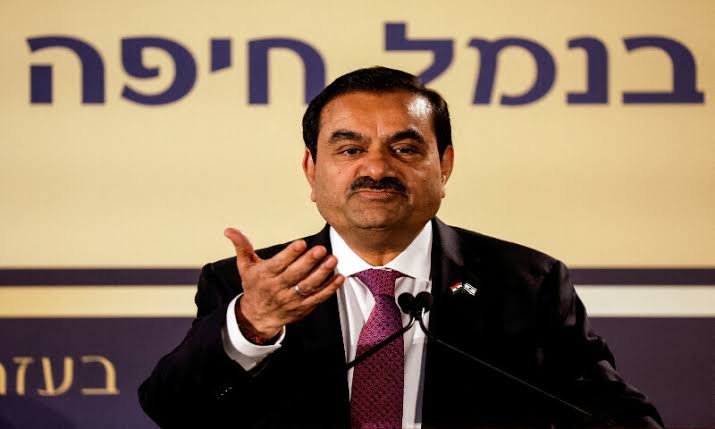
Indian billionaire Gautam Adani’s conglomerate is exploring a possible entry into the airline business, a move that could disrupt an Indian aviation market currently controlled by just two major carriers, according to two people familiar with the discussions.

The consideration marks a potential shift in direction for the group, which runs eight airports across India, including two serving Mumbai, and is midway through an expansion plan worth 11 billion dollars. The group had previously indicated it had no plans to enter the airline sector.

According to one of the sources, who spoke on condition of anonymity because they were not authorized to discuss the matter publicly, no final decision has been reached and the idea remains under internal review, partly because the airline business is widely seen as difficult to run profitably. The source said Indian officials have privately encouraged large business groups, including Adani’s, to consider launching a carrier following heightened scrutiny of Air India after a fatal crash in Ahmedabad last year, along with operational breakdowns at market leader IndiGo that disrupted air travel nationwide in December. The source characterized Adani’s interest as motivated partly by a sense of national interest, noting that the government has grown concerned that the country needs another major airline given the troubles at both existing carriers.

Shares of Adani Enterprises fell more than 3 percent on Thursday following the report. Internal talks about a possible airline venture remain in early stages, and the group has not set a timeline for a decision.

Adani ranks as Asia’s second wealthiest individual, with a net worth of roughly 89 billion dollars, though entering the airline industry would represent one of the riskier moves of his business career. Several Indian carriers, including Kingfisher, Jet Airways and Go First, have collapsed into bankruptcy over the past fifteen years amid high taxes, intense competition and supply chain problems.

While Adani has aggressively expanded his footprint in ports and airports, he has also spent time since 2024 contending with United States allegations that he paid bribes to secure a solar energy project. Those charges were dropped by American prosecutors earlier this month.

India remains one of the fastest growing aviation markets in the world, but the sector has faced persistent concern over its lack of competition. IndiGo currently holds about 65.4 percent of the domestic market, while Air India controls roughly 25 percent, leaving little room for smaller players. The Indian government has said it wants to expand the country’s airport network to between 350 and 400 facilities by 2047, up from 74 in 2014, as passenger traffic climbs and airlines place record aircraft orders with Boeing and Airbus.

Rajan Mehra, the former India head of Qatar Airways, said an Adani led entry into aviation could reshape the sector, though he added that regulators would need to ensure strong safeguards and a level playing field for all carriers going forward.

One option under consideration is acquiring a stake in an existing airline rather than building a new one from scratch, according to the second source, who said the group is keeping all possibilities open.

The government’s push for new entrants comes after it warned IndiGo in December that it could face regulatory action following a wave of flight cancellations triggered by a pilot shortage. That crisis stranded thousands of passengers and prompted officials to intervene to curb a sharp spike in airfares.

The broader push toward breaking up India’s aviation duopoly reflects a pattern seen in other fast growing emerging markets, where regulators and governments have historically encouraged new entrants once dominant carriers show signs of strain, though such efforts have a mixed record of success given the industry’s notoriously thin margins and high capital requirements.

Similar Posts

  • | |

    Petrol and diesel prices increased again in Pakist…

    The government has increased the prices of petroleum products once again announcing new rates for petrol and high-speed diesel. The revised prices will remain effective for two days. According to a notification issued by the Petroleum Division the Oil and Gas Regulatory Authority (OGRA) revised petroleum prices under the pricing mechanism approved by the federal government. The price of high-speed diesel has increased by Rs1.11 per litre taking its new price to Rs371.80 per litre. Diesel was previously priced at Rs370.69 per litre. Meanwhile, the price of petrol has risen by Rs1.12 per litre. Following the latest increase petrol will now cost Rs343.10 per litre compared with the previous rate of Rs341.98 per litre. The latest increase comes as petroleum prices continue to put pressure on household budgets and transportation costs. Higher petrol and diesel prices can also affect the cost of transporting goods and may contribute to increases in the prices of essential commodities. The government has issued the latest notification for only two days. Petroleum prices could therefore be reviewed again after the current period depending on international oil prices and other factors used in the pricing formula. The repeated changes in fuel prices are being closely watched by consumers transport operators and businesses because of their potential impact on inflation and the overall cost of living. For motorists, the latest increase means another rise in the cost of filling their vehicles. Transport and logistics businesses may also face higher operating expenses if fuel prices remain elevated.

  • | |

    Brad Pitt broke sobriety at Taylor Swift and Travi…

    Brad Pitt’s recent revelation about his changing relationship with alcohol has sparked fresh attention around a reported sighting at Taylor Swift and Travis Kelce’s wedding. The Oscar-winning actor recently revealed that he had returned to drinking after maintaining seven years of sobriety. Shortly before that revelation became public, Pitt was reportedly seen drinking at Swift and Kelce’s star-studded wedding in New York in July. However, the sighting does not establish exactly when he began drinking again. (People.com⁠) Pitt’s sobriety revelation In a new interview with Esquire, Pitt opened up about his seven-year period of sobriety and acknowledged that he eventually started drinking alcohol again. The actor described himself as having “got back off the wagon,” while explaining that his current approach is much more restrained than it was in the past. Pitt also acknowledged that he had become overconfident at certain points and learned that drinking heavily was not something he could handle responsibly. (TMZ⁠) His comments quickly attracted widespread attention because sobriety had been an important part of his personal journey for years. The wedding sighting raises questions Pitt attended Taylor Swift and Travis Kelce’s July 3 wedding in New York alongside his girlfriend, Ines de Ramon. The event brought together numerous celebrities, and Pitt was among the high-profile guests spotted at the celebration. (The Hollywood Reporter⁠) Reports published after Pitt’s Esquire interview claimed that he was seen drinking at the wedding. The timing has therefore led to speculation about whether the celebration marked an important moment in his return to alcohol. Still, it would be misleading to say that Pitt definitely “broke” his sobriety at the wedding. Neither the reported sighting nor Pitt’s interview establishes that the wedding was the first occasion on which he drank again. A different approach to alcohol Pitt’s latest comments suggest that his relationship with drinking has changed rather than simply returning to his previous habits. He said he now drinks in a more controlled manner and remains aware of his personal limits. (Los Angeles Times⁠) His disclosure has added a new chapter to a sobriety journey he has discussed publicly over the years. Rather than confirming online speculation about a specific event, Pitt’s own comments provide the clearest picture: after seven years without alcohol, he decided to drink again while attempting to keep it restrained. For now, the wedding sighting remains an intriguing detail surrounding his revelation, but there is no confirmed evidence that it was the exact moment his sobriety ended.

  • |

    IRI, NACTA team up to promote sectarian harmony

    Islamabad: The Islamic Research Institute (IRI) of the International Islamic University Islamabad (IIUI) and the National Counter Terrorism Authority (NACTA) have joined hands to combat violent extremism, promote inter-sectarian harmony and strengthen peacebuilding efforts across Pakistan. The two institutions signed a Memorandum of Understanding (MoU) on Friday at a ceremony attended by senior officials. Professor Dr Ahmed Saad Alahmed, Acting Rector and President of IIUI, and Mr Jawad Ahmad Dogar, PSP, National Coordinator of NACTA, signed the agreement on behalf of their respective organisations. The MoU follows several months of consultations and meetings between the two sides. The discussions identified areas for cooperation and established a long-term framework for joint initiatives. Both institutions also nominated focal persons to coordinate the partnership, while the draft agreement went through legal review before receiving final approval. Speaking at the ceremony, Professor Dr Ahmed Saad Alahmed highlighted the importance of cooperation between universities and national institutions in addressing major social challenges. He said universities have a key role in producing credible research, encouraging balanced religious discourse and providing practical policy recommendations that support national unity and social cohesion. Mr Jawad Ahmad Dogar described IRI as one of Pakistan’s leading centres for Islamic scholarship and policy research. He said the partnership would combine academic expertise with practical national experience to develop initiatives that promote tolerance and help prevent violent extremism. The collaboration has already produced its first major initiative. On July 9, 2026, IRI and NACTA jointly organised a pilot seminar titled **“Inter-Sectarian Harmony: Past Efforts and Future Roadmap.”** The event brought together scholars, policymakers, religious leaders and practitioners to discuss ways to improve sectarian understanding and develop lasting mechanisms for religious harmony. The two institutions are now preparing a major joint programme for August 2026, which will focus on academic dialogue, policy engagement and community outreach. The partnership also supports the government’s broader policy to establish Countering Violent Extremism (CVE) Centres at higher education institutions across the country. Under the MoU, IRI and NACTA will work together on research, training workshops, educational resources and capacity-building programmes to help universities establish and effectively operate CVE Centres. The agreement also covers joint research projects, policy studies, conferences, seminars, faculty development, curriculum support, publications and other capacity-building activities. The two sides will continue to engage researchers, policymakers, religious scholars, educators and practitioners to address emerging threats of violent extremism through research-based strategies. IRI reaffirmed its commitment to providing a national platform for Islamic scholarship and policy research, while NACTA expressed its resolve to strengthen cooperation with academic institutions to help build a peaceful, inclusive and resilient Pakistan.

  • | |

    PM Shehbaz orders expansion of digital services fo…

    Prime Minister Shehbaz Sharif has directed authorities to expand digital consular services for overseas Pakistanis, improve facilities at Pakistani missions abroad, simplify the complaints system and speed up the digitization of document attestation and official transactions. According to a statement from the Prime Minister’s Office, the directives came during a meeting chaired by the prime minister in which officials from the Ministry of Foreign Affairs, Pakistani ambassadors serving in various countries, and senior representatives from the Ministry of Interior, the Federal Investigation Agency, the Ministry of Information Technology and other relevant departments briefed him on ongoing reform efforts. Shehbaz said overseas Pakistanis represent a valuable asset for the country and that providing them with every possible facility remains a top government priority. Officials told the meeting that a QR code system has already been rolled out to simplify procedures for power of attorney, property transactions and document attestation for Pakistanis living abroad. The prime minister welcomed the initiative and directed authorities to prominently display the QR codes at Pakistani embassies and missions worldwide to improve access to the digital complaints registration system. Shehbaz also instructed the Ministry of Foreign Affairs to launch a dedicated awareness campaign encouraging overseas Pakistanis to use the QR code based system when filing complaints. The meeting was told that the ministry has recently introduced an evening shift at its Islamabad office to make services more accessible to citizens, and that document attestation services have also been launched at the Asaan Khidmat Centre in Islamabad. Officials further reported that the ministry has introduced courier based attestation services and linked its verification system with databases maintained by the Higher Education Commission, the Inter Boards Coordination Commission, the National Database and Registration Authority and the National Police Bureau, a step that has significantly cut processing times. The meeting also heard that the apostille system has reduced document attestation to a single step process. Officials said work is now underway to fully digitize the system, with the National Information Technology Board developing a mobile application that would allow digital verification of documents including birth and death certificates, marriage registration certificates and family registration certificates, among other official records. Deputy Prime Minister and Foreign Minister Ishaq Dar attended the meeting alongside federal ministers Ahsan Iqbal Cheema, Attaullah Tarar, Chaudhry Salik Hussain and Shaza Fatima Khawaja, Minister of State Awn Chaudhry, Special Assistant to the Prime Minister Tariq Bajwa and other senior officials. The push to digitize consular services reflects a broader effort by the government to modernize public sector delivery and reduce bureaucratic delays, an initiative that has gained momentum in recent years as authorities look to integrate various state databases and cut down on the paperwork burden faced by citizens both at home and abroad.

  • |

    IRGC claims destruction of US Aircraft on ground a…

    Iran’s Islamic Revolutionary Guard Corps has claimed that its attacks have destroyed US aircraft on the ground at bases throughout the region, according to a statement published by Iran’s semi-official Fars news agency. The IRGC spokesman said the attacks resulted in the destruction of “17 reconnaissance and operational drones, one F-15 fighter jet inside a hangar, one P-8 aircraft, one C-17 transport aircraft, and 8 refuelling aircraft.” The claims come amid escalating tensions between Iran and the US, with both sides trading military strikes in the Middle East. The US has conducted strikes on Iranian targets, while Iran has launched attacks on US allies in the Gulf region and targeted US military assets. The IRGC’s statement is part of Iran’s ongoing efforts to showcase its military capabilities and assert its role in the conflict. The claims have not been independently verified, and the US has not yet responded to the IRGC’s assertions. However, the destruction of US aircraft would represent a significant escalation in the conflict, potentially drawing the US into a wider confrontation with Iran. The US has enforced a naval blockade in the Strait of Hormuz, while Iran has targeted vessels that violated its rules on navigating the vital waterway. The IRGC’s claims come as diplomatic efforts continue to de-escalate the situation. Iran has urged dialogue to resolve Saudi-Yemen tensions, while Qatar and Egypt have discussed regional stability and de-escalation efforts in a Doha meeting. The Yemeni Houthis’ spokesman has also met with a Saudi delegation, indicating ongoing diplomatic engagement despite the military escalation. The international community has urged restraint, with the UN warning of catastrophic consequences if the violence continues. However, the situation remains volatile, with both sides showing little willingness to de-escalate. The IRGC’s claims of destroying US aircraft are likely to further inflame tensions, raising the stakes in the conflict and increasing the risk of a wider war. As the situation continues to evolve, the international community will be watching closely for any signs of further escalation. The US has warned that Iran will pay “many times over” for any US troop deaths, while Iran has vowed to defend its territory against any aggression. The conflict has already disrupted global energy supplies and threatened economic stability, and the situation remains precarious. The coming days will be critical in determining whether diplomatic efforts can prevent a full-scale war or whether the region will slide further into chaos, with devastating consequences for the region and the global economy. The world hopes for a diplomatic breakthrough that can bring an end to the violence and restore stability to the region. The IRGC’s claims, if confirmed, would represent a significant development in the conflict, underscoring the need for urgent diplomatic intervention to prevent further escalation. The focus remains on finding a peaceful resolution to the crisis, with all parties urged to exercise restraint and engage in meaningful dialogue. The international community continues to support efforts to de-escalate tensions and promote regional stability, but the path to peace remains fraught with challenges. The coming weeks will be critical in shaping the future of the Middle East and the broader global order, with the conflict serving as a stark reminder of the dangers of unchecked escalation and the importance of diplomacy in resolving disputes.

  • | |

    Salman Akram Raja denies PTI link to man killed in…

    Pakistan Tehreek-e-Insaf (PTI) Secretary General Salman Akram Raja has denied any known connection between the party and the man who was killed during a security incident in Rawalpindi, saying the party does not know which group the deceased belonged to or what actions he may have been involved in. Speaking about the incident, Raja said PTI was a peaceful political party and strongly opposed terrorism. He stressed that the party had never had any connection with terrorist activity and was pursuing its political struggle within the framework of the Constitution and law. “We do not know which group the man who was killed in Rawalpindi belonged to or what his actions were,” Raja said, according to reports. His comments came after a man was killed following an incident involving gunfire at security personnel on Mall Road in Rawalpindi. Police said a suspect opened fire on security forces, injuring a member of a patrol team before the suspect was killed. The incident has sparked a political dispute over the identity and political affiliation of the deceased. PTI leader Shafi Jan separately claimed that the man killed on Mall Road was a PTI worker. The claim contrasts with Raja’s statement that he did not know which group the deceased belonged to. The differing statements have added to questions surrounding the man’s identity and alleged activities. Raja also rejected any suggestion that PTI was involved in violent activity, saying the party was committed to pursuing its political objectives through constitutional and legal means. On the possibility of negotiations with the government, the PTI secretary general said there was currently no government offer on the table. However, he maintained that the party had never rejected negotiations on principle. Raja was also questioned about PTI Senator Shumail Yousafzai. He explained that she had not been removed from the party because the leadership did not want to create further divisions within PTI. He claimed that Yousafzai was not acting alone and had a group of people supporting her. Meanwhile, the Rawalpindi incident has become part of a broader political debate over security, terrorism and the role of political parties in Pakistan. Government officials and opposition figures have offered sharply different interpretations of PTI’s political conduct. The conflicting claims regarding the deceased man’s affiliation are likely to keep the issue in the spotlight as authorities investigate the circumstances surrounding the Rawalpindi shooting and determine the identity and background of the person who was killed.

Leave a Reply

Your email address will not be published. Required fields are marked *