hangu drone attack
| |

Hangu drone attack, FIR registered against TTP mil…

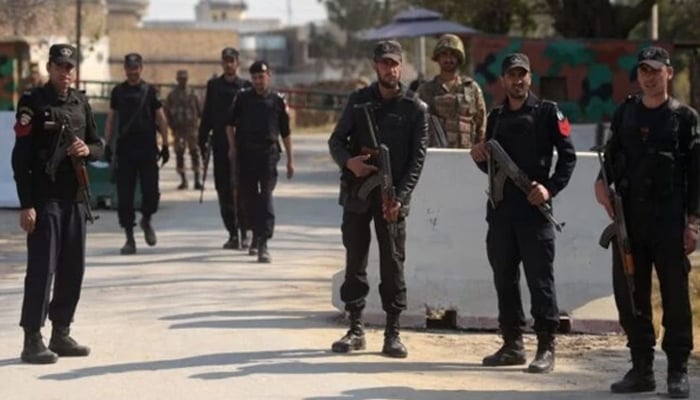
HANGU: Pakistani authorities have registered a terrorism case following a deadly drone attack on the Khazina Banda police checkpost in Hangu, where officials say militants carried out a coordinated assault that left several police personnel dead and dozens injured.

According to police, the case has been lodged at the Counter Terrorism Department (CTD) police station in Kohat on the complaint of the station house officer (SHO). The First Information Report (FIR) names members of the banned Tehreek-e-Taliban Pakistan (TTP) and includes 16 charges, including terrorism, murder, attempted murder and kidnapping.

The FIR states that the attackers used a drone as part of the assault before engaging security personnel in an intense exchange of fire.

According to the police report, DSP Diyar Khan was among 10 police officials martyred during the attack, while 33 other personnel sustained injuries in the fierce confrontation.

Authorities said security forces responded immediately, leading to a prolonged gun battle with the militants. The FIR claims that 15 militants were killed during the retaliatory operation carried out by police.

The attack also caused significant damage to government property. Police said the militants destroyed or damaged three armoured vehicles, along with other official vehicles and infrastructure at the checkpost.

Investigators have launched a detailed probe to identify all individuals involved in planning and executing the assault. Officials said evidence is being collected from the attack site, while intelligence agencies are assisting in tracing the network behind the operation.

The incident underscores the continuing security challenges facing law enforcement personnel in Khyber Pakhtunkhwa, where militant attacks have increased in recent years.

Authorities have vowed to bring all those responsible to justice, reaffirming that counterterrorism operations will continue against militant groups threatening public safety and national security. Officials also paid tribute to the police officers who lost their lives, describing their sacrifice as a testament to the force’s commitment to protecting citizens and maintaining peace in the region.

Similar Posts

  • |

    Documentary film on struggle for joint electorate …

    Karachi: A documentary titled A Separation Refused based on the Movement for Restoration of the Joint Electorate in Pakistan that was screened at Media Centre of SZABIST University Karachi. The 20-minute documentary, produced by the Centre for Social Justice and co-directed by Dawood Akhtyar Murad, traced the history of the Separate Electorate system and the movement for the restoration of the Joint Electorate in Pakistan. It highlighted the collective efforts of civil society organizations, political leaders, faith communities, and human rights advocates who campaigned for equal citizenship and inclusive democratic participation for religious minorities. Through historical narratives and personal testimonies, the documentary demonstrated how sustained advocacy contributed to democratic reforms and continues to inspire efforts towards equality, pluralism, social cohesion, and the protection of constitutional rights. The event also featured the screening of “Hum Juda Nahi,” a song reinforcing the themes of unity, equal citizenship, and peaceful coexistence. The event brought together university students, academics, lawyers, civil society representatives, human rights defenders, media professionals, political representatives, and religious leaders to reflect on an important chapter in Pakistan’s democratic history. Following the screenings, an interactive panel discussion explored the progress made towards equal citizenship and the challenges towards a democratic participation of religious minorities in Pakistan Speaking on the occasion, Anthony Naveed, Deputy Speaker of the Sindh Assembly, emphasized that a lack of public awareness remained one of the key challenges to advancing equal citizenship. He stressed the importance of strengthening community-based networks to build collective efforts capable of bringing meaningful and lasting change. Senior Advocate of the Supreme Court of Pakistan, Akhtar Hussain, who led a legal struggle against the separate elections, appreciated the documention of an important democratic struggle. He urged participants to carry forward the movement until equal political participation and equal citizenship were fully realized, emphasizing that equal participation is the right of every citizen. Dr. Riaz Ahmed Sheikh, Dean of the Faculty of Social Sciences and Education at SZABIST, highlighted the importance of upholding Article 22(1) of the Constitution. He called on the decision makers to discuss issues of equal citizenship and minority rights to mainstream that should play a more active role in promoting dialogue, constitutional values, and equal participation. Advocate Kalpana Devi called for legal and policy reforms to address discriminatory constitutional provisions and public policies that continue to limit equal rights and opportunities for religious minorities. Speaking at the event, Peter Jacob, Executive Director of the Centre for Social Justice, emphasized the need for constitutional reforms to strengthen equal citizenship. He called for a review of Articles 41 and 91 of the Constitution, which attach a precondition of being a to Muslim for the offices of the President and Prime Minister. Moreover, implementation of Article 22(1) of the constitution of Pakistan that guarantees unbiased education. In the open discussion, participants emphasized that this documentary film highlighting constitutional rights, democratic inclusion, and the experiences of religious minorities should be screened more widely through universities, arts councils, mainstream media, and other public platforms to encourage informed dialogue and greater public awareness. The event concluded with a shared commitment among participants to continue promoting constitutional rights, equal citizenship, democratic participation, and peaceful coexistence through sustained advocacy, public dialogue, and collaborative action. (END) William Sadiq: 0300 2062332 Aiman Zameer: 0316 4762471  

  • | | |

    Private sector lending surges 15% in FY2025–26, …

    Pakistan’s private sector borrowing recorded its strongest growth in four years during the fiscal year 2025–26, signaling renewed business confidence and improving economic activity, according to Adviser to the Finance Minister Khurram Shahzad. Shahzad said private sector credit expanded by nearly 15 percent over the fiscal year, with total lending reaching Rs1.138 trillion. He described the increase as a positive indicator of strengthening economic momentum, driven by greater financial support for businesses and productive sectors. According to the adviser, around 89 percent of the new loans were directed toward key segments of the economy, including manufacturing, wholesale and retail trade, and agriculture. These sectors have played a central role in boosting production, expanding commercial activity, and encouraging private investment. The manufacturing sector emerged as the largest beneficiary, receiving Rs657 billion in fresh financing. Shahzad noted that the substantial flow of credit reflects increased industrial expansion, higher production capacity, and growing confidence among manufacturers. He added that improved access to financing for the trade and agriculture sectors has further strengthened business operations and supported economic growth across the country. Shahzad emphasized that the surge in private sector lending demonstrates rising investor confidence and reflects Pakistan’s continued progress toward greater economic stability, stronger industrial performance, and a more resilient business environment.

  • | |

    JSMU issues separate notifications on Dr Nighat Sh…

    Jinnah Sindh Medical University (JSMU) has issued two separate notifications regarding the retirement and subsequent contractual appointment of Professor Dr Nighat Shah, daughter of former Sindh chief minister Syed Qaim Ali Shah. According to the university’s notifications, Dr Nighat Shah retired from government service on August 12, 2026, but was allowed to continue working at the university as a Professor of Gynaecology (BPS-21) for another three years on a contractual basis. The two notifications were issued separately. One formally announced her retirement, while the other approved her immediate appointment on a three-year contract following her retirement. According to the retirement notification issued by JSMU Registrar Dr Azam Khan, Dr Nighat Shah, who was serving as Professor of Gynaecology and Obstetrics in BPS-21 as well as Pro-Vice Chancellor, retired from government service with effect from the afternoon of August 12. The notification also referred to an earlier order dated October 6, 2025, under which she had been appointed Pro-Vice Chancellor of the university. Her tenure as Pro-Vice Chancellor was linked to her period of government service and was therefore due to end upon her retirement. However, a separate notification issued by the university states that, following a decision by the Sindh government and approval from the competent authority, the Syndicate, Dr Nighat Shah was permitted to continue her services at JSMU as Professor of Gynaecology for three years on a contractual basis. The new contract will take effect from August 13, 2026, just one day after her retirement from government service. The arrangement means that, according to the university’s own notifications, Dr Nighat Shah formally retired from government employment on August 12 but resumed her professional duties at the same institution without any break from August 13 under a three-year contractual appointment. The development has drawn attention because of the timing of the two notifications, with the retirement order followed immediately by the contractual appointment. Dr Nighat Shah was appointed Pro-Vice Chancellor of JSMU in October 2025. Her new contractual role, however, is specifically as Professor of Gynaecology rather than as Pro-Vice Chancellor. The three-year contract will allow her to continue teaching and providing academic and professional services at the university until the completion of the approved contractual period, subject to the terms and conditions of her appointment.

  • | |

    Youth dialogue calls for climate action in Punjab

      A youth-led dialogue on climate action and greater youth participation in policymaking brought together parliamentarians, policymakers, environmental experts, civil society representatives and young people in Punjab. Pak Mission Society and Forman Christian College University jointly organised the event, where participants discussed climate policy, legislation and the role of young people in shaping environmental decisions. Parliamentary Secretary for Environment Kanwal Liaqat said Punjab Chief Minister Maryam Nawaz had identified climate change as a major priority after assuming office. She said the provincial government had since introduced several measures to address environmental challenges. Liaqat said brick kilns across Punjab must use zigzag technology to operate, while women environmental inspectors were helping strengthen monitoring and enforcement. She added that authorities were taking action against industries that pollute the air and water and were working to improve the condition of canals, streams and rivers. The dialogue also examined gaps in Punjab’s climate laws and policies. Members of Green Clubs presented five climate demands developed by children and young people, urging the government to give youth a stronger role in climate governance and policymaking. The event also featured a session titled “From Dreams to Reality: Advancing Youth-Led Climate Action in Pakistan,” moderated by environmental law expert Ahmed Rafi Alam. The concluding discussion focused on practical measures to address young people’s concerns and develop a roadmap for youth-led climate action in Pakistan. Participants included Rabia Chaudhry, Waqil Ahmed Khan, Dur-e-Shahwar, Dr Younas Zahid, Ahmed Rafi Alam, Hafiz Usman, Dr Abdul Qadir, Khurram Tauqeer and Shakeela Firdous.

  • Pakistan holds first National Self-Care Dialogue on health

    On International Self-Care Day, Pakistan’s first national dialogue on self-care brought together Joint Secretary, Ministry of National Health Services Regulations and Coordination, Syed Salahuddin Ahmed; Alison Blackburne, British Deputy High Commissioner to Karachi; and senior representatives from government, healthcare institutions, academia, development organisations, business, civil society and the media. Convened by Haleon Pakistan, the dialogue highlighted the importance of advancing self-care as a public health priority to improve health outcomes, strengthen health literacy and support a more resilient healthcare system. The inaugural Pakistan Self-Care Dialogue, titled “Self-Care as a Public Health Imperative,” was led by Haleon Pakistan Limited, makers of leading consumer health brands including Panadol, Sensodyne and CAC-1000 Plus, as part of the global observance of International Self-Care Day on 24th July. Marked annually around the world, the day raises awareness of self-care as an essential pillar of public health, promoting prevention, health literacy and empowering individuals to take greater ownership of their health. The event featured a welcome address by Qawi Naseer, CEO and General Manager of Haleon Pakistan Limited, a keynote address by the Joint Secretary, Syed Salahuddin Ahmed, and remarks by Alison Blackburne, British Deputy High Commission. This event also included a dialogue-based panel discussion featuring Dr. Ahson Qavi Siddiqi, CEO Sindh Healthcare Commission, Qawi Naseer, Dr. Samar Fatima, Associate Director of Aga Khan University’s Centre of Clinical Best Practices and Dr. Humaira Jamshed Associate Professor of Bioscience at Habib University, Dr. Zulfiqar Ahmed Siddiqui (MD, MBBS, MPH), Health Specialist at UNICEF. “A healthier Pakistan cannot be built through treatment alone. Prevention, health literacy and responsible self-care must become part of everyday life. By working together across sectors, federal and provincial, we can empower people to make informed health decisions and build a stronger, more resilient healthcare system,” said the Joint Secretary, Syed Salahuddin Ahmed, sharing the Ministry’s perspective during his keynote address.

  • | | |

    PRL and SSGC face Senate anger over missing inform…

    Islamabad: State owned petroleum companies Pakistan Refinery Limited (PRL) and Sui Southern Gas Company (SSGC) faced serious criticism in the Senate after lawmakers expressed dissatisfaction over missing information, failure to follow committee directions and concerns about company management. The Senate Standing Committee on Petroleum questioned the performance and accountability of government owned petroleum companies and considered taking strict action against officials who failed to cooperate with parliamentary oversight. During the meeting chaired by Senator Umer Farooq, the committee reviewed the appointment criteria for chairpersons and managing directors of petroleum companies, the structure of their boards and progress on previous committee recommendations. The committee took serious notice of the absence of the Managing Director of Pakistan Refinery Limited during the meeting. Members expressed concern that PRL, despite being a state-owned company, did not provide the required information to the committee. The committee considered initiating a privilege motion against the Managing Director of PRL for failing to appear and provide necessary details. The Petroleum Division was directed to submit complete information about the boards of directors and senior management of all government owned petroleum companies. The committee said transparency in leadership appointments and company management is necessary because these organisations deal with matters directly linked to the national economy and public interest. The committee also expressed dissatisfaction over the performance of Sui Southern Gas Company and its failure to implement previous recommendations. Members said SSGC had not provided details of its board of directors despite earlier instructions. The committee also raised concerns over remarks made by SSGC that were considered discouraging toward the Senate Standing Committee’s role in discussing important matters. The committee considered moving a privilege motion against SSGC over non compliance with its directions. The Petroleum Division was further directed to review the tenure of board members who have remained in positions beyond the approved period and submit a detailed report. The committee also raised concerns over the absence of performance audits of oil rigs. Authorities were directed to provide the required audit report within seven days so that the committee could review the performance and efficiency of petroleum sector operations. Members said proper audits are necessary to identify problems, improve production and ensure better use of national resources. The committee also reviewed issues related to LPG quotas and licensing. The Oil and Gas Regulatory Authority was directed to hold consultations with all relevant stakeholders and submit a detailed report to the committee. Senators stressed that petroleum companies must improve governance, follow parliamentary instructions and ensure public institutions operate with transparency. The committee said accountability in state owned petroleum companies is essential to protect national interests and improve confidence in the energy sector.

Leave a Reply

Your email address will not be published. Required fields are marked *