black holes real

Black holes are real

In 1915, Albert Einstein published his ground-breaking theory of general relativity, radically altering humanity’s understanding of gravity. Rather than treating gravity as an invisible pulling force between masses, Einstein demonstrated that heavy objects warp the very fabric of space and time. Soon after, physicists realized that Einstein’s field equations contained a dramatic prediction. If enough mass were compressed into a small enough region, space-time would curve so intensely that nothing, not even light, could escape.

However, Einstein himself remained deeply skeptical of these mysterious cosmic objects, which would later be named black holes. He believed that such extreme entities were merely theoretical mathematical artifacts products of idealized, perfectly symmetrical equations that could never exist in the chaotic reality of the actual universe. Einstein argued that real collapsing stars, possessing natural asymmetries and rotational forces, would scatter or bounce rather than implode into a point of infinite density.

The Breakthrough of 1965

Ten years after Einstein’s death in 1955, a British mathematician and physicist named Roger Penrose forever settled the debate. In a revolutionary 1965 paper, Penrose provided the first rigorous mathematical proof that black holes are not merely theoretical curiosities, but robust and inevitable consequences of general relativity.

Penrose realized that traditional analytical methods were insufficient to tackle the messy reality of stellar collapse. Instead, he introduced novel geometrical and topological concepts to physics, most notably the concept of a trapped surface.

A trapped surface is a two-dimensional closed boundary where all light rays, regardless of whether they are directed inward or outward, are forced to converge toward the center. Once a collapsing star forms a trapped surface, an event horizon is established, creating a point of no return.

Penrose proved that as long as gravity remains attractive and energy remains positive, the collapse cannot be stopped by any physical force or asymmetrical shape. The collapsing matter is driven relentlessly toward a singularity: a central region where density and space-time curvature become infinite, and where classical physics breaks down entirely.

Transforming Astrophysics and Modern Cosmology

Penrose’s singularity theorem fundamentally altered how scientists viewed the cosmos. It proved that black hole formation is a robust phenomenon that regularly occurs across the universe whenever massive stars exhaust their nuclear fuel and collapse under their own gravitational weight.

Furthermore, Penrose’s mathematical techniques opened completely new avenues of theoretical research:

  • The Big Bang Origin: Inspired by Penrose’s methods, a young Stephen Hawking applied similar topological techniques in reverse to show that the entire universe must have originated from an initial space-time singularity at the moment of the Big Bang.
  • Penrose Diagrams: Penrose introduced conformal visual diagrams that allowed physicists to map out the infinite causal structures of space-time on manageable two-dimensional surfaces.
  • The Information Paradox: Defining the strict causal properties of black hole event horizons laid the groundwork for decades of theoretical inquiry into how quantum mechanics interacts with extreme gravity.

From Theoretical Paper to Nobel Prize

For decades, Penrose’s work remained largely theoretical because observational technology could not directly detect black holes. However, in the 21st century, astrophysics caught up with Penrose’s mathematics. Ground-breaking discoveries—such as the detection of gravitational waves from colliding black holes by LIGO in 2015 and the Event Horizon Telescope’s first direct image of a black hole’s shadow in 2019—provided unequivocal empirical evidence supporting his theory.


Recognizing the immense impact of his 1965 breakthrough, the Royal Swedish Academy of Sciences awarded Roger Penrose half of the 2020 Nobel Prize in Physics. More than half a century after its publication, Penrose’s paper stands as the single most critical contribution to general relativity since Einstein’s original masterpiece, proving that the most extreme objects in the universe are a tangible reality.

Similar Posts

  • Childhood divorce linked to stroke risk

    A new study suggests that people whose parents divorced during their childhood may have a higher risk of having a stroke later in life. The research, published in the journal PLOS One looked at data from more than 13,000 adults aged 65 and older. Researchers found that people whose parents divorced before they turned 18 were about 60% more likely to have experienced a stroke than those who grew up in families where their parents stayed together. Lead researcher Dr. Mary Kate Schilke, a psychology lecturer at Tyndale University in Toronto said the increased risk remained even after taking other factors into account including smoking low physical activity lower income and education levels. She said childhood parental divorce was still linked to a 61% higher risk of stroke in later life. A stroke happens when blood flow to part of the brain is blocked or when a blood vessel in the brain bursts.  It can cause brain damage long term disability or even death if not treated quickly. The researchers stressed that this was an observational study meaning it does not prove that parental divorce directly causes strokes. However childhood family stress may be connected to other health conditions that increase stroke risk such as depression diabetes smoking and obesity. Doctors say recognizing the warning signs of a stroke can save lives because early treatment is very important. Common stroke symptoms include. Sudden weakness or numbness in the face arm or leg especially on one side of the body. •Trouble speaking or understanding speech. •Sudden vision problems in one or both eyes. •Difficulty walking dizziness loss of balance or poor coordination. Experts say anyone with these symptoms should seek emergency medical care immediately as fast treatment can greatly improve recovery.

  • |

    The comfort of familiar stories

    In a world that constantly demands novelty, the act of re-reading can feel like a radical act of slowing down. The digital feeds update every second and endless streams of new books hit shelves each month. In this case, opening a novel whose plot twists you already know by heart, whose characters are familiar companions, and whose ending holds no surprises might seem inefficient to an outsider. Yet, psychologists and literary scholars recognize that re-reading is not a passive repetition. It is a claimed psychological profound and an essential dimension of human storytelling. At its core, returning to a beloved text satisfies a deep need for emotional regulation. Life is unpredictable, chaotic, and frequently overwhelming. When we navigate complex personal challenges or heightened anxiety, processing entirely new information requires significant cognitive effort. Re-reading, by contrast, lowers the mental load. It offers what psychologists call predictable comfort. Knowing exactly how a narrative conflict resolves provides a soothing sense of control and stability. In the pages of a familiar book, the universe behaves according to rules we already understand. The phenomenon offers a safe harbor when the real world feels chaotic. However, the appeal of re-reading goes far beyond simple comfort. It also acts as a mirror reflecting our own internal growth. Heraclitus famously remarked that you cannot step into the same river twice, for it is not the same river, and you are not the same person. The same principle applies to literature. The physical words printed on the page do not change over time, but we do. When you re-read a book after five, ten, or twenty years, you bring a completely different set of life experiences, heartbreaks, victories, and insights to the text. A passage that meant little to you as a teenager might suddenly strike depth in adulthood. A character you once viewed as an antagonist might reveal subtle vulnerabilities that evoke your empathy today. In this way, re-reading becomes an intimate dialogue between your past and present selves. It is a clear timeline of your emotional and intellectual evolution. Additionally, re-reading changes our focus from what happens next to how the story is constructed. Our brains are liberated to appreciate the finer nuances of literary craft. We begin to notice subtle foreshadowing, thematic motifs, delicate sentence rhythms, and character moments that flew past us during our breathless initial read. Ultimately, re-reading reminds us that literature is not a checklist of titles to be consumed and discarded. The greatest books are living spaces. The places we can inhabit again and again, finding new rooms every time we cross the threshold.  

  • Rabies still kills thousands in Pakistan

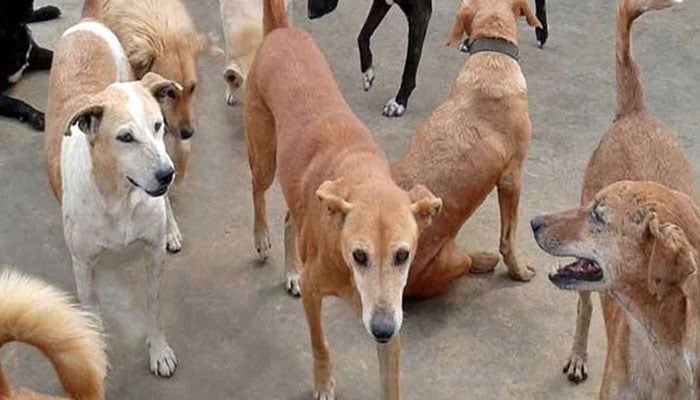
    Every year millions of people in Pakistan are bitten by dogs, and thousands are believed to die from  rabies a deadly viral disease that can almost always be prevented with timely treatment. Health experts say Pakistan still does not have a strong nationwide system to track rabies cases. Because of this around 5,000 people are estimated to lose their lives each year after being bitten by rabid dogs. Rabies is a viral infection that attacks the brain and nervous system.  Once symptoms appear the disease is almost always fatal with a survival rate of less than 1%. The first signs of rabies usually develop about six weeks after a bite from an infected animal. Common symptoms include fever headache body aches a sore throat and difficulty swallowing.  As the disease progresses it becomes much more dangerous. Children living in rural areas and on the outskirts of cities are among the most affected groups. A study published in the international journal Acta Tropica found that the high number of rabies cases in Pakistan is linked to low public awareness delays in seeking medical care and weak disease prevention efforts. Health experts say that immediate medical treatment after a dog bite including wound cleaning and timely vaccination can prevent rabies. They also welcomed the federal government’s recent in principle approval of the National Rabies Prevention and Control Framework calling it an important step toward improving rabies prevention and saving lives.

  • Why walking slows with age

    Getting older is a natural part of life and it cannot be stopped. But have you ever noticed that people often walk more slowly and feel tired more quickly as they age? A new study may explain why this happens. Researchers from Flinders University and the University of Canberra in Australia studied how walking changes with age.  They found that as people get older the body starts to focus more on safety and balance than on walking speed. The study included 107 healthy people between 26 and 86 years old. Researchers examined how their bodies moved while walking. They found that movement around the ankles and other muscles changes with age. The ankle muscles play an important role in keeping the body balanced and helping people move forward. As people age the body appears to use more muscle effort to stay stable and upright. Older adults may move the muscles around their ankles in a way that makes the ankle joints stiffer.  This can improve balance and reduce the risk of losing stability. However there is a downside. Using the muscles this way requires more effort which can make older people feel tired sooner and walk more  slowly. Researchers believe that the nervous system also becomes more focused on preventing falls and maintaining stability with age. The good news is that regular physical activity can help maintain movement and muscle strength. Exercises that improve balance and strengthen the muscles may help older adults stay active and move more confidently.

  • The tragic fate of Aurangzeb’s rebellious daughter

    In the residential quarters of Nawan Kot in Lahore stands a crumbling Mughal monument. To a casual bystander, it appears as little more than a neglected relic surrounded by modern brick houses and the distant roar of traffic from Multan Road. Yet, local legend fiercely protects this spot as the resting place of Princess Zeb-un-Nissa, the eldest daughter of the orthodox Mughal Emperor Aurangzeb. Historians, however, tell a very different story. Official records indicate that Zeb-un-Nissa died in Delhi at the Salimgarh Fort after two decades of imprisonment and was buried outside the Kashmiri Gate at the Tees Hazari gardens. Her original tomb was later dismantled during the British era to make way for a railway line. So how did a city hundreds of miles away come to claim this defiant, romantic princess as its own? The answer lies not in verified architectural blueprints, but in the psychological and political pulse of 17th-century Lahore. Zeb-un-Nissa was an anomaly in the puritanical Mughal court of her father. She was highly educated, exceptionally wealthy, a scholar of theology, and a devout patron of the arts. Under the secret pen name Makhfi (The Hidden One), she wrote expressive, Sufi-inspired poetry that directly challenged the orthodox ethos. Her political inclinations further alienated her from her father. Zeb-un-Nissa had strong affinities for her uncle, Prince Dara Shikoh: Aurangzeb’s primary rival for the throne. It was originally betrothed to his son, Prince Suleiman Shikoh. After Aurangzeb executed both Dara and Suleiman during the violent war of succession, Zeb-un-Nissa reportedly vowed never to marry. Later in life, her secret correspondence supporting her rebellious younger brother, Prince Muhammad Akbar, ultimately led to her downfall and life imprisonment. Lahore’s local folklore transformed her political tragedy into a narrative of star-crossed love. Popular stories in the city recount a passionate, poetic romance between Zeb-un-Nissa and Akil Khan Razi, the Governor of Lahore. According to local legend, after Emperor Aurangzeb forbade their union, the heartbroken princess renounced her royal luxury and retreated to a self-imposed prison in her private estate near Chauburji. In this garden sanctuary, she allegedly ran a massive public kitchen (langar) to feed dervishes, beggars, and travelers, using poetic riddles on slips of paper to communicate with the needy and eventually, to secretly reconnect with her disgraced lover. When Aurangzeb discovered their continued meetings, legends claim he ordered Akil Khan’s brutal execution and permanently confined his daughter within the garden walls. While these romantic tales lack strict historical evidence, they reflect a deeper cultural reality. Lahore had been the favorite city of Dara Shikoh, who poured immense imperial funds into its cultural and architectural enrichment. When Aurangzeb seized power, executed Dara, and shifted the imperial capital away from the city, Lahore was left politically marginalized and financially neglected. In an age where open political dissent against an absolute monarch was impossible, the citizens of Lahore used rumors, myths, and urban legends as their primary medium of protest. Zeb-un-Nissa: a brilliant woman who shared Dara Shikoh’s inclination toward Sufism, loved the city of Lahore. She publicly defied her father’s authority became the ultimate symbol of the city’s lost artistic spirit. By adopting her memory, attributing the Chauburji gardens to her patronage, and declaring the tomb in Nawan Kot as her final resting place, Lahore claimed the rebellious princess as its own. In doing so, the city permanently etched her spirit of resistance into its own historical identity.  

  • Spot the mountain lion in seconds

    It first glance this may look like an ordinary picture of a forest.  But there is actually a mountain lion hiding somewhere in the scene. The picture appears to have been taken in a US national park. A deer can be seen standing in the area with its back facing the camera.  What makes the scene interesting is that the deer has no idea that a mountain lion is hiding very close to it. If you are having trouble finding the mountain lion imagine how difficult it would be for the deer to notice its hidden predator. Only a few people can quickly spot the animal in this picture. Finding it requires careful observation and good eyesight. Take a close look at every part of the image and see if you can find the hidden lion. Did you find it? If not here is the answer. Look carefully toward the right side of the picture.  You can see the mountain lion’s face hiding among the bushes. The animal is so well hidden that it almost blends into its surroundings making this picture a great test of your observation skills.

Leave a Reply

Your email address will not be published. Required fields are marked *