man breaks fish

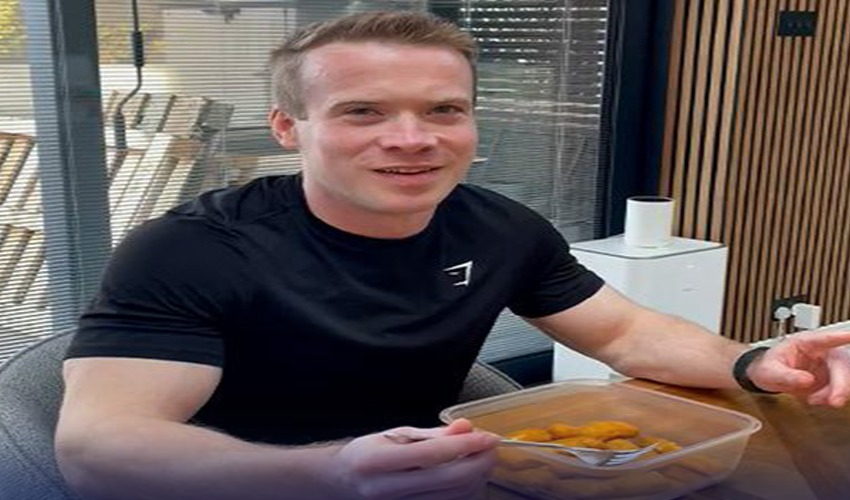
Man breaks fish finger record

A 32 year old man from the UK has earned a Guinness World Records title after eating 15 fish fingers in just one minute.

Nathan Davis decided to chase a world record after recently winning more than $130,000 on a TV game show.

He said he chose fish fingers because he had already taken part in several informal eating challenges and felt confident with the food.

After setting the record Davis said he was happy to become a Guinness World Record holder even if it was for eating fish fingers.

He added that if the fish fingers had been allowed to cool a little more he believed he could have eaten even more. Still he said he was pleased with his achievement.

Similar Posts

  • Vaping may be as harmful as smoking

    Smoking is well known to cause lung cancer heart disease and breathing problems.  However many people believe that vaping is a safer alternative. New scientific research suggests this belief may be misleading. Studies show that using e-cigarettes can also harm the body and may cause damage similar to that seen in cigarette smokers. Experts say switching from cigarettes to vaping should not be considered completely safe. Although e-cigarettes do not contain traditional tobacco they still expose the body to harmful substances. Research published in 2026 by the University of New South Wales along with findings from scientists at the University of Southern California found that vaping can damage the DNA in cells of the mouth and lungs. DNA is the body’s genetic blueprint. It controls how cells grow and function. When DNA is damaged the risk of serious diseases including cancer can increase. Researchers also found that sweet and fruit flavored vape products may contribute to DNA damage. People who use pod based vaping devices showed even higher levels of cell damage in the study. According to the scientists vaping may increase the risk of cancers of the mouth and lungs.  The research also found that DNA damage in people who vape was almost as severe as the damage seen in cigarette smokers. Although vaping and smoking work differently both can seriously affect health. Health experts advise people not to think of vaping as a harmless option. Every vaping session may damage important cells in the body. They recommend avoiding vaping altogether and raising awareness about its possible health risks.

  • 5 Makeup secrets used by pro artists

    Professional makeup artists know how to bring out natural beauty and create a polished look. Their techniques can make makeup look smoother brighter and last longer. Here are five easy makeup tips you can try at home. Never skip primer Makeup artists often use primer before foundation. It creates a smooth base by helping blur the look of pores and fine lines. Choose a primer according to your skin type. For example, an oil-control primer can be useful for oily skin. Use concealer smartly Concealer is great for covering dark circles spots and uneven areas. But it can also be used to brighten and shape the face. Apply a small amount under the eyes along the bridge of the nose and on other high points of the face for a fresh brighter look.  Master your blending Good blending can make a big difference. Makeup artists carefully blend different shades and textures so there are no harsh lines. Whether you are blending eyeshadow or smoothing out foundation take your time for a more natural and professional finish. Try multi use products Makeup artists often choose products that can do more than one job. For example a cream blush can sometimes be used on the cheeks and lips. Using multi purpose products can save time reduce the number of products you need and make your makeup routine easier. Set your makeup properly Setting your makeup helps it stay in place for longer. Makeup artists may use setting powder setting spray or both depending on the look. For extra staying power lightly apply powder under the eyes and leave it for a few minutes before gently brushing away the excess. With these simple techniques you can make your everyday makeup look smoother fresher and more polished.

  • Millions to witness rare total solar eclipse

    Millions of people Millions of people around the world will have the chance to watch a rare total solar eclipse on August 12. According to astronomers the total eclipse will be visible in Greenland Iceland Spain, parts of the North Atlantic Ocean and northern Russia. In these places the Moon will completely cover the Sun allowing people to see the Sun’s outer atmosphere known as the corona for a short time. The eclipse will not be visible in Arab countries. However several areas in North Africa, especially parts of West Africa will experience a very large partial solar eclipse. In Algeria the Moon is expected to cover about 96% of the Sun making it one of the best places in Africa to view the event. In Rabat, Morocco around 88% of the Sun will be covered. Tunisia is expected to see about 50% coverage while Mauritania could see around 46%. Astronomers have warned people not to look directly at the Sun during the eclipse as it can seriously damage the eyes. They advise using certified solar eclipse glasses or other safe viewing equipment around the world will have the chance to watch a rare total solar eclipse on August 12. According to astronomers the total eclipse will be visible in Greenland, Iceland Spain, parts of the North Atlantic Ocean and northern Russia. In these places the Moon will completely cover the Sun allowing people to see the Sun’s outer atmosphere known as the corona, for a short time. The eclipse will not be visible in Arab countries. However several areas in North Africa especially parts of West Africa will experience a very large partial solar eclipse. In Algeria the Moon is expected to cover about 96% of the Sun making it one of the best places in Africa to view the event. In Rabat, Morocco around 88% of the Sun will be covered. Tunisia is expected to see about 50% coverage while Mauritania could see around 46%. Astronomers have warned people not to look directly at the Sun during the eclipse as it can seriously damage the eyes. They advise using certified solar eclipse glasses or other safe viewing equipment.

  • |

    The limits and depth of human consciousness

    For millions of years, the survival of living species depended almost entirely on practical adaptations. The core of living was finding food, securing shelter, avoiding predators, and reproducing. Yet, at a crucial juncture in evolutionary history, Homo sapiens began engaging in a behavior that offered no immediate physical utility like making art. From red ocher hand stencils on cave walls in Sulawesi and Western Europe to intricate bone flutes and sculpted figurines, early humans devoted valuable time and energy to symbolic creation. Today, neuroscientists, cognitive psychologists, and evolutionary anthropologists increasingly view art not as a secondary cultural luxury, but as a foundational hallmark of human consciousness. The Evolutionary Emergence of Symbolic Thought The birth of artistic expression marks a profound cognitive transition. While many animals exhibit complex behaviors, these actions are largely instinctual and functional. Human art, by contrast, relies on abstract symbolic thinking. The capacity to let one object, shape, or sound represent an idea, emotion, or absent reality. When an early human carved a figure or painted a thundering herd of bison onto rock, they were not merely copying their surroundings. They were projecting an internal mental world onto an external physical canvas. This ability to externalize subjective experience required a sophisticated architecture of consciousness, including robust working memory, metacognition (thinking about one’s own thinking), and a developed theory of mind. It’s the understanding that others possess distinct mental states and can interpret shared symbols. The Neurobiology of Aesthetic Experience Modern neuroimaging reveals that creating and contemplating art engages large-scale, interconnected brain networks. When a person immerses themselves in a painting, music, or literature, the Default Mode Network (DMN) works with sensory and emotional circuits. Artistic engagement triggers a dynamic dialogue between the visual or auditory cortex, the limbic system (which processes emotion), and executive regions in the prefrontal cortex. This complex cross-talk allows humans to experience qualia. The subjective, qualitative feel of conscious experiences. A visual composition does not simply register as light wavelengths in the brain; it evokes nostalgia, awe, melancholy, or inspiration. This capacity to synthesize raw sensory inputs with deep emotional resonance and reflective thought is a unique feature of high-level conscious awareness. Lived Experience versus Machine Patterning In an era dominated by artificial intelligence algorithms capable of generating hyper-realistic images and musical compositions in seconds, the relationship between art and consciousness has taken on renewed urgency. While generative models analyze billions of data points to predict and replicate aesthetic patterns, they operate entirely without subjective awareness, intent, or emotional feeling. Human art originates from a grounded biological reality: the lived experience of mortality, joy, heartbreak, bodily sensation, and social existence. The power of a masterpiece lies not merely in its formal technique, but in the implicit bridge it constructs between the inner world of the artist and that of the observer. Art is fundamentally a dialogue of consciousnesses. It is a mechanism through which one conscious entity communicates what it feels like to exist. A Mirror to Human Identity Ultimately, art serves as both a product and a mirror of conscious awareness. It enables individuals to simulate hypothetical scenarios, process complex social dynamics, and navigate existential questions about purpose and mortality. By translating internal emotional states into tangible forms, humans construct shared cultural meaning and foster deep social cohesion.   As science continues to explore the mystery of how physical brain matter generates subjective experience, art remains our most visible and enduring cognitive fingerprint. It stands as compelling proof that human consciousness is defined not just by how we perceive the objective world, but by our infinite capacity to imagine and construct new ones.

  • YouTube adds custom thumbnails for shorts

    YouTube has launched a long awaited feature that allows creators to upload custom thumbnails for their YouTube Shorts. According to reports the new feature is currently available for creators who are part of the YouTube Partner Program (YPP). They can now choose and upload their own thumbnail images instead of relying on a frame from the video. This update gives creators more control over how their Shorts appear. They can design eye catching thumbnails that match their brand and make their videos more attractive to viewers. YouTube said custom thumbnails have been one of the platform’s most requested features. The company is rolling it out first to Partner Program members and plans to expand access to more creators in the future. Previously Shorts creators could only select a still frame from the video as the thumbnail making it harder to create a consistent look or build a strong brand identity. The new feature aims to solve that problem and improve the overall presentation of Shorts.

  • Why popcorn explodes when heated

    Popcorn is a favorite snack for people of all ages, especially during movie nights. But have you ever wondered why only certain corn kernels pop while regular corn does not? Food experts say the answer lies in the kernel’s unique structure moisture and the way it reacts to heat. Not all corn can turn into popcorn. A special type of corn called Zea mays everta is used because its kernels have a hard outer shell and a soft starchy center with a small amount of water inside. Although popcorn kernels look dry they contain about 13–15% moisture. When heated, the water inside turns into steam. Since the outer shell is very strong the steam cannot escape causing pressure to build inside the kernel. As the pressure keeps increasing the kernel acts like a tiny pressure cooker. Eventually the shell bursts with a popping sound.  The hot steam quickly escapes and the soft starch inside expands. Within seconds it cools and forms the fluffy crispy popcorn we enjoy.  A popped kernel can become 30 to 40 times larger than its original size. Sometimes a few kernels do not pop. Experts say this usually happens because they do not contain enough moisture to create the pressure needed to burst. Tiny cracks in the outer shell can also let steam escape too early preventing the kernel from popping.  Heating the kernels at a temperature that is too low may also cause them to dry out before enough pressure builds up. Popcorn can be made in several ways including on the stove in an air popper or in a microwave. Microwave popcorn bags and the oil inside them help spread heat evenly while oil on the stove helps heat the kernels more consistently. Air poppers on the other hand use only hot air and do not require oil. According to food scientists the secret behind perfect popcorn is the combination of a strong outer shell the right amount of moisture steam pressure and the natural expansion of starch when heated.

Leave a Reply

Your email address will not be published. Required fields are marked *