beyond public finance

Beyond Public Finance: Towards  Constitutional Po…

The first part of this series argued that Pakistan’s recurring fiscal crises cannot be understood through conventional economic analysis alone. The distinction between public finance and Constitutional Political Economy (CPE) must now be explained. Both examine the role of the state in economic life, but they begin from different assumptions and ask fundamentally different questions.

Traditional public finance is primarily concerned with what governments ought to do. In the classical framework associated with Richard Musgrave, fiscal policy performs three principal functions: allocation of resources, redistribution of income and macroeconomic stabilisation.

Richard Musgrave

Governments provide public goods, correct market failures, reduce unacceptable inequalities and use taxation and expenditure to promote stability and growth. This framework remains indispensable for analysing budgets, taxes and public expenditure. The International Monetary Fund’s discussion of Musgrave’s framework confirms its enduring influence on fiscal analysis.

The difficulty arises when the state is treated as a single, impartial institution pursuing social welfare. In the real world, governments consist of politicians, bureaucrats, legislators, judges, regulators and numerous organised interests. Each operates under incentives and constraints. Political actors do not cease to pursue power, institutional advantage or personal interest merely because they enter public office.

A tax system may therefore be inefficient not because its designers misunderstood economic theory, but because inefficiency benefits influential constituencies. An exemption may survive not because it promotes investment, but because its beneficiaries possess political power. Public expenditure may be allocated not according to social need, but according to the ability of institutions and groups to influence the budgetary process.

Public finance generally asks: what tax would be efficient, equitable and productive? CPE asks a prior question: what political and constitutional arrangements will cause those in authority to adopt and administer such a tax fairly?

James M. Buchanan
James M. Buchanan

This difference emerged most clearly in the work of James M. Buchanan, who was awarded the 1986 Nobel Prize for developing the contractual and constitutional foundations of economic and political decision-making. Buchanan argued that economists must specify their model of politics before recommending policies. They should examine the “constitution of economic polity”—the rules and constraints within which political actors make decisions—rather than assuming that government automatically acts as a benevolent guardian of collective welfare.

Gordon Tullock
Gordon Tullock

In The Calculus of Consent, Buchanan and Gordon Tullock applied economic reasoning to collective decision-making. They distinguished between choices made within existing rules and choices concerning the rules themselves. Ordinary politics concerns decisions taken under established constitutional arrangements. Constitutional political economy examines how those arrangements should be designed, whose consent they require and what incentives they create.

The distinction may be understood through the analogy of a game. Public finance often studies the moves made by players: whether a tax rate should be increased, expenditure reduced, subsidies withdrawn or borrowing limited. CPE examines the rules of the game: who may impose a tax, who may approve expenditure, how revenues are distributed, what majorities are required, which institutions are accountable and what remedies exist when power is abused.

Geoffrey Brennan
Geoffrey Brennan

The rules determine the range of possible outcomes. Replacing one finance minister, tax administrator or economic adviser cannot fundamentally alter results if the institutional incentives remain unchanged.

Buchanan and Geoffrey Brennan developed this insight further in The Reason of Rules. Their focus was not merely upon particular policy choices but upon the rules governing political and market interaction. CPE therefore does not ask only whether a government policy appears desirable. It asks whether the institutional process through which it is adopted protects citizens against arbitrary, discriminatory or predatory use of power.

This approach does not imply hostility towards the state. A capable state is essential for education, healthcare, infrastructure, environmental protection, social security and economic development. CPE merely refuses to assume that state power will automatically be exercised for these purposes. A strong state without constitutional restraints may become strong against ordinary citizens while remaining weak before powerful interests.

Ibn Khaldun
Ibn Khaldun

These insights are neither exclusively modern nor exclusively Western. Centuries before the emergence of public choice theory, Ibn Khaldun analysed taxation as part of the broader rise and decline of states. He observed that governments in their earlier stages could obtain substantial revenues from relatively moderate assessments, whereas later rulers frequently imposed heavier burdens but collected less as incentives weakened, production contracted and coercive expenditure expanded.

Arthur B. Laffer
Arthur B. Laffer

Arthur B. Laffer subsequently acknowledged that the proposition associated with the Laffer Curve was not his invention and specifically identified Ibn Khaldun as an important precursor. Ibn Khaldun’s contribution, however, went far beyond a relationship between tax rates and revenue: he connected fiscal policy with political legitimacy, administrative expansion, elite consumption and institutional decline.

The Constitution of Pakistan itself demonstrates that taxation is not merely an economic instrument. Article 77 provides that no federal tax may be levied except by or under the authority of an Act of Parliament. The provision embodies the constitutional principle that taxation requires lawful legislative authority; it is not simply an administrative technique for raising revenue.

Article 160 creates the National Finance Commission and provides the framework for distributing specified revenues between the Federation and the provinces. Article 160(3A) further protects the provincial share by declaring that it cannot be lower than that provided under the preceding Award. These provisions represent a constitutional bargain concerning political authority, federalism and access to public resources. Revenue distribution is consequently not just an accounting exercise. It forms part of the structure of the federation itself.

Article 140A requires the provinces to establish elected local governments and devolve political, administrative and financial responsibility to them. Fiscal policy cannot produce accountable public services when decision-making remains remote from citizens and constitutionally required devolution is treated as optional.

Articles 37 and 38 contain important commitments regarding social justice, education, economic well-being, reduction of inequality and provision of basic necessities. They are Principles of Policy rather than directly enforceable Fundamental Rights, and Article 30 limits their judicial enforceability. Their inclusion nevertheless demonstrates that the constitutional purposes of revenue collection extend beyond achievement of numerical tax targets. The state collects resources to fulfil social and economic obligations, not merely to satisfy accountants or external creditors.

Douglass North
Douglass North

Formal constitutional rules, however, tell only part of the story. Institutions also consist of unwritten conventions, established practices and informal distributions of power. Douglass North emphasised that economic performance depends upon the incentive structure embodied in institutions. Technology, investment and human capital cannot by themselves explain development when institutional arrangements reward unproductive behaviour or obstruct productive activity.

This insight is particularly relevant to Pakistan. The country possesses tax laws, parliamentary procedures, audit institutions, regulatory bodies and an elaborate administrative structure. The problem is not the complete absence of formal rules. It is the divergence between rules as written and rules as applied.

A salaried person may face automatic deduction while a politically influential group secures preferential treatment. A documented enterprise may bear numerous withholding obligations while informal competitors remain outside effective enforcement. Digital information may be abundant, but its use may be selective. A tax exemption may be legally enacted, but the political bargaining that produced it may remain invisible.

Orthodox analysis tends to describe these outcomes as weaknesses of implementation. CPE regards them as predictable consequences of the prevailing incentive structure. What appears to be administrative failure may, from the perspective of its beneficiaries, be a successfully maintained political arrangement.

The difference is crucial. A reformer guided only by public finance may propose a better tax base, a lower rate or improved technology. A reformer guided by CPE must additionally ask who will resist the reform, who will obtain exceptions, which institution will enforce it, what safeguards will protect taxpayers and whether those imposing the burden will themselves be subject to the same rules.

Pakistan needs both approaches. Public finance can identify efficient and equitable policies. CPE explains why those policies may never be adopted, may be distorted during legislation or may be selectively enforced after enactment.

The essential lesson is that fiscal instruments cannot be separated from the rules governing political power. Better taxes require better institutions; better institutions require credible constitutional restraints, genuine parliamentary scrutiny, transparent federal arrangements, empowered local governments and equal application of law.

Public finance tells us what a rational fiscal system should achieve. Constitutional Political Economy explains why Pakistan’s existing system repeatedly produces the opposite.

In the next part, we shall examine the myth of neutral tax policy and demonstrate how every tax choice distributes not only economic burdens but also political power.

[To be continued]

____________________________________________________________________

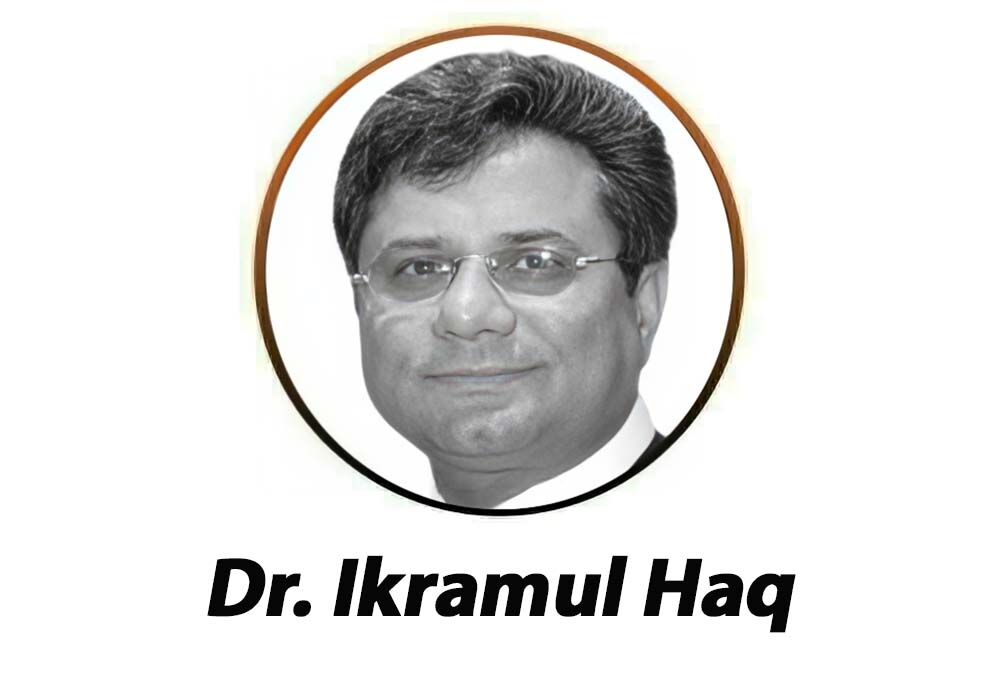
Dr. Ikramul Haq, Advocate Supreme Court, Adjunct Faculty at Lahore University of Management Sciences (LUMS), member Advisory Board and Visiting Senior Fellow of Pakistan Institute of Development Economics (PIDE), holds an LLD in tax laws. He was full-time journalist from 1979 to 1984 with Viewpoint and Dawn. He also served Civil Services of Pakistan from 1984 to 1996.
Similar Posts

  • The Intellectual Odyssey: Revisiting Daryabadi

    Bio: Hamza Tareen is a student at LUMS, majoring in Political Science and with a keen interest in philosophy and theology.   Few individuals’ legacies are defined more by their peculiar life accounts than by their vast scholarly contributions. Majid Daryabadi is probably of that ilk. An exceptionally gifted child, raised in a deeply devout family, his life was in complete accord with the theological influences that enveloped him: from wearing the characteristic religious turban to being tutored in Quran and Arabic from the very early years. And, at the precocious age of thirteen, Daryabadi began penning polemical articles and essays aimed at defending Islamic doctrines—and refuting rival traditions. However, hardly anyone could have anticipated the drastic tempest that would soon ensue and shake Daryabadi to his core. Coming across the book titled The Elements of Social Science was the critical juncture in his life which struck at the very heart of his values. This work did not flagrantly castigate Islam or denounce any other religion; it assaulted something else: the underpinning social and moral frameworks which form the bedrock of society. Little wonder that Daryabadi, still a 16-year-old who had just finished his Matriculation, was disillusioned with the guiding theological foundations he had long cherished ‘when the claims and arguments of the book were in complete accord with libidinal urges’. This episode was the turning point in his life which estranged him from his beliefs and was the nascent emergence of a decade-long journey of doctrinaire atheism. Although his shift to skepticism was driven and cemented by encounters with the works of eminent atheists and philosophers, one thing particularly arrests attention and exposes the academic dishonesty present profusely in Western academia: the spurious claim that the citadel of their scholarship is erected upon objectivity and dispassionate ‘impartiality’. Daryabadi, in his autobiography, elaborates that ‘a poison ran through the lines’ of seemingly ‘objective’ and ‘scientific’ scholarship. In a remarkably furtive and implicit manner, the most profound religious convictions would be scoffed at and trampled underfoot. Two such illustrations are worth noting: a voluminous piece of psychology argued, targeting the blessed Prophet (PBUH), that it was possible for a man suffering from epilepsy to leave behind a great legacy. In another instance, the Prophet was depicted—reprehensibly and coarsely—in an artificially concocted image, which was merely the deplorable translation of West’s bias towards Islam. Daryabadi persisted in his skepticism of religion and would fiercely critique it through his various publications. But despite the outright repudiation, there was a concealed, but potent, bond with Islam, which did not wither away; when Samuel Zwemer, a Christian polemicist who had come to British India for a conference, began his critique of the religion, Daryabadi—by then an atheist—would offer his rejoinders in defense of the faith. The subtle and discreet traces of sacred convictions had survived the materialistic tumult. It was after a decade that Daryabadi would, slowly and gradually, experience a shift in trajectory. His voracious propensity to read, coupled with sheer curiosity, led him to scrutinize the works of semi-atheistic philosophers who had entertained spiritual dimensions and possibilities beyond the cold, materialistic realm. Subsequently, he delved into the study of Buddhism, Hinduism and theosophy. Something profound had changed. Seeds of belief had been sown—once again. Engaging with the spiritual aspects of the traditions led him to deliberate the possibility of the unseen. Taken aback by the profundity of insights and reflecting upon their perennial truths, Daryabadi was intrigued. His quest for the truth eventually led him to Mawlana Jalaluddin Rumi’s Masnavi—the classic fountain of spirituality. The exemplar of Tasavvuf left a lasting imprint on Daryabadi’s rationalist outlook, unfolded before him a new horizon, and imbued him with an acute consciousness of the divine. Rumi’s Masnavi uplifted him from the recesses of oblivion to the light of the sacred. An epiphany reverberated through his austerely skeptical frameworks: the expanse of truth was too wide to be captured by the empiricist. And then came the final ‘nail in the coffin of atheism and apostasy’ when Daryabadi once again ventured to open the divine book, now bestowed with the ability to perceive the truths contained therein. That translation of the holy book was rendered by Muhammad Ali Lahori, a member of the Ahmadiyya movement, and Daryabadi’s enduring gratitude to him was a reminder to the puritanical Muslims who refuse to see the value in the works of those they deem astray. A poignant pilgrimage to the former self followed thereafter, and Daryabadi pledged allegiance to the renowned Sufi master Shaykh Ashraf Ali Thanavi—his father’s prayers had been finally answered. He went on to author a multitude of books, with his magnum opus being the multi-volume exegesis of the Holy Quran, Tafsir-i-Majidi, and was ultimately etched into history as a towering Muslim scholar who contributed immensely to Islamic scholarship.

  • 79 Years of Independence and What Went Wrong with …

    On 14 August 1947, Pakistan emerged as a new country with enormous challenges but also extraordinary potential. Seventy-nine years later, the question is not whether Pakistan has achieved anything, it certainly has, but why a country that began with comparable hopes to many newly independent nations has struggled to convert its human and natural potential into sustained prosperity, strong institutions and a secure future. The comparison becomes uncomfortable when we look at countries that began their modern journeys around the same period. Singapore became self-governing in 1959 and independent in 1965. Bangladesh became independent in 1971 after emerging from the same Pakistan that had been created in 1947. Taiwan’s post-war transformation accelerated from the 1950s onward. South Korea, independent since 1948, also started from extraordinary hardship. Their histories are very different from Pakistan’s, so simplistic comparisons would be unfair. Yet they demonstrate one important principle, institutions, continuity, human capital and economic strategy can transform countries even when starting conditions are difficult. Bangladesh is perhaps the most striking comparison because it began as the poorer and more politically disadvantaged wing of Pakistan. In 1971, its future looked extremely uncertain. Today, Bangladesh’s nominal GDP per capita is substantially higher than Pakistan’s, the World Bank reports about $2,593 for Bangladesh compared with about $1,479 for Pakistan in 2024. Bangladesh’s total GDP has also grown larger than Pakistan’s despite having a much smaller land area according to world bank open data. Singapore represents an entirely different model. A small island with few natural resources, it concentrated on competent administration, education, trade, infrastructure, investment and institutional discipline. Its 2024 GDP per capita was approximately $90,674, compared with Pakistan’s approximately $1,479. World bank open data says. Taiwan and South Korea followed another path, export-oriented industrialisation, investment in education and technology, strong state capacity and, eventually, increasingly democratic institutions. These countries did not become successful because their people were inherently more capable than Pakistanis. They created systems that allowed capability to produce results. So what happened to Pakistan? The first failure was institutional continuity. Pakistan spent much of its history moving between civilian governments, military rule, political confrontation and constitutional crises. Instead of allowing institutions to mature, every political transition often became a struggle over who controlled the state. The second failure was the weak rule of law. A country cannot become prosperous when laws are applied selectively, institutions are politicised and citizens do not have equal confidence in justice. Democracy is not merely the holding of elections, it requires constitutional supremacy, independent institutions, accountable government and protection of fundamental rights. The third failure was education and human capital. Pakistan has a huge young population, yet education has too often remained underfunded, unequal and disconnected from the needs of a modern economy. Countries that transformed themselves invested heavily in the quality of their people. Pakistan has frequently treated education as expenditure rather than as the country’s most important investment. The fourth failure was economic inconsistency. Pakistan repeatedly moved between economic models without developing a stable, long-term national strategy. Political governments changed priorities, economic crises produced short-term fixes, dependence on external financing repeatedly returned. Meanwhile, countries such as Bangladesh built globally competitive export sectors, particularly garments, while East Asian economies moved aggressively into manufacturing, technology and high-value exports. The fifth failure was population planning and social development. Pakistan’s population has grown enormously, while economic growth has not consistently kept pace with the needs of its people. The World Bank’s latest figures show Pakistan with a life expectancy of around 68 years, compared with 75 years in Bangladesh and 83 years in Singapore. The sixth failure has been our inability to build a culture of accountability without political revenge. Accountability is essential, but when it becomes a weapon used selectively against political opponents, it destroys trust rather than strengthening the state. The seventh and perhaps deepest failure is that Pakistan repeatedly confused national security with national development. Security is essential, but a nation’s ultimate security comes from educated citizens, a productive economy, social cohesion, constitutional government and opportunities for its young people. Pakistan’s people, however, did not fail Pakistan. Pakistanis have demonstrated remarkable resilience. They built businesses, universities, industries, hospitals, technology companies and a vast overseas community. Millions of Pakistanis work abroad and send billions of dollars home. In 2024, remittances were equivalent to about 9.4% of Pakistan’s GDP, according to the World Bank. The real tragedy is that the capacity of the Pakistani people has repeatedly been greater than the capacity of the systems governing them. Independence was supposed to mean more than freedom from colonial rule. It was supposed to mean dignity, justice, representation and opportunity. After 79 years, Pakistan therefore needs a different question. Not who is responsible for our problems? but what kind of state do we want to become? The answer cannot be another political slogan or another temporary economic package or presidential system of government . Pakistan needs constitutional supremacy, civilian and institutional stability, independent justice, free media, serious investment in education and health, economic continuity, women’s participation in the workforce, export-led growth, technological development and genuine local governance. The comparison with Bangladesh, Singapore, Taiwan and South Korea should not produce humiliation. It should produce reflection. We began with a dream. The unfinished task of Pakistan’s next generation is to turn that dream into functioning institutions, human development and dignity for every citizen. Seventy-nine years after independence, perhaps the most patriotic thing Pakistanis can do is not merely celebrate the birth of the country, but honestly ask why the promise of 1947 has still not reached every Pakistani.

  • A Habit of Second Thought

    President Donald John Trump occupies a singular place in the history of American leadership. He is at once a politician, a successful businessman, and an enthusiast of freestyle wrestling. His manner of thinking, planning, and decision-making bears a character distinctly different from that of his predecessors; indeed, many observers contend that it has few, if any, precedents in the annals of modern American politics. Analysts frequently describe him as a man of remarkable flexibility, yet they also acknowledge that a position defended with absolute conviction at one moment may, in the next, be replaced by its very opposite without the slightest hesitation. This characteristic became strikingly evident following the commencement of large-scale military operations against Iran on 28 February 2026. A careful examination of the period, particularly up to the defence of the Memorandum of Understanding concluded in June, reveals no fewer than seven significant shifts in President Trump’s strategic approach. At the outset, he dismissed economic concerns altogether, declaring that the financial difficulties of the American people were of no consequence and that the sole imperative was to prevent Iran from acquiring a nuclear weapon. By the time of the G7 summit, however, his tone had undergone a marked transformation. He began advocating the necessity of an agreement capable of shielding the global economy from a crisis comparable to the Hoover era and the Great Depression, pointing to instability in the financial markets as evidence supporting this revised position. His initial call for regime change in Iran was equally unequivocal. In a video address, he urged the Iranian people to rise against their government, declaring that the moment might represent their final opportunity for generations to come. Yet subsequent statements quietly abandoned this objective. Instead, he began speaking of normalising relations with Iran and cooperating with its existing leadership, occasionally describing those very leaders as more “reasonable” than before. During the early phase of the conflict, the complete destruction of Iran’s missile program, the industries responsible for its production, and the naval forces supporting it was presented as a principal objective. Later, however, his position softened considerably. He observed that while missiles might inflict damage upon limited areas, they were incapable of destroying the world, and since other nations possessed similar capabilities, Iran might also retain a limited missile arsenal. It was for this reason that the Memorandum of Understanding contained no provision requiring the dismantlement of Iran’s missile program. A similar evolution occurred regarding Iran’s nuclear program. Following the military operations of 2025 and again in 2026, it was asserted that Iran’s entire uranium enrichment capability would be eliminated and that the nuclear threat would be extinguished permanently. In time, however, the objective was narrowed simply to ensuring that Iran would not acquire a nuclear weapon. Rather than insisting upon total dismantlement, reliance shifted towards international monitoring and continued negotiations. Control over highly enriched uranium, initially regarded as a non-negotiable and indispensable condition, was subsequently treated as a matter of secondary importance. It was argued that preventing the production of a nuclear weapon remained the essential objective, while questions concerning enriched uranium would be addressed in future negotiations. The instruments of pressure likewise underwent a profound transformation. Economic sanctions and financial restrictions, once regarded as the principal means of coercion, gradually gave way to incentives. Discussions emerged concerning the release of frozen assets, temporary licences for Iranian oil exports, and the possibility of reconstruction assistance amounting to hundreds of billions of dollars, with additional concessions to be granted subject to Iran’s future conduct. Likewise, the original determination to terminate Iran’s support for regional proxy groups gradually receded into the background. In its place, greater emphasis was placed upon securing a direct ceasefire and addressing the broader requirements of peace and stability throughout the Middle East. These strategic adjustments were accompanied by repeated tactical oscillations, in which stern threats were frequently followed by the postponement or cancellation of military action. A chronological review compiled up to 3 August reveals numerous announcements of major strikes that were ultimately abandoned. The latest example occurred on 1 and 2 August, when military action was suspended following requests from Iran and several regional parties, together with the emergence of preliminary outlines for a possible understanding involving the reopening of the Strait of Hormuz and measures aimed at removing the nuclear threat. On 7 April, shortly before the expiration of an ultimatum in which President Trump had threatened strikes against bridges and power stations, a two-week ceasefire was agreed. He had warned that such attacks could extinguish an entire civilisation. On 21 April, at the request of international mediators, the ceasefire was extended indefinitely, although hostilities resumed at a later stage. On 18 May, a major military operation was deferred to allow serious negotiations to proceed, but when those negotiations faltered, military action recommenced. On the night of 11 June, President Trump threatened an overwhelming assault upon Iran together with the seizure of its oil and gas resources. Yet only hours later, citing what he described as a significant diplomatic breakthrough, he cancelled the operation, thereby paving the way for the Memorandum of Understanding. Signed on 17 June, the Memorandum provided for a ceasefire, the temporary reopening of the Strait of Hormuz, limited economic relief, and a framework for sixty days of negotiations. It nevertheless expressly reserved the right to resume bombing should its provisions prove unsatisfactory. At the beginning of July, following attacks upon commercial shipping, the ceasefire was declared terminated. Military strikes were launched against dozens, and subsequently scores, of targets. Congress was formally notified, and the Administration adopted an increasingly uncompromising public tone. Yet negotiations continued simultaneously. The naval blockade was reimposed, retaliatory operations persisted, and on 27 July the intensive daily bombardment was once again suspended in order to afford diplomacy another opportunity. Even in early August, fresh threats eventually yielded to renewed consideration of a possible political framework. Oil sanctions followed a similarly fluctuating course. Temporary export licences were granted, only to be withdrawn as sanctions were reimposed.

  • Physics of Being Human: Our Search for Meaning

    No one illustrates the laws of Physics better than human beings themselves. Entropy is not confined to laboratories and equations; it is lived through lives, societies, and relationships, steadily nudging order toward disorder. Entropy, in simple words, is a scientific measure of disorder and randomness. It shows how things naturally progress from order to chaos. Besides randomness, it is the tendency of systems to move toward greater multiplicity of possible states.   According to the Second Law of Thermodynamics, the entropy of an isolated system always tends to increase. A human being, when he evolves through childhood and moves toward adulthood, becomes more random and chaotic. He does not merely accumulate years; he gathers contradictions.   His lived experiences shape his idea of life, leaving behind a psychological residue. The feelings that he experienced for the very first time in the past become a source of discomfort as time passes. As a child, he thinks little and inquires more out of curiosity. In short, the knowledge he gained came through curiosity. But knowledge always comes at a cost. Things that fascinate us a lot turn into something that we dread a lot. As we acquire knowledge, we become aware of complexities that were always present but invisible to us.   As a child, our worldview seems simple: people are either good or bad; dreams are achievable; friends are eternal; relationships are loyal and life moves between white and black. As we grow older, the order is disrupted. A rise in consciousness awakens us to multiple contradictions, uncertainties, anxieties, grief and losses. We learn that truth is ambiguous and subjective; morality is situational; relationships are fragile; certainty is rare and life lives in the grey zone.     It is no mistake to say that human consciousness itself produces existential entropy and expands internal contradictions and multiplies possibilities. The more we know, the less certain we become. Every choice restricts us. Every decision prepares us for consequences. Every loss reshapes our understanding of love. Every truth complicates identity and brings more uncertainty. Every new experience creates new interpretations.   Here comes the importance of meaning in life. Having been surrounded by disorder and chaos, our minds look for a safe space: less entropic and more purposeful. In other words, entropy is not just a physics metaphor. It is reason that pushes humans to find an anchor in topsy-turvy life. It’s more like providing moorings to the ship that is left at the mercy of aggressive waves.   Now a question comes to mind: how do humans resist the uncertainties created by the expansion of consciousness? The answer is meaning, but its discovery could be different in philosophical terms. Existentialists, such as Jean Paul Sartre, believe that purpose is constructive and built upon the choices presented to us by expanding consciousness.   Albert Camus’ philosophy argues that we embrace life’s absurdity by revolting against it instead of surrendering to it. It means we have to continue living passionately and consciously while being aware of life’s realities.   Viktor Frankl, in his book Man’s Search for Meaning, presents a different perspective on meaning as a “response” to suffering. He called suffering an inevitable and inexplicable part of human life. Humans can endure almost any suffering if they discover a reason for it. In this situation, meaning acts like “negative entropy” as it does not eliminate suffering but arranges it into a narrative that can be endured.   Frankl also argued the concept of “logotherapy” in his book, believing that man’s primary drive is to find something meaningful instead of seeking happiness or pleasure. Still others think that if we voluntarily shoulder the responsibility, we can lay the foundation of habitable order amid chaos.   From my viewpoint, every meaning, whether small or big, is worth pursuing if it only fulfils you. The nature and timing of meaning could be different, but one thing is certain: in this world, entropy will persist. The purpose of meaning is not to defeat entropy but to resist it and make it bearable. Our lives have been the accumulation of experiences, interpretations, complexities, and uncertainties. Any moment shared with loved ones, every act of love, every truth pursued, every responsibility accepted and every desire followed becomes a source of stability against life’s expanding uncertainty. Meaning does not eliminate entropy. It is humanity’s rebellion against it.

  • Beyond Public Finance: Towards  Constitutional Po…

    The second part of this series explained why public finance and Constitutional Political Economy (CPE) ask different questions. Public finance ordinarily examines what taxes governments should impose and how revenue should be spent. CPE asks who makes those choices, under what rules, for whose benefit and subject to what restraints. That distinction leads to an important conclusion: there is no politically neutral tax system. Tax policy is often presented as a technical exercise. Economists compare direct and indirect taxes, estimate elasticity, calculate effective rates and recommend reforms intended to improve efficiency. Governments describe exemptions as incentives, withholding provisions as enforcement mechanisms and consumption taxes as instruments of broad-based revenue mobilisation. Such terminology creates the impression that taxation operates independently of political power. It does not. Every tax decision identifies those who will pay, those who will collect, those who will receive concessions and those whose activities will remain beyond effective enforcement. A tax may be neutral between two products in an economic model, but the process through which it is enacted and administered can rarely be neutral between organised interests, social classes or political constituencies. The Organisation of Economic Cooperation and Development (OECD) itself recognises that taxes affect taxpayers differently according to their income and other socio-economic characteristics. They alter behaviour and influence the distribution of income both directly and through the public expenditure they finance. Taxation is, thus, not merely a device for transferring money to the treasury. It changes economic opportunities and affects the relationship between citizen and state. The celebrated Mirrlees Review sought to design a coherent tax system in which similar activities were treated consistently, and economic choices were not distorted without good reason. This is a valuable objective. Neutrality can reduce arbitrary discrimination and prevent tax considerations from dominating productive decisions. Nevertheless, even the most carefully designed system must decide which activities are alike, which differences justify special treatment and how equity should be balanced against efficiency. Those choices necessarily embody judgments about society. The idea of neutrality becomes more problematic when it is transferred from theory to a state characterised by unequal political influence. Consider a general sales tax (GST). In theory, a broad-based value added tax (VAT) imposed at a uniform rate minimises distortions and preserves the chain of documentation. In practice, exemptions, reduced rates, special schedules, fixed taxes, withholding taxes (unique in Pakistan even for VAT/GST!) and sector-specific arrangements are introduced during the political process. The final statute may bear little resemblance to the neutral instrument initially proposed. The same is true of income tax. Horizontal equity requires persons with similar ability to pay to bear comparable burdens. Vertical equity requires those possessing greater capacity to contribute more. In Pakistan, however, the legal character assigned to income often determines the burden more decisively than the taxpayer’s actual economic capacity. Salary, business income, capital gains, dividends, property income and agricultural income may all be subjected to different regimes, rates or jurisdictions. These distinctions are not always indefensible. Different types of income may require different collection methods. The constitutional distribution of taxing powers must also be respected. However, a CPE analysis asks why particular differences survive, who benefits from them and whether their stated rationale corresponds to their actual effect. Tax exemptions provide the clearest illustration. Governments describe them as instruments for attracting investment, supporting industries, protecting vulnerable groups or promoting exports. Some concessions may serve legitimate public purposes. Others constitute expenditure conducted through the tax system without the scrutiny ordinarily applied to direct spending. Pakistan’s official Tax Expenditure Report 2026 estimated revenue forgone during fiscal year 2024–25 through income tax, sales tax and customs concessions at approximately Rs. 2.353 trillion (excluding sales tax on POL products to deprive provinces of their constitutional right, replacing it with petroleum levy). Of this amount, sales tax concessions accounted for about Rs. 1.274 trillion, income tax concessions for Rs. 579.70 billion and customs concessions for Rs. 499.14 billion. These are not accounting curiosities. They represent choices about which persons, sectors and transactions receive preferential treatment, and which taxpayers must bear the resulting revenue burden. A concession granted through the tax law is economically similar to public expenditure. If the state collects Rs. 100 from a citizen and transfers it to an industry, the transaction appears in the budget. If the state allows that industry to retain Rs. 100 that would otherwise have been payable, the distributive effect may be comparable, but the benefit is less visible. This opacity is politically useful. Direct subsidies attract public attention and legislative scrutiny. Tax concessions are buried in schedules, exemptions and statutory notifications. Their beneficiaries are often concentrated and organised, while the cost is dispersed across millions of taxpayers and consumers. Constitutional Political Economy explains why such arrangements persist. A concentrated group has a strong incentive to lobby for a benefit worth billions of rupees. Each member of the general public, bearing only a fraction of the cost, has little incentive or capacity to oppose it. What appears to be an anomaly in tax design may be the predictable result of unequal political organisation. Withholding taxation presents another example. It is defended as an efficient method of collecting revenue from an economy with weak compliance. In limited circumstances, deduction/collection at source is entirely justified. Salary taxation (pay roll taxes) and payments to non-residents commonly require withholding systems in many jurisdictions. Pakistan, however, has transformed withholding from a collection technique into a parallel tax regime. According to the Revenue Division Year Book 2024–25, withholding taxes contributed 60 percent of total income tax collection in that year. Collection through withholding reached approximately Rs. 3.382 trillion. This reliance changes the institutional character of income taxation. The tax administration increasingly obtains revenue from transactions rather than determining taxpayers’ actual net income and ability to pay. Banks, employers, utilities, property registrars, businesses and other intermediaries become unpaid tax collectors. Persons already operating within the documented economy bear recurring deductions/collections in advance, compliance costs and the burden of seeking adjustments or refunds (hardly allowed automatically in

  • Pakistan’s Next Strategic Advantage: From La…

    By Tahseenullah For decades, labour migration in Pakistan has largely been viewed as a response to unemployment and poverty. While this perspective has served its purpose, it no longer reflects the realities of today’s global economy. In the twenty-first century, labour mobility has become far more than an economic necessity—it is a strategic investment in human capital, national competitiveness and economic diplomacy. Countries that can produce skilled, certified and globally competitive workers will hold a distinct advantage in an increasingly interconnected labour market. As ageing populations, declining fertility rates and persistent labour shortages reshape developed economies, demand for skilled workers is rising across Europe, East Asia and other advanced markets. Pakistan, with one of the world’s youngest populations, is well positioned to seize this opportunity. The real challenge is not whether Pakistan has enough young people willing to work abroad, but whether it can equip them with internationally recognised skills, qualifications, language proficiency and professional competencies that meet evolving global labour market demands. Pakistan’s labour migration journey began with the establishment of the Bureau of Emigration and Overseas Employment in 1971, following the Gulf oil boom. Since then, more than 15 million Pakistanis have migrated through regular channels, contributing significantly to infrastructure, healthcare, construction, transport and service sectors worldwide while improving the livelihoods of millions of families back home. Today, overseas employment remains one of Pakistan’s most important economic assets. According to BEOE, 862,625 Pakistanis migrated for employment in 2023, followed by 725,672 in 2024 and 762,499 in 2025, with early trends indicating sustained international demand in 2026. Meanwhile, the Pakistan Migration Report 2025 and the State Bank of Pakistan estimate workers’ remittances at approximately US$38.3 billion in FY2024–25, representing nearly 9.34 percent of GDP. These remittances strengthen foreign exchange reserves, reduce poverty and support macroeconomic stability. Yet labour migration has rarely been treated as a strategic pillar of Pakistan’s long-term economic planning. The global labour market is undergoing profound change. According to the World Economic Forum’s Future of Jobs Report 2025, demographic shifts, technological advances and the green transition will create millions of new employment opportunities over the coming decade. Healthcare professionals, engineers, IT specialists, skilled technicians, renewable energy workers, construction professionals and caregivers are expected to remain in particularly high demand. Pakistan possesses a valuable demographic dividend, with nearly two-thirds of its population under the age of 30. However, this advantage will only translate into economic gains through sustained investment in education, Technical and Vocational Education and Training (TVET), international certification, digital skills and language training. The challenge is clear. The Pakistan Migration Report 2025 shows that nearly two-thirds of Pakistani migrant workers remain low-skilled or unskilled. While their contribution is invaluable, low-skilled employment often results in lower wages, limited career progression and greater vulnerability to labour market shocks. In contrast, highly skilled migrants generally access better jobs, stronger labour protections and significantly higher earnings. Pakistan must therefore move beyond a traditional labour export model towards a human capital export strategy. Success should no longer be measured simply by the number of workers leaving the country, but by the quality, productivity and global competitiveness of its workforce. Achieving this transformation requires comprehensive reforms. TVET institutions must align training with international occupational standards and labour market needs. Language education in German, Japanese, Korean and Italian, alongside digital literacy, workplace ethics and intercultural communication, should become integral components of workforce development. Market diversification is equally important. While Gulf Cooperation Council countries will remain Pakistan’s primary labour destinations, excessive dependence on one region exposes the country to geopolitical uncertainty and labour market fluctuations. Pakistan should actively expand regular labour mobility partnerships with Europe, Japan, South Korea, Australia and Canada, where structural labour shortages continue to grow. Government-to-government labour mobility agreements should become a strategic priority. Such partnerships can enhance transparency, reduce recruitment costs, improve worker protection and strengthen employer confidence in Pakistani talent. Simultaneously, Pakistan should pursue mutual recognition of qualifications and internationally accepted skills certification to facilitate smoother labour market integration. Institutional coordination will also be essential. The Ministry of Overseas Pakistanis and Human Resource Development, together with the NAVTTC, provincial TEVTAs, Overseas Employment Promoters, the Ministry of Foreign Affairs and Pakistan’s overseas missions, should implement an integrated national labour mobility framework supported by labour market intelligence, digital recruitment platforms and evidence-based policymaking. Pakistan can draw valuable lessons from the Philippines, whose migration governance combines ethical recruitment, mandatory pre-departure orientation, comprehensive worker welfare and strong overseas support systems. Adapting these practices would strengthen Pakistan’s reputation as a reliable source of skilled and protected migrant workers. At the same time, addressing irregular migration must remain a national priority. Preventing dangerous migration routes requires expanding legal migration opportunities, strengthening career counselling, improving public awareness, dismantling human smuggling networks and ensuring aspiring migrants have access to reliable information and affordable recruitment services. Labour migration should no longer be viewed solely as a means of reducing unemployment or increasing remittances. It should be recognised as a cornerstone of Pakistan’s economic diplomacy, human capital development and long-term growth strategy. The countries that will lead the future of global labour mobility will not necessarily be those with the largest populations, but those that invest in producing highly skilled, internationally certified and globally competitive talent. Pakistan has already demonstrated its ability to contribute to the global workforce. The next step is to move beyond exporting labour to exporting talent. By investing in skills, strengthening institutions, diversifying labour markets and promoting ethical, well-governed migration, Pakistan can transform its demographic dividend into one of its greatest strategic advantages. The world is searching for talent. Pakistan has the youth. What it now needs is the vision to turn that potential into global human capital leadership. Tahseen Ullah is a development and migration sector practitioner specializing in labour mobility, migration governance, education and child protection.

Leave a Reply

Your email address will not be published. Required fields are marked *