america first hormuz

America First, Hormuz Next? Trump’s Dangerous Ir…

By  Engr. Saqlain Abid tarrar
Political Commentator | MS Power Engineering | NFPA-Certified Electrical Engine

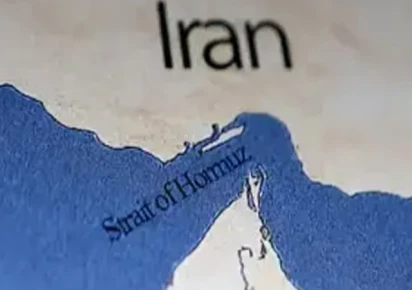
President Donald Trump, addressing a public rally, reportedly announced that the United States would soon “free” the Strait of Hormuz from what he described as Iranian captivity and suggested that it could effectively become American territory. The rhetoric immediately evokes his earlier statements about acquiring Greenland. But Hormuz is not Greenland. It is a strategic maritime chokepoint whose international legal status, geography and military consequences make any attempt to seize or control it an entirely different proposition. The question is whether Trump is merely bargaining through maximum pressure—or preparing the political ground for a ground invasion of Iran.

Several geopolitical analysts, including a Chinese professor and commentator who has repeatedly warned that Trump could eventually choose ground intervention, now see such a possibility as increasingly rational from Washington’s perspective, even if strategically dangerous. The political clock is also ticking. With the US midterm elections approaching in November, a weak Republican performance could cost Trump control of the House. Having already signed the June 17 MoU, while Iran appears to have rejected or resisted key conditions, Trump may calculate that allowing Tehran to emerge claiming victory would carry a domestic political price. Yet this is precisely where strategic calculation can become strategic miscalculation.

The Netanyahu government has also indicated that Israel could continue fighting even if Washington decides to stop. That creates an uncomfortable dilemma for Washington. The initial air campaign apparently exposed serious questions about the assumptions behind the war. If American planners underestimated Iran’s endurance, missile inventory and drone-interceptor economics, the conflict could become dramatically more expensive than anticipated. Even senior American military voices have reportedly debated whether continuing the war is necessary for credibility and deterrence. The USS Abraham Lincoln’s prolonged deployment, alongside reports of severe psychological strain among personnel, illustrates another hidden price of extended warfare. Meanwhile, Washington faces the enormous projected cost of the Golden Dome missile-defence programme, potentially requiring resources approaching $1.5 trillion. The central question is therefore simple: can America afford another open-ended adventure when it already needs enormous resources to compete with China and Russia?

Iran, meanwhile, appears to be raising the price of any settlement. Its reported demands include lifting the naval blockade so that it can sell oil and gas freely, withdrawal of American forces from West Asia, release of roughly $12 billion in frozen or seized assets, an end to Israeli attacks on Yemen and Hezbollah, and substantial war reparations. Reports of command changes within the IRGC, including the appointment of hard-line figures, suggest that Tehran wants to signal a transition from a purely defensive posture towards greater offensive preparedness. Iran has also kept some capabilities, including submarines, underwater drones and long-range missile systems, relatively restrained. Whether all these claims are accurate or not, the message is unmistakable: Tehran wants Washington to understand that the next round could be more costly.

The third actor is the Gulf. Saudi Arabia, under Mohammed bin Salman, has powerful economic reasons to prevent another escalation. A major American-Iranian war could threaten Saudi infrastructure, Vision 2030 projects and the enormous investments being built around them. Riyadh therefore has an incentive to use its relationship with Trump to discourage another military adventure. The UAE has likewise pursued back-channel diplomacy aimed at reducing the risk of Iranian retaliation. For the Gulf monarchies, the lesson is increasingly clear: money, investment and economic stability are more valuable than ideological confrontation. They may cooperate with Washington, but they do not want to become the battlefield.

Pakistan has an opportunity—and a responsibility. With Iranian officials, including Mohammad Bagher Ghalibaf and Abbas Araghchi, expected to engage Islamabad again, Pakistan can provide a diplomatic channel between Tehran, Washington and the Gulf. The visit should not be treated merely as ceremonial diplomacy. Islamabad should push for a ceasefire mechanism, maritime de-escalation, protection of Gulf shipping, and a negotiated framework for American and Iranian security concerns.

Trump now faces a historic choice: a safe exit that preserves American power, or another costly adventure that could transform Hormuz into the graveyard of his political calculations. Controlling the Strait by force is not the same as controlling the consequences. The real test of “America First” is knowing when not to fight.

Similar Posts

  • Pakistan Turkiye Saudi Arabia: A Vision for a peac…

    Post-Doctorate (Peace Education) International Islamic University Islamabad The trilateral relationship between Pakistan, Türkiye, and Saudi Arabia represents one of the most significant geopolitical partnerships in the Islamic world, with the potential to reshape regional dynamics and contribute meaningfully to global peace and stability. These three nations, each wielding considerable influence in their respective spheres, share common interests rooted in Islamic solidarity, strategic cooperation, and mutual security concerns. As the world navigates increasingly complex challenges including terrorism, economic instability and geopolitical tensions, the collaboration between these three countries offers a pragmatic pathway toward addressing regional conflicts and fostering sustainable development. This essay examines the historical foundations of this trilateral relationship, analyzes the contemporary opportunities and challenges facing these nations, and proposes a comprehensive vision for how Pakistan, Türkiye, and Saudi Arabia can work collectively to promote peace, stability, and prosperity in their regions and beyond. The relationship between Pakistan, Türkiye, and Saudi Arabia is deeply rooted in shared Islamic heritage and Cold War-era strategic alliances. Pakistan and Türkiye have maintain diplomatic relations since Pakistan’s independence in 1947, with both nations viewing themselves as guardians of Islamic values while navigating the complexities of secular governance and regional stability. Saudi Arabia, as the custodian of Islam’s holiest sites and a major regional power, has historically served as a financial and ideological anchor for both Pakistan and Türkiye. These connections intensified during the Soviet-Afghan War when all three nations collaborated to support Afghan resistance movements, establishing patterns of military cooperation and intelligence sharing that persist today. The geographical positioning of these three nations makes their cooperation particularly valuable. Pakistan serves as a bridge between the Middle East and South Asia, Türkiye controls critical waterways and straddles Europe and Asia, while Saudi Arabia dominates the Arabian Peninsula and maintains substantial economic influence globally. Together, they represent a population exceeding 250 million people and combined GDP that makes them economically significant actors in the Islamic world. Their combined military capabilities, particularly Pakistan’s nuclear arsenal and Türkiye’s advanced defense industry, provide them with considerable strategic weight in global affairs. The three nations face remarkably similar security challenges that necessitate coordinated responses. Terrorism, particularly extremist groups operating across borders, poses a persistent threat to all three countries. Pakistan has struggled with militant organizations such as the Tehrik-e-Taliban Pakistan, Türkiye faces challenges from the Kurdistan Workers’ Party and various Islamist extremist groups, while Saudi Arabia confronts threats from Al-Qaeda affiliated organizations and Iranian-backed militias. A coordinated counterterrorism strategy that shares intelligence, coordinates military operations, and implements joint training programs could significantly enhance the security of all three nations while reducing opportunities for terrorist organizations to exploit jurisdictional gaps. Beyond security concerns, these nations share substantial economic interests. The growing middle class in Pakistan, Türkiye advanced manufacturing sector, and Saudi Arabia’s renewable energy ambitions create complementary opportunities for trade and investment. Regional infrastructure projects, such as the Belt and Road Initiative and the proposed Middle Corridor connecting Central Asia to Europe through Türkiye, offer avenues for economic cooperation that could benefit all three countries. Additionally, all three nations recognize the importance of energy security in an increasingly multipolar world, creating opportunities for cooperation in renewable energy development, particularly given Saudi Arabia’s commitment to transitioning away from oil dependency and Türkiye strategic location for energy transit. Recent developments demonstrate growing momentum toward deeper trilateral cooperation The Economic Cooperation Organization, which includes all three nations along with others on the region, has emerged as a platform for discussing trade facilitation and infrastructure development. Pakistan and Türkiye have strengthened military-to-military ties through joint exercises and defense cooperation agreements, while Saudi Arabia has increased its defense: e procurement from both countries and hosted significant diplomatic summits bringing the three nations together. The Shanghai Cooperation Organization also provides a forum where these nations increasingly coordinate on regional security matters. Cultural and educational exchanges have expanded considerably, with increasing numbers of students from all three nations studying in each other’s universities and growing tourism facilitating people-to-people connections. Turkish media has gained significant popularity in Pakistan and Saudi Arabia, while Pakistani cultural products have found audiences in the other two countries, creating soft power synergies that strengthen bilateral ties. These cultural connections help build constituencies within each country that support deeper cooperation and mutual understanding. However, challenges remain in translating political will into concrete outcomes. Bureaucratic inefficiencies, trade barriers, and inconsistent policy implementation have hindered some cooperative initiatives. Additionally, each nation faces domestic political pressures that sometimes constrain their ability to fully commit to trilateral projects. Pakistan’s ongoing economic challenges, Türkiye internal political dynamics, and Saudi Arabia’s regional rivalry with Iran create competing priorities that sometimes divert attention and resources from trilateral initiatives.

  • Where We Stand: Reflections on Governance and Resp…

    In the long chronicle of human affairs, few pursuits have more clearly revealed the character of a people than the search for good governance. Our predecessors, whether the wise administrators of earlier ages or those who laid the foundations of our own constitutional order, grasped this truth with a seriousness that still commands reflection. They understood that the art of governing is not a mere technique of power, but a moral undertaking. Authority, they held, is a trust held on behalf of the community, to be discharged with restraint, justice, and an eye to the welfare of generations yet unborn. Their systems, though shaped by the limitations of their times, were animated by principles of accountability, the supremacy of law over personal will, and the conviction that public office is a burden rather than a prize. Courts were expected to stand as impartial arbiters; civil servants were trained to place duty above favour; and rulers, at their best, recognised that their legitimacy rested upon the consent and confidence of the governed. We received from them a framework of institutions—representative assemblies, independent judiciaries, administrative services, and a body of laws intended to curb arbitrary power. These were not perfect creations, yet they embodied an aspiration toward order tempered by fairness. Public life retained, for considerable periods, a measure of dignity. Corruption existed, as it has in every age, but it was more often regarded as a shameful departure from the norm rather than an accepted condition of advancement. The methods of our predecessors rested upon a shared moral vocabulary; honour in public dealing, frugality in the use of common resources, and a sense that the strong bore a particular responsibility toward the weak. Where, then, do we stand today when measured against that inheritance? The forms of good governance remain visible—constitutions are still sworn to, elections are still held, statutes continue to be enacted—yet the substance has in many places grown thin. Trust between the people and the state appears to be fading. Justice is frequently perceived as uneven, accessible more readily to those of means or influence than to the ordinary person. Administrative machinery, designed to serve, is too often entangled in delay, patronage, and self-interest. Political discourse has become coarse and transactional, with loyalty to party or person frequently eclipsing loyalty to principle or the public good. The gap between proclaimed ideals and daily practice has widened, leaving many citizens disillusioned and inclined to withdraw from civic responsibility altogether. If failure must be acknowledged—and candour requires that it should—the causes are several and interwoven. Foremost among them is a progressive weakening of personal character in public life. Ambition has too often been severed from a corresponding sense of duty. The pursuit of power and material advantage has overshadowed the older ideal of service. Political culture has drifted toward clientelism, wherein positions and favours are distributed as rewards rather than earned through merit. Institutions that ought to act as checks upon excess have themselves become vulnerable to capture, their independence eroded by pressure, inducement, or the quiet fear of consequence. Education, which should have formed citizens capable of discerning right from expedient, has frequently neglected the cultivation of ethical judgement in favour of technical competence or mere qualification. Economic pressures and rapid social change have compounded these weaknesses, fostering a climate in which short-term gain appears more urgent than long-term integrity. Over all has settled a collective habit of blame; each segment of society is ready to indict the others while absolving itself. Have we, then, discharged our responsibilities as individuals, as institutions, and as a nation? The record is sobering. As individuals, many of us have grown content to lament the state of affairs while participating, in small ways or large, in the very practices we condemn—evading obligations, seeking special treatment, remaining silent when honesty would exact a cost. Institutions have too often placed institutional survival or the interests of their leaders above the purpose for which they were created. In prima facia, courts drag their feet, legislatures focus on partisan gain, and administrative bodies forget about the citizens they’re meant to serve. As a nation, we have allowed divisions of interest, region, and allegiance to weaken the sense of a shared destiny. Necessary reforms have been postponed; uncomfortable truths have been left unspoken; and the common good has been subordinated to immediate political calculation. Yet history is not an irreversible descent. Peoples have recovered from moral and administrative decline when they recovered first the will to examine themselves without illusion. Correction of direction remains possible, though it will demand more than rhetoric or the rearrangement of outward forms. It begins with the recovery of personal integrity in ordinary dealings, for no system can long remain honest if those who operate it and those who live under it are themselves careless of truth. It requires institutions to reclaim their independence and to remember that their authority derives from the public trust, not from the favour of transient power. It calls for a renewed national conversation about the ends of government—not merely the distribution of resources or the winning of elections, but the creation of conditions in which citizens may live with dignity, security, and hope. Education must once more address the formation of character as seriously as the acquisition of skill. Civic engagement must cease to be regarded as the province of a few and become again the ordinary duty of many. The task is arduous and will meet resistance from those who profit by the present disorder. Yet the alternative is a continuing erosion of confidence, a further coarsening of public life, and the gradual loss of that cohesion without which no society can endure. Our predecessors bequeathed us not a completed structure but a charge and an example. Whether we prove equal to that charge depends upon choices that are still ours to make. If we summon the courage to prefer principle to expediency, duty to advantage, and the long view to the immediate reward, the

  • The Transferability Paradox: Skills, Borders and t…

    We often speak of professional skills as though they were assets that can be packed into a suitcase and carried effortlessly across borders. In reality, skills do not all travel in the same way. A computer language remains a computer language whether one works in Pakistan, Singapore, the United Kingdom or the United States. Engineering principles, mathematics, manufacturing techniques and many scientific disciplines retain much of their relevance regardless of geography. The environment may change, but the fundamental language of the profession remains largely intact. The situation becomes more complicated with professions that operate within national regulatory and institutional frameworks. Accounting principles may be broadly understood internationally, but taxation, reporting requirements and corporate regulations can differ substantially between jurisdictions. The same is true of law and medicine. A lawyer who has spent decades mastering one country’s legal system cannot simply assume that the same statutes, procedures and precedents apply elsewhere. A doctor may possess years of clinical experience yet still be required to pass examinations and satisfy licensing requirements before being permitted to practise in another country. The knowledge has not disappeared. What has changed is the framework within which that knowledge is recognised and allowed to operate. This distinction is important because we sometimes confuse the transferability of skills with the transferability of credentials. They are not the same thing. A seasoned CFO does not forget how to evaluate risk, allocate capital, establish financial controls or understand a balance sheet upon crossing an international border. A doctor does not lose diagnostic ability at immigration, nor does a lawyer suddenly lose the capacity for legal reasoning. Yet the receiving country’s institutions may place conditions on recognising those abilities. What is being restricted is often not the skill itself, but the right, opportunity or credibility required to exercise it. For C suite professionals, however, there is another layer to the problem. As people rise through organisations, their professional value increasingly consists of much more than technical competence. Over twenty or thirty years, an executive accumulates reputation, relationships, cultural understanding, institutional knowledge and credibility. He or she learns how decisions are actually made, which relationships matter, how regulators think, how capital moves and how to navigate the unwritten rules of a particular business environment. This social and institutional capital can become as important as the technical skills that originally built the career. Crossing a border can dramatically alter the value of that accumulated capital. A CEO, CFO or senior executive who is well known and respected in one country may arrive in another market where few people recognise the organisations he or she worked for, understand the scale of previous responsibilities or appreciate the complexity of the environment in which those responsibilities were exercised. The person has not become less capable, but the ecosystem that validated that capability has been left behind. This is perhaps one of the least discussed dilemmas of international mobility at senior levels. The higher one climbs within a particular ecosystem, the more deeply one’s professional identity may become connected with that ecosystem. A young engineer may be assessed largely on technical competence and therefore move relatively easily between markets. A senior executive is assessed on a much broader collection of attributes, many of which are difficult to demonstrate on a CV. Reputation, networks, judgement and influence cannot always be exported as easily as qualifications. Then there is the uncomfortable issue of regional bias. Professional experience is not always evaluated purely on merit. Employers and institutions can consciously or unconsciously attach different values to experience depending on where it was acquired. A senior position in one part of the world may not automatically be regarded as equivalent to a similar position in another. Accent, nationality, familiarity with local business culture and perceptions about the sophistication of the previous market can all affect how a professional is judged. Regulation can create a formal wall, while perception can create an invisible one. Perhaps professional capital should therefore be thought of in three forms. There is skill capital, meaning what a person actually knows and can do. There is credential capital, meaning what institutions formally recognise or permit that person to do. Finally, there is social capital, meaning the network of people and institutions that know, trust and are prepared to place responsibility in that person’s hands. Skill capital can often travel. Credential capital may require rebuilding. Social capital can sometimes have to be recreated almost from the beginning. This brings me to the question that I find much harder to answer. If a country’s most capable professionals conclude that their talents will produce greater opportunities elsewhere, should they leave? Or should they remain and use their abilities, experience and influence to improve the environment that is encouraging them to leave in the first place? There is an obvious argument for mobility. A professional has a responsibility to his or her own life and family and cannot reasonably be expected to sacrifice decades waiting for institutions to improve. Talent naturally seeks environments where it can grow, where merit is recognised and where opportunities allow ability to compound. If those conditions exist elsewhere, moving may be entirely rational. Yet there is an equally uncomfortable consequence. When capable professionals, entrepreneurs, academics and executives continually leave weaker institutional environments for stronger ones, the countries they leave behind lose precisely the human capital that might have helped strengthen those institutions. Weak systems cause talent to leave, and the departure of talent can make those systems even harder to improve. We then arrive at something resembling the old question of the chicken and the egg. Do strong institutions create successful people, or do successful people create strong institutions? Do countries first need better systems to retain talent, or must talented people remain long enough to build those systems? If everyone waits for the environment to improve before contributing to it, who creates the improvement? But if individuals spend their lives fighting systems that are resistant to change, what happens to their own potential? Perhaps the

  • Mining vs Refining: Real secret behind China&#8217…

    For more than a decade, the global debate over critical minerals has focused almost entirely on mining and extraction. Western policymakers, multinational mining companies and international financial institutions have invested billions of dollars in securing mineral reserves across Africa and Latin America. From cobalt mines in the Democratic Republic of Congo to the Lithium Triangle of South America, the prevailing belief has been simple: control the mines and secure the future of the green energy transition. However, this overwhelming focus on extraction overlooks a fundamental reality of modern industrial power. In today’s world, strategic independence is not achieved simply by digging raw minerals out of the ground. True industrial strength lies in refining those raw materials into high-purity, battery-grade and industrial-grade minerals through advanced chemical processing. It is at this critical processing stage, often referred to as the “processing bottleneck,” that China has established an extraordinary and nearly unmatched global dominance. The Mining Illusion and China’s Refining Monopoly Understanding why Western efforts to reduce dependence on China continue to struggle requires recognising the crucial difference between mining and refining. Raw lithium extracted from Australian hard-rock mines or South American brine deposits cannot be used directly in electric vehicle batteries. It must first undergo complex chemical processing to produce lithium hydroxide or lithium carbonate with a purity of 99.9 percent. The same applies to rare earth elements, cobalt, nickel and graphite. Without refining, raw minerals have little value for advanced technology or defence industries. This is where China’s true strength becomes evident. While the country’s share of global mining production is relatively limited, it dominates global refining capacity. China currently refines about 35 percent of the world’s nickel, between 50 and 70 percent of global lithium and cobalt, and nearly 90 percent of all rare earth elements. It also controls virtually 100 percent of the global market for spherical graphite, a key material used in battery anodes. This creates a major strategic challenge for Western economies. Even if companies in the United States, Europe or Australia develop new mines, much of the extracted material still has to be shipped to China for chemical processing. As a result, many attempts to bypass China ultimately continue to strengthen its refining ecosystem. The Structural Foundation of China’s Success China’s refining dominance is neither accidental nor simply the result of low labour costs. It reflects more than three decades of consistent industrial planning and state-backed investment. During the 1990s and early 2000s, many Western economies shifted heavy industries overseas to reduce costs and meet stricter environmental regulations. At the same time, China recognised that chemical refining would become the foundation of future technological leadership. Through successive five-year development plans, Beijing invested heavily in large-scale refining facilities, specialised metallurgical universities and low-cost energy infrastructure. Decades of research enabled Chinese engineers to master technologies capable of refining even low-grade ores efficiently and at relatively low cost. China also accepted the significant environmental costs associated with refining. Processing rare earth minerals produces toxic waste, radioactive by-products and hazardous chemicals. While strict environmental regulations and public opposition have made large-scale refining projects difficult in North America and Europe, China accepted these environmental challenges as part of its long-term national strategy. Why the West Cannot Easily Replicate China’s Model Concern over potential Chinese export restrictions has encouraged the United States and its allies to invest in domestic refining infrastructure. However, matching China’s industrial ecosystem remains an enormous challenge. Several major obstacles stand in the way First, time. Building a modern refining facility in Europe or North America typically takes seven to twelve years because of environmental approvals and legal procedures. In China, similar projects can often be completed in less than two years. Second, cost. Chinese refineries benefit from economies of scale, low electricity prices and extensive government support. Western facilities face much higher labour, environmental and operational expenses. Without strong financial guarantees, private investors remain reluctant to finance projects that could later become uncompetitive if China lowers prices. Third, skilled manpower. Decades of industrial outsourcing have reduced the number of mining metallurgists and chemical engineers in many Western countries. Meanwhile, China continues to produce thousands of specialised engineers every year, maintaining a steady pipeline of technical expertise. Strategic and Geopolitical Consequences China’s refining advantage extends far beyond electric vehicles and consumer electronics. It has become a critical factor in global defence and national security. Modern military equipment—including guided missiles, radar systems, nuclear submarines and fifth-generation fighter aircraft such as the F-35—depends heavily on refined rare earth magnets and processed critical metals. In the event of a military crisis involving Taiwan or the South China Sea, China would not necessarily need to block access to global mines. Instead, it could simply restrict exports of refined minerals. Such a move could disrupt Western defence manufacturing within months, even if friendly nations continued producing raw mineral resources. The global competition over critical minerals, therefore, is no longer centred solely on who owns the mines. It increasingly depends on who controls the refining process—the stage where China has built its strongest and most strategically important advantage.

  • An Insight into CPEC performance

    A great game changer, the China-Pakistan Economic Corridor (CPEC), which was launched in its first phase in 2013, has since emerged as a flagship initiative of strategic significance, fostering regional connectivity, economic growth and socio-economic development while reinforcing the enduring partnership between Pakistan and China. Over the past decade, CPEC has transitioned from a vision of connectivity into a comprehensive development framework, delivering tangible progress across key sectors and contributing to Pakistan’s economic transformation. After the quite successful completion of the first phase, brisk preparations are underway in Beijing and Islamabad at the appropriate high levels, under the leadership of Chinese President Xi Jinping and Pakistani Prime Minister Muhammad Shehbaz Sharif, for formally launching CPEC 2.0 during 2026. According to the information gathered from the official sources concerned, on the Long-Term Plan, the 14th ICC formally agreed to review the CPEC Long-Term Plan (2017-30) in the light of the Memorandum of Understanding (MoU) on alignment of the CPEC five corridors with the National Economic Transformation Plan (URAAN Pakistan) and the action plan to foster an even closer China-Pakistan community. The 14th ICC had further directed the adoption of the action plan for fostering an even closer China-Pakistan community with a shared future in the new era (2025-2029), signed in September 2025. The 14th ICC had also further directed the adoption of the action plan as the guiding document for CPEC 2.0, and an action matrix accordingly has been prepared by the official quarters concerned and shared with the ministries and divisions of the Federal Government. Inter-agency consultations on the revised Long-Term Plan (LTP) were underway. As regards socio-economic development, about 15 out of 17 approved projects have since been quite successfully completed, while two remaining projects were reported to be at an advanced stage of execution and were expected to be finalized soon. Furthermore, seven new development initiatives have been proposed under the third batch and submitted to the China International Development Cooperation Agency for consideration and approval. These projects include the provision of modern agricultural machinery and equipment for agro-mechanization, the supply of fiberglass fishing boats to coastal communities, the construction of a fish-landing jetty at Gwadar to strengthen the fisheries value chain, the establishment of integrated cold-chain systems for horticulture and perishable products, and other livelihood-oriented interventions aimed at enhancing local productivity, food security, employment generation, and export potential in underserved regions. During the year, efficiency improvement measures were taken in the power sector for enhancing operational performance, improving grid stability, and optimizing the utilization of existing generation and transmission infrastructure. Stakeholder consultations were also conducted for addressing issues related to bulk electricity supply for Special Economic Zones (SEZs), aimed at facilitating industrialization and investment under CPEC 2.0. A major achievement of the sector was the continued utilization of indigenous Thar coal resources, which contributed towards reducing dependence on imported fuels, strengthening energy security, conserving foreign exchange reserves, and ensuring reliable base-load electricity supply for industrial and domestic consumers. As regards transport infrastructure, the upgradation of the Main Line-1 (ML-1) railway project, spanning approximately 1,872 km from Karachi to Peshawar, remained a strategic priority under bilateral cooperation. During the reporting period, third-party financing discussions by the Asian Development Bank (ADB) and Asian Infrastructure Investment Bank (AIIB) advanced for the Karachi-Rohri section, while detailed financing and implementation proposals were also developed for the remaining sections up to Peshawar in close coordination with the Chinese side. Once completed, ML-1 was expected to substantially enhance Pakistan Railways’ operational efficiency by increasing train speeds from 65-105 km/h to nearly 160 km/h, improving freight-handling capacity, reducing transit times, and strengthening north-south economic connectivity across the country. Significant headway was also achieved on the Realignment of Karakoram Highway (KKH-Phase II) Project under the Government-to-Government (G2G) framework. Both sides have operationalized a phased implementation strategy and reached broad consensus on an 85:15 financing ratio. In Gwadar, the operationalization and consolidation of strategic infrastructure projects continued to gain momentum. The East Bay Expressway, a 19-kilometre, six-lane corridor connecting Gwadar Port with the Makran Coastal Highway, continued to improve port accessibility, reduce cargo transit time, and enhance logistics efficiency for commercial and port-related traffic. Further progress has also been achieved on Phase-II initiatives aimed at connecting Gwadar Port with the New Gwadar International Airport, including discussions on grant financing modalities and finalization of the draft Framework Agreement to strengthen integrated sea-air connectivity among Gwadar Port, Gwadar Free Zones, and the airport. Gwadar Port and the Free Zones have made further progress toward operational maturity through improved infrastructure provision, enhanced utilities connectivity, investor-friendly fiscal incentives, and continued policy facilitation measures by the Pakistan Government. Increased focus has also been placed on attracting industrial relocation, export-oriented manufacturing, warehousing, fisheries processing, and logistics-related investments in Gwadar Free Zone. Parallel progress has also been achieved on multiple road infrastructure projects, including strategic expressways and motorways, through the mechanisms of the Joint Working Group (JWG) on Transport Infrastructure and the Joint Technical Working Group (JTWG), thereby reinforcing Pakistan’s long-term objective of developing an integrated multimodal transport and logistics network under CPEC. Mining cooperation has also emerged as a major new pillar of CPEC 2.0, thereby reflecting the shared commitment of both countries to unlock Pakistan’s vast untapped mineral potential through bilateral cooperation, technology transfer, industrial cooperation, and investment partnership. During the period under review, both sides agreed to undertake a joint feasibility study for the proposed Mining Corridor connecting Nokundi with Gwadar Port. The proposed initiative was expected to substantially reduce transportation costs, improve supply-chain efficiency, and facilitate large-scale movement of copper, gold, rare earth elements, chromite, and other strategic minerals. The corridor would also complement ongoing developments in Reko Diq and other mining regions, while also laying the foundation for transforming Balochistan into a major mining, processing, and export-oriented economic hub. The last year has also witnessed quite significant progress in industrial cooperation under CPEC, with continuous development of Special Economic Zones (SEZs) and expeditious provision of basic utilities, especially electricity. Phase-1 of Rashakai SEZ has been successfully operationalized, while

  • Fundamental Right No. 10A: Right to Fair Trial in …

    By Muhammad Imran, Staff Member, SAHSOL-LUMS and Asma Rahmat, Final Year Law Student, SLC, Superior University and Muhammad Ameer Hamza, Final Year Law Student, SLC, Superior University    Historical Evolution and Constitutional Recognition: The right to a fair trial and due process is expressly guaranteed under Article 10A of the Constitution of the Islamic Republic of Pakistan, 1973, which was inserted through the Constitution (Eighteenth Amendment) Act, 2010. The Eighteenth Amendment was passed by the National Assembly on 8 April 2010, approved by the Senate on 15 April 2010, and received the assent of the President on 19 April 2010, whereupon it came into force. The insertion of Article 10A marked one of the most significant constitutional reforms introduced by the Eighteenth Amendment by expressly recognizing the right to a fair trial and due process as enforceable fundamental rights. Before the insertion of Article 10A, the Constitution did not contain an explicit guarantee of the right to a fair trial. Nevertheless, the superior judiciary consistently interpreted Articles 4, 9, and 25 of the Constitution as implicitly incorporating the principles of natural justice, procedural fairness, and due process. Article 4 guarantees the right of every individual to be dealt with in accordance with law, Article 9 protects the security of person, and Article 25 guarantees equality before the law and equal protection of the law. Through an evolving body of constitutional jurisprudence, the Supreme Court of Pakistan acknowledged that fairness in legal proceedings constituted an indispensable component of the rule of law and the protection of fundamental rights. However, the absence of an express constitutional guarantee often created uncertainty regarding the precise scope and enforceability of these procedural protections. The insertion of Article 10A fundamentally transformed Pakistan’s constitutional framework by elevating the right to a fair trial and due process into an independent and directly enforceable fundamental right. It converted principles previously implied through judicial interpretation into an explicit constitutional mandate, thereby strengthening the protection of individual liberties, reinforcing constitutional supremacy, and enhancing judicial oversight. Moreover, the amendment reflects Pakistan’s commitment to internationally recognized human rights standards, particularly Article 14 of the International Covenant on Civil and Political Rights (ICCPR), which guarantees the right to a fair and public hearing by an independent and impartial tribunal. Scope and Nature of Article 10A: Article 10A provides that: “For the determination of his civil rights and obligations or in any criminal charge against him, a person shall be entitled to a fair trial and due process.” The language of Article 10A demonstrates that its protection is not confined to criminal prosecutions. Rather, it extends equally to civil proceedings and all judicial, quasi-judicial, and administrative proceedings in which legal rights and obligations are determined. Consequently, the constitutional guarantee encompasses the entire continuum of justice, including investigation, arrest, detention, prosecution, adjudication, sentencing, appeal, and review. The constitutional requirement of “due process” ensures that every stage of legal proceedings must be conducted in accordance with established legal procedures, free from arbitrariness, discrimination, mala fide exercise of power, or abuse of authority. Essential Components of the Right to Fair Trial: The right to a fair trial under Article 10A embodies a comprehensive set of procedural safeguards that are indispensable for the administration of justice. These include the presumption of innocence until guilt is proved beyond reasonable doubt, the right to be informed promptly and clearly of the accusations, the right to adequate time and facilities to prepare a defence, the right to legal representation by counsel of one’s own choosing, the opportunity to examine and cross-examine witnesses, the right to produce evidence in defence, and the entitlement to a public hearing before an independent, impartial, and competent tribunal established by law. Equally important is the obligation that judicial decisions be reasoned, evidence-based, and transparent. The requirement to provide reasoned judgments promotes accountability, facilitates appellate review, enhances public confidence in the administration of justice, and ensures that justice is not only done but is also manifestly seen to be done. Relationship with Other Constitutional Guarantees: Article 10A does not operate in isolation but forms part of a broader constitutional framework safeguarding individual liberty and procedural justice. Article 4 guarantees that every individual shall be treated strictly in accordance with law, while Article 9 protects the fundamental rights to life and liberty. Article 10 provides specific procedural safeguards relating to arrest and detention, including the right to be informed of the grounds of arrest, the right to consult legal counsel, and the right to be produced before a magistrate within twenty-four hours. Article 25 further guarantees equality before the law and equal protection of the law. Read harmoniously, these constitutional provisions establish an integrated framework designed to prevent arbitrary state action, ensure accountability of public authorities, and uphold fairness throughout the legal process. Judicial Interpretation of Article 10A: The superior judiciary has consistently interpreted Article 10A as embodying both procedural and substantive dimensions of justice. The Supreme Court of Pakistan has repeatedly emphasized that compliance with Article 10A requires more than mere adherence to technical procedural formalities; rather, fairness must permeate every stage of legal proceedings. Investigations, collection of evidence, prosecution, trial, sentencing, and appellate review must all satisfy constitutional standards of due process. The courts have further held that statutory provisions or executive actions inconsistent with Article 10A are subject to constitutional scrutiny and may be declared unconstitutional where they undermine the fundamental right to a fair trial. Consequently, Article 10A has become a cornerstone of Pakistan’s constitutional jurisprudence, guiding judicial review in criminal justice, administrative law, disciplinary proceedings, and civil litigation. Constitutional Significance: The constitutional recognition of the right to a fair trial has significantly strengthened Pakistan’s legal system by providing an effective safeguard against arbitrary exercise of state power. It protects individuals against unlawful convictions, promotes judicial accountability, enhances public confidence in legal institutions, and reinforces the supremacy of the rule of law. Simultaneously, it serves as an important constitutional mechanism for balancing society’s interest in the effective prosecution of crime with the fundamental rights

Leave a Reply

Your email address will not be published. Required fields are marked *