
fundamental right 10a

Fundamental Right No. 10A: Right to Fair Trial in …

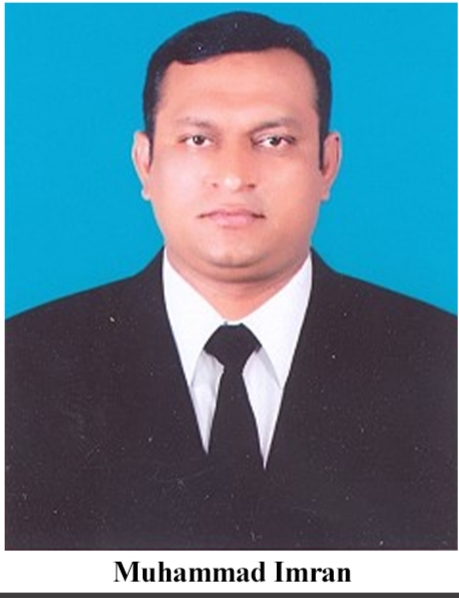
By Muhammad Imran, Staff Member, SAHSOL-LUMS and Asma Rahmat, Final Year Law Student, SLC, Superior University and Muhammad Ameer Hamza, Final Year Law Student, SLC, Superior University


 Historical Evolution and Constitutional Recognition: The right to a fair trial and due process is expressly guaranteed under Article 10A of the Constitution of the Islamic Republic of Pakistan, 1973, which was inserted through the Constitution (Eighteenth Amendment) Act, 2010. The Eighteenth Amendment was passed by the National Assembly on 8 April 2010, approved by the Senate on 15 April 2010, and received the assent of the President on 19 April 2010, whereupon it came into force. The insertion of Article 10A marked one of the most significant constitutional reforms introduced by the Eighteenth Amendment by expressly recognizing the right to a fair trial and due process as enforceable fundamental rights.

Before the insertion of Article 10A, the Constitution did not contain an explicit guarantee of the right to a fair trial. Nevertheless, the superior judiciary consistently interpreted Articles 4, 9, and 25 of the Constitution as implicitly incorporating the principles of natural justice, procedural fairness, and due process. Article 4 guarantees the right of every individual to be dealt with in accordance with law, Article 9 protects the security of person, and Article 25 guarantees equality before the law and equal protection of the law. Through an evolving body of constitutional jurisprudence, the Supreme Court of Pakistan acknowledged that fairness in legal proceedings constituted an indispensable component of the rule of law and the protection of fundamental rights. However, the absence of an express constitutional guarantee often created uncertainty regarding the precise scope and enforceability of these procedural protections.

The insertion of Article 10A fundamentally transformed Pakistan’s constitutional framework by elevating the right to a fair trial and due process into an independent and directly enforceable fundamental right. It converted principles previously implied through judicial interpretation into an explicit constitutional mandate, thereby strengthening the protection of individual liberties, reinforcing constitutional supremacy, and enhancing judicial oversight. Moreover, the amendment reflects Pakistan’s commitment to internationally recognized human rights standards, particularly Article 14 of the International Covenant on Civil and Political Rights (ICCPR), which guarantees the right to a fair and public hearing by an independent and impartial tribunal.

Scope and Nature of Article 10A: Article 10A provides that: “For the determination of his civil rights and obligations or in any criminal charge against him, a person shall be entitled to a fair trial and due process.” The language of Article 10A demonstrates that its protection is not confined to criminal prosecutions. Rather, it extends equally to civil proceedings and all judicial, quasi-judicial, and administrative proceedings in which legal rights and obligations are determined. Consequently, the constitutional guarantee encompasses the entire continuum of justice, including investigation, arrest, detention, prosecution, adjudication, sentencing, appeal, and review. The constitutional requirement of “due process” ensures that every stage of legal proceedings must be conducted in accordance with established legal procedures, free from arbitrariness, discrimination, mala fide exercise of power, or abuse of authority.

Essential Components of the Right to Fair Trial: The right to a fair trial under Article 10A embodies a comprehensive set of procedural safeguards that are indispensable for the administration of justice. These include the presumption of innocence until guilt is proved beyond reasonable doubt, the right to be informed promptly and clearly of the accusations, the right to adequate time and facilities to prepare a defence, the right to legal representation by counsel of one’s own choosing, the opportunity to examine and cross-examine witnesses, the right to produce evidence in defence, and the entitlement to a public hearing before an independent, impartial, and competent tribunal established by law.

Equally important is the obligation that judicial decisions be reasoned, evidence-based, and transparent. The requirement to provide reasoned judgments promotes accountability, facilitates appellate review, enhances public confidence in the administration of justice, and ensures that justice is not only done but is also manifestly seen to be done.

Relationship with Other Constitutional Guarantees: Article 10A does not operate in isolation but forms part of a broader constitutional framework safeguarding individual liberty and procedural justice. Article 4 guarantees that every individual shall be treated strictly in accordance with law, while Article 9 protects the fundamental rights to life and liberty. Article 10 provides specific procedural safeguards relating to arrest and detention, including the right to be informed of the grounds of arrest, the right to consult legal counsel, and the right to be produced before a magistrate within twenty-four hours. Article 25 further guarantees equality before the law and equal protection of the law.

Read harmoniously, these constitutional provisions establish an integrated framework designed to prevent arbitrary state action, ensure accountability of public authorities, and uphold fairness throughout the legal process.

Judicial Interpretation of Article 10A: The superior judiciary has consistently interpreted Article 10A as embodying both procedural and substantive dimensions of justice. The Supreme Court of Pakistan has repeatedly emphasized that compliance with Article 10A requires more than mere adherence to technical procedural formalities; rather, fairness must permeate every stage of legal proceedings. Investigations, collection of evidence, prosecution, trial, sentencing, and appellate review must all satisfy constitutional standards of due process.

The courts have further held that statutory provisions or executive actions inconsistent with Article 10A are subject to constitutional scrutiny and may be declared unconstitutional where they undermine the fundamental right to a fair trial. Consequently, Article 10A has become a cornerstone of Pakistan’s constitutional jurisprudence, guiding judicial review in criminal justice, administrative law, disciplinary proceedings, and civil litigation.

Constitutional Significance: The constitutional recognition of the right to a fair trial has significantly strengthened Pakistan’s legal system by providing an effective safeguard against arbitrary exercise of state power. It protects individuals against unlawful convictions, promotes judicial accountability, enhances public confidence in legal institutions, and reinforces the supremacy of the rule of law. Simultaneously, it serves as an important constitutional mechanism for balancing society’s interest in the effective prosecution of crime with the fundamental rights of accused persons, thereby ensuring that justice is administered fairly, impartially, and in accordance with constitutional values.

The most authoritative exposition of Article 10A, however, is found in District Bar Association, Rawalpindi v. Federation of Pakistan (PLD 2015 SC 401). While adjudicating the constitutional validity of the Twenty-first Constitutional Amendment relating to military courts, the Supreme Court recognised that Article 10A constitutes one of the Constitution’s most important guarantees of procedural justice. Although the majority upheld the constitutional amendment, several judges emphasised that even special courts exercising jurisdiction over terrorism offences remain subject to the constitutional requirements of fairness, due process, and judicial review. The judgment established that Article 10A is not confined to ordinary criminal courts but represents a constitutional standard against which all adjudicatory mechanisms must be measured. It further reaffirmed that constitutional supremacy requires all organs of the State to respect the minimum requirements of procedural fairness.

Challenges in the Implementation of Article 10A: Despite its constitutional significance, the practical realization of Article 10A continues to face substantial institutional and procedural challenges. Persistent delays in judicial proceedings, inadequate investigative standards, limited access to competent legal representation for indigent accused persons, overcrowded courts, prolonged pre-trial detention, and occasional executive interference continue to undermine the effective implementation of fair trial guarantees.

Furthermore, proceedings involving terrorism, national security, and special courts have generated continuing constitutional debate regarding the appropriate balance between collective security and individual constitutional rights. These challenges demonstrate that constitutional recognition alone cannot ensure procedural fairness unless accompanied by institutional efficiency, judicial independence, effective legal aid, professional investigation, prosecutorial integrity, and meaningful enforcement mechanisms.

Conclusion: Article 10A represents one of the most transformative constitutional reforms in Pakistan’s legal history by expressly guaranteeing the fundamental rights to a fair trial and due process. It constitutionalizes the principle that justice must not only be done but must also be seen to be done through transparent, impartial, and lawful procedures. By extending constitutional protection to both civil and criminal proceedings, Article 10A reinforces the rule of law, strengthens judicial oversight, and enhances the protection of fundamental rights. Nevertheless, the enduring effectiveness of this constitutional guarantee ultimately depends upon its faithful implementation by investigative agencies, prosecutors, courts, and all institutions entrusted with the administration of justice.
Similar Posts

  • Road to the East

    The subject idea of “Road To The East” is conceived by me by a textbook when the store Marco polo was described a story with a title of road to the east. The fascination of culture is everywhere especially, within the walled city of Kashi which is located comparatively on a high altitude like a natural fort. As this area from central east was under the invasion of different ethnic communities in the past. I got a chance to walk through the downtown streets which are relatively wider than the downtown streets of Lahore. The construction of the houses is also showing its beauty and culture with their traditions. Now the walled city have totally been preserved by the Chinese government and as I mentioned the tourism have become one of the most important growing industry in the region. The most famous place historically in this region is called Eig Gah. That is this famous mosque was built during the fifteenth century with the capacity of 20,000 people, can offer a prayer within the, inside of compound. While there is a huge yard outside of this compound which is the center of an attraction for all the tourists. Vice President Pakistan-China Joint Chamber There was a camel ride for the tourist attraction and these camels are special, only found in the Gobie desert, with two humps. These kind of camels are also an iconic symbol of China same as panda. It was also arranged a horse ride for the tourist who love to have a picture by riding at the back of the horse. At one time, in this area, the horses were used to have mainly without saddles. The local people are very fond of music, almost every coffee house have the people to play the traditional music, as their tradition music is with the history of hundreds of years. Duff is one of a very important part of their music playing with one instrument called Algoza. Always with the musicians, there is a singer playing the ancient music even though I did not understand the meaning but I got to know that this was mainly related with the stories of their local warriors. The conventional tea houses normally have their dance performance showing heir culture and dance skill. That all is very amazing. I love to watch that performance in different tea shops. Now, the culture have expended in different restaurants where not only girls but also men perform their traditional dance. I hope we can be able to arrange a cultural linkage between the cities of Lahore and Kashgar. All that modern restaurants are very beautiful, a clean and rich with their construction style. The waiters always dressed up like a female servant serving in the royale courts. Most of them are very beautiful to pass an impression of a royale age. Food of Kashgar (Kashi) is very traditional and tasty. The local people are really lamb lovers. You can find halal food in every corner of Kashi. Where you never need to ask the food quality is halal or not. Despite that, I have experienced the most lamb served in all over China is mostly done by the Muslims. The horse meat is one of the traditional delicacy of this region. But normally in our society we refrain to eat it. Camel milk is served as a soveigner to all the visitors. It was my first time to experience the camel milk. Most of the Xinjiang due the weather is dry and the rainfall is very limited. Despite of this all, Xinjiang is very rich for its fruit production in recent years. Chinese government have paid a lot of attention to improve the agriculture and food industry. This have helped a lot for the locals to improve their life standard. The government have paid a special attention to develop an agricultural farming industry in this region.   Walnut once it was used to exported from Pakistan to China but the border trade now have become an iconic product of Yecheng, is normally called as the capital of walnuts. They have also developed a technology to cultivate pomegranate in a sandy surface. I really hope under the BRI agriculture, is one of the major subject in Pakistan. Can we be able to get an experience from China that how they converted their barren lands into green fields. This is my proposal to the green initiative Pakistan, is that they are willing to improve their yield capability by the technology that have already been successful in the similar environment. Pakistan with its huge barren land along with the Gilgit city which can be experienced by using the technology already existing in this region. Mines and minerals is one of biggest subject that we need to pay attention. Till today, we are not been able to address our natural resources in to a successive model. I have observed to Pakistan side is full of natural resources with mines and minerals while the other sider of the border have already established the biggest units of processing. My advice to our provincial government of Gilgit Baltistan that why they don’t take an opportunity as China is already a friendly country with Pakistan, with a will of the transfer of technology. That means this can change the entire financial position of this region. We feel there is a lack with the technology of preservation of food and fruits. GB as a basket of the fruits, is not able to perform its strength where there are a lot of chances to earn a technology or going for a joint venture to improve the life standard of locals.

  • A Continent on Fire: What Central Asia Can Teach t…

    By Engineer Arshad H Abbasi, ahabasi@gmail.com, edited by Engineer Musa Arshad H Abbasi I write this from Islamabad, not as a diplomat or a historian, but as someone who spends his working life measuring rivers, glaciers, and energy systems — and who has spent the last year watching the instruments of my own profession become instruments of geopolitics instead. I am a water, energy and climate professional, not an expert in international relations. But you do not need a doctorate in strategic studies to feel what it means to live in a capital that sits within reach of two active fronts at once, and to watch a third, farther away, threaten the fuel that keeps my own country’s lights on. To the east, the Indus itself has become a weapon in a dispute I once only studied on paper. Since April 23, 2025, one day after the Pahalgam attack killed 26 people in Jammu and Kashmir, India has held the 1960 Indus Waters Treaty in abeyance, and as recently as July 3, 2026, New Delhi reaffirmed the suspension will continue until Pakistan “credibly and irrevocably” ends cross-border terrorism. Pakistan calls any interruption of that water an act of war. I measure river flows for a living, and I can tell you that a treaty which survived two wars and decades of hostility between 1960 and 2025 was never really about engineering — it was about restraint. Watching that restraint erode between two nuclear-armed neighbors, over a river that irrigates the fields I grew up walking beside, is not an abstraction to me. It is personal. To the west, the war that began on February 28, 2026 between the United States, Israel, and Iran has turned the Strait of Hormuz — the channel that once carried roughly a quarter of the world’s seaborne oil and a fifth of its LNG — into a contested chokepoint. Iranian forces have mined and attacked shipping there on and off for months; a ceasefire and a June memorandum of understanding collapsed in July when Iran resumed strikes on vessels it deemed noncompliant. Even now, in mid-August, Tehran and Oman are still negotiating the terms under which the strait might fully reopen. Every Pakistani household that has watched fuel prices swing this year has felt that war, even though it is being fought a thousand miles from here. And Pakistan’s own western border is no longer a metaphor for instability — it is an active one. Since February 2026, Pakistan and Afghanistan have fought what both sides’ own defense ministries have called open war along the 1893 Durand Line, with Pakistani airstrikes on Nangarhar and Kabul, an Afghan cross-border offensive, and casualty claims running into the hundreds on each side before Qatar- and Turkey-mediated pauses briefly held. I know these are not the only fires burning on this continent, and an honest accounting has to look past South Asia. In Southeast Asia, a century-old dispute between Thailand and Cambodia over the ancient temples of Preah Vihear and Ta Muen Thom erupted twice in 2025 — first in July, then again in December — leaving at least 101 people dead and forcing more than half a million civilians from their homes before a fragile ceasefire, signed December 27, brought an uneasy calm. In East Asia, the map is a thicket of overlapping claims: China and Taiwan over the island’s sovereignty itself; China and Japan over the Senkaku/Diaoyu islands in the East China Sea; China and the Philippines over Scarborough Shoal and reefs across the South China Sea; and Japan and its neighbors over a scattering of other contested waters that keep regional navies on constant alert. Indonesia and Malaysia, too, carry an unresolved history — the armed 1960s Konfrontasi and a maritime boundary dispute over the oil-rich Ambalat block in the Sulawesi Sea that periodically flares even between otherwise friendly neighbors. And running beneath all of it is the oldest fault line of all: the decades-long conflict between Israel and its Arab neighbors, still reshaping alliances and battlefields from Gaza to Lebanon to Yemen, where Houthi strikes on Saudi infrastructure continue even this month. Set against all of that, look at Central Asia — building transit corridors instead of trench lines, settling water and border disputes through negotiation rather than force, and courting the same investors that war has driven away from South Asia, the Gulf, and the South China Sea. Even the Armenia-Azerbaijan peace process next door, however unfinished — initialed in Washington in August 2025, still unsigned a year later over Armenia’s constitutional language — has produced something rarer than victory: an actual framework both sides keep returning to, rather than abandoning for the battlefield. While I want to avoid romanticizing Central Asia to those who know the region far better than I do, it stands as a compelling model for peace. The region offers a practical demonstration that Asian states can prioritize economic integration over territorial reflexes—a choice that others, from Islamabad to Phnom Penh to Manila, have yet to make. The Ledger of Conflict: A Continent Still at War With Itself It is worth setting all of this down in one place, because scattered across a dozen news cycles it is easy to lose the scale of it. India–Pakistan, Kashmir and the Indus Waters Treaty. Held in abeyance since April 23, 2025; reaffirmed as of July 2026 to remain suspended until Pakistan “irrevocably” ends cross-border terrorism, in a dispute that touches the water security of more than 300 million people and involves two nuclear-armed states that have already fought a war in 2025. Iran, Israel, and the United States. War since February 28, 2026, with Iranian attacks on shipping through the Strait of Hormuz — a corridor carrying roughly a quarter of the world’s seaborne oil and a fifth of its LNG — still unresolved as Tehran and Oman negotiate terms for reopening it, even this month. Pakistan–Afghanistan, the Durand Line. Open war since February 2026 between two governments that have never

  • Greed in Modern Age

    By Latif Tunio Imagine two people standing outside a bakery. One has not eaten since yesterday. The other has already had breakfast but buys every loaf on the shelf because nobody else should have one. The first person is hungry. The second is greedy. That is the difference we often forget. Human needs are surprisingly small. We need food, shelter, safety, affection and dignity. Yet somewhere along the road to modern civilization, our desires stopped listening to our needs. We no longer ask, “Do I need this?” We ask, “Will people notice if I don’t have it?” Perhaps that is why we live in an age where skyscrapers grow taller while patience grows shorter. Greed is not new. Kings fought wars for gold centuries ago. Empires swallowed nations for spices, land and power. But today greed wears expensive perfume, carries a smartphone and speaks the language of success. It no longer hides in dark corners; sometimes it sits on television panels giving motivational speeches. A hundred years ago, a respected person was often remembered for honesty, wisdom or service to the community. Today, many people first ask, “What car does he drive?” or “How much is she worth?” Character has quietly been replaced by price tags.Social media has made this worse. Every morning millions of people wake up and immediately begin comparing their ordinary lives with someone else’s carefully edited highlights. One person posts a luxury vacation. Another uploads a new phone. Someone else announces another achievement. Nobody uploads sleepless nights, unpaid bills or family arguments. We compare our behind-the-scenes life with everyone else’s movie trailer.Then we wonder why we feel poor. The market has discovered something dangerous: making people dissatisfied is excellent for business. If people become content, who will buy the next upgrade Advertisements rarely sell products anymore. They sell insecurity. Frankly They whisper, “You are incomplete without this watch.” “You are unsuccessful without this car.” “You are unattractive without this cream.” Apparently even happiness now comes with monthly installments. Yet greed is not always born from vanity. Sometimes it grows out of fear. A father worried about rising school fees saves every rupee he can. A mother fears another economic crisis. A young graduate sees unemployment everywhere and begins believing that only endless money can guarantee safety. Fear slowly changes saving into hoarding, and caution into obsession. There is an old saying often attributed to Mahatma Gandhi: “The Earth provides enough for everyone’s need, but not everyone’s greed.” The tragedy is that many people no longer know where need ends and greed begins. Another reason is that we have quietly lost the art of contentment. Previous generations owned fewer things but often worried less about owning more. Today many people possess wardrobes full of clothes while insisting they have “nothing to wear.” We buy bigger houses only to spend less time inside them. We own faster internet but have slower conversations. Modern life keeps promising that the next purchase will finally complete us. It never does. Greed also flourishes where justice is weak. When honest people struggle while corrupt people become celebrities, society learns a dangerous lesson. Bribes become “connections.” Fraud becomes “smartness.” Tax evasion becomes “good business.” Before long, honesty begins looking like a financial disability. The message becomes painfully simple: if cheating pays and integrity suffers, why remain honest? This is how corruption stops being an individual crime and becomes a social culture. The damage reaches far beyond bank accounts. Families break apart over inheritance before the funeral flowers have even dried. Lifelong friendships disappear over business deals. Brothers become strangers because land suddenly becomes more valuable than blood. Perhaps the saddest part is that greedy people rarely enjoy what they collect. They spend years protecting possessions they never truly have time to use. They own everything except peace. Nature also pays the bill. Forests disappear because cutting trees is profitable today, even if floods arrive tomorrow. Rivers become sewers because treating waste reduces corporate profits. Mountains are blasted apart, oceans filled with plastic and clean air sold back to us in expensive machines. Humanity has become astonishingly efficient at converting tomorrow’s disasters into today’s profits. Can greed be reduced? Not by preaching alone. Children should learn that success includes honesty, kindness and responsibility—not only salaries. Schools should celebrate integrity as loudly as achievement. Families should teach gratitude before ambition. We also need digital wisdom: learning that a perfect life on a screen is often nothing more than excellent lighting and careful editing. Governments have responsibilities too. Laws must punish corruption without asking whether the offender is rich, famous or politically connected. Justice loses its meaning when it becomes negotiable. Above all, we need to rediscover contentment—not laziness, but the wisdom of knowing when enough is truly enough. A society does not become civilized because it builds taller buildings or produces richer billionaires. It becomes civilized when people can trust one another, when honesty is rewarded instead of mocked, and when success does not require sacrificing conscience. The greatest poverty in the twenty-first century may not be empty pockets. It may be full wallets attached to empty hearts. The writer is a Social activist. He can be reached at tunio.latif786@gmail.com

  • The Transferability Paradox: Skills, Borders and t…

    We often speak of professional skills as though they were assets that can be packed into a suitcase and carried effortlessly across borders. In reality, skills do not all travel in the same way. A computer language remains a computer language whether one works in Pakistan, Singapore, the United Kingdom or the United States. Engineering principles, mathematics, manufacturing techniques and many scientific disciplines retain much of their relevance regardless of geography. The environment may change, but the fundamental language of the profession remains largely intact. The situation becomes more complicated with professions that operate within national regulatory and institutional frameworks. Accounting principles may be broadly understood internationally, but taxation, reporting requirements and corporate regulations can differ substantially between jurisdictions. The same is true of law and medicine. A lawyer who has spent decades mastering one country’s legal system cannot simply assume that the same statutes, procedures and precedents apply elsewhere. A doctor may possess years of clinical experience yet still be required to pass examinations and satisfy licensing requirements before being permitted to practise in another country. The knowledge has not disappeared. What has changed is the framework within which that knowledge is recognised and allowed to operate. This distinction is important because we sometimes confuse the transferability of skills with the transferability of credentials. They are not the same thing. A seasoned CFO does not forget how to evaluate risk, allocate capital, establish financial controls or understand a balance sheet upon crossing an international border. A doctor does not lose diagnostic ability at immigration, nor does a lawyer suddenly lose the capacity for legal reasoning. Yet the receiving country’s institutions may place conditions on recognising those abilities. What is being restricted is often not the skill itself, but the right, opportunity or credibility required to exercise it. For C suite professionals, however, there is another layer to the problem. As people rise through organisations, their professional value increasingly consists of much more than technical competence. Over twenty or thirty years, an executive accumulates reputation, relationships, cultural understanding, institutional knowledge and credibility. He or she learns how decisions are actually made, which relationships matter, how regulators think, how capital moves and how to navigate the unwritten rules of a particular business environment. This social and institutional capital can become as important as the technical skills that originally built the career. Crossing a border can dramatically alter the value of that accumulated capital. A CEO, CFO or senior executive who is well known and respected in one country may arrive in another market where few people recognise the organisations he or she worked for, understand the scale of previous responsibilities or appreciate the complexity of the environment in which those responsibilities were exercised. The person has not become less capable, but the ecosystem that validated that capability has been left behind. This is perhaps one of the least discussed dilemmas of international mobility at senior levels. The higher one climbs within a particular ecosystem, the more deeply one’s professional identity may become connected with that ecosystem. A young engineer may be assessed largely on technical competence and therefore move relatively easily between markets. A senior executive is assessed on a much broader collection of attributes, many of which are difficult to demonstrate on a CV. Reputation, networks, judgement and influence cannot always be exported as easily as qualifications. Then there is the uncomfortable issue of regional bias. Professional experience is not always evaluated purely on merit. Employers and institutions can consciously or unconsciously attach different values to experience depending on where it was acquired. A senior position in one part of the world may not automatically be regarded as equivalent to a similar position in another. Accent, nationality, familiarity with local business culture and perceptions about the sophistication of the previous market can all affect how a professional is judged. Regulation can create a formal wall, while perception can create an invisible one. Perhaps professional capital should therefore be thought of in three forms. There is skill capital, meaning what a person actually knows and can do. There is credential capital, meaning what institutions formally recognise or permit that person to do. Finally, there is social capital, meaning the network of people and institutions that know, trust and are prepared to place responsibility in that person’s hands. Skill capital can often travel. Credential capital may require rebuilding. Social capital can sometimes have to be recreated almost from the beginning. This brings me to the question that I find much harder to answer. If a country’s most capable professionals conclude that their talents will produce greater opportunities elsewhere, should they leave? Or should they remain and use their abilities, experience and influence to improve the environment that is encouraging them to leave in the first place? There is an obvious argument for mobility. A professional has a responsibility to his or her own life and family and cannot reasonably be expected to sacrifice decades waiting for institutions to improve. Talent naturally seeks environments where it can grow, where merit is recognised and where opportunities allow ability to compound. If those conditions exist elsewhere, moving may be entirely rational. Yet there is an equally uncomfortable consequence. When capable professionals, entrepreneurs, academics and executives continually leave weaker institutional environments for stronger ones, the countries they leave behind lose precisely the human capital that might have helped strengthen those institutions. Weak systems cause talent to leave, and the departure of talent can make those systems even harder to improve. We then arrive at something resembling the old question of the chicken and the egg. Do strong institutions create successful people, or do successful people create strong institutions? Do countries first need better systems to retain talent, or must talented people remain long enough to build those systems? If everyone waits for the environment to improve before contributing to it, who creates the improvement? But if individuals spend their lives fighting systems that are resistant to change, what happens to their own potential? Perhaps the

  • Eudaimonia: When Being Human Was Enough”

    From Laraib Zahra Once upon a time, far from Earth, beyond the reach of our skies, there existed a planet called the Worthlands. In the Worthlands, there was an equal proportion of humans and ghosts. Whenever a human was born, a little ghost was born by their side. These little ghosts were called Hounds. Every Hound possessed a superpower: it could know exactly what its human companion was thinking. The entire planet was ruled by three powerful ghosts, commonly known by humans and Hounds as the Great 3Gs. Each of the three had a separate kingdom. They were the Ghost of Guilt, the Ghost of Productivity, and the Ghost of Fear. The Ghost of Guilt was the eldest of the three. He controlled the capital of the Worthlands. He had his own Guilt Police and Guilt Pumps. Guilt was a magical liquid found inside these pumps. The Guilt Police, along with the Hounds, kept a constant check on the behaviour of the people in the capital. Their job was to make sure that nobody ever ran out of fuel—the fuel of guilt. Whenever a person was caught running out of guilt, the Hounds immediately reported them to the Guilt Police. They were then provided with more guilt fuel to make sure that nobody went “insane.” The biggest crime in the capital was the Rest Crime. As soon as a person became exhausted and decided to take some rest, the Hounds would begin fiercely whispering in their ears: “Strong people don’t stop.” They would tell them not to rest until they reached somewhere. But where exactly this “somewhere” was, nobody really knew. Sometimes, when a person was genuinely unable to work any further because of an overwhelming workload, the Hounds would call specialised therapists known as the Fear Feeders from the Kingdom of Failure for counselling—a kingdom I shall discuss in greater detail later. On the other hand, the entire north of the Worthlands was ruled by the second Great Ghost: the Ghost of Productivity. Unlike the Guilt Police, who were actually in charge of the capital, there was no such police force in the north. Instead, there was a ministry known as the Ministry of Merit. The humans there were never supposed to sit idle. Instead, they were expected to work harder and harder to make sure that they remained at the top of the list maintained by the Ministry of Merit. Every year, there was a grand ceremony known as the Annual Worth Ceremony. The humans who earned the highest number of merit points received a golden star carved with their names in the Worth Register of the Ministry of Merit. Every time a human refused to rest in order to increase their productivity, the Hounds would greet them by saying: “Congratulations! You have earned three merit points.” Humans were comparatively happier in the north than in the other two kingdoms because here, they were rewarded with golden stars bearing their names. The more golden stars a human had beside their name in the Worth Register, the more likely they were to become part of the Hounds—the most respected position in the Worthlands. After all, the Hounds had the superpower to read human minds, and they could even fly. Their slogan was: “You could be doing more.” To the south lay the third kingdom—the Kingdom of Failure, ruled by the Great Ghost of Fear. This kingdom was the most terrible of them all. The humans there were weak and diseased. Every second person was a victim of anaemia. They looked as though they had been starving for days, perhaps even weeks. On the contrary, the Great Ghost of Fear was the fattest of the three ghosts. The reason for this strange contrast was hidden in the Hounds. Unlike the Hounds in the north and the capital, the Hounds in the south had a distinct name. They were called Fear Feeders. The Fear Feeders had one duty: to sense fear-bearing thoughts in human minds and suck them out, because the Great Ghost of Fear fed on those thoughts. There were many kinds of fears that humans carried in that kingdom: The fear of not doing enough. The fear of getting left behind. The fear of failure. And many more. The Fear Feeders collected these thoughts and presented them to their master. The Great Ghost of Failure had one dish that was especially dear to him. It was his favourite dish of all: “What If” Spaghetti. “What If” Spaghetti was a special dish found in all three kingdoms, but it was particularly abundant in the Kingdom of Failure. The humans looked starved because they had to constantly produce fear in their minds so that they could feed it to the Fear Feeders. These fears were produced through a process called whispering, carried out by Hounds that were not themselves Fear Feeders. Then, one day, something unexpected happened. A few Hounds disappeared. Seven Hounds. Everyone in the Worthlands was deeply concerned about their sudden disappearance. The Guilt Police, along with other investigation departments, launched a search operation. But not even a single missing Hound was found. The humans whose Hounds were missing were arrested and questioned. The results of the investigation shocked everyone in the Worthlands. The Hounds could only exist if their humans obeyed them. This was something that neither the Hounds nor the humans had ever known before. The humans whose Hounds had disappeared were, surprisingly, close friends. During the investigation, they confessed that one day, they had decided to step back from their usual exhausting routines and take a break to rest their tired and ruptured nerves. All of a sudden, seven Hounds appeared and began whispering their usual slogans: “Strong people don’t stop.” “What if you get left behind?” And their most favourite: “You could be doing more.” The humans became lost in their thoughts once again and decided to give up on their plan to rest. But then, suddenly, a voice echoed through the room: “But

  • The Great Tragedy of Partition—IX   Was the tra…

    History does not become inevitable merely because it happened The Partition of British India is frequently narrated backwards. Because India and Pakistan emerged as separate states in August 1947, every disagreement preceding their creation is treated as another step towards an unavoidable conclusion. Political demands become fixed destinies, failed negotiations appear predestined to fail, and the violence accompanying the transfer of power is presented as the inevitable consequence of ancient communal hostility. The documentary record examined in this series suggests a different conclusion. To ask whether Partition was inevitable is, in fact, to combine three distinct questions. Was the political division of British India unavoidable? Was the accelerated timetable chosen for the transfer of power unavoidable? Was the mass displacement and violence accompanying Partition unavoidable? These questions are related, but they do not admit the same answer. The constitutional division of India was not historically inevitable from the beginning of the anti-colonial struggle. Competing political visions existed, but so did repeated attempts to accommodate them. The possibility of a united constitutional order survived the Lahore Resolution, the Cripps Mission and even the failure of the Simla Conference. The Cabinet Mission Plan of 1946 came remarkably close to obtaining acceptance from both Congress and the Muslim League by proposing a weak centre, autonomous provinces and compulsory provincial groupings. That arrangement might have survived; it might also have collapsed under the weight of its own ambiguities. History cannot establish with certainty what would have happened under a constitutional plan that was never fully implemented. It can establish that an alternative existed and that, for a brief period, both principal political parties considered it preferable to immediate Partition. The collapse of that opportunity did not result from one sentence, one leader or one political organisation. Congress feared that compulsory groupings would weaken the future Union and prevent the construction of an effective national government. The Muslim League feared that Congress would use its strength in the Constituent Assembly to dismantle the safeguards upon which Muslim-majority provinces had relied. British negotiators used ambiguity to secure agreement but failed to create a mechanism capable of resolving the conflicting interpretations that followed. Political trust disappeared faster than constitutional ingenuity could replace it. By early 1947, division had become increasingly probable. The Cabinet Mission framework had collapsed, the interim government was paralysed, communal violence had spread and the principal political parties no longer shared a common conception of India’s constitutional future. An increasingly probable outcome, however, is not the same as an historically predetermined one. It was the cumulative product of decisions taken, compromises rejected, assurances doubted and opportunities lost. The Second World War had accelerated this process. Britain’s strategic dependence upon India strengthened the bargaining positions of Indian political parties while weakening imperial authority. Congress demanded effective power and national independence. The Muslim League used the altered constitutional balance to secure recognition of Muslims as a political nation. The Communist Party of India (CPI), approaching the question from an entirely different intellectual tradition, acknowledged the “just essence” of the Pakistan demand through the principle of national self-determination. Muslim intellectuals were simultaneously debating what Pakistan would mean. The discussions in Tarjuman-ul-Qur’an and Tolu-e-Islam demonstrated that support for a Muslim homeland did not produce agreement about the nature of the future state. The political demand for Pakistan and the constitutional content of Pakistan were related questions, but they were never identical. British policy also evolved. The Raj did not simply devise Partition according to a predetermined imperial design. Nor can it be treated as a neutral referee unable to influence events. British constitutional arrangements had shaped political representation, while wartime policy altered the balance between Congress and the Muslim League. Cripps introduced the possibility that provinces might remain outside a future Union. Simla exposed the struggle over who could represent Indian Muslims. The Cabinet Mission attempted to preserve unity through decentralisation. Mountbatten ultimately concluded that division offered the fastest route to British withdrawal. Responsibility was therefore differentiated, but it was not absent. Congress and the Muslim League made decisions with consequences they could not fully control. British authorities retained formal power, controlled the timetable and supervised the division of the state. Provincial governments failed to protect vulnerable communities. Communal organisations, militias and local groups transformed political antagonism into killings, abductions and forced migration. Ordinary Hindus, Muslims and Sikhs, most of whom had exercised no influence over constitutional negotiations, paid the greatest price. This brings us to the second question. Even if political Partition had become unavoidable by the middle of 1947, was its hurried implementation equally unavoidable? The evidence permits a firmer answer. Britain had initially announced that power would be transferred by June 1948. Mountbatten brought the date forward to August 1947. This acceleration left only weeks to divide provinces, assets, armed forces, civil services, railways, irrigation systems and administrative records. The boundary awards were disclosed after the new states had formally come into existence. Political leaders could reasonably fear that prolonged uncertainty would intensify disorder, but haste was a choice made within difficult circumstances, not an irresistible law of history. The third question concerns the violence itself. No provision of the Indian Independence Act ordered a compulsory exchange of populations. Nothing in constitutional separation required refugee trains to become moving graveyards, women to be abducted or families to abandon ancestral homes. Violence arose from fear, organised attacks, retaliatory killings, administrative collapse and the failure to provide adequate security. Its precise course could not have been predicted, but its scale was not constitutionally necessary. The tragedy was therefore greater than Partition. It lay in the manner in which Partition was conceived, accelerated and implemented. The Indian Independence Act legally created two Dominions, but independence did not immediately erase the institutions of empire. Section 8 allowed the governmental machinery of the Government of India Act, 1935, as adapted, to continue until the new Dominions framed their own constitutions. Pakistan would remain governed under that inherited framework until its first Constitution came into force in 1956. Political sovereignty

Leave a Reply

Your email address will not be published. Required fields are marked *