road east

Road to the East

The subject idea of “Road To The East” is conceived by me by a textbook when the store Marco polo was described a story with a title of road to the east.

The fascination of culture is everywhere especially, within the walled city of Kashi which is located comparatively on a high altitude like a natural fort. As this area from central east was under the invasion of different ethnic communities in the past. I got a chance to walk through the downtown streets which are relatively wider than the downtown streets of Lahore.

The construction of the houses is also showing its beauty and culture with their traditions. Now the walled city have totally been preserved by the Chinese government and as I mentioned the tourism have become one of the most important growing industry in the region.

The most famous place historically in this region is called Eig Gah. That is this famous mosque was built during the fifteenth century with the capacity of 20,000 people, can offer a prayer within the, inside of compound.

While there is a huge yard outside of this compound which is the center of an attraction for all the tourists.

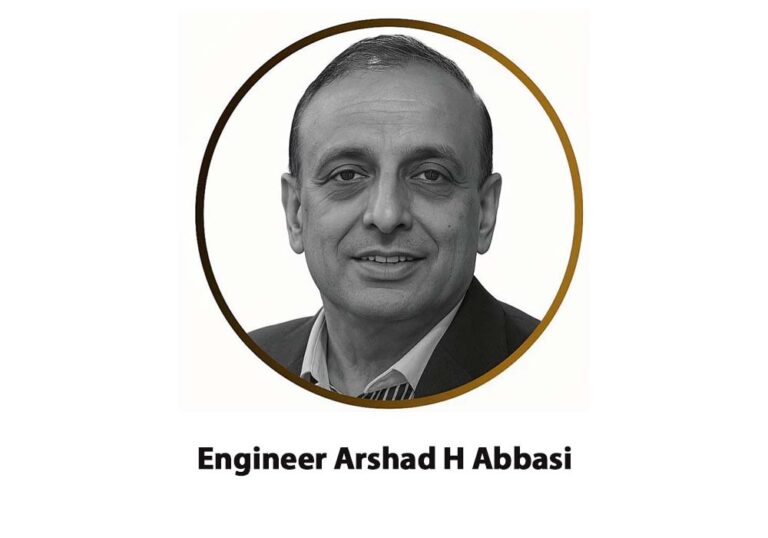
Vice President Pakistan-China Joint Chamber

There was a camel ride for the tourist attraction and these camels are special, only found in the Gobie desert, with two humps. These kind of camels are also an iconic symbol of China same as panda. It was also arranged a horse ride for the tourist who love to have a picture by riding at the back of the horse. At one time, in this area, the horses were used to have mainly without saddles.

The local people are very fond of music, almost every coffee house have the people to play the traditional music, as their tradition music is with the history of hundreds of years. Duff is one of a very important part of their music playing with one instrument called Algoza. Always with the musicians, there is a singer playing the ancient music even though I did not understand the meaning but I got to know that this was mainly related with the stories of their local warriors. The conventional tea houses normally have their dance performance showing heir culture and dance skill. That all is very amazing. I love to watch that performance in different tea shops.

Now, the culture have expended in different restaurants where not only girls but also men perform their

traditional dance. I hope we can be able to arrange a cultural linkage between the cities of Lahore and Kashgar.

All that modern restaurants are very beautiful, a clean and rich with their construction style. The waiters always dressed up like a female servant serving in the royale courts. Most of them are very beautiful to pass an impression of a royale age. Food of Kashgar (Kashi) is very traditional and tasty. The local people are really lamb lovers. You can find halal food in every corner of Kashi. Where you never need to ask the food quality is halal or not. Despite that, I have experienced the most lamb served in all over China is mostly done by the Muslims.

The horse meat is one of the traditional delicacy of this region. But normally in our society we refrain to eat it.

Camel milk is served as a soveigner to all the visitors. It was my first time to experience the camel milk.

Most of the Xinjiang due the weather is dry and the rainfall is very limited. Despite of this all, Xinjiang is very rich for its fruit production in recent years. Chinese government have paid a lot of attention to improve the agriculture and food industry. This have helped a lot for the locals to improve their life standard. The government have paid a special attention to develop an agricultural farming industry in this region.


Walnut once it was used to exported from Pakistan to China but the border trade now have become an iconic product of Yecheng, is normally called as the capital of walnuts. They have also developed a technology to cultivate pomegranate in a sandy surface. I really hope under the BRI agriculture, is one of the major subject in Pakistan. Can we be able to get an experience from China that how they converted their barren lands into green fields. This is my proposal to the green initiative Pakistan, is that they are willing to improve their yield capability by the technology that have already been successful in the similar environment.

Pakistan with its huge barren land along with the Gilgit city which can be experienced by using the technology already existing in this region.

Mines and minerals is one of biggest subject that we need to pay attention. Till today, we are not been able to address our natural resources in to a successive model. I have observed to Pakistan side is full of natural resources with mines and minerals while the other sider of the border have already established the biggest units of processing.

My advice to our provincial government of Gilgit Baltistan that why they don’t take an opportunity as China is already a friendly country with Pakistan, with a will of the transfer of technology. That means this can change the entire financial position of this region. We feel there is a lack with the technology of preservation of food and fruits. GB as a basket of the fruits, is not able to perform its strength where there are a lot of chances to earn a technology or going for a joint venture to improve the life standard of locals.

Similar Posts

  • Pakistan: Facts, Challenges and a Positive Perspec…

    By Waqar Malik The foundation of independent, responsible, and impartial journalism is balance, honesty, and fairness. Criticism is an essential part of journalism; however, a true understanding of any country’s situation requires a comprehensive view of its historical, political, economic, regional, and security circumstances. A one-sided analysis may highlight certain realities, but it cannot represent the complete picture. The German newspaper DW has raised several concerns and critical observations regarding Pakistan’s political, economic, and security situation. No country should be considered beyond criticism, and accountability is an important element of democracy. However, criticism must also be accompanied by balance, context, and a comparative perspective. If the challenges of a country are discussed, its sacrifices, achievements, and ground realities should also be presented with equal fairness. Pakistan is often portrayed as a country facing political instability, economic difficulties, and security challenges. However, an important question remains: is there any country in today’s world that is completely free from such challenges? Inflation, unemployment, political disagreements, social issues, and governance challenges are not unique to Pakistan. They are global realities affecting nations across the world. Germany, one of the world’s leading economies, is facing economic pressures, including rising energy costs, challenges within its industrial sector, concerns regarding employment, and economic uncertainty. Similarly, countries such as the United Kingdom, France, and the United States continue to experience inflation, political divisions, public protests, and social challenges. Therefore, highlighting the problems of one country while ignoring similar difficulties faced by others cannot be considered a complete and balanced analysis. Every nation must be understood within the context of its own history, geography, political environment, and security needs. Freedom of Expression: Is Pakistan Being Judged by a Different Standard? Pakistan is frequently criticised regarding freedom of expression, democratic values, and human rights. Such discussions are necessary in every democratic society. However, an important question must also be asked: is Pakistan being judged by the same standards applied to other countries? In Pakistan, political leaders, opposition representatives, journalists, lawyers, and members of civil society openly express their views on governments, state institutions, and national affairs. Political debates, speeches, and different opinions are widely discussed through media platforms. On various occasions, statements from detained political figures have also been reported prominently in the media. This raises an important comparative question: do individuals in custody in countries such as the United States, the United Kingdom, France, or Germany receive exactly the same level of media access and opportunity to express their political views? In many democratic countries, detention laws are strictly implemented, and access to media is regulated according to legal procedures. Therefore, discussions about Pakistan’s freedom of expression should also consider international comparisons and broader realities. The right to peaceful protest is a fundamental democratic right, and Pakistan’s Constitution recognises this principle. However, every right comes with responsibilities. Pakistan has witnessed political protests that have continued for weeks and, in some cases, months. On certain occasions, major roads were blocked, public life was disrupted, and damage to public and private property was reported. Despite these challenges, governments have often chosen dialogue, patience, and political engagement instead of excessive use of force. In every democracy around the world, the right to protest exists within the framework of law. No democratic society allows violence, vandalism, threats, or the disruption of public order under the name of political expression. Pakistan should neither seek exceptional treatment nor be judged by different standards. The Role of Pakistan’s Armed Forces and National Defence Some analysts describe Pakistan’s political system as a hybrid system. However, another important perspective also deserves consideration. Pakistan’s armed forces have made significant sacrifices for national defence, security, and the fight against terrorism. Thousands of soldiers and officers have lost their lives while protecting the country’s sovereignty, stability, and security. Pakistan’s geographical position places it in a complex security environment. Located at the crossroads of South Asia, Central Asia, and the Middle East, Pakistan faces unique regional and international challenges. There is also criticism that Pakistan’s armed forces are involved in business and commercial activities. However, this matter can also be viewed from another perspective. Pakistan’s defence requirements are extensive, and investments in various institutions and projects are aimed at supporting defence needs, welfare activities, and reducing unnecessary pressure on national resources. Many countries around the world allow their military institutions to participate in research, technology, industry, development projects, and humanitarian activities. The United States and other developed nations have similar examples where defence-related organisations contribute to national development and innovation. Therefore, such policies should be assessed on the basis of national interest, transparency, effectiveness, and contribution to society rather than through criticism alone. For more than four decades, Pakistan has paid a heavy price due to regional conflicts and global security challenges. The consequences of the war in Afghanistan, participation in the international fight against terrorism, hosting millions of refugees, and the loss of thousands of precious lives have deeply affected the country. Pakistan has made enormous sacrifices in combating terrorism and has achieved significant successes in restoring security and stability. Despite these challenges, Pakistan continues to contribute towards regional peace and international cooperation. The Kashmir dispute remains one of the longest unresolved conflicts in South Asia. Pakistan supports the right of the Kashmiri people to self-determination in accordance with relevant United Nations resolutions and continues to advocate a peaceful and diplomatic solution. Pakistan’s stated position has consistently been based on dialogue, diplomacy, and peaceful engagement. Sustainable peace in South Asia can only be achieved through mutual respect, understanding, and peaceful resolution of disputes. The Situation in Azad Kashmir and the Government’s Approach The situation in Azad Kashmir demonstrates the importance of dialogue and political engagement during times of tension. A responsible state must ensure law and order, protect the lives and property of citizens, and seek constitutional and democratic solutions to public concerns. The right to protest is a democratic right, but it cannot justify violence, firing, destruction of property, threats against state institutions, or taking the law into

  • A Nation in Focus: The Social Contract and the Mak…

    (When the water rises, who shows up and who is left waiting?) ‎I live in Sabzazar, a neighborhood in Lahore, Pakistan, but part of my heart is always sitting along the banks of the Moxahala Creek back home in Southeast Ohio. When the water rises in Muskingum County or the Punjab plains, who shows up, and who is left waiting? I live in Sabzazar, a neighborhood in Lahore, Pakistan, but part of my heart is always sitting along the banks of the Moxahala Creek back home in Southeast Ohio. ‎ ‎My mother and brother still live right near South Zanesville, just a stone’s throw from Crooksville. When heavy rains hit Perry and Muskingum counties, I don’t need to be there to know what it looks like. I can picture the heavy, chocolate-brown water backing up into the low spots, the damp chill that settles into a basement, the fears of what if the waters reach a house trailer, and that specific, exhausting smell of river mud that takes weeks to scrub out of porch boards and carpet. The worries of if the home has structural damage.. Halfway across the world in Pakistan, the landscape couldn’t look more different. But when monsoon season swells the rivers across the Punjab, the view from the ground is hauntingly identical. ‎ ‎Standing in a flooded doorway feels the same whether you are in Ohio or Lahore. The quiet shock is the same. The ruin of things you worked years to buy is the same. And the very first instinct is to grab your coat, shovel, a chainsaw and a pair of boots and go check on the elderly woman next door.. Start hauling wet furniture, debris to the curb and giving comfort, food and basics to those in need is entirely universal. Watching both worlds at once makes you look at governance differently. It strips away abstract political jargon and leaves you asking one fundamental question: When a community is hit with a crisis, does its system build capable people who can act, or does it leave them sitting on their hands, waiting for permission to survive? ‎ ‎What a Small Ohio Village Taught Me About Governance ‎ ‎Growing up around South Zanesville and Crooksville, you learn pretty early that small-town life relies on a very specific kind of quiet, distributed agency. ‎Crooksville isn’t a rich town. It’s a hard-working Appalachian village of under 1,500 people. But when the creek overflows, nobody sits around waiting for a press conference out of Washington, D.C., or a mandate from the state capital in Columbus. ‎ ‎The response moves in waves because the connections are already wired: ‎On the local levels we see neighbor checks on neighbor. The volunteer fire department turns on the sirens, pulls out the high-water gear, and starts the door to door knocks. At the County level we have the Perry County 911 dispatch and Emergency Management Agency (EMA) start tracking water levels and routing equipment where it’s needed most. At the State level, If the county gets overwhelmed, pre set legal triggers immediately call in the Ohio EMA or the National Guard. ‎ ‎Government here doesn’t replace the community’s instinct to help itself; it validates it, organizes it, and backs it up with real resources. The system trusts the people on the ground to know their own roads. Here in Pakistan, the human spirit is just as generous, if not more so. The impulse toward hospitality, neighborly charity, and mutual support runs incredibly deep. When disaster strikes, ordinary citizens open their wallets and their homes without a second thought. It’s just what they do… ‎ ‎And Pakistan’s has one of the world’s top class military engineering, a massive national disaster agency (the NDMA), and incredible private charities. The raw capacity is immense. Yet, too often, there is a however a very heartbreaking disconnect between that high-level power and the family standing in ankle deep water in a local neighborhood. An ordinary citizen here once described the country to me using a metaphor I’ve never forgotten: a child that was never allowed to stand on its own feet. An infant isn’t helpless because it lacks potential. It’s helpless because it hasn’t been given the space to build muscle, fall over, adjust its balance, and try again. If an authority figure picks the child up every single time it tries to pull itself up, the child never learns to walk—not from a lack of ability, but because the environment denied it the chance to build strength. ‎ ‎That is how systemic learned dependency takes root: Central authorities assume total control, bypassing local municipal councils. Neighborhoods are given no real budget or authority to fix their own drainage or organize local response teams. And when a flood comes, citizens have no choice but to wait for distant, top-down relief. The authorities look at the waiting crowd and say, “See? The people can’t manage without us.” ‎We witness power centralized even further, deepening the exact helplessness it claims to fix. Over generations, people adapt to the system they are given. If a system rewards waiting for a political patron, people learn to wait for patrons. If it rewards local initiative, communities build habits of self-reliance. It is very easy to blame culture or public apathy for civic passivity, but that misses the point entirely. Culture simply reflects the structural incentives people are given to survive and adapt. It is nature vs nurture and we have a break down when these two things fail to promote a cohesiveness and inclusion of what is a community and what that actually means. ‎ ‎Across the globe, the relationship between state control and citizen participation varies wildly, proving that central authority does not have to mean public powerlessness. In China, a deeply centralized state framework actively structures and expects local neighborhood committees and civil volunteer groups to manage community-level crises. Across much of Europe, comprehensive state safety nets exist alongside highly empowered municipal councils and professionalized local volunteer forces.

  • Self-Inflicted: How Pakistan’s Energy Regula…

    Pakistan does not need an external adversary to explain its economic decline. It has one at home, operating out of two regulatory buildings in Islamabad: the National Electric Power Regulatory Authority and the Oil and Gas Regulatory Authority, backstopped by a Ministry of Power and a Ministry of Petroleum that have spent two decades signing contracts, indexing tariffs, and deferring hard decisions in ways that now function less like national stewardship and more like a slow, self-administered dismantling of the country’s own industrial base. There is an old Urdu instinct for this kind of failure — “apne pairon par khud kulhari maarna,” to swing the axe onto your own foot — and it captures the pattern better than any conspiracy theory could. Nobody needs to have plotted Pakistan’s energy collapse. Two regulators simply kept striking the same foot, quarter after quarter, determination after determination, until there was nothing left to stand on. Start with NEPRA, and start with the number that should embarrass every member of its board. On August 10, 2026, the Authority approved a 30-year, 9.4-US-cent tariff for the 102 MW Gulpur hydropower project — a project whose tariff history is itself a case study in regulatory drift, having been revised in 2015, modified again in 2021 for exchange-rate relief, and delayed by force majeure claims for the better part of a decade before finally being settled this month, over the recorded dissent of one of NEPRA’s own members. Three weeks earlier, the same regulator had approved a tariff of just 3.0899 US cents for a 269 MW hybrid wind-and-solar project at Dhabeji.  A regulator capable of holding both of those numbers in its hands in the same month and treating them as equally acceptable outcomes is not pricing risk. It has simply stopped asking what things should cost. Then, in February 2026, NEPRA turned the same instinct on ordinary citizens. Its Prosumer Regulations 2026 dismantled the one-to-one net metering framework that had made rooftop solar a rational household investment, replacing it with net billing: excess power sold back to the grid at the National Average Energy Purchase Price of roughly Rs 10–13 per unit, while the same household buys grid electricity back minutes later at full retail rates. A citizen who financed their own panels, took on their own installation risk, and asked nothing from the state now effectively subsidizes the grid every time the sun shines. Compare that to Gulpur’s sponsors, who face none of that asymmetry and are guaranteed indexed returns for three decades. The Ministry of Power approved this framework and let it stand, even after the Prime Minister was reported to have ordered a NEPRA appeal to protect existing solar users — an appeal that, months later, has changed remarkably little for new applicants. OGRA, the sister regulator for oil and gas, has been just as busy inflicting damage of its own kind, and its failures deserve equal billing, because it is the gas sector, not electricity, that has produced Pakistan’s most persistent circular debt crisis. By July 2026, Pakistan’s gas circular debt had reached roughly Rs 3.44 trillion, and the country had missed an IMF deadline for a gas tariff notification that the Fund treats as a structural benchmark for the entire bailout program. OGRA’s own determinations tell the story: SNGPL and SSGC continue to report system losses well above the “unaccounted-for-gas” allowances built into their tariffs — 8.8 % actual against a roughly 7 % allowance for SNGPL, and a startling 13.6 % actual against an 8.2 % allowance for SSGC — with the gap simply passed through to consumers as cost rather than treated as the operational failure it is. In July 2026, when OGRA’s own recalculated prescribed prices should have lowered consumer gas bills, the federal government instead chose to keep tariffs unchanged and let SNGPL bank a projected Rs 44 billion surplus and SSGC a smaller one, rather than pass relief to the households and factories paying the bill. This is not regulation. It is bookkeeping in service of institutional convenience, dressed up as prudence. The consequence of all this — NEPRA’s mispriced generation contracts, its punitive treatment of rooftop solar, OGRA’s tolerance of chronic system losses, and both ministries’ shared unwillingness to force a reckoning — is a business environment where foreign direct investors cannot model their own electricity or gas costs five years out, let alone thirty. Industrial production stalls not because Pakistani manufacturers lack skill or ambition, but because no factory can plan around a power bill and a gas bill set by regulators who reward legacy contracts over least-cost technology and who treat circular debt as something to defer rather than solve. Pakistan’s Interior Minister recently said publicly that “the system has collapsed” — a remark aimed at governance and security, but one that describes the energy sector with uncomfortable precision, and one the security establishment has been strangely slow to connect to its own economic consequences. A country cannot out-negotiate a debt crisis it keeps manufacturing at the regulator’s desk every single quarter. None of this requires believing anyone set out to sabotage the country. It requires recognizing that an institution can do a slow version of the same damage through nothing more than inertia, misaligned incentives, and a persistent unwillingness to price energy the way the rest of the world now prices it — cheaply, competitively, and honestly. NEPRA and OGRA do not need another IMF-mandated hearing or another quarterly adjustment. They need leadership willing to admit that thirty years of axe-swings at the country’s own foot is enough, and that the next tariff determination should finally start asking what things should cost, not merely what precedent allows. So who actually chooses the people who run NEPRA and OGRA? This is the part of the story that gets almost no scrutiny, and it should. Both chairmen are selected by the federal cabinet from shortlists assembled by selection committees chaired by a serving federal minister — for NEPRA, historically the Minister for

  • Beyond Public Finance: Towards  Constitutional Po…

    The first part of this series argued that Pakistan’s recurring fiscal crises cannot be understood through conventional economic analysis alone. The distinction between public finance and Constitutional Political Economy (CPE) must now be explained. Both examine the role of the state in economic life, but they begin from different assumptions and ask fundamentally different questions. Traditional public finance is primarily concerned with what governments ought to do. In the classical framework associated with Richard Musgrave, fiscal policy performs three principal functions: allocation of resources, redistribution of income and macroeconomic stabilisation. Governments provide public goods, correct market failures, reduce unacceptable inequalities and use taxation and expenditure to promote stability and growth. This framework remains indispensable for analysing budgets, taxes and public expenditure. The International Monetary Fund’s discussion of Musgrave’s framework confirms its enduring influence on fiscal analysis. The difficulty arises when the state is treated as a single, impartial institution pursuing social welfare. In the real world, governments consist of politicians, bureaucrats, legislators, judges, regulators and numerous organised interests. Each operates under incentives and constraints. Political actors do not cease to pursue power, institutional advantage or personal interest merely because they enter public office. A tax system may therefore be inefficient not because its designers misunderstood economic theory, but because inefficiency benefits influential constituencies. An exemption may survive not because it promotes investment, but because its beneficiaries possess political power. Public expenditure may be allocated not according to social need, but according to the ability of institutions and groups to influence the budgetary process. Public finance generally asks: what tax would be efficient, equitable and productive? CPE asks a prior question: what political and constitutional arrangements will cause those in authority to adopt and administer such a tax fairly? This difference emerged most clearly in the work of James M. Buchanan, who was awarded the 1986 Nobel Prize for developing the contractual and constitutional foundations of economic and political decision-making. Buchanan argued that economists must specify their model of politics before recommending policies. They should examine the “constitution of economic polity”—the rules and constraints within which political actors make decisions—rather than assuming that government automatically acts as a benevolent guardian of collective welfare. In The Calculus of Consent, Buchanan and Gordon Tullock applied economic reasoning to collective decision-making. They distinguished between choices made within existing rules and choices concerning the rules themselves. Ordinary politics concerns decisions taken under established constitutional arrangements. Constitutional political economy examines how those arrangements should be designed, whose consent they require and what incentives they create. The distinction may be understood through the analogy of a game. Public finance often studies the moves made by players: whether a tax rate should be increased, expenditure reduced, subsidies withdrawn or borrowing limited. CPE examines the rules of the game: who may impose a tax, who may approve expenditure, how revenues are distributed, what majorities are required, which institutions are accountable and what remedies exist when power is abused. The rules determine the range of possible outcomes. Replacing one finance minister, tax administrator or economic adviser cannot fundamentally alter results if the institutional incentives remain unchanged. Buchanan and Geoffrey Brennan developed this insight further in The Reason of Rules. Their focus was not merely upon particular policy choices but upon the rules governing political and market interaction. CPE therefore does not ask only whether a government policy appears desirable. It asks whether the institutional process through which it is adopted protects citizens against arbitrary, discriminatory or predatory use of power. This approach does not imply hostility towards the state. A capable state is essential for education, healthcare, infrastructure, environmental protection, social security and economic development. CPE merely refuses to assume that state power will automatically be exercised for these purposes. A strong state without constitutional restraints may become strong against ordinary citizens while remaining weak before powerful interests. These insights are neither exclusively modern nor exclusively Western. Centuries before the emergence of public choice theory, Ibn Khaldun analysed taxation as part of the broader rise and decline of states. He observed that governments in their earlier stages could obtain substantial revenues from relatively moderate assessments, whereas later rulers frequently imposed heavier burdens but collected less as incentives weakened, production contracted and coercive expenditure expanded. Arthur B. Laffer subsequently acknowledged that the proposition associated with the Laffer Curve was not his invention and specifically identified Ibn Khaldun as an important precursor. Ibn Khaldun’s contribution, however, went far beyond a relationship between tax rates and revenue: he connected fiscal policy with political legitimacy, administrative expansion, elite consumption and institutional decline. The Constitution of Pakistan itself demonstrates that taxation is not merely an economic instrument. Article 77 provides that no federal tax may be levied except by or under the authority of an Act of Parliament. The provision embodies the constitutional principle that taxation requires lawful legislative authority; it is not simply an administrative technique for raising revenue. Article 160 creates the National Finance Commission and provides the framework for distributing specified revenues between the Federation and the provinces. Article 160(3A) further protects the provincial share by declaring that it cannot be lower than that provided under the preceding Award. These provisions represent a constitutional bargain concerning political authority, federalism and access to public resources. Revenue distribution is consequently not just an accounting exercise. It forms part of the structure of the federation itself. Article 140A requires the provinces to establish elected local governments and devolve political, administrative and financial responsibility to them. Fiscal policy cannot produce accountable public services when decision-making remains remote from citizens and constitutionally required devolution is treated as optional. Articles 37 and 38 contain important commitments regarding social justice, education, economic well-being, reduction of inequality and provision of basic necessities. They are Principles of Policy rather than directly enforceable Fundamental Rights, and Article 30 limits their judicial enforceability. Their inclusion nevertheless demonstrates that the constitutional purposes of revenue collection extend beyond achievement of numerical tax targets. The state collects resources to fulfil social and economic obligations, not

  • Privatization of DICSOs. Why Pakistan Should Hand …

    Pakistan is about to privatise three of its distribution companies — FESCO, GEPCO and IESCO — and call it reform. It is not reform. It is triage, dressed up by three institutions that have run out of the credibility to call it anything else. The government picked these three not because they are the future of Pakistan’s grid, but because they are the only ones healthy enough to survive being sold. Their transmission and distribution losses sit around 9–10 percent, low by Pakistani standards, and their books are clean enough to attract a buyer. That is not a privatisation strategy. That is a garage sale of the family’s least broken furniture while the roof still leaks — supervised by the very carpenters who let the roof rot. And look who is showing up to bid. Expressions of interest have come from a handful of Pakistani business houses — conglomerates looking for a new asset class. Not one of them has run a national distribution network at scale, with the theft, the political interference, and the feeder-level rot that defines an ex-WAPDA DISCO. We have seen this film before. It was called K-Electric. At the time of its 2005 privatisation, KE was drawing a subsidy of roughly Rs 8 billion. Two decades later, it needed a Rs163 billion tariff differential subsidy in the FY2026–27 federal budget just to keep its consumers’ bills from reflecting its own inefficiency. Twenty-fold growth in the subsidy bill is not what privatisation was sold as. If that is what “successful” privatisation looks like, Pakistan should be terrified of doing it two, or eleven, more times. The rot is institutional, and it has three addresses. NEPRA has spent years rubber-stamping tariff hikes, capitulating to circular debt, and failing to enforce performance standards on the DISCOs it already regulates — a ceremonial regulator that confuses notifying a tariff with governing a sector. CPPA-G, sitting at the centre of the power purchase and settlement system, has presided over a circular debt mountain that keeps climbing regardless of who is nominally in charge, and has never been made to answer for it. And the Ministry of Power itself has spent a decade approving capacity contracts, rejecting cheaper foreign offers, and rotating leadership through the same small circle of appointees who preside over one crisis and then the next. None of these three institutions has the standing left to supervise a privatisation of this scale. Handing FESCO, GEPCO and IESCO to private buyers while NEPRA still writes the tariff rules, CPPA-G still runs settlement, and the Ministry still calls the shots is not privatisation — it is a death sentence dressed in a share-purchase agreement, executed slowly, one quarterly tariff adjustment at a time, on the very consumers this reform claims to protect. A regulator that could not discipline a state-owned utility is not going to discipline a private one with dollar-indexed tariff protections and lawyers on retainer. Investors bidding for FESCO, GEPCO and IESCO are already demanding exactly that: payment guarantees in US dollars, contractual protection against future renegotiation, and freedom to slash staff. Pakistan is not privatising its grid. It is handing three of its most valuable state assets to whoever negotiates the toughest exit clause, under a regulator, a market operator, and a ministry with no track record of holding anyone to account. There was a better road, and Pakistan turned it down. In 2016, Chinese Smart Grid firms — brought to the table personally (Engineer Arshad H Abbasi) in that effort — offered to bring smart grid technology into Pakistan’s distribution network, the same technology that helped State Grid Corporation of China push national transmission and distribution losses down to roughly the mid-single digits in recent years. The proposal on the table was a shared-risk model: China would modernise the DISCOs into smart grids over a decade, splitting recovered losses fifty-fifty with the state. It would have cost Pakistan almost nothing upfront and aligned China’s incentives directly with reducing theft and technical loss — the two diseases actually killing Pakistan’s grid. The Ministry of Power and the Planning Commission rejected it. A parallel 2015 pitch to interconnect Pakistan’s grid with China’s has sat on the drawing board for over a decade. Meanwhile Pakistan built its way into the LNG and imported-coal trap that now drives the very capacity payments crushing consumers and taxpayers alike — a trap Chinese engineers, who have spent thirty years wiring one of the largest and most loss-efficient grids on earth, would likely have steered Pakistan away from. Compare the region. India already exports power to Nepal, Bhutan and Bangladesh and is deepening links with Sri Lanka and Myanmar. Bhutan alone hosts roughly 3,156 MW of Indian-financed hydropower capacity across five major projects — a model of a regional power partner investing in generation rather than merely trading finished electricity. Pakistan, by contrast, cannot even get its own national grid properly connected into Gilgit-Baltistan or Gwadar, a port city that still runs short of reliable power despite sitting at the centre of a multi-billion-dollar Chinese economic corridor. China already has more than 5,000 MW of committed CPEC power capacity inside Pakistan, selected and negotiated by the Planning Commission, and a demonstrated willingness to build hydropower in difficult terrain. It is time to stop pretending Pakistan can manage this alone. Invite China to finance and build the hydropower across GB, AJK and KPK the way India financed Bhutan, and let Pakistan’s surplus eventually be wheeled toward Afghanistan, toward India, even toward China itself — which still needs to retire coal capacity and would gladly take clean power off a friend’s grid. Because that is what China has been, in a relationship most Pakistanis do not need convincing about: a friend when the ledger was empty, a builder when nobody else would build, a partner sweeter than honey and, on the balance sheet of sixty years of cooperation, standing taller than Everest over every other option on the table. NEPRA and CPPA-G have failed

  • Imposed War and Imposed Peace Have Failed

    Today, the world faces unprecedented challenges, including the spread of unbridled unilateralism, the weakening of the fundamental principles of the United Nations Charter, the illegal recourse to force, the imposition of unilateral and indiscriminate sanctions, and the instrumental use of economic and financial mechanisms to exert political pressure. Members of the international system, particularly states as its primary actors, must defend multilateralism, respect for national sovereignty, sovereign equality of states, and the rule of law in international relations. Since June 2025, the nation of the Islamic Republic of Iran has experienced its bitterest days. The martyrdom of the Supreme Leader of the Islamic Revolution—as the highest political and religious authority of the Islamic Republic of Iran—the tragic attack on the Minab school resulting in the martyrdom of 168 school children, the testing of America’s latest lethal weapons and cluster missiles in the attack on the city of Lamerd in Fars Province and the indiscriminate assassination of its defenseless people, along with attacks on medical and healthcare facilities, educational environments, and universities, and the continuation of these crimes demonstrate that when a superpower turns rogue, international peace and security are put at risk. By imposing war, the U.S. government has driven several rounds of negotiations with Iran into a deadlock. The mediatory efforts of Pakistan to restore peace and tranquility to the region are commendable, and Iran has respected this vital role. It is crystal clear that wars are always initiated by one side, but ending them requires the presence and role of both warring parties. If the Americans, who imposed this war, desire to end it, they must respect the Pakistan Memorandum of Understanding and stop trying to impose peace on Iran through their own self-authored rules. However, it appears the United States seeks to dictate its demands upon Iran, whether through war or through peace. You cannot have your cake and eat it too. The Americans want everything at once and afford no standing to the opposing side. The blatant violation of the terms of the Pakistan MoU, continued attacks on transportation infrastructure, drinking water facilities, fishing boats, local commercial vessels, meteorological centers, and other civilian infrastructure are clear instances of violations of international law and international humanitarian law, as well as a stark example of the ongoing policy of resort to force and disregard for international obligations. The Islamic Republic of Iran underscores its firm resolve to defend its sovereignty, independence, and territorial integrity. The U.S. government is an untrustworthy and law-defying regime that does not adhere to international rules, regulations, and agreements. For this reason, many political analysts believe that U.S. conduct regarding West Asian regional issues poses a threat to the stability of the international community. What Trump has been asserting since last year regarding a U.S. victory and the defeat of Iranian military forces is merely a strategic mirage; continuing Trump’s self-destructive policies will pull America into a deep quagmire, demonstrating that they lack a proper understanding and perception of Iran’s history and its people. Direct U.S. intervention in the implementation of security and maritime arrangements in the Strait of Hormuz, alongside the re-imposition of a naval blockade, has once again endangered the security of one of the world’s most strategic waterways and disrupted the normal flow of international commercial shipping. The principled policy of the Islamic Republic of Iran has always been grounded in dialogue, diplomacy, good-neighborliness, and regional cooperation. We firmly believe that lasting peace will only be realized when aggression, occupation, threats, and double standards give way to mutual respect, the impartial execution of international law, and genuine commitment to international obligations. Although the Islamabad Memorandum of Understanding was signed by the presidents of both Iran and the United States, neighboring and regional countries—especially the Arab states of the southern Persian Gulf, acting as “Middle Eastern allies” of the U.S. government—are required under Articles 1 and 2 of this agreement to cooperate toward an immediate and permanent end to the war and the establishment and maintenance of peace. These countries must not forget that their territories were used to commit aggression against the Islamic Republic of Iran, and that such acts of aggression persist. Whether the territory of these nations was placed at the disposal of the United States, or the United States exploited their territory against Iran without their consent, makes no difference, as ultimately their facilities and capabilities were utilized against us. Consequently, these states form part of the war front against Iran, and they too must remain faithful to the Pakistan MoU. Brad Cooper, Commander of United States Central Command (CENTCOM), explicitly announced the involvement of several Persian Gulf Cooperation Council (PGCC) member states and Jordan in the United States’ military aggression against Iran. If this claim is merely a falsehood, these countries must officially and transparently refute it. The pervasive insecurity and raging fires across the region are the exclusive byproduct of continuous aggression against Iran, and regrettably, the territory of certain states serves these destabilizing actions. The Islamic Republic of Iran reserves its inherent right to self-defense to protect itself. We hope our neighboring countries reach a common understanding that the actions taken by Iran do not stem from hostility toward regional nations. We all believe that we are neighbors and will remain neighbors. Iran has repeatedly emphasized the logic of a “Strong Region,” believing that the entire region must become powerful—a region capable of resolving its own issues and challenges without relying on foreign forces, which are themselves the source of instability and insecurity. This region is a shared home; its security belongs to all its nations, and everyone must endeavor to create and maintain peace, security, and prosperity.

Leave a Reply

Your email address will not be published. Required fields are marked *