continent fire central

A Continent on Fire: What Central Asia Can Teach t…

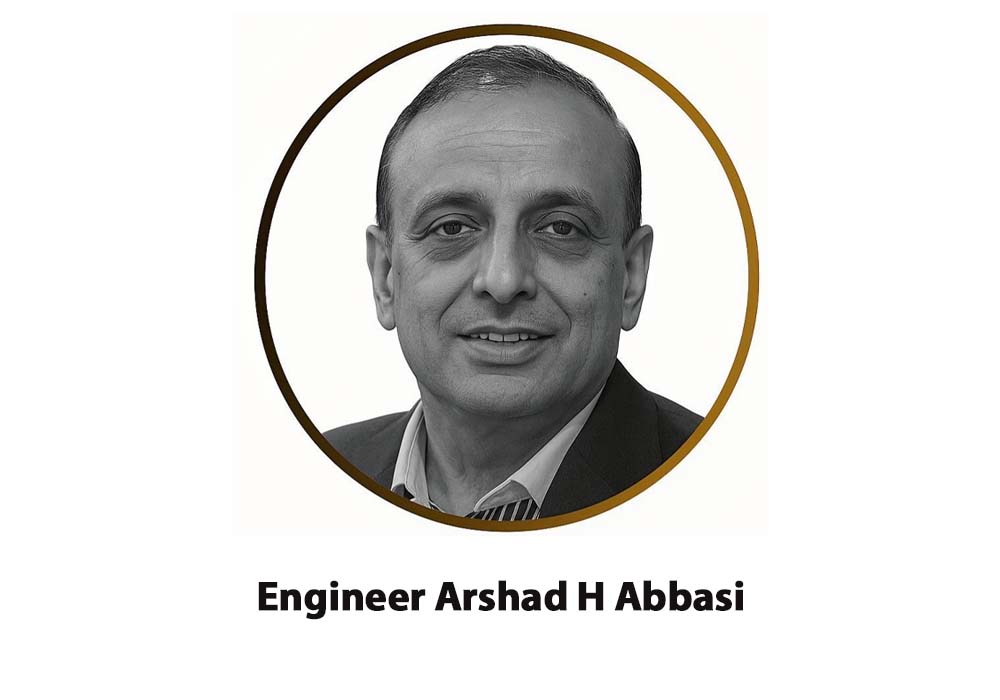
By Engineer Arshad H Abbasi, ahabasi@gmail.com, edited by Engineer Musa Arshad H Abbasi

I write this from Islamabad, not as a diplomat or a historian, but as someone who spends his working life measuring rivers, glaciers, and energy systems — and who has spent the last year watching the instruments of my own profession become instruments of geopolitics instead. I am a water, energy and climate professional, not an expert in international relations. But you do not need a doctorate in strategic studies to feel what it means to live in a capital that sits within reach of two active fronts at once, and to watch a third, farther away, threaten the fuel that keeps my own country’s lights on.

To the east, the Indus itself has become a weapon in a dispute I once only studied on paper. Since April 23, 2025, one day after the Pahalgam attack killed 26 people in Jammu and Kashmir, India has held the 1960 Indus Waters Treaty in abeyance, and as recently as July 3, 2026, New Delhi reaffirmed the suspension will continue until Pakistan “credibly and irrevocably” ends cross-border terrorism. Pakistan calls any interruption of that water an act of war. I measure river flows for a living, and I can tell you that a treaty which survived two wars and decades of hostility between 1960 and 2025 was never really about engineering — it was about restraint. Watching that restraint erode between two nuclear-armed neighbors, over a river that irrigates the fields I grew up walking beside, is not an abstraction to me. It is personal.

To the west, the war that began on February 28, 2026 between the United States, Israel, and Iran has turned the Strait of Hormuz — the channel that once carried roughly a quarter of the world’s seaborne oil and a fifth of its LNG — into a contested chokepoint. Iranian forces have mined and attacked shipping there on and off for months; a ceasefire and a June memorandum of understanding collapsed in July when Iran resumed strikes on vessels it deemed noncompliant. Even now, in mid-August, Tehran and Oman are still negotiating the terms under which the strait might fully reopen. Every Pakistani household that has watched fuel prices swing this year has felt that war, even though it is being fought a thousand miles from here.

And Pakistan’s own western border is no longer a metaphor for instability — it is an active one. Since February 2026, Pakistan and Afghanistan have fought what both sides’ own defense ministries have called open war along the 1893 Durand Line, with Pakistani airstrikes on Nangarhar and Kabul, an Afghan cross-border offensive, and casualty claims running into the hundreds on each side before Qatar- and Turkey-mediated pauses briefly held.

I know these are not the only fires burning on this continent, and an honest accounting has to look past South Asia. In Southeast Asia, a century-old dispute between Thailand and Cambodia over the ancient temples of Preah Vihear and Ta Muen Thom erupted twice in 2025 — first in July, then again in December — leaving at least 101 people dead and forcing more than half a million civilians from their homes before a fragile ceasefire, signed December 27, brought an uneasy calm. In East Asia, the map is a thicket of overlapping claims: China and Taiwan over the island’s sovereignty itself; China and Japan over the Senkaku/Diaoyu islands in the East China Sea; China and the Philippines over Scarborough Shoal and reefs across the South China Sea; and Japan and its neighbors over a scattering of other contested waters that keep regional navies on constant alert. Indonesia and Malaysia, too, carry an unresolved history — the armed 1960s Konfrontasi and a maritime boundary dispute over the oil-rich Ambalat block in the Sulawesi Sea that periodically flares even between otherwise friendly neighbors. And running beneath all of it is the oldest fault line of all: the decades-long conflict between Israel and its Arab neighbors, still reshaping alliances and battlefields from Gaza to Lebanon to Yemen, where Houthi strikes on Saudi infrastructure continue even this month.

Set against all of that, look at Central Asia — building transit corridors instead of trench lines, settling water and border disputes through negotiation rather than force, and courting the same investors that war has driven away from South Asia, the Gulf, and the South China Sea. Even the Armenia-Azerbaijan peace process next door, however unfinished — initialed in Washington in August 2025, still unsigned a year later over Armenia’s constitutional language — has produced something rarer than victory: an actual framework both sides keep returning to, rather than abandoning for the battlefield.

While I want to avoid romanticizing Central Asia to those who know the region far better than I do, it stands as a compelling model for peace. The region offers a practical demonstration that Asian states can prioritize economic integration over territorial reflexes—a choice that others, from Islamabad to Phnom Penh to Manila, have yet to make.

The Ledger of Conflict: A Continent Still at War With Itself

It is worth setting all of this down in one place, because scattered across a dozen news cycles it is easy to lose the scale of it.

  • India–Pakistan, Kashmir and the Indus Waters Treaty. Held in abeyance since April 23, 2025; reaffirmed as of July 2026 to remain suspended until Pakistan “irrevocably” ends cross-border terrorism, in a dispute that touches the water security of more than 300 million people and involves two nuclear-armed states that have already fought a war in 2025.
  • Iran, Israel, and the United States. War since February 28, 2026, with Iranian attacks on shipping through the Strait of Hormuz — a corridor carrying roughly a quarter of the world’s seaborne oil and a fifth of its LNG — still unresolved as Tehran and Oman negotiate terms for reopening it, even this month.
  • Pakistan–Afghanistan, the Durand Line. Open war since February 2026 between two governments that have never agreed on where their own border lies, following a colonial-era line drawn in 1893 that neither side ever fully accepted.
  • Thailand–Cambodia. A century-old dispute over the temples of Preah Vihear and Ta Muen Thom that killed at least 101 people and displaced more than half a million civilians across two rounds of fighting in 2025 before a fragile ceasefire in December.
  • China–Taiwan. An unresolved sovereignty dispute that keeps the Taiwan Strait among the most militarized waters on Earth.
  • China–Japan. Competing claims over the Senkaku/Diaoyu Islands in the East China Sea.
  • China–Philippines (and other South China Sea claimants). Overlapping claims to Scarborough Shoal and the wider Spratly and Paracel systems, with recurring coast guard confrontations.
  • Indonesia–Malaysia. The armed 1960s Konfrontasi and a still-unresolved maritime boundary dispute over the oil-rich Ambalat block in the Sulawesi Sea.
  • Israel and its Arab neighbors. The region’s oldest fault line, still reshaping battlefields from Gaza to Lebanon to Yemen, where Houthi strikes on Saudi infrastructure continued as recently as this month.
  • Armenia–Azerbaijan. A peace framework initialed in Washington in August 2025, still unsigned a year later over Azerbaijan’s demand that Armenia amend its constitution — real progress, but not yet peace.

Read as a list rather than as headlines, it becomes hard to avoid the conclusion the reader of this piece already suspects: no other continent carries this many live or barely-dormant fronts at once, several of them nuclear-adjacent, all of them draining resources that could otherwise be spent on the climate and water crises actually threatening our populations.

Uzbekistan’s Quiet Model

Which is what makes Central Asia’s trajectory worth naming in detail rather than in passing. For most of the 1990s and 2000s, the five Central Asian republics were themselves locked in exactly this kind of dysfunction — unresolved borders, competing claims over the Fergana Valley’s enclaves, and bitter disputes over the water and energy flows of the Amu Darya and Syr Darya rivers, with Uzbekistan under Islam Karimov among the most resistant to regional cooperation. What changed the region’s trajectory was not outside mediation. It was Uzbekistan itself, under President Shavkat Mirziyoyev, choosing after 2016 to reverse decades of isolationism. Mirziyoyev personally helped broker calm during the deadly April 2021 Tajik-Kyrgyz border crisis. He proposed a regional water-use program at the first Consultative Meeting of Central Asian leaders in Astana in 2018 and has pushed transboundary water cooperation ever since, backed by an International Fund for Saving the Aral Sea that Uzbekistan itself helped reshape into a genuine coordination body. As a fellow water professional, I find that record more persuasive than any communiqué: Uzbekistan modernized over 2.6 million hectares of its own irrigated land with water-saving technology in under a decade, and it did so while simultaneously investing in the kind of neighbor-to-neighbor diplomacy that Karachi, Kabul, and Colombo have not managed in a generation. If any single leadership deserves credit for proving that an Asian power can choose water cooperation over water warfare, it is Tashkent’s — and Central Asia as a whole, imperfect as it remains, is the model the rest of this continent should study rather than dismiss.

A Wish, and a Warning

I would like to end this the way I began it — not as an analyst, but as someone who lives inside the consequences of these disputes. My honest wish is to see an Asia free of every one of the conflicts listed above: a continent that channels its extraordinary energy into solving the crisis it is actually best positioned to solve. Asia now accounts for roughly half of all global carbon dioxide emissions, more than any other continent by a wide margin, even as it holds the majority of the world’s population and remains disproportionately exposed to the floods, glacier loss, and heat extremes that emissions produce. A region capable of decarbonizing at that scale should not be spending its treasuries and its young soldiers on border lines drawn by long-departed colonial cartographers.

But I will not pretend the most dangerous of these disputes is equivalent to the others, because I know this one from the inside. The India-Pakistan confrontation over Kashmir and the Indus Waters Treaty is not simply another item on a list. It is the one dispute on this continent where two nuclear arsenals sit on opposite banks of the same river system, where a water treaty that survived 65 years of hostility is now in abeyance, and where the language on both sides — “water and blood cannot flow together,” “any interruption of Pakistan’s water is an act of war” — has moved further from the vocabulary of diplomacy than at any point since 1971. Every other conflict on this list deserves resolution. This one, I would ask every reader to understand, deserves urgency, because it is the one closest to an ending none of us would survive to write about.

Similar Posts

  • A Second Great Wall of Trust: Why Only China Can F…

    By General Ghulam Mustafa & Arshad H Abbasi  We have stood together at the foot of the Great Wall of China more than once at different times, but today a thought has returned to both of us, unspoken until now. The Wall runs some 21,196 kilometres across dynasties and deserts, built stone by stone over centuries to secure a civilization’s frontier. Pakistan’s own most dangerous frontier — the Durand Line separating us from Afghanistan — runs roughly 2,625 kilometres, barely an eighth of that length. If a civilization on the scale of China could raise a barrier of that magnitude with the tools of the third century BC, then securing a border less than an eighth as long, with the tools of the twenty-first century, cannot be beyond the reach of the partnership Beijing and Islamabad have built. We do not ask China to build us a wall of stone. We ask Beijing to help us build something sturdier: a wall of enforced accountability against the militants using Afghan soil to bleed Pakistan dry. That bleeding is not a metaphor. Since the Afghan Taliban returned to power in Kabul, the Tehreek-e-Taliban Pakistan has operated with a freedom of movement across our western border that it never enjoyed before. Balochistan burns. Khyber Pakhtunkhwa buries its soldiers and its schoolchildren in the same week. And now the shockwaves have reached Punjab, the country’s demographic and economic core. Every honest accounting of this violence traces back to the same source: sanctuary, training, and logistical freedom on Afghan soil, tolerated or unchecked by an administration in Kabul that owes its survival, in no small part, to Chinese patience and Chinese capital. This is why we write to Beijing, and to Beijing specifically, rather than to Washington, Brussels, or Moscow. Survey after survey inside Pakistan finds that well over eight in ten of our citizens consider China, not any Western power, to be Pakistan’s true friend. Our leaders have called this friendship higher than the Himalayas and deeper than the ocean, and we do not repeat that line as ceremony. We repeat it because it is the only frame in which Beijing can hear what we are about to say plainly: no other country on earth holds the leverage over the Taliban that China holds, and no other country has more to lose from squandering it. Consider what China has already built in Afghanistan without formal recognition of its government. The Xinjiang Central Asia Petroleum and Gas Company signed a twenty-five-year contract to develop the Amu Darya oil basin, committing roughly $150 million annually and scaling toward $540 million over three years. State-backed firms continue to negotiate the long-stalled Mes Aynak copper concession, one of the largest untapped copper deposits on earth, alongside serious interest in Afghan lithium and iron ore. Beijing has cut tariffs on 98 % of Afghan imports. An active Chinese embassy operates in Kabul today, accepting Taliban-appointed diplomats, even as formal recognition is withheld. This is not incidental engagement. This is the deepest economic relationship any major power currently has with the Taliban administration, and it gives China something no airstrike or sanction regime has ever given anyone: the ability to make continued investment conditional on results. We are asking Beijing to use that leverage with the same discipline it has already shown in defending its own security interests. China has made clear, repeatedly and without apology, that it will not tolerate the Turkistan Islamic Party or East Turkistan Islamic Movement fighters operating from Afghan territory against Xinjiang. We are asking only that China extend that identical, non-negotiable standard to the Tehreek-e-Taliban Pakistan and its allied networks operating against us. If Kabul can be made to understand that Chinese mining contracts, Chinese tariff relief, and Chinese diplomatic cover all depend on a genuine, verifiable crackdown on TTP sanctuaries, this insurgency does not need years to end. It needs a Kabul administration that finally has more to lose from harbouring militants than from disowning them. But security pressure alone will not hold, and here we want to be honest about what Afghanistan actually needs from its neighbours, China chief among them. Afghanistan’s national literacy rate stands at just 37 % — 52 % among men, a mere 27 % among women — and UNESCO reports that more than nine in ten ten-year-olds in the country cannot read a simple sentence. Two point two million adolescent girls remain locked out of secondary school entirely, the only country on earth to enforce such a ban, at a projected cost to Afghanistan’s own economy of nearly $9.6 billion in lost potential by 2066. No pipeline, no copper mine, and no railway line will stabilize a country where the next generation cannot read the contracts, safety manuals, or engineering plans that would let them run these projects themselves. It is China’s duty, as the neighbour with the deepest economic stake and the clearest long-term interest in a stable Afghanistan, to make literacy, vocational training, and the reopening of girls’ education a hard condition of its investment — not out of charity, but because an illiterate, disenfranchised population is the same population the TTP and ETIM recruit from. Afghanistan does not need a foreign army. It needs classrooms, teachers, and a workforce equipped to build the country’s own future, backed by an investor patient and disciplined enough to insist on it. Every failed intervention in Afghanistan’s modern history has shared the same flaw: outsiders who came to fight a war, not to build a neighbour. Britain came and left. The Soviet Union came and left, at ruinous cost to itself. NATO and the United States spent two decades and did not leave functioning institutions behind them. China is different in the one respect that matters most: China is not leaving. It shares a border with Afghanistan. Its investments are measured in decades, not electoral cycles. And it has, through the Belt and Road Initiative and the China-Pakistan Economic Corridor, already built the template for what real

  • The hands that clean Karachi

    KARACHI: Before the city wakes up, thousands of sanitation workers are already at work. They sweep roads, collect household waste, clean neighbourhoods and, in some cases, enter sewer lines and manholes to clear blockages. Among them are many workers from Christian and Hindu communities who perform some of Karachi’s most difficult and hazardous jobs. On August 11, Pakistan observes National Minorities Day. The occasion is usually marked with messages about equality, tolerance and the contribution of minority communities to the country. But for many minority sanitation workers in Karachi, the day will be no different from any other: they will be out cleaning the city, often while facing low wages, insecure employment, inadequate safety equipment and social discrimination. Their problems extend beyond poverty. They include workplace safety, access to healthcare, employment benefits and the stigma attached to the occupation itself. There is no reliable and up-to-date official figure showing exactly how many Christian and Hindu sanitation workers are currently employed in Karachi. A World Bank-linked environmental and social assessment, however, recorded around 11,400 sweepers and sanitary workers employed by the city’s district authorities. It also noted additional workers employed through SSWMB contractors and a large informal workforce involved in door-to-door waste collection and material recovery. The 11,400 figure therefore does not represent Karachi’s entire sanitation workforce. The actual number is considerably broader once outsourced, daily-wage and informal workers are included. Sanitation work in Pakistan has for decades been disproportionately associated with religious minorities. Research by Amnesty International has documented the concentration of Christians and Hindus in sanitation work and found evidence of discrimination in recruitment, employment and working conditions. The issue therefore begins well before a worker picks up a broom. It is also about whether people from particular religious and social backgrounds are being denied opportunities to enter other occupations. The question of wages is equally important. The Sindh government has announced a minimum monthly wage of Rs43,000 with effect from July 1, 2026. While the announcement is significant for low-paid workers, the more important question for sanitation workers is whether the amount actually reaches them. A substantial part of Karachi’s sanitation work is performed through contractors, outsourcing arrangements and daily-wage employment. Previous reporting has documented workers employed through SSWMB contractors receiving wages below the applicable minimum wage. In one reported case, a minor working for an SSWMB contractor was receiving Rs15,000 a month when the minimum wage for unskilled workers was Rs32,000. The new Rs43,000 minimum wage therefore requires more than a government notification. It requires effective enforcement and monitoring, particularly where public sanitation services are outsourced. If a worker performs essential public work through a contractor, there must be clarity about who is responsible for ensuring that he receives the legally prescribed wage and other employment rights. For sanitation workers, however, low wages are not the only concern. The nature of the work itself can be fatal. In September 2025, three sanitation workers died in Karachi’s Usmanabad area after inhaling toxic gases while cleaning a manhole. The victims were identified as 22-year-old Vishal, 19-year-old Shahir and 42-year-old George. A fourth worker survived after being rescued. The deaths were followed by further fatalities. In October 2025, The Express Tribune reported that six sanitation workers had died from suffocation while cleaning sewers in Karachi in just over a month. The deaths occurred in Sohrab Goth, Garden and Landhi. According to the report, the victims were privately hired daily-wage workers who lacked adequate safety equipment and training. On April 17, 2026, three private sanitation workers died in Surjani Town after inhaling toxic fumes while cleaning a choked sewerage line. Police identified the deceased as Wilson, Waqas and Nazeer and said all three belonged to the Christian community. Such incidents follow a familiar pattern. A worker enters a sewer to clear a blockage. Toxic gases overcome him. Another worker may enter in an attempt to rescue him and can suffer the same fate. Without proper protective equipment, gas detection devices, training and rescue arrangements, a routine cleaning operation can quickly turn into multiple deaths. The exact number of sanitation workers who have died in Karachi is difficult to establish because there is no comprehensive publicly available official database covering municipal, private, contracted and informal workers. In October 2025, activist Naeem Sadiq told Arab News that approximately 100 manual scavengers die every year in Pakistan, including around 30 in Karachi. He also warned that the actual number could be higher because of underreporting. The figure is an activist estimate rather than an official government statistic, but it illustrates the scale of the concern. At the national level, Amnesty International documented 80 sanitation workers who died in 50 manhole incidents between 2011 and 2023. Of these, 40 were Christians, 22 Muslims and 18 Hindus. Most of the deaths were associated with poisonous gases and asphyxiation. The figures highlight a wider concern: minority workers are disproportionately represented in some of the most hazardous sanitation jobs, while also facing social and economic disadvantages. A survey by the National Commission for Human Rights of 42 sanitation workers in Karachi provides further evidence of poor working conditions. Thirty-three workers, or 78.6 per cent, said they had never been provided personal protective equipment. Twenty-four, or 57.1 per cent, reported workplace injuries. The same number reported verbal or physical abuse, threats, non-payment or other forms of discrimination. These findings raise a basic question about Karachi’s sanitation system: the issue is not only who will clean the city, but under what conditions the people cleaning it are expected to work. Another study involving 400 sewerage and sanitary workers in Karachi found that 228, or 57 per cent, were sweepers and 172, or 43 per cent, were sewerage workers. The study found that 96.5 per cent had not been immunised against typhoid, hepatitis and tetanus, while 91 per cent were not using safety equipment at work. For workers exposed daily to sewage, waste and potentially toxic environments, protective clothing, gloves, boots, masks, vaccination, health examinations and emergency support should not

  • Correcting the Asymmetry: Why Bangladesh Needs UN-…

    I first learned to think of rivers as questions of survival, not just geography, from the late Dr. Mohammad Moniruzzaman Miah, the visionary Dhaka University vice-chancellor and geographer whose work shaped a generation of Bangladeshi thinking on transboundary water. In the years when Khaleda Zia’s government stood firm in defending Bangladesh’s water rights, I was part of the technical effort that helped galvanize opposition to India’s proposed 1,500 MW Tipaimukh Dam on the Barak River in Manipur — a fight documented in the broader scholarly record of that transnational resistance movement. That episode taught a lesson Bangladesh cannot afford to forget as it approaches the next deadline in its water diplomacy: December 2026, when the landmark 1996 Ganges Water Treaty expires. The Ganges Treaty, signed in December 1996, was hailed as a diplomatic breakthrough — the first long-term water-sharing arrangement between India and Bangladesh. But thirty years on, its formula looks less like fairness and more like a structural handicap for the downstream nation. Under the treaty, dry-season flow at the Farakka Barrage (January 1 to May 31) is divided in alternating ten-day blocks. When total flow is 70,000 cusecs or less, the two countries split it 50-50. But when flow reaches 75,000 cusecs or more — precisely the scenario Bangladesh needs most, during peak dry-season stress — India takes a fixed 40,000 cusecs off the top, and Bangladesh gets only the remainder. In practice, the treaty guarantees India a floor while leaving Bangladesh’s share to fluctuate with whatever is left. For a delta nation of 175 million people, dependent on the Ganges-Padma system for irrigation, drinking water, fisheries, and salinity control, that asymmetry has never been sustainable. It is even less so now, as climate change intensifies dry-season scarcity and accelerates saline intrusion along the coast. Bangladesh is not asking for charity. It is asking for a renewed, predictable framework that reflects present-day hydrological and demographic realities — not the assumptions of three decades ago. That renewal must also confront a public health emergency that the original treaty never anticipated: the mobilization of naturally occurring arsenic into the very groundwater tens of millions of Bangladeshis depend on for drinking water. The mechanism is worth explaining plainly. Reduced dry-season flow in the Ganges limits natural flushing and recharge of shallow aquifers. Farmers and municipalities, deprived of adequate surface water, turn increasingly to groundwater pumping for irrigation and drinking supply. That heavy extraction alters subsurface flow and oxygen conditions, encouraging microbial processes that break down buried organic carbon and release arsenic bound in iron-rich sediments — arsenic that occurs naturally in the geology of the Bengal delta. It’s important to be precise here: most researchers attribute the origin of this arsenic primarily to natural, geogenic sources within the delta’s Holocene sediments, not to the Farakka Barrage itself. But many Bangladeshi hydrologists and public health researchers argue, credibly, that reduced Ganges flow and the resulting over-reliance on groundwater pumping act as an accelerant — turning a latent geological hazard into an active public health catastrophe. Whatever the precise weighting of causes, the outcome is not in dispute: Bangladesh is living through what the World Health Organization has called the largest mass poisoning of a population in history. The economic toll is staggering and measurable. Studies estimate that arsenic contamination has reduced Bangladesh’s effective rural labor supply by roughly 8 percent — a contraction larger than the labor-market shock the United States experienced during the Great Recession. Projections suggest arsenic-related mortality and morbidity could cost the economy up to $13 billion over twenty years in lost productivity alone. Millions of person-days are lost annually to arsenicosis, and the neurotoxic effects on children threaten the cognitive development of the next generation — a bottleneck on Bangladesh’s long-term growth prospects. Contaminated irrigation water enters the food chain, straining agricultural yields and export credibility. At the household level, families spend hundreds of millions of taka annually on treatment, exhausting savings and pushing the rural poor deeper into poverty. Visible skin lesions bring social stigma, job loss, and marginalization, particularly for women. This is not an abstract environmental dispute; it is a slow-moving national emergency with a very real balance sheet. This debate does not exist in isolation. It sits alongside Bangladesh’s long-stalled push for a Teesta River sharing agreement, another dispute where upstream control and India’s domestic politics — particularly in West Bengal — have repeatedly delayed progress. Dhaka has made clear that a fair, long-term renewal of the Ganges pact is now central to the broader trajectory of India-Bangladesh relations. The two issues are linked in substance as much as in diplomacy: both test whether the region can move from a “mercantile” approach to shared rivers, in which every cusec is treated as a zero-sum resource to be captured upstream, toward an approach that treats water as a shared trust with obligations that flow downstream as well as up. Given this, the renewal of the Ganges Treaty must do more than reallocate cusecs. It must treat adequate, dependable freshwater flow as a public health intervention, not merely an irrigation input. Diluting arsenic concentrations in shallow aquifers, sustaining natural flushing, and reducing pressure to over-pump groundwater all depend on Bangladesh receiving a demonstrably larger and more reliable share of dry-season Ganges flow than the 1996 formula allows. Given the scale of what’s at stake — public health, food security, and the credibility of a 175-million-person delta nation’s future — this renewal should not be negotiated behind closed doors on India’s terms alone. Bangladesh should press for the process to include independent, internationally recognized water and public health experts, convened under UN auspices, to assess minimum flow requirements against verifiable arsenic, salinity, and agricultural data. This is not a call to internationalize a bilateral treaty in perpetuity; it is a call for technical objectivity in setting the numbers that will govern Bangladesh’s water security for the next generation. India, for its part, has its own legitimate claims — competing agricultural demand in West Bengal, and domestic

  • Between Threats and Truces: The Narrative War Behi…

    By Eng Saqlain Abid Last weekend, U.S. President Donald Trump declared on Truth Social that the United States and Israel were fully prepared to strike Iran’s critical power infrastructure, warning that military pressure would continue until Tehran surrendered completely. Around the same time, Iranian Foreign Minister Abbas Araghchi reportedly conveyed messages through Pakistan’s Chief of Army Staff, Field Marshal Asim Munir, and Turkish Foreign Minister Hakan Fidan, emphasizing that any major attack on Iran would be met with a determined response against GCC partners and strategic regional assets if no diplomatic option remained. Yet within hours, the rhetoric shifted dramatically. Trump announced that although American and Israeli forces were fully prepared, he had decided to postpone military action following appeals from Gulf states and international mediators, citing “humanity” and the possibility of reaching an agreement. Reports suggested that negotiations revolved around two major conditions: keeping the Strait of Hormuz open to global shipping and ensuring that Iran would not pursue nuclear weapons. At first glance, the story appears simple—a crisis narrowly avoided through diplomacy. In reality, however, it represents a sophisticated narrative war in which every actor seeks to project strength while avoiding the devastating costs of a prolonged regional conflict. For Washington, the challenge is not merely military capability but strategic credibility. The United States undoubtedly possesses overwhelming conventional military superiority over Iran. However, superiority does not automatically translate into political success. Internal assessments by CENTCOM and the Pentagon have reportedly warned that any large-scale conflict could extend well beyond expectations, potentially lasting until 2027. Such a scenario would coincide with America’s domestic political calendar, including congressional elections, while risking declining public support for another costly Middle Eastern war. The lessons of Afghanistan continue to shape American strategic thinking. Airpower alone may inflict significant damage, but permanently degrading Iran’s military capabilities without ground operations remains an uncertain objective. Any decision requiring “boots on the ground” would carry enormous political and economic consequences. Consequently, Washington’s repeated threats increasingly resemble a strategy of coercive diplomacy rather than an immediate roadmap to invasion. A superpower is expected to demonstrate resolve, but maintaining global leadership also requires restraint when the costs outweigh the benefits. Iran, on the other hand, continues to rely on its long-established doctrine of strategic resistance. Despite mounting military pressure and repeated warnings, Tehran has sought to demonstrate that it retains the ability to impose costs across multiple theatres. The Strait of Hormuz remains one of the world’s most strategically significant maritime chokepoints, and any disruption immediately reverberates through global energy markets. Meanwhile, continued instability around the Bab el-Mandeb Strait, largely influenced by Iran-aligned Houthi forces, further complicates regional trade and shipping.   These maritime flashpoints have created understandable concerns among Gulf states. Countries investing billions of dollars in economic diversification projects—including Saudi Arabia’s Vision 2030 and NEOM—depend heavily upon uninterrupted trade routes and stable energy markets. For Gulf capitals, preventing a regional escalation has become not merely a security priority but an economic necessity. Israel’s strategic calculations are equally complex. Since the beginning of the confrontation, Israeli policymakers have consistently sought firm American backing while remaining conscious of the domestic burden imposed by prolonged conflict. Extended military campaigns strain national resources, disrupt civilian life, and test public resilience. Consequently, Israel also has incentives to support diplomatic arrangements if they preserve security objectives without expanding into an open-ended regional war. Ultimately, today’s confrontation extends beyond missiles and military deployments. It is a contest of narratives, deterrence, and political signalling. Every side seeks to appear uncompromising while simultaneously avoiding a conflict whose consequences none can fully control. The prospect of a prolonged regional war is becoming increasingly difficult for any major stakeholder to sustain. Iran continues to deepen its strategic relationships with China and Russia, while the United States prefers negotiated constraints over another indefinite military campaign. Pakistan and Turkey have emerged as important channels of communication, but expecting either country to shoulder the diplomatic burden of resolving one of the world’s most dangerous geopolitical crises would be unrealistic. History repeatedly demonstrates that wars are easier to begin than to conclude. In the current Middle Eastern crisis, the loudest battlefield may not be defined by bombs or missiles but by competing narratives, diplomatic manoeuvres, and carefully calculated restraint. Whether this fragile pause evolves into a lasting settlement or merely delays another round of confrontation will determine not only the future of Iran but also the stability of the wider region and the global order.

  • PM Shehbaz Sharif and Field Marshal Syed Asim Muni…

    Pakistan’s growing diplomatic influence has entered a new phase as Prime Minister Muhammad Shehbaz Sharif and Field Marshal Syed Asim Munir lead the country’s strategic engagement with the world, strengthening alliances and projecting Pakistan as an important voice in regional peace and security. The signing of the Makkah Joint Defence Agreement between Pakistan, Saudi Arabia and Türkiye represents a major milestone in Pakistan’s foreign and security policy. The agreement brings together three influential nations through a framework of collective defence, enhanced military cooperation and a shared commitment to regional stability. In recent months, Pakistan’s defence capabilities and strategic importance have received increased international attention. The role of the Pakistan Army in national security and regional stability has been a central factor in shaping Pakistan’s strategic partnerships, while Field Marshal Syed Asim Munir’s engagement with international counterparts has highlighted the importance of defence diplomacy in promoting peace and cooperation. The global perception of Pakistan’s strategic role has evolved as Islamabad has continued to demonstrate its capacity to engage with major powers and regional stakeholders. Under Field Marshal Asim Munir’s leadership, Pakistan’s military diplomacy has focused on strengthening partnerships, supporting stability and advancing dialogue as a pathway to resolving regional challenges. Prime Minister Muhammad Shehbaz Sharif has complemented these efforts through active diplomatic outreach, engaging world leaders and strengthening Pakistan’s relationships with key allies. Whenever Pakistan’s leadership has engaged internationally, these visits have increasingly focused on expanding cooperation, improving economic ties and promoting peace initiatives. Pakistan’s diplomatic role in encouraging dialogue during tensions involving the United States and Iran also attracted international attention. US President Donald Trump acknowledged Pakistan’s leadership efforts in supporting peace and dialogue, reflecting the country’s potential role as a constructive bridge between nations. Pakistan continues to maintain strong strategic relations with major international partners, including China, while also enjoying deep historical and security ties with Saudi Arabia, Türkiye and other Middle Eastern countries. Iran has repeatedly highlighted the importance of its relationship with Pakistan and recognised the value of regional cooperation. The Makkah Declaration further strengthens this strategic momentum. The agreement reflects the shared commitment of Saudi Arabia, Türkiye and Pakistan to collective security and regional stability. It establishes that any armed attack against one of the three states will be regarded as an attack against all, while enhancing defence cooperation, military coordination and strategic collaboration. Built on historic relations, Islamic solidarity and common interests, the declaration aims to strengthen collective deterrence and contribute towards peace, security and prosperity. The emerging partnership between Pakistan’s political and defence leadership is being viewed by supporters as a coordinated national effort to protect Pakistan’s interests and expand its international role. Prime Minister Shehbaz Sharif’s diplomatic engagement and Field Marshal Syed Asim Munir’s strategic approach have together shaped a more proactive foreign policy outlook. The Makkah summit could become a defining moment in Pakistan’s international journey—strengthening its alliances, enhancing its strategic relevance and reinforcing its message that Pakistan seeks peace through cooperation, dialogue and responsible global engagement.

  • Gulf in the Crossfire

    There is a particular kind of exhaustion that sets in when a war refuses to end on schedule. Five months into the conflict between the United States and Iran, we are living through it. Ceasefires are announced and collapse within weeks. Strikes are billed as decisive and are followed, days later, by more strikes. Each side insists the other will soon come to its senses, and each side is wrong. What we are watching is not a war moving toward resolution. It is a war that has become self-sustaining, and the longer it runs, the more countries get pulled into its logic whether they wanted a role in it or not. Saudi Arabia is the clearest example. For nearly four years, Riyadh had quietly extracted itself from the Yemen war, treating the 2022 ceasefire with the Houthis as one of the few unambiguous foreign policy wins of Crown Prince Mohammed bin Salman’s tenure. That restraint is now gone. When the Houthis resumed missile fire at Israel in solidarity with Tehran, and then began striking Saudi oil infrastructure directly, Riyadh had no real choice but to respond. It bombed Hodeidah. The Houthis retaliated against Aramco facilities in Yanbu and Jizan. A conflict Saudi Arabia spent years trying to bury is now, again, live on its border, not because Riyadh chose it but because a war between Washington and Tehran left no room for neutrality. This is the pattern worth naming plainly: nobody in this conflict is fighting the war they intended to fight. Washington launched its campaign framed around Iran’s nuclear program, wagering that decisive strikes would force capitulation or collapse. Instead it has strikes running past the two-week mark with no clear terminus, American service members killed in Jordan and Iraq, and a president publicly conceding that the exit could be “diplomatic or military” — which is another way of saying nobody currently knows how this ends. Iran, for its part, has responded to devastating strikes on its cities not with capitulation but with exactly the kind of asymmetric, proxy-driven defiance its doctrine was built for, activating fronts in Iraq, the Gulf, and now Yemen that cost it little and cost everyone else a great deal. The Strait of Hormuz tells the same story in economic terms. Daily vessel traffic through one of the world’s most important oil chokepoints has fallen to a small fraction of its prewar level. That is not an abstraction. It shows up in tanker insurance premiums in Piraeus and London, in fuel costs in Mumbai and Rotterdam, in the balance sheets of countries that have precisely nothing to do with this fight. War aims that once seemed narrowly bilateral — Washington versus Tehran, over centrifuges and missile stockpiles — have metastasized into a tax on global trade that nobody voted for and nobody can opt out of. It is tempting, watching this unfold, to look for a single culprit. Commentators sympathetic to Washington will point to Iran’s decades of proxy warfare, its nuclear ambiguity, its crackdown on its own protesters, and argue the current campaign is simply overdue accountability. Commentators sympathetic to Tehran will point to a US-Israeli strike that killed Iran’s Supreme Leader and ask what state, faced with the assassination of its head of state, would not treat that as an act of war demanding a response. Both arguments contain real grievances. Neither survives contact with what has actually happened since: a conflict that both sides insist is about narrow, defensible aims but that neither side has been able to keep narrow. Wars rarely stay the size their architects intend. What should worry observers most is not any single strike or retaliation but the absence of an exit ramp anyone believes in. Ceasefires here have not functioned as steps toward peace; they have functioned as pauses for rearmament, evidenced by how quickly each one has collapsed back into nightly bombing. That is the signature of a conflict without a theory of victory — one where both governments can inflict real pain on the other indefinitely, but where neither can convert that pain into a settlement it can sell to its own public. In that kind of war, the fighting does not stop because someone wins. It stops, if it stops, because the costs finally exceed what either government’s domestic politics can absorb — and on the evidence of the past five months, that threshold keeps receding rather than approaching. Saudi Arabia’s reluctant return to the Yemen battlefield should be read as an early warning rather than a footnote. It shows how a conflict that both Washington and Tehran describe as fundamentally about themselves keeps finding new participants who never agreed to join. If this war continues on its current trajectory, the question worth asking is not which superpower prevails, but how many other countries, currencies, and shipping lanes get quietly conscripted before it does.

Leave a Reply

Your email address will not be published. Required fields are marked *