cambridge paper leak
|

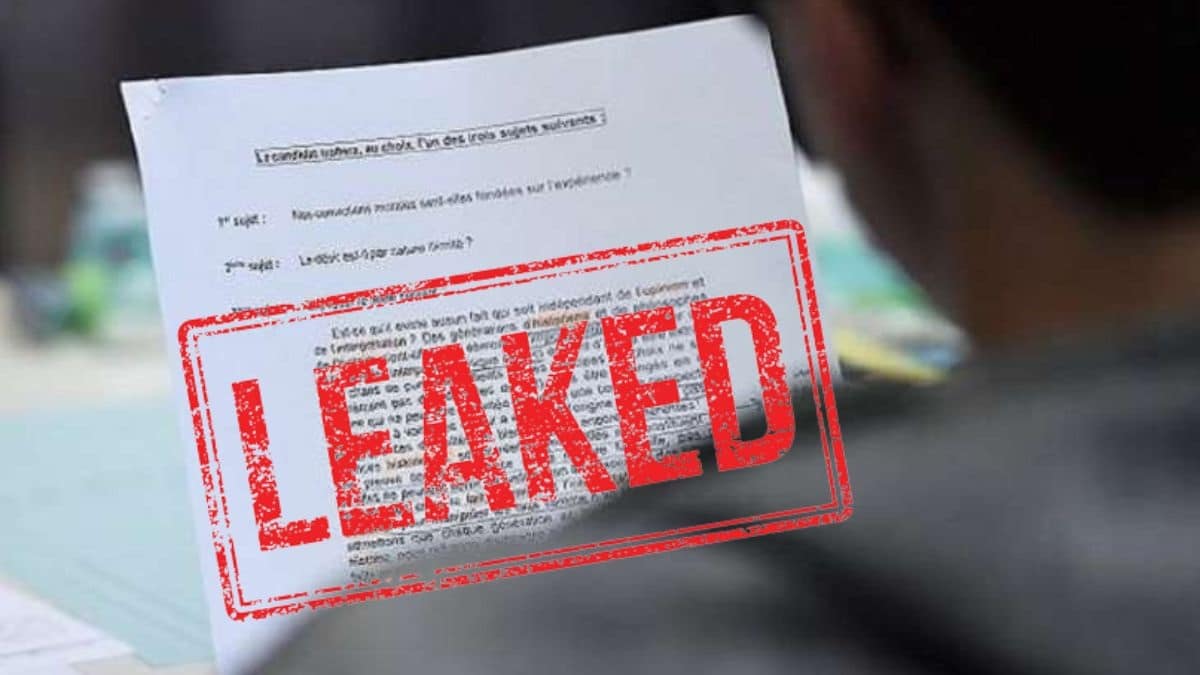
Cambridge paper leak case: students hand over 17 papers evidence to NCCIA, but investigation still not complete

Islamabad: The investigation into the alleged Cambridge A Level and O Level paper leaks has drawn fresh criticism after affected students claimed that they provided complete evidence, forensic details and technical assistance to the National Cyber Crime Investigation Agency (NCCIA), but the inquiry remains incomplete.

Students associated with the Accountability4Cambridge movement said they made every possible effort to help NCCIA investigate the case and submitted evidence related to 17 leaked examination components. They claimed they even conducted their own forensic checks and prepared detailed records before handing them over to authorities.

The students said their main demand was a quick investigation because their future depends on the final results. They wanted the matter resolved before results were announced so that affected students could receive relief if unfair practices had affected their grades.

However, according to the students, NCCIA has still not completed its investigation. They claimed that the investigation officer assigned to the case has gone on training, causing further delay.

The Accountability4Cambridge representatives said they submitted a complete evidence package to NCCIA, including 44 exhibits with verification details. They said the material was prepared carefully to help investigators identify where the papers were leaked and who was involved.

The students said they tracked the movement of leaked papers and provided information about possible sources, online groups and communication channels where the leaked material was shared. Their evidence included details about WhatsApp numbers, Telegram groups and payment methods allegedly used to purchase the leaked papers.

The students submitted the evidence directly to NCCIA’s forensic department and expected progress within days, but they were later informed that the assigned official was unavailable because he had gone for training.

The controversy started after students alleged that Cambridge examination papers reached some candidates before the official exams, creating an unfair advantage for those who accessed them early.

According to Accountability4Cambridge, around 17 examination components were leaked during the June 2026 examination series. They said Cambridge International acknowledged four of these components, while the remaining cases were still disputed.

Students argued that a leaked paper could damage the grades of honest candidates because grade boundaries may change when some students score unusually high marks after seeing questions in advance.

They said a student who worked honestly could lose university opportunities if their grades dropped because of unfair competition.

The students also raised concerns about delays in the official response. The Senate Standing Committee on Federal Education had directed NCCIA to provide findings by July 21, 2026, but the deadline passed without a final report being submitted.

The group said only an informal indication was given that findings would come later, while students continued waiting for answers. During their efforts, students met with various institutions, including the IBCC, Senate committees and NCCIA officials, and prepared documentation to support their claims.

They said the evidence was not based only on screenshots but included detailed verification methods such as timestamps, recordings and technical information to support the authenticity of the leaked material.

The students said they wanted authorities to identify the people responsible and ensure accountability instead of allowing the matter to continue without a clear conclusion. They also demanded stronger action from Cambridge, including transparency regarding how the leaks happened, where they originated and what action was taken against those involved.

The students further demanded reforms in the examination system, including better protection of papers, separate arrangements for Pakistan and measures to prevent future leaks. They warned that the issue concerned not only marks but also the future of thousands of students who depend on Cambridge results for university admissions in Pakistan and abroad.


Similar Posts

  • | |

    Imran said party ignored his orders: Afridi

    Pakistan Tehreek-e-Insaf (PTI) leader and Member of the National Assembly Iqbal Afridi has claimed that jailed former prime minister Imran Khan told him during their last meeting that members of the party were not following his instructions. According to a video statement shared on social media by PTI Senator Faisal Javed Khan, Afridi said he met Imran Khan at Adiala Jail, where the former premier allegedly expressed frustration over the party’s internal affairs. Afridi claimed that Imran Khan told him, “Iqbal, the party is not listening to me. I say this with my hand on the Holy Quran.” The PTI lawmaker said he responded by expressing his loyalty to the party founder. Afridi claimed he told Imran Khan that anyone betraying him deserved the strongest condemnation, while referring to a political slogan from the past. Afridi further said that he never had another meeting with Imran Khan after that conversation. He claimed that if he had met him again and been told the names of those allegedly disobeying party instructions, the situation would have been different. In the video statement, Afridi also made controversial remarks, saying that if he is allowed another meeting and Imran Khan identifies individuals who are not following his directives, he would not spare them. He used threatening language while making the statement. The remarks have drawn attention on social media, although there has been no official response from PTI leadership or other party figures regarding Afridi’s claims. Imran Khan has also not publicly commented on the statements attributed to him.

  • | |

    NCCIA crackdown: 14 suspects arrested in Lahore, M…

    The National Cyber Crime Investigation Agency (NCCIA) Punjab has launched a major crackdown against networks allegedly involved in online financial fraud, identity theft and social media scams, arresting 14 suspects in Lahore and Multan. The operation was carried out under the direction and supervision of NCCIA Punjab Director Muhammad Ali Waseem. Officials said the suspects allegedly defrauded citizens of millions of rupees through various online schemes. In Lahore, the NCCIA arrested four suspects in three separate cases. They were identified as Muhammad Amir, Muhammad Ashfaq, Muhammad Qamar and Ameer Karim. According to initial investigations, the suspects allegedly posed as marriage bureau representatives or close friends to gain victims’ trust. They then allegedly deceived citizens into transferring money. Investigators recovered mobile phones from the suspects and found evidence indicating that victims had been defrauded of significant amounts. In Multan, the NCCIA carried out three separate operations and arrested 10 suspects. They were identified as Muhammad Asghar, Amir Shehzad, Muhammad Kamran, Rizwan Talib, Saqib Ali, Kamran Talib, Iftikhar Manzoor, Muhammad Adnan, Muhammad Sultan and Muhammad Naeem. Investigators said the suspects allegedly used social media platforms and WhatsApp to impersonate officials from customs, police, banks and other government institutions. The suspects allegedly contacted citizens using false claims involving prizes, gifts, donations, bank verification and parcel clearance. They then demanded money from victims under various pretexts. Investigators uncovered one case in which a victim was allegedly defrauded of Rs1 million, while another involved the alleged theft of Rs588,000. The NCCIA said several mobile phones, SIM cards, fake WhatsApp accounts, social media profiles and other digital evidence were recovered during the operations. The seized devices and accounts are being subjected to forensic analysis. Cases have been registered against all 14 suspects under relevant provisions of the Prevention of Electronic Crimes Act (PECA) 2016, as amended in 2025, along with applicable sections of the Pakistan Penal Code.

  • | |

    Balochistan home minister survives Mastung convoy …

    QUETTA: Balochistan Home Minister Mir Ziaullah Langove remained safe after armed attackers targeted his convoy in Mastung on Friday. The attack took place in the Khad Kocha area. Langove was travelling from Kalat to Quetta when his convoy came under fire. The minister was not injured in the attack. However, six people sustained bullet wounds. Three of the injured were police personnel accompanying the convoy. The injured were immediately taken to Nawab Raisani Memorial Hospital for treatment. Hospital officials said six wounded people were brought to the facility. Two injured people were in serious condition. Two others were later referred to Quetta for further medical treatment. Security forces quickly surrounded the area after the attack. A search operation was launched to trace the attackers and determine their whereabouts. Security personnel also began collecting evidence from the site. The authorities are investigating how the attackers targeted the convoy and managed to escape. No group has so far claimed responsibility for the attack. The incident has raised fresh security concerns in Mastung and surrounding areas. Balochistan has witnessed several attacks in recent years, with security forces frequently conducting operations against armed groups. Langove belongs to the Balochistan Awami Party. He assumed the provincial home ministry in March this year. He has previously served as Balochistan’s home minister. His earlier appointment was later declared invalid after he was removed from the provincial cabinet in August 2024. The latest attack has prompted authorities to review security arrangements for senior government officials travelling through sensitive areas.

  • | |

    Atif Aslam performs with Fahad Mustafa, Asim Azhar…

    Atif Aslam recently gave fans a special musical moment when he was joined on stage by Fahad Mustafa, Asim Azhar and Talha Anjum at the launch of his new album Subha Aye Naa. The star-studded gathering brought together some of Pakistan’s biggest names from music, television and film. (Facebook⁠) The four celebrities were spotted performing together during the event, creating a scene that quickly caught the attention of Pakistani entertainment fans. According to videos shared from the evening, Fahad Mustafa, Asim Azhar and Talha Anjum joined Atif on stage for a special rendition of his popular song “Hum Kis Gali Ja Rahe Hain.” (Instagram⁠) The unexpected combination of artists made the performance particularly exciting. Atif is known for his powerful vocals and emotional songs, while Asim Azhar has established himself as one of Pakistan’s popular contemporary singers. Talha Anjum, meanwhile, represents the country’s growing hip-hop scene through his work with Young Stunners and his solo career. Fahad Mustafa added a different element to the performance. Best known for his work as an actor, television host and producer, Fahad has also remained closely connected with Pakistan’s entertainment and music scene. The gathering came as Atif celebrated the launch of Subha Aye Naa, his fourth album, making the occasion significant for his fans. The album launch also highlighted how Pakistan’s entertainment industry continues to bring together artists from different parts of the creative world. (Facebook⁠) Social media users were quick to notice the chemistry between the four stars. Images and videos from the event showed the performers sharing the stage, giving fans a rare crossover between mainstream pop, acting and Pakistani hip-hop. For many listeners, seeing Atif Aslam perform alongside younger artists such as Asim Azhar and Talha Anjum also reflected the changing landscape of Pakistani music. While Atif remains one of the country’s most recognised voices, newer musicians are bringing different sounds and audiences into the spotlight. The album launch therefore became more than a promotional event. With four major Pakistani stars coming together for a live performance, it offered fans an entertaining celebration of the country’s evolving music culture. The memorable stage appearance is likely to remain one of the standout moments from Atif Aslam’s latest musical chapter, especially for fans who enjoyed seeing different generations of Pakistani entertainment come together.

  • |

    US-backed Venezuela talks set to begin as Machado stays out of negotiations

    Negotiations aimed at reshaping Venezuela’s political system are expected to begin in the coming days with support from the United States, but the country’s most influential opposition leader, Maria Corina Machado, will not take part in the discussions. The talks are intended to lay the foundation for future democratic elections and political reforms following major changes in the country’s leadership. The dialogue will bring together representatives of Venezuela’s interim government and a faction of the opposition. Jorge Rodriguez, president of the National Assembly and an experienced negotiator, will head the government delegation. The opposition team will be led by Dinorah Figuera, who heads the opposition controlled National Assembly elected in 2015. That legislature continues to be recognised by the United States as Venezuela’s last democratically elected parliament. Sources familiar with the process said Washington encouraged Figuera to lead the opposition delegation because of her position within the 2015 assembly. The United States has backed her group’s efforts to reform Venezuela’s electoral authority and judicial system in preparation for future elections that it says should be free and transparent. Machado’s absence has attracted significant attention because she remains the country’s most popular opposition figure. The Nobel Peace Prize winner has been living mostly outside Venezuela after spending months in hiding following the disputed 2024 presidential election. She recently announced plans to return to Venezuela to assist communities affected by the devastating earthquakes that struck the country in June, despite concerns expressed by some US officials about the timing of her return. Reports suggesting that the Trump administration discouraged Machado from returning have been rejected by US President Donald Trump. Since the removal of former president Nicolas Maduro earlier this year, Machado has largely remained outside the political process promoted by Washington. US officials have argued that broader political support is needed to lead the country’s transition. According to people familiar with the negotiations, Machado was either informed about the talks shortly before they were announced or was never invited to join the delegation because she is not a member of the 2015 National Assembly. Despite her exclusion, she has said she will not obstruct any effort that genuinely advances democracy. Machado has stated that she will judge the success of the negotiations by whether they restore democratic institutions, release political prisoners and establish a clear path toward credible elections. Political analysts believe the negotiators face pressure to deliver meaningful progress quickly. They say any agreement must convince Venezuelans that the process is capable of producing real political change while addressing concerns over Machado’s absence from the discussions. The interim government is expected to use the negotiations to seek the removal of remaining US sanctions. Washington has previously eased restrictions on Venezuela’s oil, gas and gold industries after agreements aimed at improving electoral conditions. Officials hope further progress could lead to additional sanctions relief as part of a broader political settlement. Although the talks were initially scheduled to begin on August 1, sources close to both the government and the opposition said they are now expected to start on Sunday or Monday after the opposition delegation arrives in Caracas. Previous negotiations between the opposition and the former Maduro administration produced limited results. An agreement before the 2024 election promised fair competition and full opposition participation, but Machado was later barred from running. International observers and the United States questioned the election outcome, arguing that opposition candidates received the majority of votes while state institutions declared Maduro the winner. Some experts believe excluding Machado’s political movement leaves an important section of Venezuelan society without direct representation. However, they also note that divisions within the opposition have existed for years, making further splits unlikely. US Secretary of State Marco Rubio has said the United States supports an inclusive political process and believes Machado represents a significant part of Venezuelan society. He stressed that Washington’s role is to facilitate negotiations rather than control them. Opposition figures also say US involvement provides reassurance because many political leaders have previously faced arrests and legal action that they describe as politically motivated. They believe continued international support will be essential if the negotiations are to produce lasting democratic reforms.

  • |

    Viral 1970s PTV clip reignites debate over changing TV standards

    A vintage clip from a 1970s Pakistan Television (PTV) drama has gone viral on social media, reigniting conversations about how the country’s television industry and cultural standards have changed over the decades. PTV, Pakistan’s oldest television network, first went on air in November 1964 and quickly became known for producing memorable dramas, educational programs, and family-oriented entertainment. Many of its productions from the 1960s and 1970s are still remembered for their strong storytelling, talented actors, and high production quality. Over the years, however, the broadcaster’s programming evolved alongside Pakistan’s changing political and social landscape. The recently resurfaced clip is from the classic PTV play Parchaiyaan. In the scene, several female characters are seen wearing elegant sarees paired with sleeveless blouses, a fashion choice that has caught many younger viewers by surprise. The attire, which reflected the style of that era, has sparked widespread discussion online, with many people saying such costumes would be unlikely to appear on mainstream Pakistani television today. The video quickly gained traction across social media platforms, where users compared the fashion and creative freedom of the 1970s with modern television standards. Many viewers expressed surprise that such scenes were once broadcast on the country’s state-owned television network. Some social media users described the clip as evidence that Pakistani television once embraced a more modern and progressive visual style. Others questioned whether the footage was authentic, with one user asking if it had really aired on PTV. Another remarked that the television industry of the time appeared far more liberal than many people assume today. Not everyone viewed the clip positively. Some users argued that the clothing shown in the scene was too revealing by today’s standards, while others said the discussion highlighted how cultural expectations and public attitudes have shifted over the decades. Several viewers, however, praised the actresses featured in the clip for carrying the traditional outfits with grace and elegance. One user admired the woman dressed in a black saree, saying she wore the outfit confidently despite the short-sleeved blouse. Others pointed out that sarees were a common part of formal fashion in Pakistan during that period, particularly among urban families and in television productions. The viral discussion has also revived broader conversations about the evolution of Pakistan’s entertainment industry. Many users reflected on how television content has changed over time due to shifting social values, cultural preferences, and broadcasting policies. Some believe earlier productions offered greater artistic freedom, while others argue that changing audience expectations naturally influenced the direction of television programming. As the clip continues to circulate online, it serves as a reminder of how fashion, media, and public opinion evolve across generations. Whether viewed as a symbol of artistic expression or simply a reflection of its time, the decades-old scene has once again placed PTV’s rich television history at the center of public conversation.

Leave a Reply

Your email address will not be published. Required fields are marked *