guatemalan emergency services
|

Guatemalan emergency services initiate community evacuations following eruption of Fuego volcano

Guatemalan disaster management authorities ordered the preventive evacuation of settlements surrounding the Fuego volcano after the geological structure entered a paroxysmal eruptive phase, sending plumes of volcanic ash and pyroclastic density currents down its flanks.

The National Coordinator for Disaster Reduction (CONRED) issued a nationwide institutional orange alert, while escalating departmental warnings to red across Sacatepéquez, Chimaltenango, and Escuintla. Emergency personnel coordinated the relocation of over 1,700 residents from high-risk communities, including El Porvenir and Las Lajitas in the San Juan Alotenango municipality.

Monitoring reports from the National Institute of Seismology, Volcanology, Meteorology and Hydrology (INSIVUMEH) confirmed that high-temperature pyroclastic flows, composed of volcanic gases, ash, and incandescent rock, descended across five major ravines.

Officials warned that dispersed ash clouds could affect municipalities up to 130 kilometres west and northwest of the crater. In response, regional transport authorities temporarily closed National Route 14 to civilian traffic, while the Ministry of Education suspended in-person schooling across nearby districts.

Similar Posts

  • | |

    Islamabad set to become medical tourism hub

    The Special Investment Facilitation Council (SIFC) is accelerating plans to establish Pakistan’s first luxury medical tourism model centre in Islamabad, with the aim of capturing a greater share of the rapidly growing global medical tourism market. Pakistan is seeking to benefit from the global medical tourism industry, estimated to be worth around $144 billion, while the country currently accounts for only about 0.5% of the market. The initiative gained momentum after plastic and cosmetic surgeon Dr Muhammad Salman Khan approached the SIFC Secretariat seeking up to 25,000 square feet of land or a built-up facility for a five-star luxury medical centre with room for future expansion. In his proposal, Dr Khan said cosmetic surgery and dentistry together account for around 35% of global medical tourism activity. He argued that Pakistani specialists can provide international-standard services at significantly lower costs than those charged in countries such as Turkey, the United States and the United Kingdom. The SIFC subsequently convened a high-level meeting at its secretariat on August 5. Representatives from the Capital Development Authority (CDA), Jinnah Medical Complex and medical professionals participated in the meeting. According to the meeting minutes, Dr Salman presented a phased plan for the project. The initiative would initially introduce premium “Med Suites” in Islamabad, followed by a dedicated medical tourism centre and eventually the development of a comprehensive Islamabad Medical City. Participants identified several advantages that could help Pakistan compete in the international medical tourism sector. These include significantly lower treatment costs, a large pool of qualified medical specialists and a sizeable overseas Pakistani community that could form an initial customer base for the proposed services. The meeting also highlighted the distinction between aesthetic tourism and broader medical tourism. Officials agreed that establishing a dedicated luxury aesthetic tourism centre in the federal capital could help create the foundation for a new high-value industry. The proposed facility could attract thousands of international patients to Pakistan and generate valuable foreign exchange for the country. Islamabad was considered a suitable location because of its relatively secure environment, scenic surroundings and high-quality residential infrastructure. The proposed model would combine specialised medical services with a five-star hospitality experience for patients and their accompanying family members. The meeting concluded with several directives to move the proposal forward. The CDA was asked to arrange a follow-up meeting within a week involving Dr Salman Khan, the CDA chairman and other relevant stakeholders to examine the proposal in detail. Medical experts were also directed to prepare a comprehensive investment, commercial and financial feasibility study for the proposed project at the Jinnah Medical Complex. Separately, the SIFC was asked to arrange meetings between leading medical specialists and representatives of major five-star hotels in Islamabad. The discussions will assess commercial interest and examine the practical feasibility of developing dedicated medical tourism facilities. The project has now entered an initial implementation phase, with several government institutions involved in evaluating the proposal.

  • | |

    Two officials martyred in Kohat terror attack

    Two government officials were martyred and another was seriously injured after terrorists attacked a government vehicle at a joint security check post near the Kohat Toll Plaza on the Indus Highway late Thursday night, officials said. According to police, unidentified armed men opened fire on a customs enforcement vehicle that was carrying out routine anti-smuggling duties at the joint check post. The intense firing caused the vehicle to catch fire, resulting in heavy damage. The officials martyred in the attack were identified as Assistant Sub-Inspector (ASI) Sajjad-ul-Islam of the Kohat Excise Office and Customs Enforcement Constable Jawad Ahmed of the Peshawar Collectorate. Both officers lost their lives while performing their official duties. Another Customs official, Basirullah, suffered serious injuries during the attack. Rescue teams reached the scene shortly after receiving an emergency call, provided first aid and shifted the injured official to the District Headquarters Hospital in Kohat for further treatment. Rescue personnel also recovered the body of the customs constable from the burnt government vehicle, while firefighters extinguished the blaze to prevent it from spreading further. Soon after the incident, police and security forces cordoned off the area and launched a search operation to trace the attackers. Authorities have started an investigation to determine how the attack was carried out and identify those responsible. Officials said the attack created panic in the area, prompting additional security measures along the highway and surrounding locations. Funeral prayers for ASI Sajjad-ul-Islam were offered near his residence in Kohat. Senior officials from the Excise Department, law enforcement agencies and other government institutions attended the funeral and paid tribute to his services. The Excise Department described him as a dedicated and professional officer who served the department with commitment and courage. Officials expressed solidarity with his family and prayed for the elevation of his rank. Funeral prayers for Customs Constable Jawad Ahmed were also offered at the Custom House in Peshawar. Customs officials, colleagues and family members attended the funeral to pay their final respects. The Customs Department expressed deep sorrow over the loss of its officer, stating that he embraced martyrdom while carrying out his national duty. The department honoured his sacrifice and extended condolences to his family. Prime Minister Shehbaz Sharif strongly condemned the terrorist attack and expressed deep grief over the martyrdom of the two officials. He offered condolences to their families, prayed for the speedy recovery of the injured officer and directed the relevant authorities to arrest those behind the attack. The prime minister reaffirmed the government’s commitment to eliminating terrorism, saying operations against militant groups would continue until peace and stability are fully restored across the country.

  • | |

    UK approves new drug aficamten for thousands of patients

    A major breakthrough has been announced in the United Kingdom for thousands of people living with obstructive hypertrophic cardiomyopathy (HCM), a serious heart condition that can significantly affect quality of life. The UK’s Medicines and Healthcare products Regulatory Agency (MHRA) and the National Institute for Health and Care Excellence (NICE) have simultaneously approved and recommended a new treatment, Aficamten, marketed under the brand name MYQORZO. The decision marks an important milestone in the treatment of obstructive HCM and is expected to benefit around 6,600 patients in England. The coordinated approval process between MHRA and NICE enabled the medicine to become available more quickly than usual, ensuring that eligible patients gain faster access to this innovative therapy. Aficamten is a once-daily oral tablet designed to treat obstructive hypertrophic cardiomyopathy by reducing the excessive contraction of the heart muscle. In people with HCM, the heart muscle becomes abnormally thick, making it harder for the heart to pump blood effectively. This can lead to symptoms such as shortness of breath, chest pain, fatigue, dizziness, fainting, and irregular heart rhythms. By limiting the heart muscle’s excessive contraction, Aficamten improves blood flow from the heart, enhances overall cardiac function, and helps relieve these debilitating symptoms. Clinical trials have shown that Aficamten significantly improves patients’ ability to perform physical activities and reduces many of the common symptoms associated with the disease. Participants experienced better exercise capacity and reported less breathlessness, fatigue, chest discomfort, dizziness, and episodes of abnormal heartbeat. These findings indicate that the medication can substantially improve the quality of life for patients living with obstructive HCM. According to medical experts, the effectiveness of Aficamten is comparable to Mavacamten, another approved treatment for the condition. However, one potential advantage of Aficamten is that patients may require fewer echocardiograms, or heart ultrasound scans, during treatment. This could reduce the need for frequent hospital visits and ongoing monitoring, making treatment more convenient for both patients and healthcare providers. NICE stated that Aficamten was recommended after a comprehensive cost-effectiveness assessment showed that it represents good value for the National Health Service (NHS). The organization also highlighted that close collaboration with the MHRA helped accelerate the review and approval process without compromising safety or effectiveness. Helen Knight, Director of Medicines Evaluation at NICE, described the approval as an important advancement in the treatment of this complex heart disease. She said the new medicine offers fresh hope to patients and expands the range of available treatment options. Julian Beach, Executive Director at the MHRA, said the joint effort between the two organizations demonstrates the importance of collaboration in ensuring that safe and effective medicines reach patients as quickly as possible. The decision has also been welcomed by Cardiomyopathy UK. Chief Executive Katharine McIntosh said the availability of Aficamten would provide patients with more effective treatment options and help improve their overall quality of life. According to NHS England, the new medicine will be available to eligible patients within 30 days of NICE issuing its final guidance. The pharmaceutical company has also agreed to provide the medicine to the NHS at a discounted price, making the treatment more affordable and accessible. The approval represents a significant step forward in the management of obstructive hypertrophic cardiomyopathy and offers renewed hope for thousands of patients across England.

  • |

    Syria rejects Israel’s claim over airbase strike

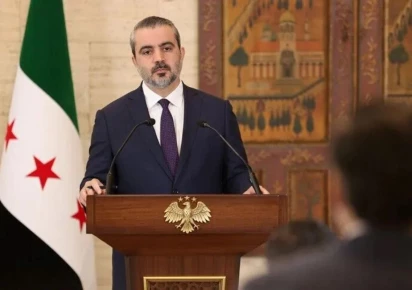
    Syria has rejected Israel’s explanation for an airstrike on a military airbase in northern Syria, saying there were no plans to establish a Turkish military base or permanent Turkish presence at the facility. Syrian Foreign Minister Asaad al-Shaibani said Damascus had informed Israeli officials about the nature of the work being carried out at Abu al-Duhur airbase before the attack. According to Syrian officials, the facility was being repaired and prepared for use by the Syrian Air Force. The work was focused on restoring runways and infrastructure damaged during Syria’s civil war. Israel carried out at least eight strikes on the airbase early Tuesday, hitting runways and hangars. The attacks reportedly damaged recently repaired sections of the facility. No casualties were reported. Israeli officials said the operation was aimed at preventing what they described as a Turkish military buildup at the site. Israeli Prime Minister Benjamin Netanyahu also said Syria had previously been warned against allowing a Turkish military presence at the base. Al-Shaibani strongly disputed that account. He said the airbase was largely empty and had not yet become fully operational. “There was no Turkish military buildup at the base,” the Syrian foreign minister said, arguing that the situation on the ground did not support Israel’s justification for the strike. He acknowledged that Turkish military officers had visited the facility shortly before the attack. However, he described the visit as part of broader military cooperation between Syria and Türkiye, including training and the exchange of expertise. Al-Shaibani said Syria had also developed military cooperation with countries including Saudi Arabia, Jordan, Qatar and Russia as it works to rebuild its institutions. He stressed that Syria is a sovereign country and has the right to establish partnerships with other states. The Syrian minister also said Syrian and Israeli officials had remained in contact before the airstrike. Damascus had reportedly explained that the facility would remain under Syrian control and that no permanent Turkish deployment was planned. Following the attack, Syria contacted the United States and other countries to protest the strike and seek measures to prevent similar incidents. Al-Shaibani said Damascus had warned Washington about what it described as Israel’s increasingly aggressive policies toward Syria. He also called for respect for Syrian sovereignty and warned against turning Syrian territory into a battleground for wider regional disputes. Despite the latest escalation, Damascus said it remained open to negotiations with Israel aimed at reducing tensions along their border. Al-Shaibani said Syria and Israel had previously spent months negotiating a security arrangement through US mediation. According to him, the two sides had made substantial progress and reached an understanding on paper, but Israel later failed to implement the agreed framework. The Syrian foreign minister said future negotiations could resume if there was genuine political will. He maintained that any security arrangement must address the concerns of both sides while respecting Syria’s sovereignty. Meanwhile, Türkiye has strongly backed Syria following the Israeli strike. Turkish Communications Director Burhanettin Duran criticised Netanyahu’s statements about Türkiye and accused the Israeli leadership of using threats against regional countries to divert attention from its own policies. Duran said Türkiye would continue supporting Syria and other countries seeking peaceful solutions to regional conflicts. He argued that Israel’s military actions in Gaza, Syria and Lebanon had contributed to growing instability across the region. He also said Ankara opposed policies that could widen the conflict. Duran stressed that Türkiye’s objective was to reduce bloodshed and promote peace, with the Palestinian issue and the situation in Gaza remaining among its key concerns.

  • |

    Wheat straw crisis hits Karachi dairy farmers

    Karachi is experiencing an acute wheat straw crisis following a three-day supply suspension, sparking protests among local dairy farmers and raising concerns over a potential milk shortage across the metropolis. Media reports indicate that trucks carrying wheat straw have ceased arriving in the city, impacting hundreds of local dairy farms. In response, farm owners gathered in Cattle Colony to demonstrate against alleged police extortion, claiming officers at entry points and checkpoints are demanding illegal payments from transporters and halting deliveries. The supply disruption, coupled with recent increases in petroleum and diesel prices that have driven up transport costs, has pushed wheat straw prices from 1,200 rupees to 2,000 rupees per maund. Because wheat straw serves as primary feed for cattle, stakeholders warn that the ongoing shortage threatens Karachi’s milk supply. Dairy farmers have called on the Sindh government, the Inspector General of Sindh Police, and the Commissioner Karachi to eliminate police extortion, ensure uninterrupted transport, and stabilise feed prices.

Leave a Reply

Your email address will not be published. Required fields are marked *