pakistan unveils major
| | |

Pakistan unveils major construction reforms to boo…

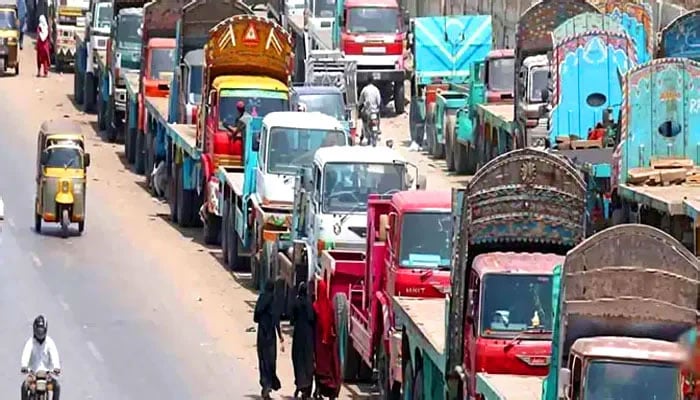
ISLAMABAD: The federal government is preparing a wide-ranging reform package aimed at revitalising Pakistan’s construction industry, improving regulatory oversight and attracting greater investment in modern infrastructure.

The proposed measures include the establishment of a Construction Industry Development Board (CIDB), consideration of a specialised Construction Development Bank (CDB), targeted tax reforms and changes to import and export policies.

The proposals were discussed during a high-level meeting chaired by Federal Minister for Economic Affairs and Establishment Division Senator Ahad Khan Cheema. The meeting brought together senior government officials, representatives of the Construction Association of Pakistan and other stakeholders to examine the sector’s financial, regulatory and operational challenges.

Under the proposed framework, the CIDB would promote the development of the construction industry while also regulating contractors, consultants and industry standards. The body would include representatives from both the public and private sectors and would seek to establish more consistent construction standards across the country.

Senator Cheema said the government and the Construction Association of Pakistan were in agreement over the need for a dedicated regulatory and development body. The proposed framework will be presented to Prime Minister Shehbaz Sharif for approval.

The government also plans to introduce targeted tax incentives and rationalise import and export policies to encourage the use of modern construction technologies and strengthen local production capacity.

In a significant move to improve the quality and durability of public infrastructure, the standard Defect Liability Period for public development projects is expected to increase from one year to three years, with a longer-term plan to extend it to five years.

The proposed reforms would also increase accountability for consultants. Unlike contractors, who can face penalties for poor performance, consultants currently have limited direct legal accountability. Under the new framework, consultants could be subjected to regulatory oversight and held financially and legally responsible for design defects and technical errors.

The government is also examining the construction industry’s difficulties in obtaining financial and performance guarantees. Senator Cheema directed Minister of State for Finance Bilal Azhar Kayani to consult the State Bank of Pakistan and Pakistan Banks Association on these issues and assess the feasibility of establishing a dedicated Construction Development Bank.

The government says the reforms are intended to ensure that public infrastructure projects deliver better value for money, remain durable and meet higher technical standards. Officials believe stronger regulation and accountability could reduce disputes, improve construction quality and bring Pakistan’s industry closer to international standards.
Similar Posts

  • | |

    Shehbaz denounces Houthi attacks in call with MBS

    Prime Minister Shehbaz Sharif held a telephone conversation with Saudi Crown Prince Mohammed bin Salman and strongly condemned the recent Houthi attacks on Saudi oil tankers in the Red Sea, reaffirming Pakistan’s full support for the Kingdom. During the conversation, the prime minister described the attacks as unacceptable and said they violated international law while posing a serious threat to freedom of navigation and regional stability. Shehbaz Sharif said Pakistan stands firmly with Saudi Arabia during the current security situation. He conveyed the country’s complete solidarity with the Saudi leadership and people, stressing that Pakistan remains committed to supporting the Kingdom in safeguarding regional peace and security. The prime minister also said he conveyed the support of Field Marshal Syed Asim Munir and the entire Pakistani nation, expressing unity with Saudi Arabia at what he described as a critical time. According to the prime minister, both leaders agreed to maintain close coordination on issues affecting regional peace and maritime security. They emphasised the importance of ensuring the safe and uninterrupted movement of commercial shipping through the Red Sea and the Strait of Hormuz, two of the world’s most important international trade routes. The two sides also agreed to continue working together to promote stability across the wider Middle East and support efforts aimed at protecting lawful maritime commerce from security threats. The conversation comes amid heightened regional tensions following recent attacks targeting commercial shipping in the Red Sea. The waterway remains a vital route for global energy supplies and international trade, making its security a key concern for countries in the region and the wider international community.

  • |

    ECC approves emergency import of 1 million tonnes …

    ISLAMABAD: In a move aimed at easing mounting pressure on wheat supplies and soaring flour prices, the Economic Coordination Committee (ECC) has conditionally approved the emergency import of up to one million metric tonnes of wheat, with the estimated import bill standing at $340 million. The decision was taken during an emergency meeting of the ECC chaired by Finance Minister Muhammad Aurangzeb. However, officials said the final quantity of wheat to be imported will depend on the requirements of the provinces and their willingness to arrange payments before shipments are ordered. According to the Ministry of Finance, a high-level steering committee led by Deputy Prime Minister Ishaq Dar will oversee the import process, assess the country’s wheat requirements and develop an operational framework to ensure transparency and financial discipline. Federal Minister for National Food Security Rana Tanveer Hussain said the imported wheat would cost approximately $340 million, while transportation costs within Pakistan would be borne by the provinces requesting the grain. Officials said the federal government had linked wheat imports to the opening of letters of credit (LCs) by provincial governments to avoid financial complications experienced during previous commodity imports. Provinces seeking wheat supplies will also participate in decisions regarding import quantity, quality standards and procurement procedures. Government sources indicated that the actual import volume could range between 500,000 and one million metric tonnes, depending on the final assessment by provincial authorities. The approval comes as Pakistan faces a sharp increase in wheat flour prices. According to the Pakistan Bureau of Statistics, the average national price of wheat flour has surged by 74% over the past year, reaching around Rs129 per kilogram, while prices in some cities, including Peshawar, have climbed as high as Rs150 per kilogram. Officials said the provinces had collectively requested around 2.2 million metric tonnes of wheat to stabilise supplies and curb rising prices. The ECC’s approval for up to one million tonnes represents nearly 45% of that total demand. The steering committee will now finalise procurement timelines, import mechanisms and financial arrangements in coordination with provincial governments. Authorities hope the emergency imports will help improve market availability, ease pressure on flour prices and provide relief to consumers struggling with the rising cost of essential food items.

  • | | |

    Pakistan to launch advanced IT courses to boost di…

    The federal government has announced a nationwide initiative to introduce advanced information technology (IT) courses as part of its broader strategy to strengthen Pakistan’s digital economy and equip young people with globally competitive digital skills. The decision was announced during a meeting chaired by Federal Minister for Information Technology and Telecommunication Shaza Fatima Khawaja, attended by the heads of IT training institutions from across the country. Participants agreed on a national roadmap aimed at accelerating the development of a skilled IT workforce and expanding access to high-quality digital training. During the meeting, the minister directed all provinces to immediately begin offering advanced IT courses and internationally recognised training programmes. The initiative is intended to prepare Pakistan’s youth for opportunities in the global technology sector, freelancing, and the rapidly growing digital economy. Shaza Fatima said developing a workforce with modern digital skills remains one of the government’s top priorities. She emphasised that training programmes should align with international industry standards and market requirements, enabling young Pakistanis to compete effectively in global employment markets. The government believes that expanding access to advanced IT education will not only increase employment opportunities but also help boost Pakistan’s exports of digital services and strengthen the country’s position in the global technology industry. The meeting also focused on improving coordination among IT training institutions to ensure consistent delivery of quality education and practical skills. Officials discussed measures to enhance the effectiveness of training programmes and ensure they meet the evolving demands of employers and technology companies. To monitor progress, the federal minister instructed all IT training institutions to submit weekly performance reports to the Ministry of Information Technology and Telecommunication. The reports will help the ministry assess implementation, track outcomes, and identify areas requiring additional support. Pakistan has been placing greater emphasis on digital transformation in recent years, with increasing attention on technology education, entrepreneurship, freelancing, and software exports. Government officials view investment in digital skills as a key component of long-term economic growth and employment generation. The planned rollout of advanced IT courses is expected to provide students and professionals with access to updated technical knowledge and practical training in emerging technologies. By expanding the country’s pool of skilled IT professionals, the government aims to support innovation, attract investment, and accelerate the growth of Pakistan’s digital economy while creating new opportunities for young people in domestic and international markets.

  • |

    Khairpur Lithium discovery boosts industry plans

    Pakistan has taken a significant step towards developing its first indigenous lithium industry after the discovery of high-quality lithium reserves in Sindh’s Khairpur districtPakistan has taken a significant step towards developing its first indigenous lithium industry after the discovery of high-quality lithium reserves in Sindh’s Khairpur district, opening new opportunities for the country’s mineral and industrial sectors. In a major development, the Oil and Gas Development Company Limited (OGDCL) has entered into a strategic agreement with the Pakistan Institute of Nuclear Science and Technology (PINSTECH) to jointly develop technology for the commercial-scale extraction of lithium from geothermal brine. The collaboration follows the successful identification of high-grade lithium in samples collected from a well located in Khairpur. The discovery is being viewed as a breakthrough that could reduce Pakistan’s dependence on imported lithium while creating new investment and industrial opportunities. Under the agreement, OGDCL and PINSTECH will work together to design and develop advanced extraction technologies capable of recovering lithium efficiently from geothermal brine. The initiative is expected to pave the way for the establishment of a domestic lithium processing industry, supporting the growing global demand for the critical mineral. Lithium is considered one of the world’s most valuable strategic minerals due to its extensive use in rechargeable batteries for electric vehicles, mobile phones, laptops, renewable energy storage systems, and other advanced technologies. As global demand continues to rise, countries with commercially viable lithium resources are increasingly focusing on developing local production capabilities. Officials believe the partnership will strengthen Pakistan’s mineral exploration efforts, promote scientific research, and encourage technology-driven industrial development. The project is also expected to contribute to economic growth by attracting investment, generating employment opportunities, and enhancing the country’s position in the global critical minerals market.

  • |

    North Korea accuses NATO of expanding war preparations

    PYONGYANG: North Korea has accused NATO of increasing preparations for future conflicts, claiming the alliance’s planned expansion of military fuel infrastructure reflects a shift toward a more aggressive military posture. In a statement carried by the state-run Korean Central News Agency (KCNA), Pyongyang criticised NATO’s reported plans to upgrade and expand its fuel supply network across Europe. The project reportedly includes new pipelines and fuel storage facilities aimed at improving military logistics between western Europe and newer eastern and northern member states. North Korea claimed the expansion of fuel infrastructure shows NATO is strengthening its ability to maintain strategic reserves and conduct large-scale military operations. It alleged that the alliance is preparing not only for conflicts in Europe but also for possible involvement in other regions, including the Asia-Pacific. The commentary accused NATO of increasing its military presence in the Asia-Pacific region and criticised the alliance’s cooperation with countries that Pyongyang considers hostile. North Korea claimed that NATO’s recent activities near the Korean Peninsula have contributed to rising regional tensions. Pyongyang also criticised NATO members’ participation in multinational military exercises, including the Rim of the Pacific (RIMPAC) drills. It claimed such exercises demonstrate that the alliance views the Asia-Pacific as a possible area of future military confrontation. North Korea warned that NATO’s expansion of military capabilities and logistics networks could increase global instability. It said strengthening military infrastructure would encourage an arms buildup and create further tensions between major powers. The allegations come amid growing concerns over security developments in Europe and the Asia-Pacific. NATO, however, has repeatedly stated that its military posture is defensive and focused on protecting member countries and deterring potential threats.

  • | |

    Hafiz Naeem slams rising prices, elite privileges

    Jamaat-e-Islami Emir Hafiz Naeemur Rehman has criticised the country’s elite class, saying ordinary Pakistanis are struggling under rising costs while privileged groups continue to enjoy extensive benefits without paying their fair share of taxes. Speaking at a press conference at Jamaat-e-Islami headquarters in Mansoorah, Lahore, Hafiz Naeem said increases in petroleum prices have a direct impact on the prices of essential goods and place the greatest burden on middle- and lower-income families. He said access to quality healthcare and education remained inadequate for a large section of the population, adding that ordinary citizens were being deprived of basic facilities. Hafiz Naeem also said Jamaat-e-Islami had not ended its protest sit-in but had only postponed it. He criticised what he described as a political system dominated by a self-serving political class. He said many Pakistanis were taking significant risks to travel abroad in search of employment, while educated young people were also leaving the country because of limited job opportunities. The Jamaat-e-Islami leader further alleged that owners of independent power producers were not being adequately taxed despite earning substantial incomes. At the same time, he said, people across the country were facing prolonged power outages while additional charges were being collected from consumers. Hafiz Naeem accused the ruling class of failing to deliver meaningful relief because of what he described as corruption and poor governance. He questioned the reported purchase of an aircraft worth around Rs11 billion for the Punjab chief minister. He also criticised government officials for defending the expenditure, saying public funds should not be used for expensive official vehicles and other privileges. The Jamaat-e-Islami emir urged authorities to reduce unnecessary government spending and focus resources on providing relief to ordinary citizens.

Leave a Reply

Your email address will not be published. Required fields are marked *