aamer raza named
| |

Aamer Raza named Pakistan’s Strategic Commander

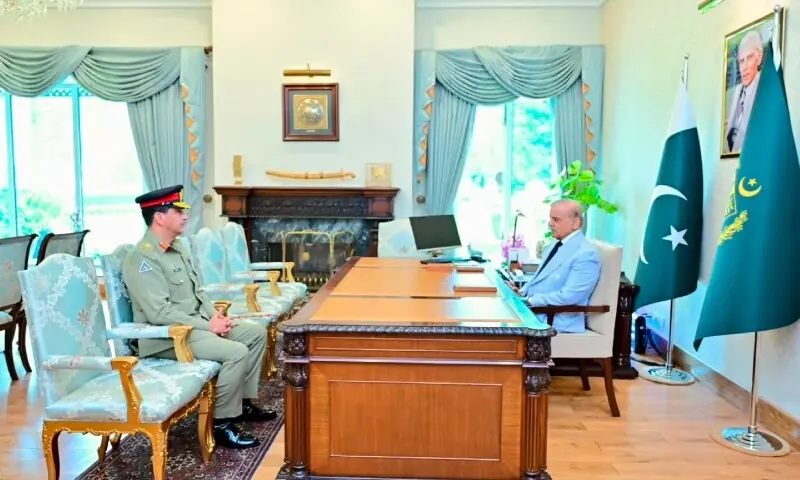
Lieutenant General Syed Aamer Raza, HI(M), SBt, has been promoted to the rank of four-star general and appointed as the Commander of the National Strategic Command, marking a significant milestone in his military career. The appointment places one of the Pakistan Army’s most experienced senior officers at the helm of the country’s strategic command structure.

General Aamer Raza has built a distinguished career through a series of key command, operational and administrative appointments. Before his promotion, he was serving as the Chief of the General Staff (CGS) at the General Headquarters (GHQ), one of the Pakistan Army’s most influential positions. As CGS, he oversaw operational planning, intelligence coordination and strategic military affairs, making the role central to the Army’s command structure.

Military observers view his promotion as recognition of his extensive professional experience and leadership. His tenure as Chief of the General Staff provided him with broad exposure to strategic planning, operational decision-making and national security matters, qualities considered essential for leading the National Strategic Command.

General Aamer Raza also possesses significant expertise in defence technology and military procurement. He previously served as Director General Weapons and Equipment, where he supervised the acquisition, maintenance and development of military hardware. In addition, he served as Chairman of Heavy Industries Taxila (HIT), one of Pakistan’s leading defence production organisations, where he played a role in strengthening indigenous defence manufacturing and modernisation efforts.

Commissioned into the Armoured Corps, General Aamer Raza has held numerous command, staff and instructional appointments throughout his career. His service includes leadership roles at various operational formations as well as senior positions within military institutions, giving him extensive experience in both field operations and strategic planning.

Defence analysts believe his combination of operational leadership, technical expertise and institutional experience makes him well suited for his new responsibilities. The National Strategic Command is expected to play a key role in coordinating Pakistan’s strategic capabilities, strengthening national security planning and overseeing matters related to strategic deterrence.

Similar Posts

  • |

    Young people increasingly turn to AI chatbots for emotional support and social advice

      Artificial intelligence is becoming an increasingly common source of support for teenagers and young adults as many begin relying on AI-powered chatbots to navigate personal conversations, relationships, and everyday social situations. Recent national studies suggest that around 20 percent of young people now seek guidance from AI companions for emotional support and relationship advice instead of turning to friends, family members, or other trusted individuals. Experts say that the growing popularity of AI chatbots reflects changing communication habits among younger generations. Many users are employing these digital tools to help write difficult text messages, prepare for challenging conversations, and better understand complicated social interactions. For many, artificial intelligence provides a convenient and accessible way to think through personal situations before speaking with others. Researchers have found that many teenagers appreciate AI because it is available at any time of the day or night. Unlike human conversations, interacting with a chatbot does not involve the immediate fear of criticism, embarrassment, or rejection. This constant availability has made AI an appealing option for individuals who may feel anxious about discussing sensitive topics with people in their lives. Clinical psychologist Joshua Goodman believes that AI chatbots can offer users a comfortable environment to explore their thoughts and emotions. He explained that conversations with artificial intelligence may feel like a safe place where young people can discuss issues they might hesitate to share with parents, teachers, or friends. This sense of privacy and emotional comfort has contributed to the increasing use of AI for personal guidance. However, mental health professionals caution that artificial intelligence should not be viewed as a replacement for genuine human relationships. While AI can provide information, suggestions, and conversational support, experts emphasize that it lacks the emotional understanding, empathy, and lived experience that real people bring to meaningful relationships. Clinical psychologist Mary Alvord has warned that although AI conversations may seem safe, users should remember that perceived privacy is different from actual privacy. She pointed out that interactions with chatbots may be stored, analyzed, or processed by technology providers, meaning users should be careful about sharing highly personal or sensitive information. Experts also stress that artificial intelligence cannot fully replicate the complexity of human communication. Media psychologist Don Grant explained that chatbots are generally designed to remain supportive and non-confrontational. While this may make conversations feel comfortable, it also means users may not experience the constructive challenges, disagreements, or honest feedback that often help people develop stronger communication skills and emotional resilience. According to specialists, relying too heavily on AI for social interactions could reduce opportunities to practice real-life communication. Building confidence in conversations, resolving disagreements, and forming lasting friendships require experiences that technology cannot fully provide. Human relationships involve empathy, body language, emotional understanding, and shared experiences that remain difficult for artificial intelligence to reproduce. To encourage a healthy balance, health professionals recommend using AI as a supportive tool rather than a substitute for personal relationships. They advise parents, educators, and young adults to establish clear boundaries regarding AI use while continuing to prioritize conversations with family members, friends, teachers, and mental health professionals when needed. Experts also encourage young people to regularly practice face-to-face communication, participate in social activities, and develop interpersonal skills that strengthen emotional well-being. These experiences help build self-confidence, improve problem-solving abilities, and create meaningful personal connections. As artificial intelligence continues to become part of everyday life, specialists believe it can play a positive role when used responsibly. However, they emphasize that maintaining genuine human relationships remains essential for emotional growth, mental health, and long-term social development. AI may offer convenience and support, but meaningful human connection continues to be irreplaceable.

  • | |

    Will Smith gets rare backing from his King Richard…

    Will Smith has received rare public support from his King Richard co-star Aunjanue Ellis-Taylor, who has defended the actor’s actions during his infamous 2022 Oscars confrontation with Chris Rock. Ellis-Taylor, who played Oracene “Brandy” Price in the Oscar-winning film, discussed the controversy during an appearance on The Daily Beast’s Obsessed podcast. More than four years after the incident, she made it clear that she still stands behind Smith’s decision to defend his wife, Jada Pinkett Smith. (People.com⁠) “I know that he wanted to protect his wife, and I stand by that,” Ellis-Taylor said during the interview. She also criticized the idea that freedom of speech should automatically protect comments she considers deliberately hurtful or disrespectful. (People.com⁠) The controversy dates back to the 2022 Academy Awards, when Rock was presenting the award for Best Documentary Feature. During his remarks, the comedian made a joke about Pinkett Smith’s shaved head, comparing her appearance to Demi Moore’s character in G.I. Jane. Pinkett Smith had previously spoken publicly about her alopecia, a condition that causes hair loss. (The Washington Post⁠) Smith initially appeared to laugh at the joke before walking onto the stage and slapping Rock. He then returned to his seat and shouted at the comedian to keep his wife’s name out of his mouth. The shocking moment was broadcast to audiences around the world and immediately became one of the most talked-about incidents in Oscars history. (The Washington Post⁠) Smith later apologized publicly, calling his behavior unacceptable and inexcusable. The Academy also launched a formal review, and Smith eventually resigned from the organization. He was subsequently banned from attending Academy events for 10 years. (The Washington Post⁠) Despite the controversy, Ellis-Taylor says her personal experience with Smith was very different from the image created by the Oscars incident. She praised him for being caring and respectful while they worked together on King Richard, particularly toward crew members and background actors. She described his kindness on set as something she considered unusual in Hollywood. (Page Six⁠) Her comments offer a different perspective on an incident that continues to divide public opinion. While many have condemned Smith’s decision to respond physically, Ellis-Taylor believes understanding his motivation matters. The actress is not the first person connected to King Richard to defend Smith. Richard Williams, the real-life father portrayed by Smith in the movie, also previously expressed support for the actor and said he would not turn against him over the Oscars incident. (cbsnews.com⁠) Years later, the slap remains part of Smith’s public story. But Ellis-Taylor’s latest comments show that some of the people who know him personally continue to separate the controversial moment from the person they experienced behind the scenes.

  • | |

    Pakistan faces 400+ cyberattacks this year

    Pakistan has faced more than 400 cyberattacks during the current year, with authorities successfully stopping all reported attacks in time, according to the Director General of the National Cyber Emergency Response Team, Dr Haider Abbas. Dr Abbas said the growing number of cyber threats showed the need for stronger national cybersecurity measures. He called for the establishment of a powerful National Cyber Security Authority to coordinate cybersecurity efforts across the country. Speaking in an interview, he said Pakistan was facing increasingly complex cyber threats. He also warned about the risks posed by cyberattacks allegedly backed by state actors. According to Dr Abbas, Pakistan needs a central institution with sufficient authority to deal with the growing cybersecurity challenges. He proposed placing the National Cyber Security Authority under the prime minister. He said a national authority working under the prime minister could respond more effectively to major cyber threats. It could also improve coordination between government institutions and other organisations responsible for digital security. The official stressed that cybersecurity had become an important national issue. The increasing dependence on digital systems has also increased the potential risks to government institutions, businesses and other critical sectors. More than 400 attacks reported this year highlight the scale of the challenge facing Pakistan. Although the attacks were reportedly prevented, officials believe the country needs stronger systems to detect and respond to future threats. Dr Abbas said the proposed authority should oversee cybersecurity across the country. It should also ensure that different institutions follow effective security measures and remain prepared for emerging digital threats. A central cybersecurity body could help improve coordination during cyber emergencies. It could also allow authorities to respond quickly when sensitive digital systems come under attack. The official’s proposal comes as cyber threats continue to become more sophisticated worldwide. Governments are increasingly focusing on protecting critical infrastructure, public institutions and digital networks from cyberattacks. Pakistan has also expanded its dependence on online systems in government, banking, communications and other sectors. Any major cyberattack on important infrastructure could potentially disrupt essential services. Dr Abbas therefore called for a stronger national framework to protect Pakistan’s digital environment. He said the proposed authority should have a clear mandate and sufficient powers to manage cybersecurity across the country. He also emphasised the importance of a coordinated national response. Different government departments and institutions need to work together to identify threats and prevent attacks before they cause damage. The official said placing the authority under the prime minister would give it greater effectiveness and allow important decisions to be taken quickly. The disclosure of more than 400 cyberattacks this year has renewed attention on Pakistan’s digital security. Authorities are now facing growing pressure to strengthen national cybersecurity systems and improve preparedness against future threats.

  • 46 Passport officials overstay foreign postings, audit flags irregular payments

    Islamabad: Forty six officers and employees of the Directorate General Immigration and Passports remained posted at Pakistani missions abroad after completing their allowed three year tenure, while audit declared salaries, allowances and other benefits paid after the expiry of their foreign assignments irregular and unauthorized. The issue triggered strong criticism in the Public Accounts Committee, where members demanded to know why the officials were not called back and who was responsible for failing to implement the approved policy. The existing foreign posting policy clearly states that Immigration and Passport staff sent to Pakistani missions abroad are to serve for 36 months. The policy states this period is not extendable. It further states that the posting automatically ends after 36 months and pay should stop at that point. The replacement process is also required to begin at least one year before an official completes the foreign posting so that passport operations at missions are not disturbed. Audit found that the department did not follow these requirements. The department provided a list of 46 officials and employees who had served at different Pakistani missions abroad. The locations included Dubai, Jeddah, Riyadh, Abu Dhabi, Muscat, Doha, Kuwait, Milan, London, Barcelona, Paris, Rome, Frankfurt, Manchester, Toronto, New York, Madrid, Hong Kong, Washington, Sydney, Chicago, Berlin, Bangkok, Copenhagen, Los Angeles, Stockholm, Tokyo, Tehran and Vancouver. Audit said the officials had not returned to Pakistan after completion of their foreign assignments. It also said management had failed to arrange their replacements in time. According to the audit, payments of salaries, allowances and other benefits after the completion of the approved foreign posting period were irregular and unauthorized. Audit said failure to follow the foreign posting policy violated instructions issued by the Establishment Division and the Ministry of Interior. It recommended an investigation to determine responsibility and called for regularizing the period during which the officials remained abroad beyond their approved tenure. The matter became more controversial during discussion before the Public Accounts Committee. Members repeatedly asked Immigration and Passport officials why the employees were not recalled after completing three years. Officials said the staff had originally been posted under the existing policy. They explained that proposals for a new policy had later been sent to the Ministry of Interior but had not been finalized. Committee members were not satisfied with that explanation. They argued that until a new policy was formally approved, the existing policy remained binding. Members said government departments could not stop following an approved policy simply because another policy was being prepared. One member said the rules had to be followed as written and officials could not decide for themselves whether an approved policy was right or wrong. The member said a clear violation had taken place because the officials remained abroad after their tenure without proper regularization or recall. Questions were also raised over who had the authority to approve any extension when the existing policy itself described the foreign posting period as non extendable. Members said the matter may have required approval from a higher forum if the government wanted to keep the officials abroad after their original tenure expired. The committee also questioned why the department had not started the replacement process before the officials completed their assignments. Officials acknowledged during the discussion that requests concerning replacements and policy changes were sent after some tenures had already ended. Members pointed out that the department already knew from the start that every foreign posting would end after three years. They therefore questioned why replacement planning was not started earlier. Criticism sharpened when members discussed the scale of the issue. The committee was told that the matter involved 46 officials, not one or two exceptional cases. One member remarked that it appeared as if a large part of the department was enjoying extended stays outside the country. Another member said the handling of the policy showed a troubling level of carelessness and called for the case to be treated as an example so that other departments do not ignore government rules in the same way. A further concern involved the money spent on officials after their approved tenure had ended. One committee member argued that if the officials were staying abroad in violation of the policy, questions would also arise about the legality of expenditure on their salaries, allowances and other benefits during that extra period. The member said the matter could not be solved simply by deciding whether to call the officials back or allow them to remain abroad. The period already spent beyond the approved tenure would also have to be regularized through the proper authority. The Interior Secretary acknowledged that the policy had not been implemented and suggested taking the matter to the appropriate forum for regularization. He also said approval from the Finance Division could be needed for expenditure incurred during the additional period. Officials suggested that the Cabinet or another competent authority might have to decide how to treat the overstayed period. Management had earlier told the Departmental Accounts Committee that the foreign posting policy was under review. It also said the Interior Minister had approved the continuation of currently posted officials until their replacements joined. According to management, official passports could also be renewed under the relevant rules to avoid legal complications in host countries. Audit did not accept this explanation as a settlement of the objection. It maintained that the existing approved policy had been violated because the revised policy had not yet been finalized and the continued foreign postings were unauthorized under the policy that remained in force. Committee members also stressed that responsibility could not simply disappear once the overstay was regularized. They said officials who failed to implement the approved foreign posting policy should also be identified. The committee called for accountability from those who allowed the situation to continue. Members also demanded a transparent selection process for replacement officials. They said employees whose tenure had already expired should be brought back according to the existing rules while new staff should be selected

  • |

    Rome to host US-mediated Israel-Lebanon negotiations on southern pilot zones

    Technical delegations from Israel and Lebanon will assemble in Rome from August 4 to 6 for a fresh round of United States-brokered talks designed to advance the implementation of their bilateral framework agreement. First disclosed by Italian Foreign Minister Antonio Tajani and subsequently confirmed by the US State Department, the upcoming dialogue will address the expansion of designated pilot zones in southern Lebanon alongside broader border resolutions and long-term peace objectives. The core terms of the underlying framework deal, established after conflict flared between Israel and the Iran-backed militant group Hezbollah in March, require a cessation of hostilities, the disarming of Hezbollah, the national deployment of the Lebanese Armed Forces, and a structured, phased withdrawal of Israeli forces commencing from two initial pilot areas. Negotiators aim to leverage early operational data from these initial zones to refine the broader security rollout and facilitate a progressive expansion of government control throughout the border region. The upcoming diplomatic round occurs amidst friction on the ground, with the Lebanese military recently condemning persistent Israeli artillery shelling and strikes in southern territory, cautioning that continued operations directly impede the full deployment of state troops outlined in the agreement.

  • | |

    Permit documents reveal fresh details about Taylor…

    Newly surfaced permit documents have offered fans a closer look at how Taylor Swift and Travis Kelce planned one of the most talked-about celebrity weddings of the year. The superstar couple exchanged vows earlier this month during a lavish yet highly private ceremony at Madison Square Garden in New York City. While they have largely kept details of the celebration out of the public eye, official event permits have now revealed how carefully every aspect of the wedding was organized. According to documents obtained by the Associated Press, the main wedding celebration began at 5 p.m. and continued until 4 a.m. the following morning. The permits also outlined a multi-day schedule, with an intimate rehearsal dinner for approximately 100 guests taking place the evening before the ceremony, followed by the larger wedding celebration attended by around 1,000 guests.  The paperwork also confirmed that extensive road closures were approved around Madison Square Garden to accommodate guest arrivals, security operations and event logistics. Several nearby streets were temporarily closed, while police officers and traffic personnel were deployed throughout the area to manage crowds and ensure the safety of attendees. The large-scale security operation reflected the extraordinary level of public interest surrounding the wedding.  The newly revealed documents also highlight just how much planning went into maintaining the couple’s privacy. Reports indicated that the event featured a strict no-phone policy, while guests and staff were asked to follow confidentiality measures designed to prevent photos or videos from leaking online. Those efforts appear to have been successful, as very few authentic images from the ceremony have surfaced since the celebration.  Preparations inside Madison Square Garden were equally impressive. Sources previously revealed that the iconic venue was transformed into an elegant wedding setting featuring custom décor, greenery, canopies and a specially designed reception space while preserving the arena’s unique character.  The wedding reportedly brought together family members, close friends and a long list of celebrity guests from the worlds of music, sports and entertainment. Despite its grand scale, those in attendance have largely respected the couple’s wishes for privacy, allowing Taylor and Travis to celebrate away from constant public attention.  The permit documents provide the clearest picture yet of how the high-profile celebration was executed. From carefully timed arrivals and extensive security measures to a multi-day schedule, every detail reflected meticulous planning. While fans remain eager to learn more about the wedding, the newly released documents show that Taylor Swift and Travis Kelce prioritized one thing above all else: creating a memorable celebration that remained intimate despite the world’s attention.

Leave a Reply

Your email address will not be published. Required fields are marked *