before your memory

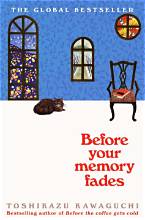
Before Your Memory Fades

Holding this unforgettable book in my hands made me realize that time may take away the people we love, but it can never erase the feelings we share with them. Before Your Memory Fades is a touching novel by Toshikazu Kawaguchi, published in 2022. Set in the peaceful Café Donna Donna on a hillside in Hakodate, Japan, the book explores love, loss, regret, forgiveness, and the importance of expressing our feelings before it is too late.

At first, the idea of the story seems like a magical dream. A special café has a seat that allows visitors to travel back in time and meet someone from their past. However, the journey comes with strict rules. Visitors cannot change the present, they can only meet someone connected to the café, they must remain in their seat, and most importantly, they must return before their coffee gets cold.

Through four emotional stories, Kawaguchi presents different kinds of love and regret. The characters include an orphaned girl, a struggling comedian, a heartbroken sister, and a young man facing his own mortality. Their experiences show how fear, anger, pride, and unspoken feelings can create deep regret. Although they cannot change what happened in the past, their brief meetings help them understand their feelings and face the present with greater courage.

The most important lesson of the book is that we cannot change the past, but we can change how we live in the present. Sometimes, a few honest words can heal years of sadness. The story encourages us to forgive, express our love, and value the people around us while we still have the opportunity.

What makes this book special is its gentle and emotional writing. It reminds readers that sadness is not only a sign of loss; it is also a reminder of how deeply we have loved. The novel encourages us to ask ourselves: What would we say if we had only a few minutes with someone we deeply miss?

In conclusion, Before Your Memory Fades is a meaningful and emotional book that teaches us not to wait for the perfect moment to express our feelings. We should appreciate the people we love, forgive others, and speak from the heart before time takes the opportunity away.

By: Mahnoor Haider

Similar Posts

  • | |

    Finding Macbeth among the cul-de-sacs

    There is a persistent cultural myth that high art requires crumbling castles, stormed heaths, or the frantic pulse of a metropolitan center. Suburbia, by contrast, is frequently dismissed as a landscape of cultural vacuum. The locality is defined instead by the hypnotic hum of lawnmowers, identical mailboxes, and the predictable choreography of the morning commute. Yet, to truly understand the works of William Shakespeare, one might argue that the quiet cul-de-sac is precisely where his characters feel most alive. Far from being an ivory-tower exercise, reading the Elizabethan canon against the backdrop of modern suburban life reveals a shocking truth. The human heart remains unchanged. It battles with the exact same ambitions, fears, and frailties that obsessed the playwright over four centuries ago. Shakespeare’s Macbeth Consider the iconic image of Macbeth encountering the three witches on a desolate heath. It’s a scene immortalized in classical art where armored men on horseback reel back in shock from supernatural prophets. On the surface, this imagery feels light-years away from a suburban subdivision. And yet, the psychological anatomy of Macbeth’s descent is intensely domestic. The internal dialogue of unchecked ambition, the quiet rationalization of moral compromise, and the creeping dread of consequences do not require a Scottish throne room. They can happen just as easily across a kitchen island or inside a quiet home office late at night. The weird sisters whispering prophecies of greatness are mirrored in modern life by the relentless cultural pressures to achieve. King Lear’s Misjudgment of His Children When we open a volume of Shakespeare, the distance between the sixteenth-century stage and the twenty-first-century lawn collapses. The suburban environment with its heavy emphasis on conformity and respectability provides a testing ground for tragedy. Iago’s subtle manipulations and toxic envy find their modern equivalents in politics, gossip, and the quiet resentments behind closed doors. King Lear’s tragic misjudgment of his children echoes in the universal anxieties of aging, and the desperate search for legacy. The stakes may appear smaller. They’re measured in property values and school districts rather than kingdoms and crowns but the emotional resonance is identical. Reading Shakespeare in Suburbia Furthermore, reading Shakespeare in suburbia changes how we interact with our immediate surroundings. It strips away the sterile academic intimidation that often turns classical literature into a chore to be checked off a syllabus. Instead, the verse becomes a lens through which the mundane details of daily existence are rendered extraordinary. The polite wave to a neighbor takes on a layer of complex subtext; the solitary evening walk under streetlights feels heavy with introspection. We begin to recognize that our neighbors are not merely background characters in a quiet life, but complex individuals harboring their own private comedies and tragedies.    Immutable Patterns of Human Behavior Ultimately, literature serves as a mirror. The suburban landscape offers a surface polished to a clear, sometimes uncomfortable reflection. Shakespeare did not write merely about royalty or historical epochs. He wrote about the immutable patterns of human behavior. By bringing his texts into the quiet corners of modern domestic life, we bridge the gap between antiquity and the everyday. We discover that drama is not something reserved for history books or theatrical stages, but an inescapable part of being human, waiting to be noticed right outside our front doors.

  • |

    Jean Rhys’s “Good Morning, Midnight” whispers in the dark

    When Jean Rhys published Good Morning, Midnight in 1939, it was met with a chorus of discomfort and bewilderment. Critics at the time found its tone too bleak, its protagonist too unvarnished, and its atmosphere too heavy with melancholy. Yet decades later, this tragic, brilliant novel stands out as one of the most hauntingly modern studies of isolation, vulnerability, and resilience ever written. It is a work that does not simply invite readers into a story; it pulls them directly into the fractures of a wounded mind. The novel centers on Sasha Jansen, an aging Englishwoman returning to Paris after a long absence. Having scraped together a modest sum of money, she hopes to use the trip as a desperate attempt to patch over her fraying life. But the Paris Sasha steps back into is not a romantic city of artists and cafes; it is a claustrophobic landscape of cheap, dimly lit hotel rooms, cold streets, and judgemental eyes. Traumatized by a past filled with poverty, loss, and abusive relationships, Sasha moves through the city like a ghost in her own life, attempting to dull her emotional pain with alcohol while simultaneously craving a human connection she fears will ultimately destroy her. What makes Rhys’s narrative so compelling is her incredible command of internal voice. Written in a tight, stream-of-consciousness style, the novel obliterates the boundary between Sasha’s thoughts and the world around her. Rhys captures the quiet humiliation of financial insecurity. The constant calculation of tips, the fear of being judged by hotel staff, the defensive impulse to buy cheap clothes just to look respectable. Through Sasha’s eyes, even everyday interactions carry a terrifying weight. When she encounters a young Russian man who mistakes her for someone wealthier, or when she interacts with an eccentric gigolo, the tension is palpable. The reader is trapped right alongside Sasha. They navigate the razor-thin line between her deep yearning for intimacy and her absolute terror of being hurt. Beyond its psychological depth, Good Morning, Midnight is a social critique. Published on the cusp of World War II, the novel subtly mirrors the anxiety and dislocation of late-1930s Europe. Sasha’s struggle highlights how unforgiving society can be to women who fall outside traditional expectations of youth, wealth, and domestic stability. She is a woman adrift in an urban landscape that demands self-sufficiency while offering no safety net, making her experience feel astonishingly contemporary to modern readers facing their own eras of isolation and uncertainty. Rhys’s prose is razor-sharp, sparse, and poetic, delivering emotional blows with remarkable economy. The book’s final passage remains one of the most famous, devastating, and deeply ambiguous endings in twentieth-century literature. It is neither a story of neat redemption nor one of complete surrender, but rather a quiet, defiant acceptance of life’s painful complexities. Good Morning, Midnight demands that we look directly at the aspects of human suffering we often try to ignore; loneliness, aging, and  poverty. Jean Rhys offers a masterpiece of modernism that feels as vital, raw, and resonant today as it did nearly a century ago.  

  • Nazuk: A Powerful Portrait of Baloch Women’s Struggles

    By Sania Sher Jamak This book review is about the novel Nazuk, written by Syed Zahoor Shah Hashmi and translated by Fazal Baloch. Syed Zahoor Shah Hashmi was a renowned Balochi poet, writer, linguist, historian, and philosopher. He is regarded as one of the most influential figures in modern Balochi literature. Syed Zahoor Shah Hashmi was born on 21 April 1926 in Gwadar and passed away on 4 March 1978 in Karachi. He also wrote a dictionary called Syed Gunj, in addition to many works of poetry, history, and books on the Balochi language and literature. Nazuk is a very interesting and thought-provoking novel. The title itself is meaningful and reflects the delicate and difficult lives of Baloch women who suffer from various social problems. Through this novel, the writer highlights the hardships, struggles, and challenges faced by women in Balochi society. The novel is not only an engaging piece of literature but also provides a deeper understanding of Balochi culture and society. It encourages readers to think about social issue

  • Book review – The Broken Wings

    By Sher Jan Qadir, The Broken Wings is a poetic novel written by Khalil Gibran, first published in Arabic in 1912. It is a touching story of tragic love, set in Beirut at the beginning of the twentieth century. The novel highlights several important social issues of Eastern Mediterranean society at that time. These include religious corruption, the oppression and limited rights of women, and the strong influence of money and power. Through the story, the author shows how wealth and authority often control people’s lives and decisions, revealing how power and money dominate society. The story begins when Khalil Gibran is eighteen years old, at an age when love opens his eyes to the intense and magical beauty of a young girl whom he falls in love with. He falls in love with a courageous, generous, and strong woman named Selma Karamy. She is the one and only daughter of Faris Effendi Karamy, who is known as one of the wealthiest men in Lebanon. As time passes, Khalil Gibran succeeds in finding Selma’s home and becomes familiar with her father, Faris Effendi, who considers Khalil to be the son of his closest friend. After some time, Khalil and Selma become tied by the bond of friendship, as their souls are similar. When they are in heaven, flying with angels and enjoying the delicious fruits of friendship, the devil, Mansur Bey Galib, enters the story. He is responsible for taking Adam and Eve out of heaven. Selma and Khalil become like Eve and Adam, who make the mistake of not revealing their feelings to Faris Effendi Karamy before the entry of the devil, Mansur Bey Galib. Mansur Bey Galib is a man of both power and wealth. His entry into their lives makes the family of Faris Effendi Karamy worried and horrified. He separates Selma and Khalil and drags them into a life of helplessness and worry. From here, the story enters a new phase, where Selma’s father, Faris Effendi Karamy, is compelled to give Selma’s hand in marriage to Mansur Bey Galib, who is a roisterer. Selma’s difficulties begin here, but she still remains in love with Khalil Gibran. All the luxuries and the mansion become a prison for Selma, where she is bound to live but finds it difficult to stay. After some time, Mansur Bey Galib becomes aware of Selma’s secrets—what she does, how she lives, and whom she meets. He forbids Selma from visiting her father’s home and forces her to obey him as her husband. One day, she secretly visits her father’s home to meet Khalil Gibran and makes him aware of all her circumstances. They then decide to separate with sadness. A few months later, Selma gives birth to a baby boy, but destiny plans the tragic end of the lives of both the child and his mother, leaving Lebanon in mourning.

  • |

    Han Kang transforms trauma into human connection

    In an era often dominated by literary posturing and self-absorbed memoirs, South Korean author Han Kang offers a profound counterweight. Her collection, Light and Thread, serves as an intimate look into the ethical consciousness of a writer shaped by the long shadow of national tragedy. Rather than using her platform to project certainty or celebrate her global acclaim, Han Kang turns writing into a delicate act of witness. An attempt to span the distance between isolated souls using language as a fragile bridge. The Weight of Historical Memory Beneath the intimate and domestic moments captured in Light and Thread lies an undercurrent of history. For readers familiar with Han Kang’s literary canon, the ghostly presence of unresolved national trauma is a constant motif. History is not presented here as a series of dead facts. Instead, it breathes through silence, leaving behind a persistent political and moral residue. A decisive turning point in her artistic journey occurred when she encountered archival photographs of the 1980 Gwangju massacre. She found herself forced to abandon her previous literary trajectory while confronted by the reality of historical violence. The weight of what she witnessed demanded an entirely new vocabulary of remembrance. This epiphany reflects an overarching ethical seriousness. Literature is not viewed as a vehicle for self-promotion or intellectual display. Creation is treated as a solemn, almost spiritual responsibility toward those who have been sisilenced. Her work continually battles with how language can articulate grief without reducing its magnitude. How it can preserve human dignity against historical erasure and honor the memory of the dead. Even in her Nobel Lecture, Han Kang rejects self-congratulation. She transforms the moment into a vulnerable meditation on a writer’s moral duties, choosing quiet reflection over triumph. An Invisible Connection Between Hearts The central motif of the collection traces back to a poem Han Kang wrote as an eight-year-old child. In it, she envisioned an invisible golden thread linking human hearts across space. Decades later, that simple childhood metaphor provides the framework for Light and Thread. For Han Kang, storytelling operates as that very filament: delicate, easily broken, yet surprisingly resilient. It holds the power to link separated lives across loss, time, and geography. Reading and writing become acts of deep empathy. They’re active ways of reaching into another person’s experience without seeking control or mastery. Dissolving the Self to Preserve Humanity Unlike conventional memoirs focused on self-dramatization, Light and Thread presents a porous sense of self. The author’s first-person perspective regularly fades into descriptions of weather, ambient sound, plant life, and lingering pain. Han Kang shifts the focus away from herself and onto the fragile conditions that allow human consciousness to endure. Her fundamental skepticism toward absolute answers becomes her greatest strength. Her writing creates a quiet space where grief can exist without being distorted.  

  • Book Review: “A Thousand Splendid Suns”

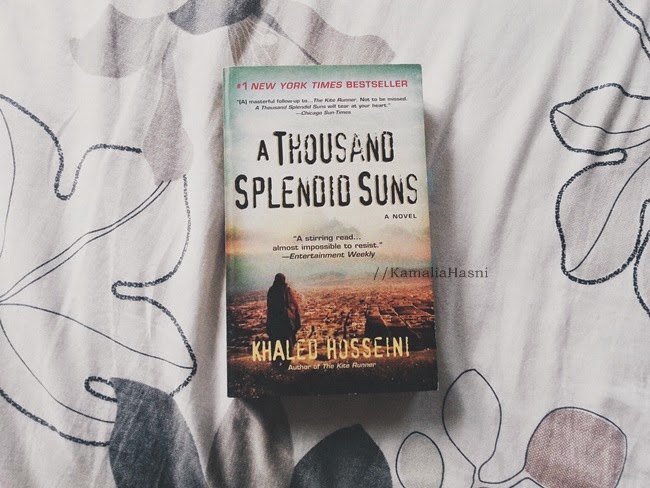
    By Shamsa Najeeb A Thousand Splendid Suns is an extraordinary novel by Khaled Hosseini, an Afghan writer and journalist currently living in America. Hosseini gained international recognition with his debut novel, The Kite Runner, and this brilliant work stands as his second novel. The book follows the parallel lives of two women: Mariam, a rural woman who is sent to Kabul to marry an older man named Rasheed, and Laila, a local teenager raised by open-minded and educated parents.The story is set in Kabul, Afghanistan, against the turbulent backdrop of the early rise of the Taliban. At its core, A Thousand Splendid Suns focuses heavily on the inequalities and hardships that Afghan women endure daily. The narrative masterfully explores how Mariam and Laila survive these harrowing challenges with deep bravery and heroism. Additionally, the characters in the book are written with such profound realism that readers cannot help but sympathize with their struggles. Khaled Hosseini has done an exceptional job of creating a masterpiece that is both deeply moving and emotionally gripping. It serves as a classic tribute to the courageous and resilient women of Afghanistan. In a nutshell, A Thousand Splendid Suns is one of those rare books that stays with you forever, fundamentally transforming your worldview regarding Afghanistan and its women.

Leave a Reply

Your email address will not be published. Required fields are marked *