exile kingdom

Exile and The Kingdom

I have always interpreted the quote, “Don’t judge a book by its cover,” as a metaphor, denying the worldly meaning and focusing on the discrete sense it creates. But not until I read the book “Kingdom and Exile” by Albert Camus. Judging by the title, it establishes a scenario of a king ruling in his kingdom with absolute power and authority. But owing to certain reasons, he was compelled to exile and relinquish his power. That’s how I correlated the book with its title.

I was totally left bemused when I started reading it, flapping one page after the other and realizing the book isn’t like how its title says; it’s different inside. It’s actually a collection of six intriguing stories, each with different lessons.

This book, which contains amusing stories, was written by Albert Camus, a French author and philosopher. He narrated and published his book in 1957, and soon after, he died in a car accident in 1960. For his magnificent write-up, he was awarded a Nobel Prize in literature.

‘Kingdom and Exile’ is a book of 126 pages, completed within approximately 6 days without making us invest more time in it. The flow of stories makes us read them in no time.

Each of the stories revolves around a new protagonist with different roles as a character in the story. I enjoyed reading all 6 stories, but I was more absorbed with the first story of the book, “The adulterous woman,” who follows her husband on his business trip when she is asked to.

Undoubtedly, her husband loved her and made her existence real, but more often than not, she realized he was more involved in his business, which made her wonder about the probability of his affection. It eventually made certain boundaries between them where she kept her uneasiness to herself, making her feelings isolated within herself. But at the end of the day, he was her husband who always made her feel valued, so she ended up accepting the meager way of being valued.

The other five stories were relinquishing; they always made me wonder about the end of them. But woefully, I was baffled by the ending most of the time because I thought there must have been a better ending. Though the book is interesting, it could have been in its best version if it had emphasized explicitness. I was actually finding it hard to understand because of the vocabulary.

Overall, it made me willing to read it because I wasn’t bored and stayed focused. The best part of reading it was becoming involved as an invisible character in these stories who secretly observed the characters playing their roles.

Since it is always better to surround ourselves with print media, read new things, and expand our domain of learning, this book is relevant to all those who are sluggish enough to start reading. It will keep us interested and focused throughout each story.

Similar Posts

  • Book Review: “A Thousand Splendid Suns”

    By Shamsa Najeeb A Thousand Splendid Suns is an extraordinary novel by Khaled Hosseini, an Afghan writer and journalist currently living in America. Hosseini gained international recognition with his debut novel, The Kite Runner, and this brilliant work stands as his second novel. The book follows the parallel lives of two women: Mariam, a rural woman who is sent to Kabul to marry an older man named Rasheed, and Laila, a local teenager raised by open-minded and educated parents.The story is set in Kabul, Afghanistan, against the turbulent backdrop of the early rise of the Taliban. At its core, A Thousand Splendid Suns focuses heavily on the inequalities and hardships that Afghan women endure daily. The narrative masterfully explores how Mariam and Laila survive these harrowing challenges with deep bravery and heroism. Additionally, the characters in the book are written with such profound realism that readers cannot help but sympathize with their struggles. Khaled Hosseini has done an exceptional job of creating a masterpiece that is both deeply moving and emotionally gripping. It serves as a classic tribute to the courageous and resilient women of Afghanistan. In a nutshell, A Thousand Splendid Suns is one of those rare books that stays with you forever, fundamentally transforming your worldview regarding Afghanistan and its women.

  • | | |

    Reason, passion and desire

    We often like to view ourselves as unified, consistent individuals guided by singular motives. Yet, almost everyone has experienced an intense internal conflict. It’s wanting to spend on a impulse buy while knowing it defies financial logic. Or feeling overcome with regret immediately after giving in to a temptation. Over two millennia ago, the ancient Greek philosopher Plato set out to explain this psychological friction in Book IV of his masterwork, the Republic. Plato proposed that our psyche is composed of three distinct yet interacting forces rather than treating the human mind or psuche (soul) as a monolithic entity. Plato developed the concept of the tripartite soul. Further, he offered a framework that remains remarkably relevant to modern understandings of human behavior, self-control and moral choice. The Three Components of the Psyche Plato divides the human mind into three primary elements, each responsible for different aspects of our drives and behavior. 1. The Appetitive Element (To Epithumetikon) The appetitive part is the largest and most primal component of human nature. It encompasses our basic instinctual desires, including physical appetites for food, drink, comfort, and sensual pleasure, as well as material wants. Because these cravings are immediate and self-interested, the appetitive drive is inherently impulsive. Left unchecked, it seeks gratification regardless of long-term consequences. 2. The Spirited Element (To Thumoeides) The spirited element represents our emotional drive, passion, and sense of honor. It is the source of courage, pride, and righteous indignation when we witness or experience injustice. Unlike raw bodily appetite, the spirited part is closely tied to our moral identity and self-image. When functioning healthily, spirit acts as an ally to reason. It generates feelings of shame or self-directed anger when we surrender to harmful appetitive urges. 3. The Rational Element (To Logistikon) The rational element is the calculating and reflective mind. It seeks truth through logic, forethought, and critical reflection. What sets rationality apart from the other two components is its scope. While appetite and spirit focus on fulfilling specific, immediate goals, the rational mind evaluates what is best for the entire person in the long run. The Conflict Within: Why the Soul Divides To demonstrate that these three elements are truly distinct, Plato relies on an early formulation of the principle of non-contradiction: a single entity cannot simultaneously move in opposite directions in the exact same respect. Therefore, when a person experiences contradictory impulses such as feeling an intense thirst yet consciously choosing not to drink due to illness or health concerns, different parts of the mind must be in opposition. A classic illustration of this psychological war is the story of Leontius. While walking, Leontius felt a compulsive curiosity to look at execution corpses lying on the ground. Simultaneously, he felt disgust and moral repulsion. Eventually, his base appetite won out, causing him to rush over while angrily cursing his own eyes. This reaction demonstrates the spirited part of the soul becoming angry at the appetitive part for overriding rational judgment. From Conflict to Harmony Plato’s goal was not to suggest that humans should eradicate desire or emotion altogether. Instead, he argued that mental health and moral integrity, what he called justice of the soul, require a proper hierarchy. Reason must govern, serving as the wise leader that understands the big picture. Spirit must protect and enforce reason’s guidance with courage and conviction. Appetite must operate within temperate limits established by reason.   When these three components function in balance, an individual achieves psychological harmony. Conversely, when base desires or untamed emotions usurp the throne, inner turmoil and destructive behaviors follow. Plato’s tripartite framework ultimately serves as a timeless reminder that self-mastery is not about suppressing who we are, but about bringing our competing drives into a balanced, reason-guided unity.

  • | |

    The Art of Being Alone 

    By  Shokiat Baloch of Kulanch  “Sometimes, being alone is not a sign of loneliness; it is an opportunity to discover yourself.” The book is written by Renuka Gavrani. This book contains many topics because these topics are more important to everyone’s life. This powerful idea lies at the heart of The Art of Being Alone, a thoughtful book that teaches readers how to enjoy their own company and find peace within themselves. The book shows that spending time alone can help us understand our thoughts, emotions, goals, and true personality. Another is saying, “Solitude is my home, Loneliness was my cage. (1)The pain of hiding your true self. This is the first topic in the book. How to hide secrets in your life while everyone has secrets.”Saying, “The most painful and scariest thing in the world is to look in the mirror and not recognise the person staring right at you”A person without hiding cannot live because the false hope that someday someone will magically show up and the fear of looking like a weirdo makes us do things that we never intended to do . Self-love starts with self-acceptance. It means first love yourself; after you should love another, and self-love has become more like self -pity. As clear-cut as possible, Self – love is about two things: (1) Knowing yourself. First, know yourself: you are doing what or for what purpose you live in life, then you have confident to able do something in life. (2) Accepting yourself are those which we do mistake in yourself; then accept yourself because everyone do mistake but the people accept yourself not an other Self. There are many thoughts in the present in a dark structure in the heart, and we should accept ourselves. The book is saying that the “greatest thing in the world is to know to belong to oneself “The love for Solitude.” You cannot be lonely if you like the person you are alone with. This book’s main purpose is solitude, loneliness and love. The book gives more information about love and being alone, how to love and self-love, and yourself.I found the book inspiring because it presents solitude as a chance for personal growth rather than something to fear. Its ideas are especially useful in today’s busy world, where people are constantly connected through phones and social media. “The main purpose of the book “The Art of Being Alone is a meaningful and inspiring book about understanding yourself and finding happiness within. I would recommend it to anyone who wants to become more independent, peaceful, and confident. The book suggest the people read this book because it is one of the most important book everyone life.

  • |

    Ranjhan Yaar: Reclaiming Waris Shah’s Philosophy of Power and Resistance

    By Tallat Naveed Ranjhan Yaar is an original Punjabi play by the eminent philosopher, historian, literary critic, poet, translator, and scholar Dr. Manzur Ejaz, whose profound understanding of Waris Shah’s Heer has earned him recognition as one of the most insightful interpreters of Punjab’s literary heritage. The play was written at the request of the Global Arts drama group, whose objective was not to stage another dramatic adaptation of a familiar folk romance. Instead, they envisioned a theatrical work that would unveil the philosophical and anthropological essence of Waris Shah’s Heer. Accepting this challenge, Dr. Manzur Ejaz produced a play that moves beyond the conventional narrative of romantic love to explore the deeper realities of power, social hierarchy, human dignity, and the contradictions of the feudal order. Rooted in the author’s extensive study of Waris Shah, ‘Ranjhan Yaar’ offers an original and intellectually engaging interpretation of one of Punjab’s greatest literary masterpieces. The play was later performed in Washington, D.C., where it received widespread appreciation for its literary depth, philosophical insight, and compelling dramatic structure. Rather than merely retelling a timeless legend, ‘Ranjhan Yaar’ invites its audience to rediscover Waris Shah’s vision as a profound reflection on society, justice, and the enduring struggle between power and humanity oppressed. Rather than celebrating romance alone, the play unveils the enduring conflict between the feudal ruling class and the dispossessed, revealing how social and economic power shapes human relationships and destinies. Dr. Manzur Ejaz displays remarkable dramatic artistry in ‘Ranjhan Yaar’ by transforming a familiar folk narrative into a philosophical and socially conscious play. The plot is tightly structured, with each scene advancing both the dramatic action and the central ideological conflict. His characters transcend individual identities to embody opposing social forces, lending the play symbolic depth. The dialogue is concise, intellectually engaging, and dramatically effective, revealing character while exposing the contradictions of the feudal order. In its fusion of social criticism and philosophical discourse, the play recalls the dramatic technique of George Bernard Shaw, whose theatre employs dialogue as a medium for intellectual debate. Through its structural coherence and thematic depth, ‘Ranjhan Yaar’ firmly establishes Dr. Manzur Ejaz as a playwright of remarkable literary vision He subverts the conventional hierarchy of folk drama by assigning intellectual and moral authority to the marginalised rather than the feudal elite. Characters such as Rangu, Elmu, and Jammu emerge as the true custodians of wisdom, while Heer’s companions Noori and her maid Rano collectively reinforce the play’s philosophy of resistance against class oppression and feudal hegemony. Heer is transformed into a symbol of resilience and moral defiance, and Ranjha into an embodiment of unwavering devotion and human dignity. Consequently, ‘Ranjhan Yaar’ transcends the limits of a romantic folk tale, evolving into a powerful dramatic critique of class hierarchy, caste prejudice, religious exploitation and the moral bankruptcy of the feudal order.The friendship between Dhedhu (Ranjha) and Rangu dissolves the artificial boundaries of class, affirming that humanity is measured not by birth but by conscience. Even more striking is the contrast between Malki, the wife of the feudal lord Chuchak, and Rano, Heer’s humble maid. Bound by the chains of privilege, she lacks the courage to defend her own daughter, while Rano, though socially insignificant, rises as the moral conscience of the play by standing fearlessly beside Heer. In this profound inversion of power, Dr. Manzur Ejaz revives Waris Shah’s enduring philosophy: society is governed by socio-economic injustice, where class interests eclipse blood relations, justice, and ethical values. This vision closely echoes the Marxist critique of feudal hegemony. Consequently, Heer and Ranjha cease to be merely legendary lovers; they become symbols of equality, human dignity, and resistance, whose tragic end exposes a social order that annihilates every voice raised against oppression. As Rangu reminds us in the closing movement of the play, ایهه سماج چود ہریاں مھراں دا سماج ، ھیراں رانجھیاں نوں اپنے اندر سمو نہیں سکدا جے کر اندر سمون دا جتن کرے آپ پاٹ جاۓ. A society founded upon privilege, caste, and feudal power can never become a sanctuary for truth, love, or justice. Its very structure demands the destruction of those who dare to challenge its authority. Heer and Ranjha are therefore not defeated because they loved; they are sacrificed because they embody equality, integrity, and the freedom of the human spirit. Yet, while the feudal order succeeds in silencing their bodies, it fails to extinguish their ideals. The moral courage of Rangu, Elmu, Jammu, Noori, Dena, and Rano survives as an enduring voice of conscience against oppression. In this lies the enduring greatness of ‘Ranjhan Yaar.’ Dr. Sahib restores Waris Shah’s Heer to its true philosophical stature—not as a romantic legend, but as a profound documentation of power, class hierarchy, and human resistance. The play reminds us that oppressive systems may eliminate individuals, but they can never annihilate the truth they represent. That is why Heer and Ranjha continue to live—not as lovers imprisoned in folklore, but as timeless. More than a reinterpretation of Waris Shah’s Heer, ‘Ranjhan Yaar’ holds a mirror to the society we continue to inhabit. Its critique of class privilege, feudal authority, religious exploitation, and socio-economic injustice remains profoundly relevant. It is an essential read for anyone who seeks to understand that Heer is not merely a love story, but a timeless philosophy of power, resistance, and human dignity. A compelling and indispensable read for every serious student of Punjabi literature. Name of book:Rajhan Yaar Author: Manzur Ejaz Published: Kitab Trinjan, Lahore. Tallat Naveed is Lahore based poetess and literary Analyst.  

  • Forty Days of Mourning

    The author Arslan Athar is based in Lahore. However, belongs to Hyderabad. In his novel Forty Days of Mourning, he weaves together themes of identity, migration, political questions, displacement and diaspora. He also flexes out human emotions of love, hate, betrayal and loss. The book is a refreshing piece of work sprinkled with a Pakistani flavour. Fatima Bhutto was the author’s mentor. She helped him navigate the troubled waters of writing and storytelling. Saleema and Ali are the protagonists. And Naveed, a soldier to Ali, acts as the villain. The city of Hyderabad is itself shown as a living character, with the description of the marketplace and the women in burqas; the city mattered a lot. As Saleema, in an act of disloyalty to Ali, twists the truth around to save herself from disgrace, Ali sends her to Surriya’s in Lahore on the pretext that she was going to be a grandmother and her daughter needed her. But was this really the matter? Or was there a graver issue at hand? Ali definitely did not know of Saleema’s infidelity, but he knew something much bigger. Hyderabad now belonged to India! And the people of Hyderabad would have to flee in order to save their lives. The women lost their husbands and sons. They had to figure out life in that moment, too. Where would they take shelter? Refugee camps? Saleema was a strong woman. She was growing with time. She was becoming more mature. She held onto her secret, careful not to spill it out to anyone. She was able to manipulate and swim through circumstances. The one person who knew her secret was Rukiaya, the maid, and she made a deal with her to set her free in return for her silence. Why the novel is titled such because there is constant mourning going on. First, it is with Ali’s mother’s death, then its Saleema saddened by her engagement to her cousin, which didn’t last long, then it is in Ali’s death and finally in the annexation of Hyderabad. Where would Hyderabad belong? India or Pakistan, or will it become independent? The novel explores the collapse of a political order through the eyes of Saleema Ali Khan, a woman whose personal struggles mirror the fate of the state she loves. It is interesting to know how the author depicts history through the relationships, conversations, homes and silences. The reader sees how the personal and political are entwined. When one reads the title, one is not too excited about buying the book. But despite the morbid title, the novel offers an interesting and colourful take on life in Hyderabad, Deccan. On the whole, the book is a marvellous read. Despite being the author’s debut book, it promises a high level of maturity and coherence. A great read!

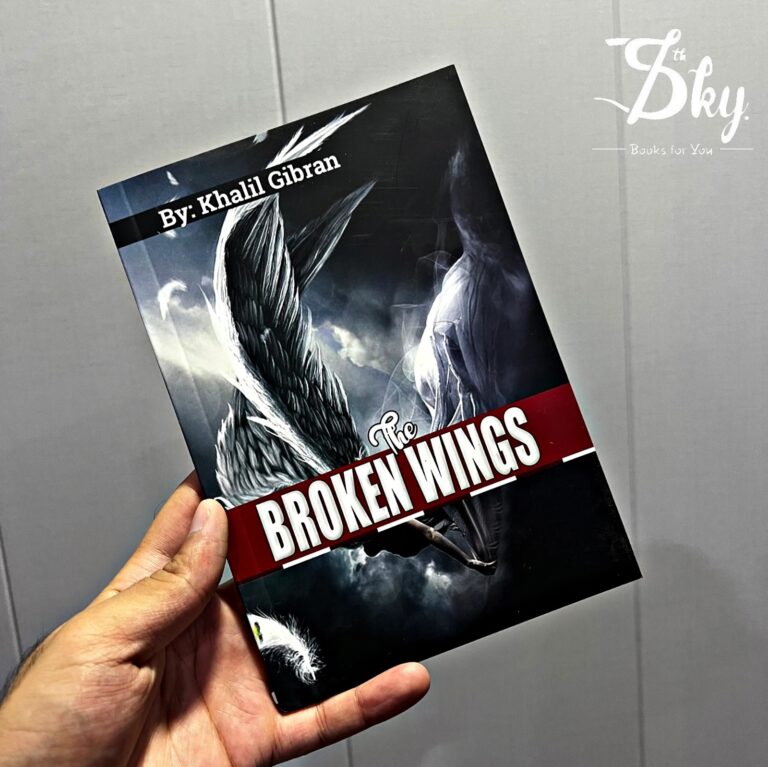
  • Book review – The Broken Wings

    By Sher Jan Qadir, The Broken Wings is a poetic novel written by Khalil Gibran, first published in Arabic in 1912. It is a touching story of tragic love, set in Beirut at the beginning of the twentieth century. The novel highlights several important social issues of Eastern Mediterranean society at that time. These include religious corruption, the oppression and limited rights of women, and the strong influence of money and power. Through the story, the author shows how wealth and authority often control people’s lives and decisions, revealing how power and money dominate society. The story begins when Khalil Gibran is eighteen years old, at an age when love opens his eyes to the intense and magical beauty of a young girl whom he falls in love with. He falls in love with a courageous, generous, and strong woman named Selma Karamy. She is the one and only daughter of Faris Effendi Karamy, who is known as one of the wealthiest men in Lebanon. As time passes, Khalil Gibran succeeds in finding Selma’s home and becomes familiar with her father, Faris Effendi, who considers Khalil to be the son of his closest friend. After some time, Khalil and Selma become tied by the bond of friendship, as their souls are similar. When they are in heaven, flying with angels and enjoying the delicious fruits of friendship, the devil, Mansur Bey Galib, enters the story. He is responsible for taking Adam and Eve out of heaven. Selma and Khalil become like Eve and Adam, who make the mistake of not revealing their feelings to Faris Effendi Karamy before the entry of the devil, Mansur Bey Galib. Mansur Bey Galib is a man of both power and wealth. His entry into their lives makes the family of Faris Effendi Karamy worried and horrified. He separates Selma and Khalil and drags them into a life of helplessness and worry. From here, the story enters a new phase, where Selma’s father, Faris Effendi Karamy, is compelled to give Selma’s hand in marriage to Mansur Bey Galib, who is a roisterer. Selma’s difficulties begin here, but she still remains in love with Khalil Gibran. All the luxuries and the mansion become a prison for Selma, where she is bound to live but finds it difficult to stay. After some time, Mansur Bey Galib becomes aware of Selma’s secrets—what she does, how she lives, and whom she meets. He forbids Selma from visiting her father’s home and forces her to obey him as her husband. One day, she secretly visits her father’s home to meet Khalil Gibran and makes him aware of all her circumstances. They then decide to separate with sadness. A few months later, Selma gives birth to a baby boy, but destiny plans the tragic end of the lives of both the child and his mother, leaving Lebanon in mourning.

Leave a Reply

Your email address will not be published. Required fields are marked *