ranjhan yaar reclaiming
|

Ranjhan Yaar: Reclaiming Waris Shah’s Philosophy of Power and Resistance

By Tallat Naveed

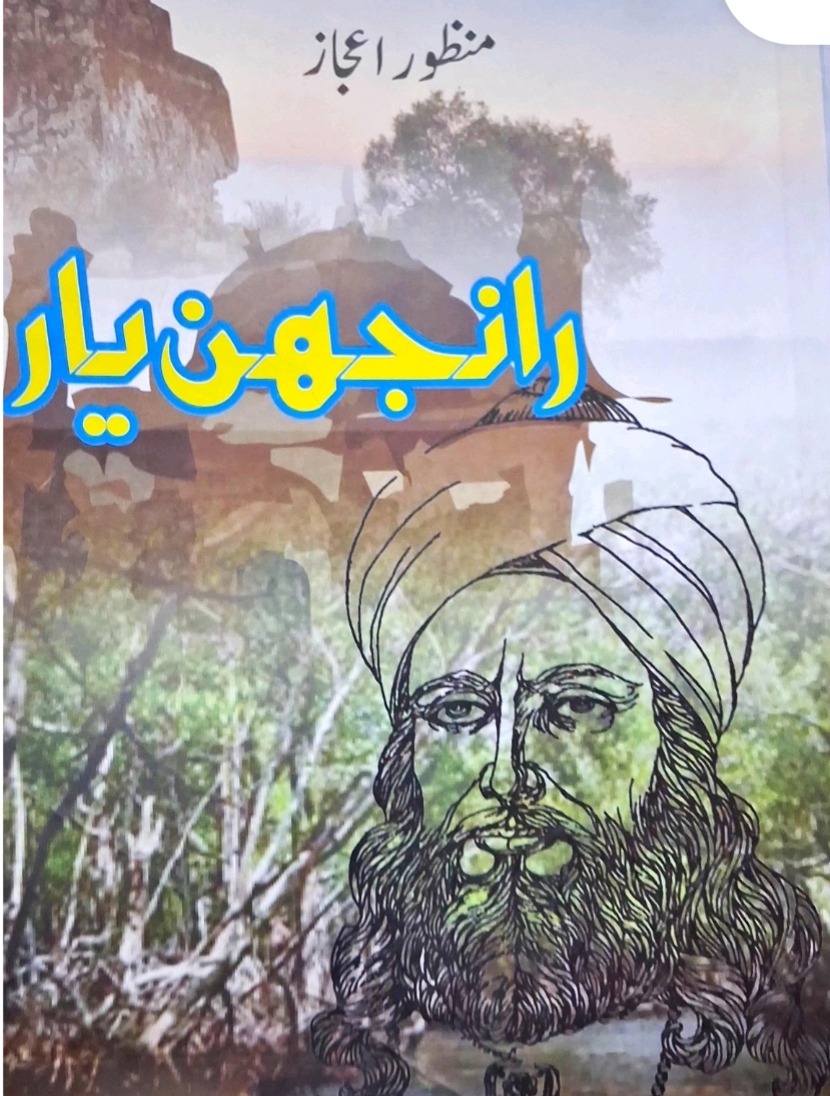
Ranjhan Yaar is an original Punjabi play by the eminent philosopher, historian, literary critic, poet, translator, and scholar Dr. Manzur Ejaz, whose profound understanding of Waris Shah’s Heer has earned him recognition as one of the most insightful interpreters of Punjab’s literary heritage.

The play was written at the request of the Global Arts drama group, whose objective was not to stage another dramatic adaptation of a familiar folk romance. Instead, they envisioned a theatrical work that would unveil the philosophical and anthropological essence of Waris Shah’s Heer. Accepting this challenge, Dr. Manzur Ejaz produced a play that moves beyond the conventional narrative of romantic love to explore the deeper realities of power, social hierarchy, human dignity, and the contradictions of the feudal order.

Rooted in the author’s extensive study of Waris Shah, ‘Ranjhan Yaar’ offers an original and intellectually engaging interpretation of one of Punjab’s greatest literary masterpieces. The play was later performed in Washington, D.C., where it received widespread appreciation for its literary depth, philosophical insight, and compelling dramatic structure. Rather than merely retelling a timeless legend, ‘Ranjhan Yaar’ invites its audience to rediscover Waris Shah’s vision as a profound reflection on society, justice, and the enduring struggle between power and humanity oppressed. Rather than celebrating romance alone, the play unveils the enduring conflict between the feudal ruling class and the dispossessed, revealing how social and economic power shapes human relationships and destinies.

Dr. Manzur Ejaz displays remarkable dramatic artistry in ‘Ranjhan Yaar’ by transforming a familiar folk narrative into a philosophical and socially conscious play. The plot is tightly structured, with each scene advancing both the dramatic action and the central ideological conflict. His characters transcend individual identities to embody opposing social forces, lending the play symbolic depth. The dialogue is concise, intellectually engaging, and dramatically effective, revealing character while exposing the contradictions of the feudal order. In its fusion of social criticism and philosophical discourse, the play recalls the dramatic technique of George Bernard Shaw, whose theatre employs dialogue as a medium for intellectual debate. Through its structural coherence and thematic depth, ‘Ranjhan Yaar’ firmly establishes Dr. Manzur Ejaz as a playwright of remarkable literary vision

He subverts the conventional hierarchy of folk drama by assigning intellectual and moral authority to the marginalised rather than the feudal elite. Characters such as Rangu, Elmu, and Jammu emerge as the true custodians of wisdom, while Heer’s companions Noori and her maid Rano collectively reinforce the play’s philosophy of resistance against class oppression and feudal hegemony. Heer is transformed into a symbol of resilience and moral defiance, and Ranjha into an embodiment of unwavering devotion and human dignity. Consequently, ‘Ranjhan Yaar’ transcends the limits of a romantic folk tale, evolving into a powerful dramatic critique of class hierarchy, caste prejudice, religious exploitation and the moral bankruptcy of the feudal order.The friendship between Dhedhu (Ranjha) and Rangu dissolves the artificial boundaries of class, affirming that humanity is measured not by birth but by conscience. Even more striking is the contrast between Malki, the wife of the feudal lord Chuchak, and Rano, Heer’s humble maid. Bound by the chains of privilege, she lacks the courage to defend her own daughter, while Rano, though socially insignificant, rises as the moral conscience of the play by standing fearlessly beside Heer. In this profound inversion of power, Dr. Manzur Ejaz revives Waris Shah’s enduring philosophy: society is governed by socio-economic injustice, where class interests eclipse blood relations, justice, and ethical values. This vision closely echoes the Marxist critique of feudal hegemony. Consequently, Heer and Ranjha cease to be merely legendary lovers; they become symbols of equality, human dignity, and resistance, whose tragic end exposes a social order that annihilates every voice raised against oppression.

As Rangu reminds us in the closing movement of the play,

ایهه سماج چود ہریاں مھراں دا سماج ، ھیراں رانجھیاں نوں اپنے اندر سمو نہیں سکدا جے کر اندر سمون دا جتن کرے آپ پاٹ جاۓ.

A society founded upon privilege, caste, and feudal power can never become a sanctuary for truth, love, or justice. Its very structure demands the destruction of those who dare to challenge its authority. Heer and Ranjha are therefore not defeated because they loved; they are sacrificed because they embody equality, integrity, and the freedom of the human spirit. Yet, while the feudal order succeeds in silencing their bodies, it fails to extinguish their ideals. The moral courage of Rangu, Elmu, Jammu, Noori, Dena, and Rano survives as an enduring voice of conscience against oppression.

In this lies the enduring greatness of ‘Ranjhan Yaar.’ Dr. Sahib restores Waris Shah’s Heer to its true philosophical stature—not as a romantic legend, but as a profound documentation of power, class hierarchy, and human resistance. The play reminds us that oppressive systems may eliminate individuals, but they can never annihilate the truth they represent. That is why Heer and Ranjha continue to live—not as lovers imprisoned in folklore, but as timeless.

More than a reinterpretation of Waris Shah’s Heer, ‘Ranjhan Yaar’ holds a mirror to the society we continue to inhabit. Its critique of class privilege, feudal authority, religious exploitation, and socio-economic injustice remains profoundly relevant. It is an essential read for anyone who seeks to understand that Heer is not merely a love story, but a timeless philosophy of power, resistance, and human dignity.

A compelling and indispensable read for every serious student of Punjabi literature.

Name of book:Rajhan Yaar

Author: Manzur Ejaz

Published: Kitab Trinjan, Lahore.

Tallat Naveed is Lahore based poetess and literary Analyst.

 

Similar Posts

  • |

     Why collectors pay millions for fractured porcelain

    There is a low-frequency hum inside an antique shop, an acoustic hush from dust and centuries of quiet survival. It is often the wounded object that commands the most reverence amidst the polished mahogany and gleaming silver. A spiderweb hairline fractured across the belly of a Qing dynasty jar; a cobalt Blue Willow plate stitched together with iron staples; a tea bowl held in delicate cohesion by golden veins of lacquer. In a modern economy obsessed with pristine surfaces and factory precision, these fractured ceramics defy logic. They do retain value despite their damage. Often, they derive their singular majesty precisely because they broke. The art market regularly bears witness to this quiet paradox. At major auction houses in London and New York, porcelain pieces bearing dramatic structural fractures, historic restorations or visible fractures routinely sell for astronomical sums. When a cracked 18th-century Chinese brush washer or a chipped Song Dynasty bowl is launched, purists do not turn away. Instead, connoisseurs see a vessel that has successfully negotiated with time. A pristine artifact can feel like an untouched relic in a glass museum case. A cracked ceramic, however, carries the irreplaceable friction of human history. This romantic obsession with fracture finds its deepest philosophical roots in the Japanese tradition of Kintsugi: literally, golden joinery. In 15th-century Japan, legend holds that the shogun Ashikaga Yoshimasa sent a damaged Chinese tea bowl back to China for repair. It returned bound by heavy and unsightly metal staples. Japanese craftsmen was displeased and sought a more poetic solution. He bonded the porcelain shards with Japanese lacquer dusting it with powdered gold. Rather than disguising the trauma, Kintsugi illuminated the break. This technique transformed a domestic accident into a radiant architecture of resilience. When collectors haunt dim antique parlors today for cracked celadon or worn earthenware, they are participating in a quiet rebellion against the disposable. We live in an era of engineered obsolescence where a small fracture on a smartphone screen renders the entire device wasted. Antique ceramics represent the opposite: fired earth that withstands centuries, absorbing the touch of generations, bearing scars as badges of longevity. A crack proves that the vessel was used, held, washed, dropped, mourned and salvaged. It shifts the object from a passive decoration to an active survivor. Even the historical methods of repair have become prized antiques in their own right. Before gold lacquer was widely available, 18th and 19th-century itinerant tinkerers repaired heirloom china using metal staples. They were drilling tiny holes on either side of a split and hammering in delicate bronze or iron rivets. To a contemporary eye, these industrial-looking stitches might seem like visual vandalism. Yet, to collectors of stapled china, those iron rivets are exquisite evidence of human ingenuity and resourcefulness from an era when nothing precious was ever casually thrown away.   Ultimately, the enduring value of cracked porcelain in antique shops lies in what it reflects about our own human condition. Perfection is intimidating, fragile and ultimately unfeeling. Rupture, on the other hand, is universal. When a buyer pays for a cracked jar, they are purchasing a physical manifestation of survival. They acquire a tangible reminder that broken things can be mended, that wounds can be highlighted with beauty and that time does not diminish value, but rather confers it.

  • | |

    Jungkook asks fans to stop shoving cameras in his face

    BTS member Jungkook has addressed fans directly after a series of privacy violations left him visibly frustrated, drawing a clear line between genuine fan support and behaviour that crosses into rudeness and disrespect. During a live session on Weverse, Jungkook spoke candidly about an incident that had clearly bothered him. He described going into a bakery to simply buy bread when a fan shoved a camera directly into his face without warning or permission. “Taking pictures together isn’t a problem, but I went in to get some bread and there was someone who shoved a camera in my face. That’s not good manners,” he said, adding plainly that this kind of behaviour was “kind of rude.” It was not an angry outburst. It was a measured and direct appeal from someone who has consistently tried to maintain a warm relationship with his fanbase while also asking to be treated like a human being rather than a subject for content creation. This is not the first time Jungkook has raised these concerns. He has previously spoken about fans showing up near his home, sending unsolicited deliveries and tracking his private movements and whereabouts. Each time, he has responded with patience and directness, asking people to reconsider whether what they were doing was genuinely supportive or simply intrusive. The latest comments come at a significant moment for BTS as a group. The band is currently preparing for its highly anticipated group comeback, with all members having completed or in the process of completing their mandatory military service in South Korea. Fans have been eagerly watching every update, which may partly explain the heightened intensity of interest in the members’ private lives during this period. But for Jungkook, that context does not change the basic principle he was articulating. The response from the BTS ARMY was largely supportive. Many fans took to social media to echo his message, encouraging other supporters to engage with the group’s work in ways that did not involve crossing personal boundaries. The conversations that followed touched on a broader tension that exists within large, dedicated fanbases, where the line between admiration and intrusion can blur, sometimes without the fan even realising it. Jungkook’s willingness to address the issue directly, on his own terms, in a live conversation with fans rather than through a formal statement, reflects a specific kind of relationship he has always tried to maintain. He speaks to his audience honestly and without pretence, which is precisely why the message landed the way it did. Respecting a public figure’s private moments is not a complicated ask. When someone is simply trying to buy bread, the most supportive thing a fan can do is let them.

  • |

    Kashmiri film Saffron Kingdom finds new home on Watermelon+

    Filmmaker Arfat Sheikh’s film Saffron Kingdom is now streaming worldwide. It has landed on the Palestinian-owned platform Watermelon+. The release comes after a strong run on the international festival circuit. Sheikh hails from India-Occupied Kashmir. He had earlier described the film as his attempt to reclaim his people’s stories from Bollywood. He said he wanted to take the pen back from an industry he views as a tool of oppression. The story follows Masrat, played by Diana Aras. She is a half-widow, a term used for Kashmiri women whose husbands have been forcibly disappeared by Indian forces. After her husband vanishes, Masrat flees the valley with her young son Rizwan, played by Alex Cheeks. The pair eventually settle in the United States. There, both mother and son must confront the trauma of their years spent living under occupation. Old memories resurface even as they try to build a new life. Sheikh said the film leans heavily on its female characters to carry the emotional core. He called the choice a deliberate allegory. According to him, the story centeres on two women rather than men. He explained that this reflects reality on the ground. Few men remain in India-Occupied Kashmir today, he said. The women who stay behind, he added, reveal what survival under occupation truly demands. Saffron Kingdom premiered at the Wake Forest Film Festival in the United States. It then travelled to six more countries. Screenings consistently drew full houses. The film found strong support from minority communities. Many viewers related to its themes of migration and inherited trauma. With its streaming debut, Saffron Kingdom now sits alongside other politically resonant titles on Watermelon+. These include Oscar nominee The Voice of Hind Rajab and Bafta-winning documentary Gaza: Doctors Under Attack. Pakistan’s 2025 Oscar submission The Glassworker is also part of the platform’s growing library. Together, these films reflect Watermelon+’s focus on stories of occupation, displacement, and resistance. The platform continues to build a catalogue centered on voices often left out of mainstream cinema.

  • |

    Anil Kapoor turns Anand Ahuja’s birthday into a family love fest

    Anil Kapoor stepped up to celebrate his son-in-law in style. He shared a heartfelt note for Anand Ahuja on Instagram. The post came with a lovely set of pictures. Anand, husband to Sonam Kapoor, celebrated his birthday on July 29. In his caption, the 69-year-old actor opened up about his bond with Anand. He said Anand’s presence always brings him a sense of calm. Just seeing him or hearing his voice seems to do the trick. It is a small detail, but it says a lot about how close the two have become. Anil did not stop there. He spoke about how thoughtfully Anand treats everyone in the family. He praised the ease with which Anand cares for Sonam and their children. This quality, Anil wrote, fills him with comfort and joy. He ended the note on a simple, warm birthday wish. Anand was quick to respond to the sweet gesture. He replied with his signature humour, joking about how many of his old hairstyles had made it into Anil’s post. He also thanked his father-in-law for always being encouraging and kind. The celebrations did not end there. Sonam joined in with her own tribute. She shared a series of throwback photos capturing their journey as a couple. She described Anand as her safest place and closest support system. She added that she would pick him again, no matter how many lifetimes she got. Anand responded in his usual playful tone. He lovingly called her his dream machine in return. The couple has been married since May 2018. They exchanged vows in a small, intimate Punjabi wedding that was widely covered at the time. Since then, their relationship has often stood out for its warmth, humour and visible affection, something fans and family alike have noticed again and again. Sonam and Anand became parents for the first time in 2022, welcoming their son Vayu. Their family grew further this year when they welcomed their second son on March 29, 2026. Between Anil’s touching note and Sonam’s loving tribute, Anand’s birthday turned into more than just a celebration. It became a public reminder of just how close-knit this family really is, and how easily that affection comes through in the little things they share online.

  • |

    Bruce Springsteen biographer Dave Marsh dies at 76

    Dave Marsh, the renowned American rock critic, author, and radio personality best known for his work documenting Bruce Springsteen’s career, has died at the age of 76. Marsh passed away late Friday at his home in Connecticut, with news of his death emerging on Saturday, August 15. His passing was confirmed by Jim Rotolo, the host of the Springsteen-focused SiriusXM program The Wild and The Innocent. Rotolo shared the news on the program’s official Facebook page, describing Marsh as both a longtime friend and an important figure in the world of music journalism. Marsh dedicated much of his career to chronicling the development of rock music and the artists who shaped the genre. He wrote numerous books throughout his career, producing a body of work that covered some of the biggest names and most important developments in popular music. He was especially recognized for his extensive writing about Bruce Springsteen. His 1979 book Born to Run examined Springsteen’s early career and became an important work for fans seeking a deeper understanding of the singer-songwriter’s rise to prominence. Marsh went on to write several other books connected to Springsteen, cementing his reputation as one of the artist’s most notable biographers. Marsh entered music journalism in 1969 when he began working with Creem magazine. His sharp criticism and detailed knowledge of rock music quickly established him as a respected voice within the industry. During the 1970s and early 1980s, he also worked with Rolling Stone, where he contributed reviews and helped shape the publication’s influential approach to music criticism. His impact was not limited to journalism. Marsh was widely associated with the early use of the phrase “punk rock,” which he used while writing about Question Mark & the Mysterians in 1971. The term would later become closely associated with one of the most influential movements in modern music. As his career developed, Marsh expanded into radio broadcasting. He was involved in the creation of E Street Radio, a SiriusXM channel dedicated to Springsteen and his music. He also hosted Kick Out the Jams on SiriusXM for 19 years, giving listeners a platform to explore rock music and its history. Beyond his work as a critic and broadcaster, Marsh also served as a committee member of the Rock and Roll Hall of Fame. His involvement reflected his broader influence and knowledge of rock music. Marsh had increasingly stepped away from public life in his later years. He left broadcasting in 2022 following a prolonged period of declining health. His official cause of death has not been publicly revealed. News of his death has led to an outpouring of appreciation from those who admired his work and influence. His career spanned more than five decades, during which he documented major artists, movements, and moments in rock history. For Bruce Springsteen fans in particular, Marsh’s work remains closely connected to the story of one of America’s most celebrated musicians. Through his books, criticism, and broadcasting, he helped preserve important chapters of rock history for future generations. Marsh’s legacy will live on through his extensive writing and the many listeners and readers influenced by his work. His contribution to music journalism leaves him remembered as a distinctive and influential voice in American rock criticism.

  • | |

    Johnny Depp unveils new look as Scrooge for upcomi…

    Johnny Depp has officially unveiled his dramatic transformation into Ebenezer Scrooge, giving fans their first look at his highly anticipated new film, Ebenezer: A Christmas Carol. The veteran actor appears almost unrecognizable in the role, sporting a weathered Victorian look complete with gray facial hair, bushy eyebrows, a top hat, a long overcoat, and a walking cane. The striking makeover has already generated excitement among movie lovers eager to see Depp return to a major studio production.  The first trailer introduces Ebenezer as a darker and more atmospheric adaptation of Charles Dickens’ timeless novel A Christmas Carol. Directed by acclaimed filmmaker Ti West, who is best known for his horror films, the movie blends classic storytelling with supernatural suspense. Instead of presenting a traditional holiday tale, the film leans into the eerie encounters between Scrooge and the ghosts of Christmas Past, Present, and Future, promising a fresh take on the beloved story.  Depp recently surprised fans by appearing in full Scrooge costume during San Diego Comic-Con, where he stayed in character while greeting the audience. The actor playfully interacted with fans and cosplayers dressed as some of his most iconic characters, including Captain Jack Sparrow, Edward Scissorhands, and Willy Wonka. His theatrical entrance added to the buzz surrounding the film and highlighted his commitment to the role.  The upcoming movie also boasts an impressive supporting cast. Andrea Riseborough portrays the Ghost of Christmas Past, while legendary actor Ian McKellen takes on the role of Jacob Marley. Rupert Grint stars as Bob Cratchit, with Daisy Ridley and Sam Claflin also joining the ensemble. Together, the cast aims to breathe new life into one of literature’s most enduring holiday classics.  For Depp, Ebenezer represents an important milestone in his career. It marks his first leading role in a major Hollywood studio film in several years and showcases his signature ability to disappear into eccentric and complex characters. Throughout his career, Depp has earned praise for memorable performances in films such as Edward Scissorhands, Pirates of the Caribbean, and Charlie and the Chocolate Factory. His portrayal of Scrooge continues that tradition of transformative acting.  Ebenezer: A Christmas Carol is scheduled to arrive in theaters on November 13, 2026. With its haunting visuals, star-studded cast, and a darker interpretation of Dickens’ classic tale, the film is already shaping up to be one of the year’s most talked-about releases. Fans will soon discover whether Johnny Depp’s haunting version of Ebenezer Scrooge becomes another unforgettable performance in his celebrated career. 

Leave a Reply

Your email address will not be published. Required fields are marked *