book review 8220a

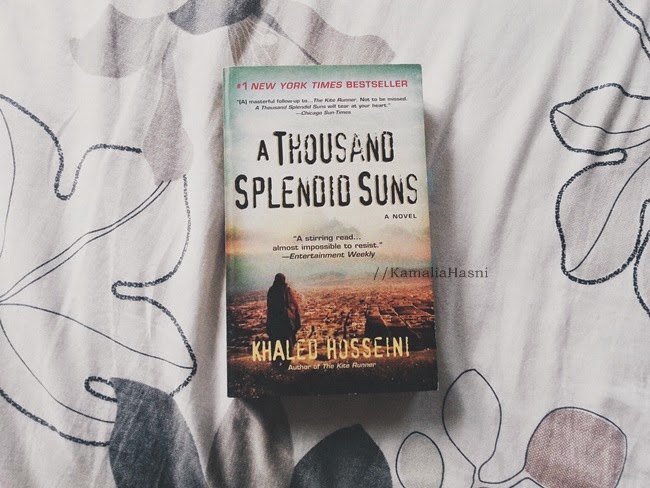
Book Review: “A Thousand Splendid Suns”

By Shamsa Najeeb

A Thousand Splendid Suns is an extraordinary novel by Khaled Hosseini, an Afghan writer and journalist currently living in America. Hosseini gained international recognition with his debut novel, The Kite Runner, and this brilliant work stands as his second novel.

The book follows the parallel lives of two women: Mariam, a rural woman who is sent to Kabul to marry an older man named Rasheed, and Laila, a local teenager raised by open-minded and educated parents.The story is set in Kabul, Afghanistan, against the turbulent backdrop of the early rise of the Taliban.

At its core, A Thousand Splendid Suns focuses heavily on the inequalities and hardships that Afghan women endure daily. The narrative masterfully explores how Mariam and Laila survive these harrowing challenges with deep bravery and heroism.

Additionally, the characters in the book are written with such profound realism that readers cannot help but sympathize with their struggles. Khaled Hosseini has done an exceptional job of creating a masterpiece that is both deeply moving and emotionally gripping. It serves as a classic tribute to the courageous and resilient women of Afghanistan.

In a nutshell, A Thousand Splendid Suns is one of those rare books that stays with you forever, fundamentally transforming your worldview regarding Afghanistan and its women.

Similar Posts

  • |

    Jean Rhys’s “Good Morning, Midnight” whispers in the dark

    When Jean Rhys published Good Morning, Midnight in 1939, it was met with a chorus of discomfort and bewilderment. Critics at the time found its tone too bleak, its protagonist too unvarnished, and its atmosphere too heavy with melancholy. Yet decades later, this tragic, brilliant novel stands out as one of the most hauntingly modern studies of isolation, vulnerability, and resilience ever written. It is a work that does not simply invite readers into a story; it pulls them directly into the fractures of a wounded mind. The novel centers on Sasha Jansen, an aging Englishwoman returning to Paris after a long absence. Having scraped together a modest sum of money, she hopes to use the trip as a desperate attempt to patch over her fraying life. But the Paris Sasha steps back into is not a romantic city of artists and cafes; it is a claustrophobic landscape of cheap, dimly lit hotel rooms, cold streets, and judgemental eyes. Traumatized by a past filled with poverty, loss, and abusive relationships, Sasha moves through the city like a ghost in her own life, attempting to dull her emotional pain with alcohol while simultaneously craving a human connection she fears will ultimately destroy her. What makes Rhys’s narrative so compelling is her incredible command of internal voice. Written in a tight, stream-of-consciousness style, the novel obliterates the boundary between Sasha’s thoughts and the world around her. Rhys captures the quiet humiliation of financial insecurity. The constant calculation of tips, the fear of being judged by hotel staff, the defensive impulse to buy cheap clothes just to look respectable. Through Sasha’s eyes, even everyday interactions carry a terrifying weight. When she encounters a young Russian man who mistakes her for someone wealthier, or when she interacts with an eccentric gigolo, the tension is palpable. The reader is trapped right alongside Sasha. They navigate the razor-thin line between her deep yearning for intimacy and her absolute terror of being hurt. Beyond its psychological depth, Good Morning, Midnight is a social critique. Published on the cusp of World War II, the novel subtly mirrors the anxiety and dislocation of late-1930s Europe. Sasha’s struggle highlights how unforgiving society can be to women who fall outside traditional expectations of youth, wealth, and domestic stability. She is a woman adrift in an urban landscape that demands self-sufficiency while offering no safety net, making her experience feel astonishingly contemporary to modern readers facing their own eras of isolation and uncertainty. Rhys’s prose is razor-sharp, sparse, and poetic, delivering emotional blows with remarkable economy. The book’s final passage remains one of the most famous, devastating, and deeply ambiguous endings in twentieth-century literature. It is neither a story of neat redemption nor one of complete surrender, but rather a quiet, defiant acceptance of life’s painful complexities. Good Morning, Midnight demands that we look directly at the aspects of human suffering we often try to ignore; loneliness, aging, and  poverty. Jean Rhys offers a masterpiece of modernism that feels as vital, raw, and resonant today as it did nearly a century ago.  

  • Before Your Memory Fades

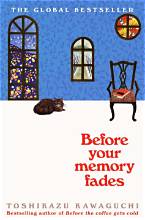
    Holding this unforgettable book in my hands made me realize that time may take away the people we love, but it can never erase the feelings we share with them. Before Your Memory Fades is a touching novel by Toshikazu Kawaguchi, published in 2022. Set in the peaceful Café Donna Donna on a hillside in Hakodate, Japan, the book explores love, loss, regret, forgiveness, and the importance of expressing our feelings before it is too late. At first, the idea of the story seems like a magical dream. A special café has a seat that allows visitors to travel back in time and meet someone from their past. However, the journey comes with strict rules. Visitors cannot change the present, they can only meet someone connected to the café, they must remain in their seat, and most importantly, they must return before their coffee gets cold. Through four emotional stories, Kawaguchi presents different kinds of love and regret. The characters include an orphaned girl, a struggling comedian, a heartbroken sister, and a young man facing his own mortality. Their experiences show how fear, anger, pride, and unspoken feelings can create deep regret. Although they cannot change what happened in the past, their brief meetings help them understand their feelings and face the present with greater courage. The most important lesson of the book is that we cannot change the past, but we can change how we live in the present. Sometimes, a few honest words can heal years of sadness. The story encourages us to forgive, express our love, and value the people around us while we still have the opportunity. What makes this book special is its gentle and emotional writing. It reminds readers that sadness is not only a sign of loss; it is also a reminder of how deeply we have loved. The novel encourages us to ask ourselves: What would we say if we had only a few minutes with someone we deeply miss? In conclusion, Before Your Memory Fades is a meaningful and emotional book that teaches us not to wait for the perfect moment to express our feelings. We should appreciate the people we love, forgive others, and speak from the heart before time takes the opportunity away. By: Mahnoor Haider

  • | | |

    Reason, passion and desire

    We often like to view ourselves as unified, consistent individuals guided by singular motives. Yet, almost everyone has experienced an intense internal conflict. It’s wanting to spend on a impulse buy while knowing it defies financial logic. Or feeling overcome with regret immediately after giving in to a temptation. Over two millennia ago, the ancient Greek philosopher Plato set out to explain this psychological friction in Book IV of his masterwork, the Republic. Plato proposed that our psyche is composed of three distinct yet interacting forces rather than treating the human mind or psuche (soul) as a monolithic entity. Plato developed the concept of the tripartite soul. Further, he offered a framework that remains remarkably relevant to modern understandings of human behavior, self-control and moral choice. The Three Components of the Psyche Plato divides the human mind into three primary elements, each responsible for different aspects of our drives and behavior. 1. The Appetitive Element (To Epithumetikon) The appetitive part is the largest and most primal component of human nature. It encompasses our basic instinctual desires, including physical appetites for food, drink, comfort, and sensual pleasure, as well as material wants. Because these cravings are immediate and self-interested, the appetitive drive is inherently impulsive. Left unchecked, it seeks gratification regardless of long-term consequences. 2. The Spirited Element (To Thumoeides) The spirited element represents our emotional drive, passion, and sense of honor. It is the source of courage, pride, and righteous indignation when we witness or experience injustice. Unlike raw bodily appetite, the spirited part is closely tied to our moral identity and self-image. When functioning healthily, spirit acts as an ally to reason. It generates feelings of shame or self-directed anger when we surrender to harmful appetitive urges. 3. The Rational Element (To Logistikon) The rational element is the calculating and reflective mind. It seeks truth through logic, forethought, and critical reflection. What sets rationality apart from the other two components is its scope. While appetite and spirit focus on fulfilling specific, immediate goals, the rational mind evaluates what is best for the entire person in the long run. The Conflict Within: Why the Soul Divides To demonstrate that these three elements are truly distinct, Plato relies on an early formulation of the principle of non-contradiction: a single entity cannot simultaneously move in opposite directions in the exact same respect. Therefore, when a person experiences contradictory impulses such as feeling an intense thirst yet consciously choosing not to drink due to illness or health concerns, different parts of the mind must be in opposition. A classic illustration of this psychological war is the story of Leontius. While walking, Leontius felt a compulsive curiosity to look at execution corpses lying on the ground. Simultaneously, he felt disgust and moral repulsion. Eventually, his base appetite won out, causing him to rush over while angrily cursing his own eyes. This reaction demonstrates the spirited part of the soul becoming angry at the appetitive part for overriding rational judgment. From Conflict to Harmony Plato’s goal was not to suggest that humans should eradicate desire or emotion altogether. Instead, he argued that mental health and moral integrity, what he called justice of the soul, require a proper hierarchy. Reason must govern, serving as the wise leader that understands the big picture. Spirit must protect and enforce reason’s guidance with courage and conviction. Appetite must operate within temperate limits established by reason.   When these three components function in balance, an individual achieves psychological harmony. Conversely, when base desires or untamed emotions usurp the throne, inner turmoil and destructive behaviors follow. Plato’s tripartite framework ultimately serves as a timeless reminder that self-mastery is not about suppressing who we are, but about bringing our competing drives into a balanced, reason-guided unity.

  • |

    Ranjhan Yaar: Reclaiming Waris Shah’s Philosophy of Power and Resistance

    By Tallat Naveed Ranjhan Yaar is an original Punjabi play by the eminent philosopher, historian, literary critic, poet, translator, and scholar Dr. Manzur Ejaz, whose profound understanding of Waris Shah’s Heer has earned him recognition as one of the most insightful interpreters of Punjab’s literary heritage. The play was written at the request of the Global Arts drama group, whose objective was not to stage another dramatic adaptation of a familiar folk romance. Instead, they envisioned a theatrical work that would unveil the philosophical and anthropological essence of Waris Shah’s Heer. Accepting this challenge, Dr. Manzur Ejaz produced a play that moves beyond the conventional narrative of romantic love to explore the deeper realities of power, social hierarchy, human dignity, and the contradictions of the feudal order. Rooted in the author’s extensive study of Waris Shah, ‘Ranjhan Yaar’ offers an original and intellectually engaging interpretation of one of Punjab’s greatest literary masterpieces. The play was later performed in Washington, D.C., where it received widespread appreciation for its literary depth, philosophical insight, and compelling dramatic structure. Rather than merely retelling a timeless legend, ‘Ranjhan Yaar’ invites its audience to rediscover Waris Shah’s vision as a profound reflection on society, justice, and the enduring struggle between power and humanity oppressed. Rather than celebrating romance alone, the play unveils the enduring conflict between the feudal ruling class and the dispossessed, revealing how social and economic power shapes human relationships and destinies. Dr. Manzur Ejaz displays remarkable dramatic artistry in ‘Ranjhan Yaar’ by transforming a familiar folk narrative into a philosophical and socially conscious play. The plot is tightly structured, with each scene advancing both the dramatic action and the central ideological conflict. His characters transcend individual identities to embody opposing social forces, lending the play symbolic depth. The dialogue is concise, intellectually engaging, and dramatically effective, revealing character while exposing the contradictions of the feudal order. In its fusion of social criticism and philosophical discourse, the play recalls the dramatic technique of George Bernard Shaw, whose theatre employs dialogue as a medium for intellectual debate. Through its structural coherence and thematic depth, ‘Ranjhan Yaar’ firmly establishes Dr. Manzur Ejaz as a playwright of remarkable literary vision He subverts the conventional hierarchy of folk drama by assigning intellectual and moral authority to the marginalised rather than the feudal elite. Characters such as Rangu, Elmu, and Jammu emerge as the true custodians of wisdom, while Heer’s companions Noori and her maid Rano collectively reinforce the play’s philosophy of resistance against class oppression and feudal hegemony. Heer is transformed into a symbol of resilience and moral defiance, and Ranjha into an embodiment of unwavering devotion and human dignity. Consequently, ‘Ranjhan Yaar’ transcends the limits of a romantic folk tale, evolving into a powerful dramatic critique of class hierarchy, caste prejudice, religious exploitation and the moral bankruptcy of the feudal order.The friendship between Dhedhu (Ranjha) and Rangu dissolves the artificial boundaries of class, affirming that humanity is measured not by birth but by conscience. Even more striking is the contrast between Malki, the wife of the feudal lord Chuchak, and Rano, Heer’s humble maid. Bound by the chains of privilege, she lacks the courage to defend her own daughter, while Rano, though socially insignificant, rises as the moral conscience of the play by standing fearlessly beside Heer. In this profound inversion of power, Dr. Manzur Ejaz revives Waris Shah’s enduring philosophy: society is governed by socio-economic injustice, where class interests eclipse blood relations, justice, and ethical values. This vision closely echoes the Marxist critique of feudal hegemony. Consequently, Heer and Ranjha cease to be merely legendary lovers; they become symbols of equality, human dignity, and resistance, whose tragic end exposes a social order that annihilates every voice raised against oppression. As Rangu reminds us in the closing movement of the play, ایهه سماج چود ہریاں مھراں دا سماج ، ھیراں رانجھیاں نوں اپنے اندر سمو نہیں سکدا جے کر اندر سمون دا جتن کرے آپ پاٹ جاۓ. A society founded upon privilege, caste, and feudal power can never become a sanctuary for truth, love, or justice. Its very structure demands the destruction of those who dare to challenge its authority. Heer and Ranjha are therefore not defeated because they loved; they are sacrificed because they embody equality, integrity, and the freedom of the human spirit. Yet, while the feudal order succeeds in silencing their bodies, it fails to extinguish their ideals. The moral courage of Rangu, Elmu, Jammu, Noori, Dena, and Rano survives as an enduring voice of conscience against oppression. In this lies the enduring greatness of ‘Ranjhan Yaar.’ Dr. Sahib restores Waris Shah’s Heer to its true philosophical stature—not as a romantic legend, but as a profound documentation of power, class hierarchy, and human resistance. The play reminds us that oppressive systems may eliminate individuals, but they can never annihilate the truth they represent. That is why Heer and Ranjha continue to live—not as lovers imprisoned in folklore, but as timeless. More than a reinterpretation of Waris Shah’s Heer, ‘Ranjhan Yaar’ holds a mirror to the society we continue to inhabit. Its critique of class privilege, feudal authority, religious exploitation, and socio-economic injustice remains profoundly relevant. It is an essential read for anyone who seeks to understand that Heer is not merely a love story, but a timeless philosophy of power, resistance, and human dignity. A compelling and indispensable read for every serious student of Punjabi literature. Name of book:Rajhan Yaar Author: Manzur Ejaz Published: Kitab Trinjan, Lahore. Tallat Naveed is Lahore based poetess and literary Analyst.  

  • |

    Han Kang transforms trauma into human connection

    In an era often dominated by literary posturing and self-absorbed memoirs, South Korean author Han Kang offers a profound counterweight. Her collection, Light and Thread, serves as an intimate look into the ethical consciousness of a writer shaped by the long shadow of national tragedy. Rather than using her platform to project certainty or celebrate her global acclaim, Han Kang turns writing into a delicate act of witness. An attempt to span the distance between isolated souls using language as a fragile bridge. The Weight of Historical Memory Beneath the intimate and domestic moments captured in Light and Thread lies an undercurrent of history. For readers familiar with Han Kang’s literary canon, the ghostly presence of unresolved national trauma is a constant motif. History is not presented here as a series of dead facts. Instead, it breathes through silence, leaving behind a persistent political and moral residue. A decisive turning point in her artistic journey occurred when she encountered archival photographs of the 1980 Gwangju massacre. She found herself forced to abandon her previous literary trajectory while confronted by the reality of historical violence. The weight of what she witnessed demanded an entirely new vocabulary of remembrance. This epiphany reflects an overarching ethical seriousness. Literature is not viewed as a vehicle for self-promotion or intellectual display. Creation is treated as a solemn, almost spiritual responsibility toward those who have been sisilenced. Her work continually battles with how language can articulate grief without reducing its magnitude. How it can preserve human dignity against historical erasure and honor the memory of the dead. Even in her Nobel Lecture, Han Kang rejects self-congratulation. She transforms the moment into a vulnerable meditation on a writer’s moral duties, choosing quiet reflection over triumph. An Invisible Connection Between Hearts The central motif of the collection traces back to a poem Han Kang wrote as an eight-year-old child. In it, she envisioned an invisible golden thread linking human hearts across space. Decades later, that simple childhood metaphor provides the framework for Light and Thread. For Han Kang, storytelling operates as that very filament: delicate, easily broken, yet surprisingly resilient. It holds the power to link separated lives across loss, time, and geography. Reading and writing become acts of deep empathy. They’re active ways of reaching into another person’s experience without seeking control or mastery. Dissolving the Self to Preserve Humanity Unlike conventional memoirs focused on self-dramatization, Light and Thread presents a porous sense of self. The author’s first-person perspective regularly fades into descriptions of weather, ambient sound, plant life, and lingering pain. Han Kang shifts the focus away from herself and onto the fragile conditions that allow human consciousness to endure. Her fundamental skepticism toward absolute answers becomes her greatest strength. Her writing creates a quiet space where grief can exist without being distorted.  

  • Nazuk: A Powerful Portrait of Baloch Women’s Struggles

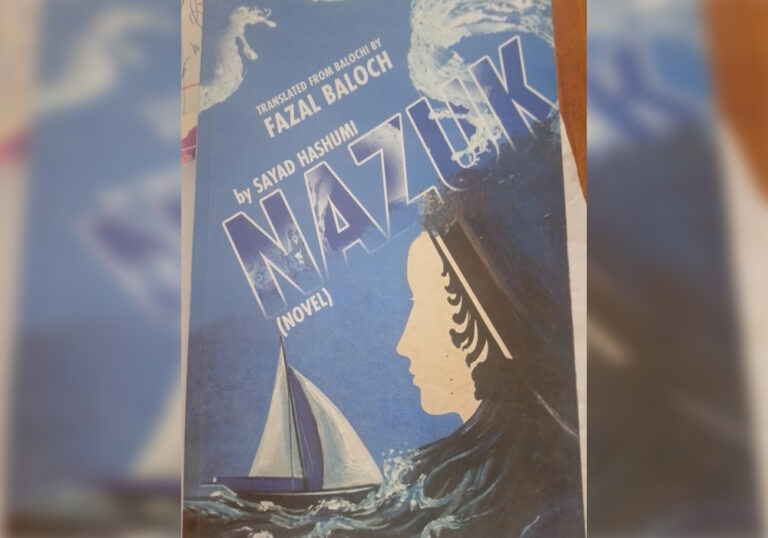
    By Sania Sher Jamak This book review is about the novel Nazuk, written by Syed Zahoor Shah Hashmi and translated by Fazal Baloch. Syed Zahoor Shah Hashmi was a renowned Balochi poet, writer, linguist, historian, and philosopher. He is regarded as one of the most influential figures in modern Balochi literature. Syed Zahoor Shah Hashmi was born on 21 April 1926 in Gwadar and passed away on 4 March 1978 in Karachi. He also wrote a dictionary called Syed Gunj, in addition to many works of poetry, history, and books on the Balochi language and literature. Nazuk is a very interesting and thought-provoking novel. The title itself is meaningful and reflects the delicate and difficult lives of Baloch women who suffer from various social problems. Through this novel, the writer highlights the hardships, struggles, and challenges faced by women in Balochi society. The novel is not only an engaging piece of literature but also provides a deeper understanding of Balochi culture and society. It encourages readers to think about social issue

Leave a Reply

Your email address will not be published. Required fields are marked *