
new provinces stronger

New provinces or stronger local governments?

The debate over Pakistan’s administrative structure has returned to the national stage after Interior Minister Syed Mohsin Raza Naqvi suggested that the country should seriously examine the question of creating new provinces or administrative units. Predictably, the discussion immediately descended into familiar political slogans. Some portrayed the proposal as a threat to federalism, others embraced it as the long-awaited solution to governance failures. Between these two extremes lies a far more important question: what does the Constitution of Pakistan actually permit, and what course best serves national unity at a time of unprecedented regional instability?

The timing of the debate is significant. Pakistan today faces persistent security challenges in Balochistan and Khyber Pakhtunkhwa, constitutional sensitivities relating to Azad Jammu and Kashmir, continuing political polarisation, and a rapidly deteriorating strategic environment as conflict in the Middle East threatens to reshape regional geopolitics. In such circumstances, constitutional reform should not be driven by political expediency. It must be guided by constitutional principles, empirical evidence and the long-term interests of the federation.

The Constitution of islamic Republic of Pakistan is neither silent nor rigid on the question of creating new provinces. Article 1 recognises Pakistan as a federation consisting of provinces and territories whose limits may be altered in accordance with the Constitution. However, Article 239(4) places an important constitutional safeguard on any proposal affecting provincial boundaries. No constitutional amendment that alters the limits of a province can become law unless, in addition to obtaining the prescribed parliamentary majority, it is approved by not less than two-thirds of the members of the provincial assembly concerned.

This requirement reflects the federal compact. Provinces are not merely administrative divisions; they are constitutional partners in the federation. Consequently, no province can be divided, merged or otherwise altered through a simple parliamentary majority in Islamabad. Provincial consent is itself a constitutional requirement.

This constitutional position explains why proposals for South Punjab, Bahawalpur, Hazara or other new provinces have repeatedly surfaced over the past two decades but have never matured into constitutional reality.

Various drafts, often described collectively as proposals for a Twenty-Eighth Constitutional Amendment, have circulated in political and academic circles. They have contemplated the creation of additional provinces together with corresponding adjustments in Senate representation, National Finance Commission allocations, provincial institutions and administrative structures. Yet none has commanded the political consensus demanded by Article 239. Constitutional design has proved stronger than political rhetoric.

The debate, however, should not begin with Article 239. It should begin with Article 140A. Inserted through the Constitution (Eighteenth Amendment) Act of 2010, Article 140A obliges every province to establish a local government system and devolve political, administrative and financial responsibility and authority to elected representatives. This is not merely a recommendation. It is a constitutional command. Unfortunately, after even lapse of 16 years, this remains a constitutional provision that has been implemented (sic) with greater reluctance.

Successive provincial governments, irrespective of political affiliation, have preferred centralised provincial bureaucracies over constitutionally empowered local governments. Elections have been delayed, powers diluted, finances retained by provincial capitals and administrative authority reclaimed through executive control. The result is that Pakistan continues to speak the language of devolution while practising administrative centralisation.

Before demanding new provinces, one must ask a more fundamental question: has Pakistan sincerely implemented the Constitution it already possesses?

The empirical evidence nevertheless deserves serious attention. Pakistan has experienced extraordinary demographic transformation since independence. The country’s population has increased from approximately 34 million in the early years of independence to over 255 million today, yet the number of provinces has remained unchanged.

The presentation recently unveiled on constitutional and administrative reforms demonstrates this remarkable contrast and argues that governance structures have failed to evolve alongside population growth. It further notes that each of Pakistan’s four provinces administers populations exceeding those of many sovereign countries and that, among major federations, Pakistan places an unusually large administrative burden upon each provincial government.

Whether one accepts every conclusion of that presentation/study or not, the underlying constitutional question cannot be ignored. Effective governance depends not merely upon constitutional powers but upon administrative reach.

A provincial capital hundreds of kilometres from remote districts inevitably encounters greater challenges in delivering education, healthcare, policing and justice than a more decentralised system. The presentation also links many development indicators with administrative distance from provincial capitals, suggesting that constitutional debate should be informed by measurable governance outcomes rather than political sentiment alone.

However,  administrative efficiency is only one dimension of federalism. The second is national integration. Pakistan’s history demonstrates that provincial identities become dangerous only when constitutional grievances remain unresolved. Conversely, attempts to suppress legitimate constitutional debate merely strengthen centrifugal tendencies. The Constitution therefore wisely provides a peaceful and democratic mechanism through which territorial adjustments may be considered while ensuring that no province loses its constitutional status without its own consent. This balanced approach deserves preservation.

Current security realities also counsel prudence. Parts of Balochistan continue to face organised violence supported by hostile external actors. Khyber Pakhtunkhwa confronts renewed terrorist activity along its western frontier. Azad Jammu and Kashmir occupies a unique constitutional and strategic position within Pakistan’s national policy on Jammu and Kashmir.

Simultaneously, the widening conflict across the Middle East has introduced new uncertainties affecting regional security, energy supplies and geopolitical alignments. These circumstances require a stronger federation rather than a weaker one. That objective, however, should not be confused with excessive centralisation.

Strong federations are built upon responsive institutions, constitutional legitimacy and public confidence. Citizens judge the State not by constitutional theory but by whether schools function, hospitals remain open, justice is delivered promptly and basic civic services reach every district.

Equally important is the responsibility of political leadership. Statements by political actors—including repeated interventions by Maulana Fazlur Rehman on constitutional and provincial questions—must be evaluated through the prism of constitutionalism rather than political confrontation.

Democratic disagreement is legitimate, but constitutional discourse should unite rather than inflame an already polarised polity. The Constitution provides lawful mechanisms for reform. Political mobilisation should reinforce those mechanisms, not substitute for them. The real constitutional debate, therefore, is not whether Pakistan should have four provinces, six provinces or ten provinces.

The real question is far more fundamental. At what level should public power be exercised so that constitutional accountability, fiscal responsibility and administrative effectiveness reinforce one another?

A federation that merely creates additional provinces without devolving financial authority and administrative responsibility to local governments will simply multiply bureaucracies without improving governance. Equally, a federation that refuses to reconsider administrative boundaries despite profound demographic transformation risks overburdening provincial governments beyond their effective capacity.

Pakistan’s constitutional future t lies neither in emotional demands for new provinces nor in rigid defence of inherited administrative boundaries. It lies in a principled constitutional conversation that integrates Article 239 with Article 140A, territorial reorganisation with genuine local self-government, and political consensus with fiscal federalism.

The Constitution already provides both pathways. One permits the creation of new provinces through constitutional amendment founded upon federal and provincial consensus. The other requires the immediate and faithful implementation of elected local governments with genuine political, administrative and financial autonomy.

Pakistan should first honour the constitutional obligation it has consistently neglected. If, after genuine implementation of Article 140A, experience still demonstrates that additional provinces are necessary to improve governance, the Constitution already provides the lawful mechanism for achieving that objective. Constitutional evolution should proceed through evidence rather than emotion, through consensus rather than confrontation, and above all through an unwavering commitment to strengthening the federation in an increasingly uncertain world.

_____________________________________________________________

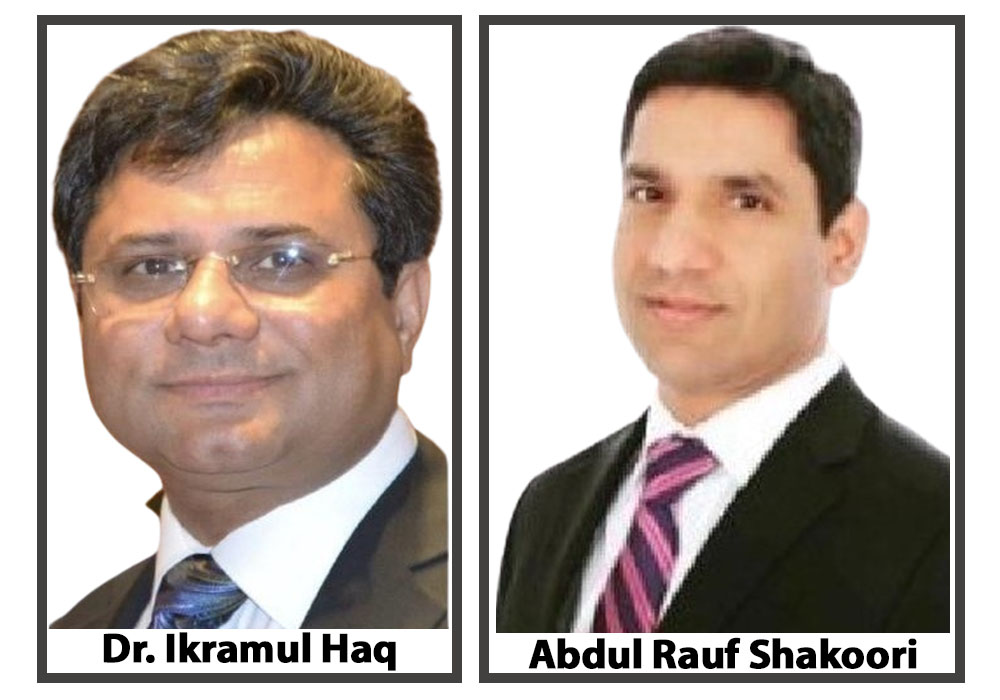
Dr. Ikramul Haq, Advocate Supreme Court, specializes in constitutional, corporate, environment, media, ML/CFT related laws, IT, intellectual property, arbitration and international tax laws.  He holds an LLD in tax laws with specialization in transfer pricing. He was full-time journalist from 1979 to 1984 with Viewpoint and Dawn. He served Civil Services of Pakistan from 1984 to 1996.

He established Huzaima & Ikram in 1996 and is presently its chief partner. He studied journalism, English literature and law. He is Chief Editor of TaxationHe is country editor and correspondent of International Bureau of Fiscal Documentation (IBFD) and member of International Fiscal Association (IFA).  He is Visiting Faculty at Lahore University of Management Sciences (LUMS) and member Advisory Board and Visiting Senior Fellow of Pakistan Institute of Development Economics (PIDE).

He has coauthored with Huzaima Bukhari many books that include, Tax Reforms in Pakistan: Historic & Critical Review, Towards Broad, Flat, Low-rate, and Predictable Taxes (third edition, 2024),  Pakistan: Enigma of Taxation, Towards Flat, Low-rate, Broad and Predictable Taxes (revised/enlarged edition of December 2020), Law & Practice of Income Tax, Law , Practice of Sales Tax, Law and Practice of Corporate Law, Law & Practice of Federal Excise, Law & Practice of Sales Tax on Services, Federal Tax Laws of Pakistan, Provincial Tax Laws, Practical Handbook of Income Tax, Tax Laws of Pakistan, Principles of Income Tax with Glossary and Master Tax Guide, Income Tax Digest 1886-2011 (with judicial analysis).

He is author of Commentary on Avoidance of Double Taxation Agreements, Pakistan: From Hash to Heroin, its sequel Pakistan: Drug-trap to Debt-trap and Practical Handbook of Income Tax. Two books of poetry are Phull Kikkaran De (Punjabi 2023) and Nai Ufaq (Urdu 1979 with Siraj Munir and Shahid Jamal).

He regularly writes columns/article/papers for many Pakistani newspapers and international journals and has contributed over 3000 articles on a variety of issues of public interest, printed in various journals, magazines and newspapers at home and abroad.

_______________________________________________________________

Abdul Rauf Shakoori, Advocate High Court, is a subject-matter expert on AML-CFT, Compliance, Cyber Crime and Risk Management. He has been providing AML-CFT advisory and training services to financial institutions (banks, DNFBPs, Investment companies, Money Service Businesses, insurance companies and securities), government institutions including law enforcement agencies located in North America (USA & CANADA), Middle East and Pakistan.  His areas of expertise include legal, strategic planning, cross-border transactions including but not limited to joint ventures (JVs), mergers & acquisitions (M&A), takeovers, privatizations, overseas expansions, USA Patriot Act, Banking Secrecy Act, Office of Foreign Assets Control (OFAC).

Over his career he has demonstrated excellent leadership, communication, analytical, and problem-solving skills and have also developed and delivered training courses in the areas of AML/CFT, Compliance, Fraud & Financial Crime Risk Management, Bank Secrecy, Cyber Crimes & Internet Threats against Banks, E–Channels Fraud Prevention, Security and Investigation of Financial Crimes. The courses have been delivered as practical workshops with case study driven scenarios and exams to ensure knowledge transfer.

His notable publications are Rauf’s Compilation of Corporate Laws of Pakistan, Rauf’s Company Law and Practice of Pakistan and Rauf’s Research on Labour Laws and Income Tax and others.

His articles include: Revenue collection: Contemporary targets vs. orthodox approach, It is time to say goodbye to our past, US double standards, Was Due Process Flouted While Convicting Nawaz Sharif?, FATF and unjustly grey listed Pakistan, Corruption is no excuse for Incompetence, Next step for Pakistan, Pakistan’s compliance with FATF mandates, a work in progress, Pakistan’s strategy to address FATF Mandates was Inadequate, Pakistan’s Evolving FATF Compliance, Transparency Curtails Corruption, Pakistan’s Long Road towards FATF Compliance, Pakistan’s Archaic Approach to Addressing FATF Mandates, FATF: Challenges for June deadline, Pakistan: Combating the illicit flow of money, Regulating Crypto: An uphill task for Pakistan. Pakistan’s economy – Chicanery of numbers. Pakistan: Reclaiming its space on FATF whitelist. Sacred Games: Kulbhushan Jadhav Case. National FATF secretariat and Financial Monitoring Unit. The FATF challenge. Pakistan: Crucial FATF hearing. Pakistan: Dissecting FATF Failure, Environmental crimes: An emerging challenge, Countering corrupt practices .

The recent publication, coauthored by these writes with Huzaima Bukhari is:                       

Pakistan Tackling FATF: Challenges & Solutions, available at:

https://aacp.com.pk/book-detail/pakistan-tackling-fatf-challenges-and-solutions-35
https://www.amazon.com/dp/B08RXH8W46

Similar Posts

  • Why Is Perception of China and President Xi Improv…

    Recently, the Pew Research Center released results from a study on global perceptions of China and President Xi. The results also compared China and President Xi with the USA and President Donald Trump. The study was conducted in 36 countries and included 42,151 respondents. The results are quite interesting and show that the overwhelming majority of people strongly favor China and President Xi. For example, respondents from 30 of the 36 countries ranked China and President Xi more positively. Moreover, 67% of respondents from 17 middle-income countries viewed China as a reliable partner. This suggests that China fulfills its commitments and never betrays its partners. And 57% believed that China takes care of the interests of other countries. These findings are in line with China’s philosophy of international relations, win-win cooperation and shared prosperity.   The results also indicated that, among the surveyed countries, all Muslim countries have a positive perception of China. Except for Nigeria (equal confidence in Xi and Trump), all Muslim countries showed confidence in President Xi and his leadership.   It is worth noting that in both categories, Pakistanis ranked China and President Xi highest. According to the results, 90% of Pakistanis held a favorable view of China, and 83% expressed confidence in President Xi’s leadership.   Now, the question is, despite all propaganda and malicious campaigns, why is the positive perception of China and President Xi very high?  The answer is that China believes in common development and development together and for everyone. It also resonates with President Xi’s vision that no one should be left behind on the road of development. Therefore, since its rise as a major economic and global power, China is contributing to global development, especially in the Global South. Simultaneously, China has been working to strengthen the voices of the Global South in global affairs and protect them against the hegemonic aspirations of some powerful countries. Moreover, China is striving to bring sustainable peace and security, and to ensure that everyone’s security and security concerns are treated equally. In the pursuit of these objectives, President Xi has launched numerous initiatives, including global, regional, and country-specific ones.   On the global front, President Xi launched five major initiatives: the Belt and Road Initiative, the Global Development Initiative, the Global Security Initiative, the Global Civilization Initiative, and the Global Governance Initiative. These initiatives have all the ingredients to help the world solve contemporary challenges and chart a path to peaceful, sustainable development and prosperity through cooperative coexistence.   First, China launched the Belt and Road Initiative (BRI) by adhering to the Chinese philosophy of shared growth through discussion and collaboration. Latest data show that China has invested almost US$ 1.4 trillion to help countries bridge the development gap. Second, the Global Development Initiative (GDI) was introduced in accordance with the vision of shared prosperity. Under GDI, China has invested more than US$ 23 billion. Third, the Global Security Initiative (GSI), which has been built on four pillars: common, comprehensive, coordinated, and sustainable security, was presented. Fourth, the Global Civilization Initiative emphasized harmony in diversity and the rejection of the clash of civilizations. Fifth, the Global Governance Initiative recognizes that all countries, regardless of size, strength, or wealth, are equal participants, decision-makers, and beneficiaries in global governance. The five key principles of GCI, proposed by President Xi, include respecting sovereign equality, adhering to the international rule of law, practicing multilateralism, advocating a people-centered approach, and prioritizing concrete actions.   The China International Import Expo (CIIE) is another initiative with global relevance and a vision of sharing prosperity. It is a unique idea, as there is no precedent in history for organizing an import expo. President Xi himself proposed, planned, deployed, and promoted the idea of the China International Import Expo to fulfill his promise of high-level opening up and creating opportunities for the world. CIIE has emerged as a new avenue to introduce new products, share ideas, and promote innovation. It plays a prominent role in promoting new products by helping companies find buyers for their products and vice versa. China’s technology and innovation penetration and diffusion policies encourage companies and investors to join the event. Therefore, it attracts innovators and leading companies from around the world to attend the event and showcase their products and ideas.   In the list of global initiatives, we can also include the construction of ecological civilization as a seventh initiative, as it is highly relevant to the global audience. The construction of ecological civilization is rooted in the philosophy of harmony between the planet and humans and among humans. It is urgently needed in the context of climate change and environmental degradation.   At the regional level, China has also launched numerous initiatives, including the Asian Infrastructure Investment Bank (AIIB), the Boao Forum, and the Shanghai Cooperation Organization (SCO), among others. AIIB was launched to bridge the investment gap in Asia. AIIB aims to build a prosperous future under the slogan “Building Infrastructure for Tomorrow” by adopting principles of sustainability, innovation, and prosperity for the benefit of its people in Asia. Since its launch, President Xi has ensured that the AIIB develops into a modern, innovative, inclusive, goal-oriented, and rule-based institution that can help bridge the investment gap. Thus, he discourages geopolitics, mainstream economic rationales, and sustainability principles.   The Boao Forum (BF) is another regional initiative for Asia. BF is a non-governmental, nonprofit organization hosted and promoted by China. It provides a platform for dialogue among leaders of national governments, industry and business, and academia from countries in Asia and other continents on important issues facing Asia and the world. An analysis of past forums shows that it has focused on multiple areas and helped bring people closer together. It has created opportunities for cooperation and collaboration. Building on the Boao Forum’s past successes and strengths, China is working to explore how to build a community with a shared future for humanity in Asia by deepening interaction and cooperation.   Second, despite propaganda against

  •  The Pakistan We Still Have to Build

    Every 14 August, Pakistan awakens to the familiar colours of green and white. Flags appear on buildings, national songs fill the air, children dress in traditional colours, and speeches once again remind the nation of the sacrifices that accompanied independence. Yet Independence Day is not merely an occasion to celebrate the Pakistan we inherited; it is an opportunity to ask a more demanding question: What have we done with the Pakistan that was entrusted to us? On 14 August 1947, independence transformed millions of lives. Pakistan emerged from one of the most extraordinary political movements of the twentieth century, carrying the hopes of Muslims of the subcontinent for political security, social justice, dignity and the freedom to shape their collective future. Nearly eight decades later, the country possesses a substantial population, strategic importance, nuclear capability, a young generation, a resilient economy and a remarkable human resource. But the distance between Pakistan’s original aspirations and its contemporary realities remains a serious national question. The first mistake would be to interpret patriotism as silence about national shortcomings. Genuine patriotism requires the courage to identify weaknesses as well as the wisdom to recognise achievements. A country cannot strengthen itself by denying its problems. Nor can it progress through perpetual pessimism. Pakistan’s challenge in 2026 is therefore to move beyond both exaggerated self-congratulation and destructive cynicism. The political history of Pakistan demonstrates the consequences of institutional instability, confrontation and the excessive personalisation of politics. Governments have changed, political alliances have shifted, constitutions have been amended, and civilian and non-civilian institutions have repeatedly struggled over the appropriate boundaries of authority. The result has often been a political culture in which winning power becomes more important than strengthening institutions. This is particularly dangerous for a federation as diverse as Pakistan. Punjab, Sindh, Khyber Pakhtunkhwa, Balochistan, Gilgit-Baltistan and the regions of Azad Jammu and Kashmir possess distinct histories, cultures and political concerns. National unity cannot be imposed through administrative uniformity. It must be constructed through justice, representation, constitutionalism and an equitable distribution of opportunity. The recent political and social tensions surrounding Azad Jammu and Kashmir offer another reminder that national integration cannot depend exclusively upon slogans. Reports of violent protests, deaths and political grievances in the region demonstrate how quickly unresolved questions of representation, economic opportunity and political legitimacy can become matters of national concern. At the same time, the ongoing electoral process indicates that democratic participation remains an important mechanism through which political differences can be addressed. The lesson for Pakistan is broader than any particular political dispute: the federation becomes stronger when citizens believe that institutions listen to them. Religion presents another essential dimension of Pakistan’s identity. The country was created in the name of a political and social vision deeply connected with the religious consciousness of the Muslims of the subcontinent. But Islam cannot be reduced to national symbolism, political slogans or ceremonial references. Its deeper teachings demand justice, honesty, compassion, accountability, dignity and responsibility. The Qur’anic concept of Ummah is fundamentally connected with moral solidarity. It does not mean that differences disappear; rather, it teaches that human beings and communities are bound by principles of justice and mutual responsibility. The Qur’an repeatedly places justice at the centre of social life. Consequently, a religiously inspired Pakistan should not merely ask whether society looks Islamic from the outside. It should ask whether the weak receive justice, whether public resources are protected from corruption, whether the powerful are accountable, whether minorities live with dignity, and whether the poor have meaningful opportunities to improve their lives. Pakistan’s constitutional framework itself reflects this relationship between Islamic values and democratic citizenship. The Objectives Resolution, incorporated into the Constitution, describes democracy, freedom, equality, tolerance and social justice as principles to be observed, while also affirming the rights of minorities to freely profess and practise their religions and develop their cultures. This constitutional balance is important because religious identity and citizenship should not be presented as competing ideas. A confident Islamic state does not need discrimination to demonstrate its faith. It demonstrates its moral strength through justice. Protection of minorities is not a concession to another culture; it is part of the constitutional and ethical responsibility of the state. Pakistan’s social crisis, meanwhile, is perhaps more complicated than its political crisis. Millions of Pakistanis continue to demonstrate extraordinary resilience, entrepreneurship and generosity. Pakistani professionals have achieved distinction around the world, while ordinary citizens routinely support relatives, neighbours and communities in times of hardship. Yet social inequality, unemployment, educational disparities, population pressure, inflationary pressures and unequal access to healthcare continue to limit the potential of a large part of the population. The most important national resource is not the country’s geography, minerals or strategic position. It is its people. A nation with a young population cannot afford an education system that merely produces certificates. Pakistan needs education that produces critical thinkers, scientists, entrepreneurs, skilled workers, ethical professionals and responsible citizens. Artificial intelligence is rapidly transforming economies and professions, making it even more urgent for Pakistan to reform its educational priorities rather than simply expand enrolment. The same principle applies to women and young people. A country cannot speak convincingly about development while large sections of its human capital remain underutilised. Pakistan’s future competitiveness will depend increasingly upon the quality of its education, digital capacity, scientific research, vocational training and entrepreneurial ecosystem. Independence also has an international dimension. Pakistan’s geography has historically placed it at the intersection of major geopolitical interests. Its relationship with China, Saudi Arabia, Türkiye, the Gulf states, the United States, Europe, Afghanistan and other regional partners reflects the complexity of its strategic environment. But the strongest foreign policy is ultimately built upon domestic strength. Economic stability, political credibility, social cohesion and institutional continuity provide a stronger foundation for diplomacy than dependence upon temporary geopolitical alignments. National security, therefore, should be understood in a broader sense. A secure Pakistan is not merely one with strong borders and capable armed forces. It is also a Pakistan where a child can

  • A Nation in Focus: The Social Contract and the Mak…

    (When the water rises, who shows up and who is left waiting?) ‎I live in Sabzazar, a neighborhood in Lahore, Pakistan, but part of my heart is always sitting along the banks of the Moxahala Creek back home in Southeast Ohio. When the water rises in Muskingum County or the Punjab plains, who shows up, and who is left waiting? I live in Sabzazar, a neighborhood in Lahore, Pakistan, but part of my heart is always sitting along the banks of the Moxahala Creek back home in Southeast Ohio. ‎ ‎My mother and brother still live right near South Zanesville, just a stone’s throw from Crooksville. When heavy rains hit Perry and Muskingum counties, I don’t need to be there to know what it looks like. I can picture the heavy, chocolate-brown water backing up into the low spots, the damp chill that settles into a basement, the fears of what if the waters reach a house trailer, and that specific, exhausting smell of river mud that takes weeks to scrub out of porch boards and carpet. The worries of if the home has structural damage.. Halfway across the world in Pakistan, the landscape couldn’t look more different. But when monsoon season swells the rivers across the Punjab, the view from the ground is hauntingly identical. ‎ ‎Standing in a flooded doorway feels the same whether you are in Ohio or Lahore. The quiet shock is the same. The ruin of things you worked years to buy is the same. And the very first instinct is to grab your coat, shovel, a chainsaw and a pair of boots and go check on the elderly woman next door.. Start hauling wet furniture, debris to the curb and giving comfort, food and basics to those in need is entirely universal. Watching both worlds at once makes you look at governance differently. It strips away abstract political jargon and leaves you asking one fundamental question: When a community is hit with a crisis, does its system build capable people who can act, or does it leave them sitting on their hands, waiting for permission to survive? ‎ ‎What a Small Ohio Village Taught Me About Governance ‎ ‎Growing up around South Zanesville and Crooksville, you learn pretty early that small-town life relies on a very specific kind of quiet, distributed agency. ‎Crooksville isn’t a rich town. It’s a hard-working Appalachian village of under 1,500 people. But when the creek overflows, nobody sits around waiting for a press conference out of Washington, D.C., or a mandate from the state capital in Columbus. ‎ ‎The response moves in waves because the connections are already wired: ‎On the local levels we see neighbor checks on neighbor. The volunteer fire department turns on the sirens, pulls out the high-water gear, and starts the door to door knocks. At the County level we have the Perry County 911 dispatch and Emergency Management Agency (EMA) start tracking water levels and routing equipment where it’s needed most. At the State level, If the county gets overwhelmed, pre set legal triggers immediately call in the Ohio EMA or the National Guard. ‎ ‎Government here doesn’t replace the community’s instinct to help itself; it validates it, organizes it, and backs it up with real resources. The system trusts the people on the ground to know their own roads. Here in Pakistan, the human spirit is just as generous, if not more so. The impulse toward hospitality, neighborly charity, and mutual support runs incredibly deep. When disaster strikes, ordinary citizens open their wallets and their homes without a second thought. It’s just what they do… ‎ ‎And Pakistan’s has one of the world’s top class military engineering, a massive national disaster agency (the NDMA), and incredible private charities. The raw capacity is immense. Yet, too often, there is a however a very heartbreaking disconnect between that high-level power and the family standing in ankle deep water in a local neighborhood. An ordinary citizen here once described the country to me using a metaphor I’ve never forgotten: a child that was never allowed to stand on its own feet. An infant isn’t helpless because it lacks potential. It’s helpless because it hasn’t been given the space to build muscle, fall over, adjust its balance, and try again. If an authority figure picks the child up every single time it tries to pull itself up, the child never learns to walk—not from a lack of ability, but because the environment denied it the chance to build strength. ‎ ‎That is how systemic learned dependency takes root: Central authorities assume total control, bypassing local municipal councils. Neighborhoods are given no real budget or authority to fix their own drainage or organize local response teams. And when a flood comes, citizens have no choice but to wait for distant, top-down relief. The authorities look at the waiting crowd and say, “See? The people can’t manage without us.” ‎We witness power centralized even further, deepening the exact helplessness it claims to fix. Over generations, people adapt to the system they are given. If a system rewards waiting for a political patron, people learn to wait for patrons. If it rewards local initiative, communities build habits of self-reliance. It is very easy to blame culture or public apathy for civic passivity, but that misses the point entirely. Culture simply reflects the structural incentives people are given to survive and adapt. It is nature vs nurture and we have a break down when these two things fail to promote a cohesiveness and inclusion of what is a community and what that actually means. ‎ ‎Across the globe, the relationship between state control and citizen participation varies wildly, proving that central authority does not have to mean public powerlessness. In China, a deeply centralized state framework actively structures and expects local neighborhood committees and civil volunteer groups to manage community-level crises. Across much of Europe, comprehensive state safety nets exist alongside highly empowered municipal councils and professionalized local volunteer forces.

  • From Hormuz to Hiroshima: Is the Iran War Approach…

    By Saqlain Abid Tarrar The 60-day U.S.-Iran understanding expired on August 17 without the breakthrough Washington and Tehran had hoped—or claimed—to seek. The agreement has effectively stalled, the Strait of Hormuz remains at the centre of the confrontation, and both sides continue to blame the other for the diplomatic failure. Iran has now warned that it could shift towards a more offensive posture if diplomacy does not progress. This leaves a disturbing question on the table: is the nuclear option becoming the next neutralisation node in the Iran war? The question gained momentum after former Congresswoman Marjorie Taylor Greene claimed that the use of nuclear weapons had been discussed in Trump administration strategy meetings. Such a claim should be treated cautiously because there is no independent evidence that President Donald Trump has ordered or formally approved a nuclear strike. Nevertheless, the allegation itself demonstrates how far the strategic debate has moved. The White House has maintained that nuclear use is not a proposal on the table. Yet Trump’s own rhetoric has made the situation increasingly difficult to ignore. He has declared that the United States has “total control” of Hormuz and described the idea of making the strategically vital waterway U.S. territory as attractive. The Strait of Hormuz is not merely another battlefield. Around one-fifth of the world’s oil and gas supplies normally pass through this narrow maritime chokepoint. Any prolonged closure therefore creates consequences far beyond Iran and the United States: higher energy prices, disrupted shipping, inflationary pressure and another shock to an already fragile global economy. So, what are the chances of the United States actually using nuclear weapons? At present, they remain extremely low—but low is not the same as impossible. History demonstrates how quickly supposedly unthinkable options can become military realities. The United States became the first country to use nuclear weapons in warfare when it dropped atomic bombs on Hiroshima and Nagasaki in August 1945. However, it would be historically inaccurate to argue that those attacks were simply conducted to test plutonium and uranium against the Soviet Union. The motives remain debated, including compelling Japanese surrender and influencing the emerging post-war balance with Moscow. The lesson, nevertheless, is unmistakable: once a state believes that an extraordinary weapon can achieve an extraordinary political objective, the threshold can become dangerously negotiable. That is why today’s situation deserves scrutiny. The Trump administration needs an exit from a war that has become increasingly difficult to convert into a decisive political settlement. The USS Abraham Lincoln has also endured an exceptionally long deployment, reportedly more than 240 days at sea, adding another layer of military and political pressure. But nuclear weapons would not provide a rational solution to that problem. Iran’s nuclear capability is certainly a serious concern. The IAEA reported that Iran had accumulated about 440.9 kilograms of uranium enriched to 60 percent before the 2025 attacks disrupted international verification. That material could theoretically produce significant quantities of weapons-grade material if further enriched, but possession of 60-percent enriched uranium does not mean Iran already possesses nuclear weapons. Iran, meanwhile, has suffered severe economic and infrastructural damage, yet its resistance has not disappeared. Tehran continues to signal that it will not simply surrender under pressure. The danger is therefore that military escalation creates the very nuclear insecurity Washington says it wants to prevent. Russia and China could condemn any nuclear use and mobilise diplomatic opposition. The United Nations could debate emergency resolutions. European governments could strongly object. But none of these actors could physically intercept an American warhead once Washington had made the decision. That makes the most important restraint internal: the political and strategic judgment of the American leadership itself. And there is an even larger regional consequence. If Iran were struck with nuclear weapons, Gulf states could reach a frightening conclusion: conventional alliances may no longer provide sufficient security. Saudi Arabia, the UAE, Türkiye and others could reconsider their long-term strategic options. Nuclear hedging and proliferation could become increasingly attractive. That would transform the Middle East permanently. The irony would be profound. An American nuclear strike intended to prevent Iran from becoming a nuclear power could encourage an entire region to seek nuclear deterrence. Hormuz may eventually be reopened through negotiations, military pressure or a new regional security arrangement. But once the nuclear taboo is broken, restoring it would be far more difficult. The nuclear option should therefore remain the last option—not because it is weak, but because its consequences are stronger than any victory it could deliver. Power can neutralise an opponent. But when power is unleashed without restraint, it can ultimately neutralise the international order itself.

  • Fiscal turnaround—or fiscal illusion?

    The fiscal deficit fell to just 2.6 of GDP—the lowest in 22 years—while the primary surplus reached a record 2.9%, the highest since at least FY 2000-01— tweet by Khurram Schehzad, Adviser to Federal Finance Minister The latest official numbers tell an impressive story. Pakistan closed fiscal year 2025–26 with a consolidated budget deficit of Rs. 3.313 trillion, equal to 2.6% of gross domestic product (GDP), and a primary surplus of 2.9%. They accompany a familiar boast: the Federal Board of Revenue (FBR) achieved a “record” collection of Rs. 13.010 trillion. In the post cited above, Adviser to the Federal Finance Minister, Khurram Schehzad, described the outcome as the “strongest fiscal performance in 22 years”. He highlighted three consecutive primary surpluses, the “lowest fiscal deficit in 22 years”, and the highest primary surplus in at least 26 years, debt growth at a 20-year low, and declining debt-to-GDP and interest burdens. He concluded that Pakistan was moving decisively from recurring fiscal stress towards discipline, stability and sustainable growth. The improvement is real. The conclusion is premature. The Finance Division’s newly released Fiscal Operations for July–June 2025–26 show consolidated revenue of Rs. 19.774 trillion and expenditure of Rs. 23.087 trillion. The resulting deficit is unquestionably lower than the enormous gaps of recent years. Fiscal consolidation has occurred and should be acknowledged. The claim of a 22-year low, however, does not survive the adviser’s own infographic. The chart accompanying the post places the deficit at 1.7% in 2003–04 and 2.5% in 2004–05—both below 2.6%. The contemporaneous Pakistan Economic Survey 2006–07, using the series then published, recorded 2.4% for 2003–04. Revisions may explain the discrepancy between 1.7% and 2.4%, but neither figure supports an unqualified record claim. The latest statement is also provisional. The defensible description is that 2.6% is among the lowest deficits in about two decades. More importantly, 2.6% is the consolidated deficit. The federation did not run a deficit of Rs. 3.313 trillion. Its net revenue receipts, after transfers to provinces, were Rs. 10.520 trillion, against expenditure of Rs. 15.283 trillion. The federal deficit was Rs. 4.763 trillion, or about 3.8% of GDP. It fell to the consolidated figure because the provinces produced a combined surplus of Rs. 1.450 trillion. Punjab alone contributed Rs. 914 billion. Provincial surpluses assist macroeconomic management but do not extinguish the federation’s borrowing requirement. They are intergovernmental cash offsets while the federal government remains deeply indebted. The earlier article, Bankruptcy of ideas—X: Debt, Taxes & Democracy, argues that shifting cash between tiers cannot repair a debt-driven state. An even more striking adjustment appears under “statistical discrepancy”. The detailed expenditure table reports total consolidated expenditure of Rs. 23.940 trillion. A negative statistical discrepancy of Rs. 853 billion lowers expenditure in the summary to Rs. 23.087 trillion. Without this adjustment, the gap between revenue and expenditure would be about Rs. 4.167 trillion, or approximately 3.3% of GDP. Statistical discrepancies are not unusual in provisional accounts. An adjustment equal to more than one-quarter of the celebrated deficit nevertheless demands explanation before a historic record is proclaimed. Transparency requires reconciliation of this amount when the accounts are finalised. The composition of expenditure further weakens the triumphal narrative. Mark-up payments reached Rs. 6.948 trillion—5.5% of GDP. Federal Public Sector Development Programme expenditure, excluding development grants to provinces, was only Rs. 727 billion. Interest was therefore about 9.6 times the federal development programme. A deficit can fall because investment and public services are compressed while inherited interest obligations continue dominating expenditure. That is fiscal compression, not fiscal transformation. The “record” FBR’s collection claim presents a similar illusion. With inflation and nominal GDP growth, the largest rupee collection will normally recur. The relevant questions are whether revenue rose relative to GDP, the base broadened and additional taxation reduced borrowing. FBR’s Rs. 13.010 trillion was only 10.3% of GDP. It was about Rs. 1.12 trillion below the original target of Rs. 14.13 trillion and barely exceeded the subsequently revised figure of approximately Rs. 12.983 trillion. The goalpost was moved, and arrival at the moved goalpost was described as a record. Analysis of Pakistan’s withholding-based system [Tax Proposals for Budget 2027—III: Withholdingisation: Weapon of destruction, Minute Mirror, May 25, 2026 and FBR’s Performance FY 2024-25 (Part II): Income Tax or Expropriatory Taxation, Minute Mirror, April 14, 2026] has repeatedly shown why aggregate collection cannot be equated with administrative performance. During FY 2024–25, withholding and advance collection accounted for about 96% of income tax, leaving only a small fraction attributable to returns and enforcement. Employers, banks, utilities, importers and businesses collect much of FBR’s revenue on behalf of the state. Extraction at source is not evidence that concealed income has been discovered or that privileged sectors have entered the tax net. The latest statement also exposes reliance on non-tax revenue. Federal non-tax receipts reached Rs. 5.178 trillion. These included Rs. 2.428 trillion transferred as State Bank of Pakistan surplus and Rs.1.567 trillion collected as petroleum levy. Together, the two sources provided almost Rs. 4 trillion. As explained in Bankruptcy of ideas—VII: The Petroleum (Levy) State, the petrolem levy operates as inflationary and regressive extraction. It raises transport, agricultural, industrial and household costs. It also remains outside the divisible pool, allowing the federation to retain revenue that would otherwise be shared under the National Finance Commission framework. A large central-bank transfer and an ever-rising fuel levy cannot substitute for fair, broad-based taxation. Debt servicing supplies the decisive test. Cash mark-up payments of Rs. 6.948 trillion absorbed 53.4% of FBR collection and about 66% of federal net revenue receipts. Domestic interest alone was Rs. 6.030 trillion; foreign interest was Rs. 917 billion. These figures do not include refinancing of maturing domestic principal. The financing table reports gross external financing of Rs. 3.805 trillion and external debt repayments of Rs. 2.627 trillion. Programme loans alone amounted to Rs. 2.054 trillion. The federal deficit required net financing of Rs. 4.763 trillion: Rs. 1.178 trillion externally and Rs. 3.585 trillion domestically. State Bank financing reached Rs. 3.202 trillion. These amounts

  • Pakistan’s College Education Crisis

    Educational debates in Pakistan usually begin with schools and end with universities. Somewhere in between lies a vast public college network that has quietly undergone a transformation without receiving the reforms necessary to sustain it. For decades, colleges were viewed merely as institutions imparting Intermediate education. That perception is now obsolete. Government colleges across Pakistan award four-year BS degrees, supervise undergraduate research, implement semester systems, and produce graduates completing sixteen years of education. They have become institutions of higher education in every meaningful sense except in the standards by which they recruit, promote and evaluate their faculty. The real crisis begins not when institutions disappear but when they continue to exist while quietly abandoning the purpose they were meant to serve. Pakistan’s college education system increasingly reflects this uncomfortable reality. Buildings stand, classrooms remain occupied, salaries are paid and degrees continue to be awarded, yet the intellectual purpose that ought to define higher education is steadily weakening. The system continues to function, but it no longer asks whether it is producing scholars, researchers and critical thinkers or merely issuing degrees. This contradiction is not merely administrative. It is national. Countries do not build knowledge economies simply by increasing enrolment or opening new campuses. They do so by ensuring that those entrusted with educating the next generation possess the intellectual depth, scholarly discipline and professional integrity demanded by higher education. Pakistan has expanded the responsibilities of its colleges without fundamentally reforming the standards governing those who teach in them. It is this mismatch between expanding responsibilities and stagnant reforms that explains much of the present crisis. History offers repeated warnings against confusing continuity with progress. Great civilisations have seldom been defeated by ignorance alone; far more often, they have been weakened by their refusal to reform. Ancient Troy believed its mighty walls guaranteed safety until destruction entered concealed within the famous wooden horse. Institutions, too, often collapse not because external forces overwhelm them but because internal weaknesses become too familiar to recognise. Pakistan’s colleges face a similar danger. The greatest threat is not inadequate infrastructure or declining enrolment. It is the quiet normalisation of standards that no longer correspond with the responsibilities these institutions now carry. Perhaps nowhere is this more evident than in faculty recruitment. Every education system is ultimately only as strong as the people it appoints to teach. Laboratories, libraries and curricula matter, but they cannot compensate for weak academic recruitment. A nation’s classrooms reflect the intellectual standards it establishes at the point of entry into the profession. Countries that consistently perform well in higher education understand this principle with remarkable clarity. Finland recruits teachers from among its highest-performing graduates and treats teaching as one of the country’s most competitive professions. Singapore invests heavily in teacher selection, structured professional development and continuous evaluation throughout an educator’s career. South Korea subjects aspiring academics to rigorous competition, while Germany closely links academic progression with scholarly achievement and research productivity. These countries differ in culture, politics and economic history, yet they share one conviction that higher education depends first and foremost upon the quality of its faculty. Pakistan, regrettably, often operates on a different assumption. Recruitment is frequently treated as the culmination of academic achievement rather than its beginning. A lecturer appointed with only a sixteen years education may spend an entire career within the same system without acquiring higher qualifications or contributing substantially to research, yet still retire after holding senior academic positions carrying the titles of Associate Professor or Professor. Such a framework might have appeared understandable when colleges were primarily institutions for Intermediate education. It becomes increasingly indefensible once those same institutions award undergraduate degrees equivalent to those offered by universities. Academic titles should signify scholarly accomplishment rather than the mere passage of time. Across the world, the designation of Professor represents sustained intellectual contribution, recognised research, advanced qualifications and academic leadership. When promotion depends overwhelmingly upon seniority rather than scholarship, titles gradually lose their meaning. The loss is not symbolic alone. It diminishes public confidence in higher education itself. This is not an argument against experience. Experience remains indispensable in teaching. A seasoned educator often possesses insights that no newly qualified academic can immediately acquire. Classrooms are enriched by years of interaction with students, evolving pedagogical techniques and practical wisdom accumulated over decades. Experience, however, should complement scholarship, not replace it. Knowledge no longer remains static for an entire career. Disciplines evolve at astonishing speed. Artificial Intelligence is reshaping linguistics, medicine, engineering, law and the humanities alike. Climate science has transformed environmental studies. Digital humanities have altered literary scholarship. Advances in neuroscience continue redefining educational psychology. A qualification earned thirty years ago, valuable though it remains, cannot alone certify mastery over fields that have changed beyond recognition. Medicine provides an obvious comparison. No patient would willingly place complete trust in a surgeon who had never updated professional knowledge after graduation. Engineers continually adapt to changing technologies and safety standards. Judges engage with evolving constitutional interpretation. Military officers undergo regular professional education throughout their service. Every serious profession recognises that learning is continuous. Higher education cannot become the sole profession where intellectual growth effectively ends with appointment. The irony is that Pakistan’s college sector contains thousands of exceptionally capable teachers who have voluntarily pursued MPhil and PhD degrees despite limited institutional incentives. Many complete advanced research while balancing heavy teaching schedules, administrative responsibilities and family obligations. Their commitment deserves recognition because it reflects a genuine desire to improve professionally rather than merely fulfil formal requirements. Yet the existing structure frequently sends the opposite message. Promotion often rewards waiting more consistently than learning. When advanced qualifications receive insufficient institutional value, the incentive to pursue rigorous scholarship inevitably weakens. No education system can flourish if intellectual ambition appears optional while seniority remains sufficient. The anomaly becomes even more striking when one examines the present hierarchy within many public colleges. It is no longer uncommon to find an MPhil-qualified lecturer or even a PhD serving under an officer whose highest

Leave a Reply

Your email address will not be published. Required fields are marked *