after makkah towards

After Makkah: towards an Islamic NATO—or a new r…

Nato is a giant military alliance where there are 32 countries. We have started here as three countries and we have to take very humble but concrete stepsMakkah defence pact technically same as Nato’s Article 5: Turkish minister, The News, August 9, 2026

The above words of Turkish Foreign Minister Hakan Fidan deserve careful attention. Speaking after the Makkah Joint Defence Agreement between Türkiye, Pakistan and Saudi Arabia, he went considerably further than the diplomatic language normally accompanying defence cooperation. He described the arrangement as technically the same as NATO’s Article 5 principle of collective defence.

More importantly, Fidan disclosed something about its intended institutional evolution. A ministerial committee resembling NATO’s structure is to be created, a permanent secretariat will be established in Saudi Arabia, and President Recep Tayyip Erdoğan does not envisage an organisation permanently confined to its three founding members. Egypt is already being mentioned as a possible entrant.

The question we raised immediately after Makkah has therefore acquired greater urgency: are we witnessing the embryonic formation of an Islamic NATO? The answer requires more caution than either celebration or alarm.

The Makkah agreement is unquestionably important. Saudi Arabia combines enormous financial and energy resources with a pivotal position in the Arab and Islamic worlds. Türkiye possesses NATO’s second-largest military, an increasingly sophisticated defence-industrial base and strategic access linking Europe, the Black Sea, the Mediterranean and the Middle East. Pakistan is a nuclear-armed state located at the intersection of South Asia, China, Central Asia, Iran and the Arabian Sea. Taken together, the three constitute an unusual coalition of middle powers.

Their convergence is also occurring at a moment when the regional order constructed around American predominance is under extraordinary strain. The latest Middle Eastern war has again demonstrated that overwhelming military capability can destroy infrastructure and degrade adversaries without necessarily producing political order.

Michael Fuchs recently argued in Foreign Affairs that the United States should finally relinquish its attempt to dominate the Middle East militarily. The proposition is important, but it raises a larger question. If American primacy recedes, what replaces it? International relations offers no reason to assume that withdrawal by a dominant external power automatically produces regional peace. It can produce strategic autonomy. It can equally produce competitive balancing, arms races and struggles among regional powers seeking to fill the resulting space.

Makkah Defence Agreement represents both an opportunity and a danger. The opportunity is the emergence of indigenous collective security. For much of the modern history of the Middle East, regional states have depended upon external powers for protection while simultaneously fearing abandonment by those same protectors. Britain once performed this role in the Gulf.

The United States subsequently constructed a much larger military architecture based upon bases, arms supplies, bilateral guarantees and partnerships. Dependence created security, but never complete strategic autonomy.

Saudi Arabia’s search for alternatives must be understood against this background. Türkiye has followed another path: remaining inside NATO while steadily expanding its capacity for independent action. Pakistan maintains a strategic partnership with China without severing its relationships with Washington, Riyadh or Ankara.

These are not states simply changing camps. They are practising what contemporary scholarship increasingly describes as hybrid or non-exclusive alignment: cultivating overlapping relationships rather than accepting the rigid binaries of Cold War alliance politics.

This makes Fidan’s second assertion as important as his comparison with Article 5. He insists that Makkah is not directed against Iran or any other country. That principle must survive implementation.

An alliance requires deterrence; it does not necessarily require a permanent enemy. If the emerging arrangement becomes an anti-Iran coalition, it will institutionalise one of the Muslim world’s most dangerous fault lines. Iran is not a temporary presence in the Gulf. It is a major civilisation and regional power whose geography cannot be altered by sanctions, regime change strategies or military pressure.

Pakistan has particular reason to understand this. Iran is its neighbour. Internal sectarian peace, Balochistan, border security, Afghanistan and regional connectivity all make a permanently hostile Pakistan-Iran relationship strategically irrational. Nor should Makkah become simply the Muslim military response to Israel.

The Palestinian question cannot be removed from regional security, as proponents of the Abraham Accords sometimes appeared to assume. Normalisation and economic integration cannot indefinitely substitute for a political settlement guaranteeing Palestinian rights and viable statehood. At the same time, transforming the region into two permanent military camps would hardly produce the peace Palestinians themselves require.

The better possibility is, thus, not an Islamic NATO in the literal sense. NATO emerged from the particular conditions of post-war Europe and bipolar confrontation with the Soviet Union. The Muslim world is geographically dispersed, politically heterogeneous and internally divided. Its states have very different relations with Washington, Beijing, Moscow, Tehran and Tel Aviv. Türkiye itself demonstrates the difficulty of imposing a binary model: it would simultaneously belong to NATO and to the emerging Makkah Accord.

That apparent contradiction may actually tell us something important about the international order now taking shape. The twenty-first century may be characterised less by fixed blocs than by overlapping arrangements through which middle powers seek room for manoeuvre between larger powers. This is also where geoeconomics becomes indispensable.

Saudi finance and energy, Türkiye’s manufacturing and defence technology and Pakistan’s geography, human resources and access towards China, Central Asia and the Arabian Sea could create something considerably more important than another military organisation. Egypt’s eventual participation would add the Suez Canal, the Arab world’s largest population and another major military power.

A security structure built around such capabilities could eventually support trade, energy corridors, defence production, technological cooperation, food security and infrastructure connectivity. Without this economic foundation, an Islamic NATO would remain largely an exercise in military coordination.

China will watch these developments closely. Beijing requires Gulf energy, values Iran, has deep interests in Pakistan and maintains substantial economic relations across the Middle East. It is unlikely to wish to inherit America’s expensive role as regional military hegemon. A regional arrangement capable of providing stability without forcing states into an anti-China or anti-Western camp could therefore coexist with China’s geoeconomic interests.

Pakistan should approach Makkah from precisely this perspective. Its greatest contribution need not be the extension of military power. Its unusual relationships with China, Saudi Arabia, Türkiye, Iran and the United States provide diplomatic space that should be preserved. Pakistan has already demonstrated the utility of mediation during the Iran crisis.

Deterrence and dialogue should become complementary pillars of the new arrangement. The establishment of a secretariat and ministerial mechanism means Makkah has moved beyond symbolism.

Whether it becomes an Islamic NATO will depend upon decisions still to be taken: membership, command arrangements, interoperability, financing, defence-industrial cooperation and, above all, the political definition of aggression and collective response. The larger objective should nevertheless remain clear.

The Muslim world does not need another alliance that divides it into opposing camps. It needs the capacity to protect its states, trade routes and peoples while reducing dependence upon external military patrons.

If Makkah evolves in that direction—and eventually creates space for Egypt, Iran and other regional states within a broader security dialogue—it could contribute to something historically significant: an indigenous regional order based upon deterrence, strategic autonomy and economic interdependence. If it merely identifies new enemies and purchases more weapons, it will reproduce the old Middle East under a new institutional name.

Fidan is right that the three countries should proceed through “humble but concrete steps.” The most important question is not whether those steps eventually create another NATO. It is whether they can create something the Muslim world has found much harder to achieve: collective strength without permanent internal confrontation.

_____________________________________________________________

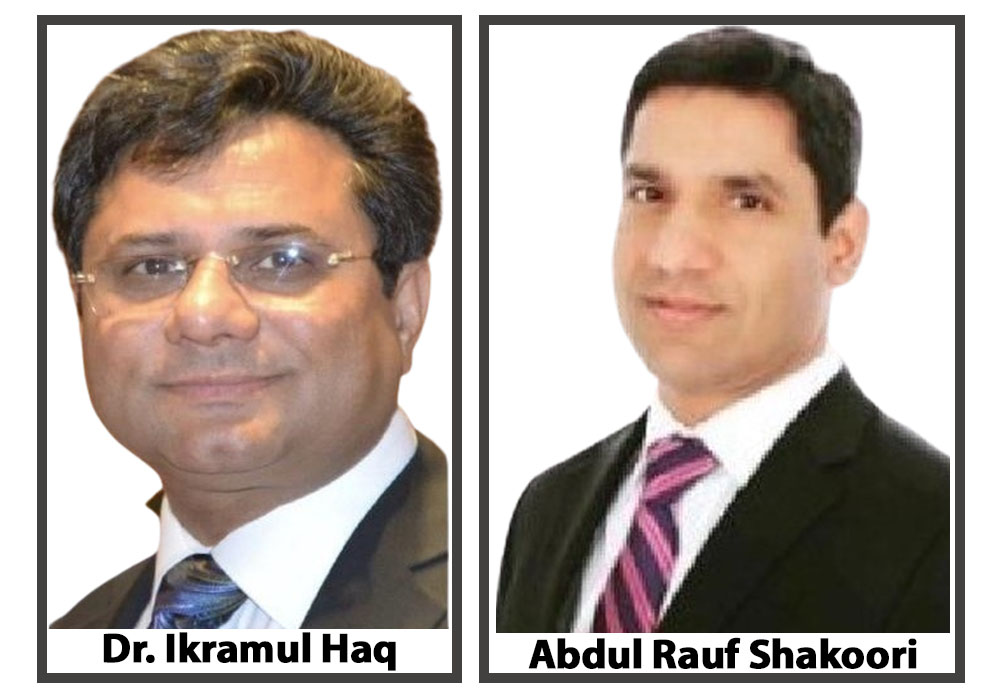
Dr. Ikramul Haq, Advocate Supreme Court, specializes in constitutional, corporate, environment, media, ML/CFT related laws, IT, intellectual property, arbitration and international tax laws.  He holds an LLD in tax laws with specialization in transfer pricing. He was full-time journalist from 1979 to 1984 with Viewpoint and Dawn. He served Civil Services of Pakistan from 1984 to 1996.

He established Huzaima & Ikram in 1996 and is presently its chief partner. He studied journalism, English literature and law. He is Chief Editor of TaxationHe is country editor and correspondent of International Bureau of Fiscal Documentation (IBFD) and member of International Fiscal Association (IFA).  He is Visiting Faculty at Lahore University of Management Sciences (LUMS) and member Advisory Board and Visiting Senior Fellow of Pakistan Institute of Development Economics (PIDE).

He has coauthored with Huzaima Bukhari many books that include, Tax Reforms in Pakistan: Historic & Critical Review, Towards Broad, Flat, Low-rate, and Predictable Taxes (third edition, 2024),  Pakistan: Enigma of Taxation, Towards Flat, Low-rate, Broad and Predictable Taxes (revised/enlarged edition of December 2020), Law & Practice of Income Tax, Law , Practice of Sales Tax, Law and Practice of Corporate Law, Law & Practice of Federal Excise, Law & Practice of Sales Tax on Services, Federal Tax Laws of Pakistan, Provincial Tax Laws, Practical Handbook of Income Tax, Tax Laws of Pakistan, Principles of Income Tax with Glossary and Master Tax Guide, Income Tax Digest 1886-2011 (with judicial analysis).

He is author of Commentary on Avoidance of Double Taxation Agreements, Pakistan: From Hash to Heroin, its sequel Pakistan: Drug-trap to Debt-trap and Practical Handbook of Income Tax. Two books of poetry are Phull Kikkaran De (Punjabi 2023) and Nai Ufaq (Urdu 1979 with Siraj Munir and Shahid Jamal).

He regularly writes columns/article/papers for many Pakistani newspapers and international journals and has contributed over 3000 articles on a variety of issues of public interest, printed in various journals, magazines and newspapers at home and abroad.

_______________________________________________________________

Abdul Rauf Shakoori, Advocate High Court, is a subject-matter expert on AML-CFT, Compliance, Cyber Crime and Risk Management. He has been providing AML-CFT advisory and training services to financial institutions (banks, DNFBPs, Investment companies, Money Service Businesses, insurance companies and securities), government institutions including law enforcement agencies located in North America (USA & CANADA), Middle East and Pakistan.

His areas of expertise include legal, strategic planning, cross-border transactions including but not limited to joint ventures (JVs), mergers & acquisitions (M&A), takeovers, privatizations, overseas expansions, USA Patriot Act, Banking Secrecy Act, Office of Foreign Assets Control (OFAC).

Over his career he has demonstrated excellent leadership, communication, analytical, and problem-solving skills and have also developed and delivered training courses in the areas of AML/CFT, Compliance, Fraud & Financial Crime Risk Management, Bank Secrecy, Cyber Crimes & Internet Threats against Banks, E–Channels Fraud Prevention, Security and Investigation of Financial Crimes. The courses have been delivered as practical workshops with case study driven scenarios and exams to ensure knowledge transfer.

His notable publications are Rauf’s Compilation of Corporate Laws of Pakistan, Rauf’s Company Law and Practice of Pakistan and Rauf’s Research on Labour Laws and Income Tax and others.

His articles include: Revenue collection: Contemporary targets vs. orthodox approach, It is time to say goodbye to our past, US double standards, Was Due Process Flouted While Convicting Nawaz Sharif?, FATF and unjustly grey listed Pakistan, Corruption is no excuse for Incompetence, Next step for Pakistan, Pakistan’s compliance with FATF mandates, a work in progress, Pakistan’s strategy to address FATF Mandates was Inadequate, Pakistan’s Evolving FATF Compliance, Transparency Curtails Corruption, Pakistan’s Long Road towards FATF Compliance, Pakistan’s Archaic Approach to Addressing FATF Mandates, FATF: Challenges for June deadline, Pakistan: Combating the illicit flow of money, Regulating Crypto: An uphill task for Pakistan. Pakistan’s economy – Chicanery of numbers. Pakistan: Reclaiming its space on FATF whitelist. Sacred Games: Kulbhushan Jadhav Case. National FATF secretariat and Financial Monitoring Unit. The FATF challenge. Pakistan: Crucial FATF hearing. Pakistan: Dissecting FATF Failure, Environmental crimes: An emerging challenge, Countering corrupt practices .

The recent publication, coauthored by these writes with Huzaima Bukhari is:                       

Pakistan Tackling FATF: Challenges & Solutions, available at:

https://aacp.com.pk/book-detail/pakistan-tackling-fatf-challenges-and-solutions-35

https://www.amazon.com/dp/B08RXH8W46  

Similar Posts

  • A Nation in Focus: The Social Contract and the Mak…

    (When the water rises, who shows up and who is left waiting?) ‎I live in Sabzazar, a neighborhood in Lahore, Pakistan, but part of my heart is always sitting along the banks of the Moxahala Creek back home in Southeast Ohio. When the water rises in Muskingum County or the Punjab plains, who shows up, and who is left waiting? I live in Sabzazar, a neighborhood in Lahore, Pakistan, but part of my heart is always sitting along the banks of the Moxahala Creek back home in Southeast Ohio. ‎ ‎My mother and brother still live right near South Zanesville, just a stone’s throw from Crooksville. When heavy rains hit Perry and Muskingum counties, I don’t need to be there to know what it looks like. I can picture the heavy, chocolate-brown water backing up into the low spots, the damp chill that settles into a basement, the fears of what if the waters reach a house trailer, and that specific, exhausting smell of river mud that takes weeks to scrub out of porch boards and carpet. The worries of if the home has structural damage.. Halfway across the world in Pakistan, the landscape couldn’t look more different. But when monsoon season swells the rivers across the Punjab, the view from the ground is hauntingly identical. ‎ ‎Standing in a flooded doorway feels the same whether you are in Ohio or Lahore. The quiet shock is the same. The ruin of things you worked years to buy is the same. And the very first instinct is to grab your coat, shovel, a chainsaw and a pair of boots and go check on the elderly woman next door.. Start hauling wet furniture, debris to the curb and giving comfort, food and basics to those in need is entirely universal. Watching both worlds at once makes you look at governance differently. It strips away abstract political jargon and leaves you asking one fundamental question: When a community is hit with a crisis, does its system build capable people who can act, or does it leave them sitting on their hands, waiting for permission to survive? ‎ ‎What a Small Ohio Village Taught Me About Governance ‎ ‎Growing up around South Zanesville and Crooksville, you learn pretty early that small-town life relies on a very specific kind of quiet, distributed agency. ‎Crooksville isn’t a rich town. It’s a hard-working Appalachian village of under 1,500 people. But when the creek overflows, nobody sits around waiting for a press conference out of Washington, D.C., or a mandate from the state capital in Columbus. ‎ ‎The response moves in waves because the connections are already wired: ‎On the local levels we see neighbor checks on neighbor. The volunteer fire department turns on the sirens, pulls out the high-water gear, and starts the door to door knocks. At the County level we have the Perry County 911 dispatch and Emergency Management Agency (EMA) start tracking water levels and routing equipment where it’s needed most. At the State level, If the county gets overwhelmed, pre set legal triggers immediately call in the Ohio EMA or the National Guard. ‎ ‎Government here doesn’t replace the community’s instinct to help itself; it validates it, organizes it, and backs it up with real resources. The system trusts the people on the ground to know their own roads. Here in Pakistan, the human spirit is just as generous, if not more so. The impulse toward hospitality, neighborly charity, and mutual support runs incredibly deep. When disaster strikes, ordinary citizens open their wallets and their homes without a second thought. It’s just what they do… ‎ ‎And Pakistan’s has one of the world’s top class military engineering, a massive national disaster agency (the NDMA), and incredible private charities. The raw capacity is immense. Yet, too often, there is a however a very heartbreaking disconnect between that high-level power and the family standing in ankle deep water in a local neighborhood. An ordinary citizen here once described the country to me using a metaphor I’ve never forgotten: a child that was never allowed to stand on its own feet. An infant isn’t helpless because it lacks potential. It’s helpless because it hasn’t been given the space to build muscle, fall over, adjust its balance, and try again. If an authority figure picks the child up every single time it tries to pull itself up, the child never learns to walk—not from a lack of ability, but because the environment denied it the chance to build strength. ‎ ‎That is how systemic learned dependency takes root: Central authorities assume total control, bypassing local municipal councils. Neighborhoods are given no real budget or authority to fix their own drainage or organize local response teams. And when a flood comes, citizens have no choice but to wait for distant, top-down relief. The authorities look at the waiting crowd and say, “See? The people can’t manage without us.” ‎We witness power centralized even further, deepening the exact helplessness it claims to fix. Over generations, people adapt to the system they are given. If a system rewards waiting for a political patron, people learn to wait for patrons. If it rewards local initiative, communities build habits of self-reliance. It is very easy to blame culture or public apathy for civic passivity, but that misses the point entirely. Culture simply reflects the structural incentives people are given to survive and adapt. It is nature vs nurture and we have a break down when these two things fail to promote a cohesiveness and inclusion of what is a community and what that actually means. ‎ ‎Across the globe, the relationship between state control and citizen participation varies wildly, proving that central authority does not have to mean public powerlessness. In China, a deeply centralized state framework actively structures and expects local neighborhood committees and civil volunteer groups to manage community-level crises. Across much of Europe, comprehensive state safety nets exist alongside highly empowered municipal councils and professionalized local volunteer forces.

  • Justice Begins with the Well-being of Judges

    When we talk about justice, we usually think about independent courts, fair and speedy decisions, and honest judges. But we often forget one important question: What about the justice-sector people behind all this? Judges have one of the most demanding jobs in society. Every day, they decide cases that affect people’s lives, freedom, families, businesses, property, and rights. They are expected to remain fair, independent, and impartial, no matter how difficult or ‘high profile’ the case may be. To recognize the importance of supporting judges, the United Nations General Assembly declared 25 July as the International Day for Judicial Well-being in March 2025. Judges also need healthy and supportive working conditions to perform their duties effectively. Being a judge is not easy. Many judges face heavy workloads, long working hours, difficult and emotionally charged cases, public criticism, security risks, and administrative responsibilities. These challenges can affect their physical and mental health. When judges are under constant stress, it can also affect the quality and speed of justice. Looking after judges is therefore not a personal favour; it helps the entire justice system. Healthy and motivated judges are better able to make fair decisions, uphold the rule of law, and maintain public confidence in the courts. The idea of judicial well-being gained international attention with the adoption of the Nauru Declaration on Judicial Well-being on 25 July 2024. The Nauru Declaration on Judicial Well-being is founded on seven guiding principles: (1) judicial well-being is essential to judicial independence and the effective administration of justice; (2) judicial stress should be recognized without stigma; (3) promoting judicial well-being is a shared responsibility of judges and judicial institutions; (4) courts should foster an ethical, respectful, and inclusive judicial culture; (5) awareness, education, prevention, and support measures should be encouraged; (6) each jurisdiction should develop well-being initiatives suited to its own needs and circumstances; and (7) all efforts to promote judicial well-being should respect human rights and fundamental freedoms. A 2021 survey by the Global Judicial Integrity Network of the United Nations Office on Drugs and Crime (UNODC), involving judges from more than 100 countries, highlights the growing importance of judicial well-being. The survey found that 76% of judges lack enough time to care for their physical and mental health, 92% experience work-related stress, 89% know colleagues suffering from stress or anxiety, 69% believe mental health remains a taboo subject in the judiciary, 83% say their court systems provide insufficient support, and 97% believe judicial well-being deserves greater attention. Judges also reported that poor well-being affects the efficiency of courts, the quality of judicial decisions, public confidence in the judiciary, access to justice, judicial integrity, and procedural fairness. These findings show that judges around the world face similar challenges. When judges receive proper support, they are better able to make fair and balanced decisions; work more efficiently; maintain high ethical standards; resist outside pressure; and strengthen public confidence in the courts. Supporting judges means strengthening the rule of law and improving the delivery of justice. Governments and judicial institutions should take practical steps to improve judicial well-being. These include reducing excessive workloads; providing confidential counselling and mental health services; creating peer-support programmes; offering leadership and well-being training; protecting judges from harassment and intimidation; and ensuring safe and healthy working environments. It is also important to create a culture where judges feel comfortable seeking support when they need it. In Pakistan, judges work under immense psychological pressure. The rapid growth of social media has changed the environment in which justice is delivered. Cases that are still pending before the courts are frequently debated online, with people openly expressing opinions and expecting decisions that match their own views. Such public discussion creates pressure on judges, even if it does not influence their legal reasoning or final decisions. Many judges are also present on social media or are more visible in public life than in the past. Their participation in public events and increased interaction with society have reduced the professional distance that traditionally existed between judges and the public. While greater engagement has its benefits, it also exposes judges to public criticism, expectations, and scrutiny, which can affect their psychological well-being. For a judge, there should be no distinction between an ordinary case and a so-called ‘high-profile case.’ Article 25 of the Constitution of Pakistan guarantees that all citizens are equal before the law. Every case deserves the same attention, fairness, and impartiality. However, media coverage and public opinion often create the perception that certain cases are more important than others. Even where judges remain completely independent, such external attention can create significant psychological pressure. Another challenge is public perception of the justice system. Justice is delivered by many institutions, including the police, prosecution, lawyers, prison authorities, investigators, and the courts. Delays and weaknesses often result from failures across the entire justice sector. Yet, when justice is delayed, or public confidence declines, the criticism is directed mainly at the judiciary. Judges become the visible face of the justice system and bear the burden of public dissatisfaction, even when the causes lie beyond the courts. This constant scrutiny, criticism, and pressure can affect judges’ morale and well-being. Pakistan has recently taken an important step by placing judicial well-being on the national agenda. To mark the International Day for Judicial Wellbeing, the Law and Justice Commission of Pakistan will organize the country’s first National Conference on Judicial Wellbeing at the Supreme Court of Pakistan on 25 July 2026. This initiative is a welcome beginning. However, promoting judicial well-being should become a permanent part of judicial reform rather than a one-day observance. Protecting judges’ well-being ultimately strengthens the rule of law and improves public confidence in the administration of justice. Justice is delivered by people. Judges are expected to remain fair, calm, independent, and ethical while making decisions that can change people’s lives. They can perform this important role best when their own well-being is protected.

  • Shah Abdul Latif Bhittai: A Multifaceted Poet

    Shah Abdul Latif Bhittai was one of the most multifaceted poets of the subcontinent. The scope of his poetry covers various areas such as peace, humanity, humility, spirituality, patriotism, patience, struggle, and many other important aspects of human life. The light of his poetry reaches the minds and souls of people belonging to different walks of life. Latif was born in a period when Persian was the official language and was also the language of poetry and other means of expression. However, he broke the chains of tradition, put aside the fear of social conventions, and used Sindhi instead of Persian as the medium of his poetry. His narrative reinforces the idea that one should prefer native and indigenous languages to foreign ones, because one’s identity and cultural association are linked with indigenous languages. He does not mean to disrespect Persian; rather, he intends to reinforce the significance of native languages. Patriotism was one of the important themes of Latif’s poetry. Sur Marvi is a testament to his inner feelings about the homeland and the deep love attached to it. According to the story, when Marvi was allegedly kidnapped by Umar, the ruler of the time, and brought to his grand palace, she rejected the luxuries and comforts of the palace. Instead, she requested Umar to return her to Malir, her homeland. Marvi tells Umar that if she dies in imprisonment, her dead body should be sent back to her beloved parents, ancestors, and the land of Malir. Even after her demise, reaching her homeland would bring comfort and peace to her soul. She wishes to be buried among the fragrant herbs and plants of her beloved land. This symbolises love, simplicity, and attachment to the homeland and its people. It shows that despite achieving all worldly luxuries and privileges, a person with a true conscience desires to return to their native land. For Latif, love for the homeland is more than a feeling or a sense of belonging. It is an attachment to one’s identity, culture, and indigenous roots. Therefore, Marvi does not care about worldly luxuries but desires to return to Malir, which may be simple but possesses natural beauty, pure love, and the affection of relatives and fellow beings. For Marvi, her homeland Malir is superior and matchless. In Sur Sarang, Latif discusses rain and the prosperity that follows rainfall through agriculture, irrigation, and the grazing of domestic animals and livestock. Latif describes Thar as a thirsty land that has always longed for rain and showers because the sustainability of Thar depends upon rainfall. The dark clouds over Thar bring excitement and happiness, not only to the poor people but also to their livestock. For the rain-thirsty region of Thar, rain indicates the hope of prosperity. After rainfall, lands are cultivated, animals are kept in homes, and people experience prosperity. This reflects the deep association between humans and nature and shows how people keep high hopes from natural blessings such as rain. Latif’s poetry does not only confine itself to love, peace, and patriotism; patience, humanity, self-surrender, and contentment with minimum means are also significant themes of his poetry. He emphasises the purity and piousness of the inner soul and encourages people to sacrifice worldly desires to elevate their inner selves. During the British era, many British officers posted in Sindh recognised the greatness of Shah Abdul Latif’s poetry and paid tribute to him. Writers and scholars such as H.T. Sorley considered him one of the great poets of the world. Through their contributions, they tried to promote and spread Latif’s message of love, peace, humanity, brotherhood, and tolerance. They observed that although Latif’s poetry apparently covers regional issues and feelings, its thoughts and expressions are universal and comparable with the works of internationally recognised poets. While talking about the concept of the Lord, Latif explains that apparently there seems to be one palace having hundreds of thousands of doors and countless windows. Wherever one looks, one can see the presence of the Lord. This indicates that God is omnipresent and can be seen through different forms of His creation and symbols. One of the fundamental aspects of Latif’s poetry is real love and the approach towards the Creator. According to Latif, the initial step to achieve this elevated spiritual status is to become humble, submissive, caring, and kind towards people living on earth. He believes that in order to have access to God, one has to brush aside worldly desires and become humble and devoted. His poetry also contains messages of hope, patience, courage, and adventure. Latif says that those who have the courage and determination to cross rivers of difficulties and hardships will ultimately reach their destination. In his poetry, the river symbolises obstacles and difficult situations that a person faces while struggling to achieve success. Those who are brave enough to face the horrifying waves of difficulties can ultimately cross the river and achieve their goals. Latif also emphasises avoiding excessive desires of the material world. According to him, the way to spiritual elevation is to remain humble, kind, and caring towards the creatures of the Lord. His poetry teaches people that life is temporary and that one must play one’s role positively in this world to achieve success in the spiritual world. Sur Samundi is another important chapter of Latif’s poetry. In this Sur, Latif depicts the life of marine traders, their economic struggles, social issues, and the feelings of their loved ones when these sailors travel through deep seas and remain away from their homes for many months. In this chapter of his poetry, Latif observes that people of the olden days were involved in trade and commerce and lived prosperous lives. These mariners travelled to far off areas and traded various valuable items, including diamonds, pearls, and jewels. They left the comforts and luxuries of their homes because they preferred trade and adventure to a comfortable life. Latif not only highlights the success and struggles of these traders but also

  • Imposed War and Imposed Peace Have Failed

    Today, the world faces unprecedented challenges, including the spread of unbridled unilateralism, the weakening of the fundamental principles of the United Nations Charter, the illegal recourse to force, the imposition of unilateral and indiscriminate sanctions, and the instrumental use of economic and financial mechanisms to exert political pressure. Members of the international system, particularly states as its primary actors, must defend multilateralism, respect for national sovereignty, sovereign equality of states, and the rule of law in international relations. Since June 2025, the nation of the Islamic Republic of Iran has experienced its bitterest days. The martyrdom of the Supreme Leader of the Islamic Revolution—as the highest political and religious authority of the Islamic Republic of Iran—the tragic attack on the Minab school resulting in the martyrdom of 168 school children, the testing of America’s latest lethal weapons and cluster missiles in the attack on the city of Lamerd in Fars Province and the indiscriminate assassination of its defenseless people, along with attacks on medical and healthcare facilities, educational environments, and universities, and the continuation of these crimes demonstrate that when a superpower turns rogue, international peace and security are put at risk. By imposing war, the U.S. government has driven several rounds of negotiations with Iran into a deadlock. The mediatory efforts of Pakistan to restore peace and tranquility to the region are commendable, and Iran has respected this vital role. It is crystal clear that wars are always initiated by one side, but ending them requires the presence and role of both warring parties. If the Americans, who imposed this war, desire to end it, they must respect the Pakistan Memorandum of Understanding and stop trying to impose peace on Iran through their own self-authored rules. However, it appears the United States seeks to dictate its demands upon Iran, whether through war or through peace. You cannot have your cake and eat it too. The Americans want everything at once and afford no standing to the opposing side. The blatant violation of the terms of the Pakistan MoU, continued attacks on transportation infrastructure, drinking water facilities, fishing boats, local commercial vessels, meteorological centers, and other civilian infrastructure are clear instances of violations of international law and international humanitarian law, as well as a stark example of the ongoing policy of resort to force and disregard for international obligations. The Islamic Republic of Iran underscores its firm resolve to defend its sovereignty, independence, and territorial integrity. The U.S. government is an untrustworthy and law-defying regime that does not adhere to international rules, regulations, and agreements. For this reason, many political analysts believe that U.S. conduct regarding West Asian regional issues poses a threat to the stability of the international community. What Trump has been asserting since last year regarding a U.S. victory and the defeat of Iranian military forces is merely a strategic mirage; continuing Trump’s self-destructive policies will pull America into a deep quagmire, demonstrating that they lack a proper understanding and perception of Iran’s history and its people. Direct U.S. intervention in the implementation of security and maritime arrangements in the Strait of Hormuz, alongside the re-imposition of a naval blockade, has once again endangered the security of one of the world’s most strategic waterways and disrupted the normal flow of international commercial shipping. The principled policy of the Islamic Republic of Iran has always been grounded in dialogue, diplomacy, good-neighborliness, and regional cooperation. We firmly believe that lasting peace will only be realized when aggression, occupation, threats, and double standards give way to mutual respect, the impartial execution of international law, and genuine commitment to international obligations. Although the Islamabad Memorandum of Understanding was signed by the presidents of both Iran and the United States, neighboring and regional countries—especially the Arab states of the southern Persian Gulf, acting as “Middle Eastern allies” of the U.S. government—are required under Articles 1 and 2 of this agreement to cooperate toward an immediate and permanent end to the war and the establishment and maintenance of peace. These countries must not forget that their territories were used to commit aggression against the Islamic Republic of Iran, and that such acts of aggression persist. Whether the territory of these nations was placed at the disposal of the United States, or the United States exploited their territory against Iran without their consent, makes no difference, as ultimately their facilities and capabilities were utilized against us. Consequently, these states form part of the war front against Iran, and they too must remain faithful to the Pakistan MoU. Brad Cooper, Commander of United States Central Command (CENTCOM), explicitly announced the involvement of several Persian Gulf Cooperation Council (PGCC) member states and Jordan in the United States’ military aggression against Iran. If this claim is merely a falsehood, these countries must officially and transparently refute it. The pervasive insecurity and raging fires across the region are the exclusive byproduct of continuous aggression against Iran, and regrettably, the territory of certain states serves these destabilizing actions. The Islamic Republic of Iran reserves its inherent right to self-defense to protect itself. We hope our neighboring countries reach a common understanding that the actions taken by Iran do not stem from hostility toward regional nations. We all believe that we are neighbors and will remain neighbors. Iran has repeatedly emphasized the logic of a “Strong Region,” believing that the entire region must become powerful—a region capable of resolving its own issues and challenges without relying on foreign forces, which are themselves the source of instability and insecurity. This region is a shared home; its security belongs to all its nations, and everyone must endeavor to create and maintain peace, security, and prosperity.

  • From Family Discipline to National Defence

    After creating man, Allah Almighty included within his nature an administrative structure for the family, whereby he might continue the journey of life according to the needs of his age. With the passage of time this structure was obliged to expand; the family pressed onward and at length arrived at the threshold of the state. In the present family order, while the grandfather yet lives he is acknowledged head of the house, and his permission and consent enter into all the greater affairs thereof. Yet for the practical running of that household he has delegated certain responsibilities and powers to the members of his family, so that each person may be answerable for the work committed to his charge. When this same structure enlarged its scope to the management of the state, successive arrangements were fashioned in the light of varied experience, and the state began to be administered accordingly. In view of the requirements of the present hour further amendments were introduced, and thus the Pakistan Defence Forces Amendment Bill of 2026 was approved by Parliament, that all the affairs of the state might be conducted professionally under their proper jurisdictions. The Act gives effect to certain provisions of the earlier Twenty-Seventh Constitutional Amendment. It establishes a Defence Forces Headquarters under the Chief of Defence Forces—an office held concurrently by the Chief of Army Staff—as the central headquarters of the armed forces. The Chief of Defence Forces is constituted the principal military adviser to the Prime Minister upon questions of national security, defence and the armed forces; he exercises operational command and control of those forces while remaining responsible to the federal government; and he is vested with authority for multi-domain integration, operational cohesion, joint and tri-service coordination, organisation, training, administration, combat readiness and kindred functions. Broad personnel powers are likewise conferred upon him; he may retire, release, accept or reject resignation, discharge, retain in service, or relax the limits of age and length of service for personnel subject to the laws of the armed forces, excluding only those appointed under Article 243, namely the service chiefs themselves. Amendments to the National Command Authority substitute the former office of Chairman of the Joint Chiefs of Staff Committee with that of the Chief of Defence Forces. The measures are given retrospective effect from November 27, 2025. These provisions stand partially in line with a global tendency toward unified joint command and a single senior military counsellor. Many countries have created equivalent positions—Chief of Defence Staff, Chief of the Defence Force, Chairman of the Joint Chiefs and the like—in order to improve jointness, diminish service silos and furnish single-point military advice, lessons drawn from the demands of modern multi-domain warfare. In the United States the Chairman of the Joint Chiefs of Staff is the highest-ranking officer and principal military adviser to the President, the National Security Council and the Secretary of Defence. By the Goldwater-Nichols reforms and the provisions of Title 10 he possesses no operational command authority over the armed forces or over the other Joint Chiefs; the chain of command runs from the President through the Secretary of Defence to the combatant commanders. His function is deliberately advisory, concerned with counsel, planning, joint doctrine and the transmission of communications, so that civilian control and a measure of service autonomy in operations may be preserved. In India the Chief of Defence Staff serves as principal military adviser to the Defence Minister on tri-service matters, permanent Chairman of the Chiefs of Staff Committee, head of the Department of Military Affairs and military adviser to the Nuclear Command Authority. He is charged with promoting jointness in operations, logistics, training, the prioritisation of procurement and the development of theatre commands. Explicitly, however, he does not exercise operational military command over the service chiefs, who retain command of their respective services; he is described as first among equals. The office was created to enhance integration without subordinating the services in the conduct of operations. In the United Kingdom the Chief of the Defence Staff is the professional head of the Armed Forces and principal military adviser to the Prime Minister and the Secretary of State for Defence. Historically the role centred upon advice and strategy; reforms of recent years have strengthened it so that the Chief commands the service chiefs and heads a Military Strategic Headquarters charged with force design, war planning and the development of an integrated force. Even so, the office continues to operate under strong ministerial and civilian direction through the Defence Council. Canada, Australia and similar Commonwealth models typically invest the Chief of the Defence Staff or Chief of the Defence Force with command authority over the forces, subject to direction from the government or the minister and ultimate civilian or Crown control. Emphasis is laid upon unified command for both operations and administration, exercised under parliamentary oversight. The global pattern, therefore, moves toward a senior joint office for better integration and counsel. Pakistan’s law shares the goals of jointness, a central headquarters, multi-domain coordination and a principal advisory role, and is in that respect consistent with prevailing trends. Yet the Pakistani model differs in significant particulars. The concurrent dual role, whereby the Chief of Defence Forces is held by the serving Army Chief, is uncommon; most systems either appoint a separate officer, often rotated among the services, or keep the joint head distinct from day-to-day single-service command. This arrangement produces a clearer Army-centred apex than the more balanced or purely advisory models of the United States, India or the earlier British practice. Moreover, the combination of direct operational command and control of all services with sweeping personnel powers—extending to retirement, discharge, retention and the alteration of service limits across the forces, save only the top service chiefs—exceeds the strictly advisory character of the American and Indian systems. It approaches the stronger command-oriented models found in parts of the Commonwealth and in the recent British reforms, yet remains unusually comprehensive in matters of personnel under a single officer. In

  • Remembering Amin Mughal;Republic of revolutionarie…

    A rare photograph can sometimes preserve more history than an official archive. The one below brings together six extraordinary men. In the front row, from left to right, stand Zafar Iqbal Mirza—our beloved ZIM—Shafqat Tanvir Mirza, Dada Ameer Hyder and I.A. Rehman. Behind them are Major Ishaq Muhammad, remembered for the Rawalpindi Conspiracy Case, and Professor Amin Mughal. None sought celebrity. Together, they represent a moral and intellectual republic that Pakistan never formally acknowledged. An extraordinary assembly of Pakistan’s progressive tradition. Front row, from left: Zafar Iqbal Mirza (ZIM), Shafqat Tanvir Mirza, Dada Ameer Hyder and I.A. Rehman. Second row: Major Ishaq Muhammad and Professor Amin Mughal The photograph is remarkable not because all six belonged to a single organisation or followed an identical political line. They did not. Its power lies in the coexistence of different traditions of resistance: the revolutionary organiser, the dissident soldier, the journalist, the editor, the defender of human rights, the custodian of Punjabi language and the teacher who connected all these worlds through conversation. Amin Mughal, standing quietly in the second row, provides the key to reading the photograph. His position is almost symbolic. He does not occupy the centre, although he belonged at the centre of the intellectual relationships represented in it. He appears as he lived: present, observant and connected to everyone, without needing to establish precedence over anyone. Much has already been written after his passing in London on August 12, 2026. A chronological retelling of his life—his teaching, political activity, imprisonment, journalism and exile—cannot explain what made him exceptional. His real contribution lay in creating intellectual continuities. He connected the organised Left of Dada Ameer Hyder and Major Ishaq with the democratic journalism of ZIM and I.A. Rehman, the linguistic and cultural resistance of Shafqat Tanvir Mirza, and younger people like me who entered journalism without fully comprehending the inheritance placed before them. I worked with Amin Sahib at the weekly Viewpoint between 1979 and 1984. Its modest premises at 4-Lawrence Road, Lahore, were my real university. As recalled in “Remembering Viewpoint & its stalwarts” [Minute Mirror, March 23-24, 2026], Mazhar Ali Khan had gathered people for whom journalism was an ethical commitment rather than a route to influence, wealth or political patronage. Amin Mughal belonged naturally to that environment. He did not separate editing from teaching, political analysis from literature, or intellectual disagreement from personal affection. The men in this photograph remind us that the Left was once far more than an electoral label. Dada Ameer Hyder had travelled the world as a worker and revolutionary before most Pakistanis had encountered the language of globalisation. Beginning as a coal-boy on a ship, Dada experienced labour, empire and racial hierarchy directly. His memoirs, Chains to Lose, reveal a world stretching from Bombay and Moscow to New York, Shanghai and Buenos Aires. He organised workers across borders long before international solidarity became the vocabulary of funded conferences. I had the rare honour of meeting Dada at Viewpoint. He carried no theatrical aura of revolutionary greatness. His authority arose from struggle endured, not status claimed. Official histories largely excluded him because he challenged both colonial power and the class order that succeeded it. The state could accommodate elite leaders of independence; a worker who asked what independence had delivered to other workers remained dangerous. Major Ishaq represented another uncomfortable history. A soldier capable of thinking beyond military obedience, he was implicated in the Rawalpindi Conspiracy Case and repeatedly imprisoned. After Hasan Nasir’s death in custody, he pursued the matter when silence would have been safer. Major Ishaq later organised peasants and workers, treating revolution neither as romance nor slogan but as the slow construction of collective capacity. Even paralysis could not end his political work. His life contradicted the convenient division between soldier and dissident, patriot and critic. Shafqat Tanvir Mirza—STM—resisted through language. Journalist, trade unionist, historian and scholar, he understood that the marginalisation of Punjabi was not a literary accident. It reflected the estrangement of a people from their own cultural memory. STM’s  scholarship on Punjabi literature, history and the Sufi poets restored dignity to a language spoken by millions but frequently denied serious institutional space. His commitment earned imprisonment and professional hardship, but never displaced his willingness to engage in dialogue. ZIM embodied another form of courage: fidelity to professional standards when both censorship and commercialisation encouraged surrender. In my tribute to him, I recalled him as my teacher and mentor. He was a master sub-editor, stylist and conversationalist. When Mazhar Ali Khan, I.A. Rehman and Amin Mughal were arrested in 1981, ZIM helped ensure that Viewpoint appeared without interruption. His authority came from mastery of craft joined with an unshakable belief in free expression, equality and human dignity. I.A. Rehman carried those commitments into the organised defence of human rights. His life demonstrated that opposition to injustice need not produce bitterness. He spoke softly, listened patiently and remained firm. At a PIDE memorial, I recalled that he spoke the truth although it sent him to prison twice. Rehman sahib, as we all call him with respect and affection, suffered without complaint because, for him, sacrifice was the natural cost of professed principles. His advice that the struggle for human rights was “a marathon, not a sprint” remains essential in an age addicted to instant victories and equally instant despair. What, then, distinguished Amin Mughal among these giants? He was the interpreter between their worlds. From Dada and Major Ishaq came the imperative of structural change; from STM, the inseparability of culture and emancipation; from ZIM, professional integrity; from I.A. Rehman, the defence of every person’s dignity. Amin Sahib absorbed these traditions without turning any of them into dogma. Amin Mughal possessed a rare capacity to disagree without diminishing another person. His questions could dismantle a weak argument, but never the dignity of the person making it. For younger colleagues, this was an education in democratic conduct. He taught us that progressive politics without intellectual honesty becomes another orthodoxy,

Leave a Reply

Your email address will not be published. Required fields are marked *